In This Guide
- Why Temperature Isn't Just About Being Cozy
- From Rocky Outcrops to Your Tank: Mimicking Nature
- The Heart of the Matter: Nighttime Heat Strategy
- Gadgets and Controls: Don't Fly Blind
- Untangling the Web: Your Questions, Answered
- Putting It All Together: A Sample Daily Routine
- The Final Word: Safety, Rhythm, and Peace of Mind
So you're staring at that little ceramic dome glowing in the corner of the tank, and the question starts nagging at you as bedtime approaches. Do I turn the heat lamp off at night for a leopard gecko? It feels like one of those simple pet care questions that shouldn't be complicated, but the more you dig, the more conflicting advice you find. Some forums scream "never leave it on!" while others insist your gecko will turn into a reptilian popsicle without it. Honestly, it's enough to make any new owner anxious.
I remember when I first got my leopard gecko, Sheldon. The first night, I left his heat lamp on because I was terrified he'd get cold. I barely slept, convinced the red glow was somehow disturbing him. The next night, I turned it off. Then I spent the night worrying he was too cold. It was a lose-lose situation for my sleep schedule. The truth, as I learned through trial, error, and a lot of reading from actual experts, lies not in a simple yes or no, but in understanding what your gecko actually needs from its environment when the lights go out.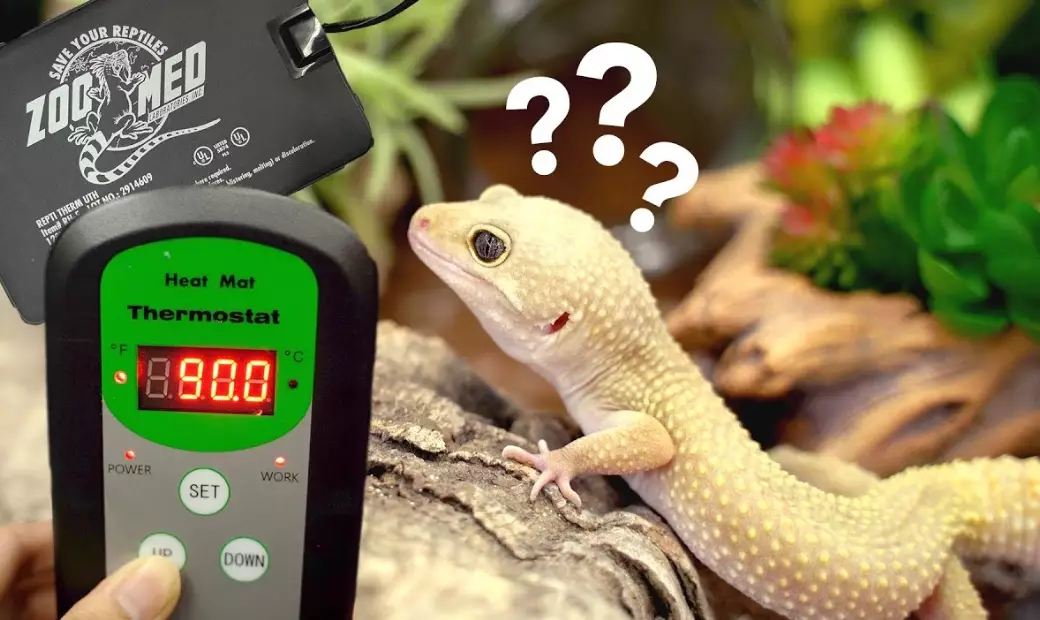
Let's cut through the noise. This isn't about following a random rule. It's about recreating a slice of their natural world in your living room. Getting it wrong doesn't just risk a chilly gecko; it can impact their digestion, immune system, and overall well-being. So let's break down the science, the practical setup, and finally answer that burning question with clarity.
Why Temperature Isn't Just About Being Cozy
Leopard geckos, like all reptiles, are ectotherms. This is a fancy word for saying they don't generate their own internal body heat like we do. Their body temperature is almost entirely governed by their environment. This isn't a design flaw; it's how they're built. But it means every single biological process inside them—digesting that cricket you fed them, fighting off a minor infection, even simply moving around—is directly tied to the temperature you provide.
Think of it like this: their metabolism has an "on" switch and a "dim" switch. The warm area of the tank (the "basking spot") flips the switch to "on." This is where they go to get energized, digest food, and be active. The cooler side of the tank is where they go to cool down, rest, and let their systems idle. Nighttime introduces a third setting: a "sleep mode" temperature that is cooler than the daytime warm side but shouldn't be outright cold.
This is where the core confusion for the question "Do I turn the heat lamp off at night for a leopard gecko?" comes from. People hear "they need a temperature drop" and interpret it as "no heat needed." That's a risky oversimplification. A sudden, drastic plunge into cold temps can halt digestion (leading to impaction), suppress their immune system, and cause significant stress. The goal is a gradient, even at night, just on a lower, more muted scale.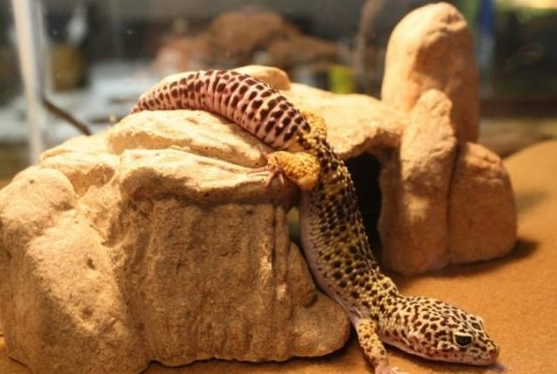
From Rocky Outcrops to Your Tank: Mimicking Nature
Leopard geckos hail from the arid, rocky grasslands and deserts of Afghanistan, Pakistan, and parts of India. These places aren't always scorching 24/7. Daytime rock surfaces can get very hot under the sun, providing glorious basking real estate. But when the sun sets, the air temperature drops significantly. The magic, however, is in the geology. Those rocks and the earth itself retain heat long after the sun is gone.
Your gecko in the wild wouldn't be sitting out in the cold night air. It would be tucked into a burrow, a crevice between rocks, or under some scrub. These microhabitats are significantly warmer than the open air because they're being gently warmed by the residual heat stored in the ground and rocks from the daytime sun. This is the environment we're trying to copy: a nighttime retreat that is cool, but not chillingly cold—a place of sustained, gentle warmth.
This natural history lesson is crucial. It tells us that turning off the sun (your bright heat lamp) is correct. But removing all ground warmth (the residual heat) is not. In a thin glass tank in a climate-controlled house, we don't have sun-warmed rocks holding heat for hours. We have to provide a substitute. That's why the answer to "Do I turn the heat lamp off at night for a leopard gecko?" is almost always, "Yes, but you need to replace it with something else."
The Heart of the Matter: Nighttime Heat Strategy
Alright, let's get practical. You're about to go to bed. What do you actually do with the equipment?
The universal rule is this: Any heat source that emits visible light should be turned off at night. This includes white basking lamps, halogen bulbs, and colored bulbs (red, blue, purple). Light at night disrupts their circadian rhythm, can stress them out, and prevents proper rest. So, yes, that specific heat lamp gets turned off.
But the heat itself shouldn't vanish if your ambient room temperature falls below the safe threshold. So what are your options?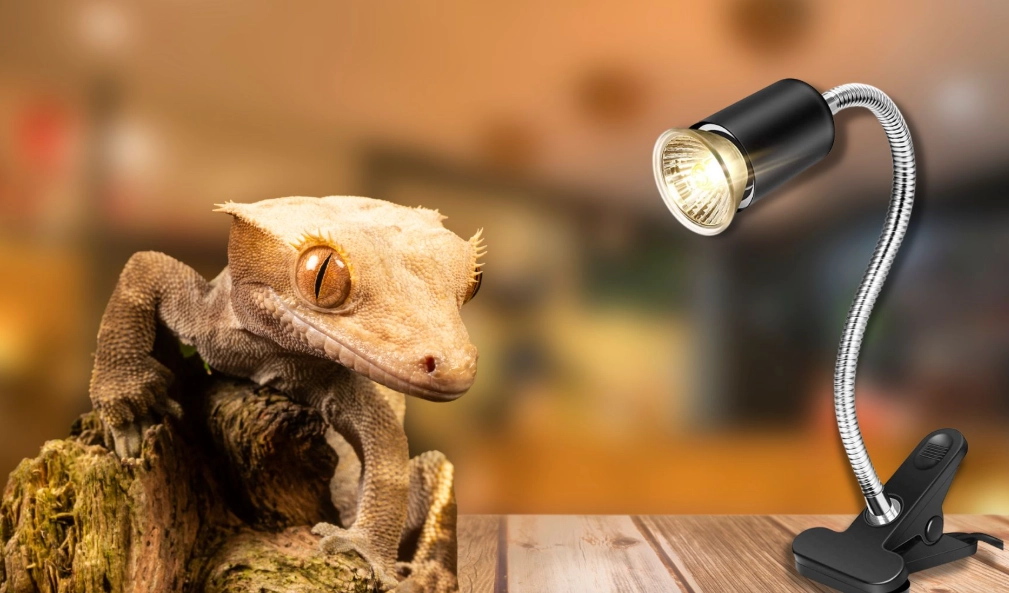
Your Nighttime Heating Toolkit
Here’s a breakdown of the common tools for the job. I wish someone had laid it out for me this clearly when I started.
| Device | How It Works | Best For Night? | Key Consideration |
|---|---|---|---|
| Ceramic Heat Emitter (CHE) | A ceramic bulb that screws into a lamp fixture and produces only heat (infrared), no light. | Excellent. The go-to for primary nighttime heat from above. | MUST be used with a ceramic socket lamp (not plastic) and a thermostat to prevent overheating. Gets very hot. |
| Under-Tank Heater (UTH) | A flat pad that sticks to the bottom outside the glass of the tank, warming the floor. | Excellent. Mimics warm ground/rocks perfectly. Ideal for belly heat. | MUST be regulated by a thermostat. Never use inside the tank or under loose substrate. Place under one side only. |
| Deep Heat Projector (DHP) | A more advanced bulb that emits infrared-A & B (penetrating heat), no light. | Very Good. Provides a more natural, sun-like heat spectrum. | More expensive. Requires a thermostat and appropriate fixture. A fantastic, modern option. |
| Heat Mat (inside tank) | Similar to UTH but sometimes marketed for inside use. | Not Recommended. Risk of burns, moisture damage, and malfunction. | I'd avoid these entirely. An external UTH controlled by a thermostat is far safer. |
| Red/Blue "Night" Bulbs | Colored bulbs that emit light along with heat. | Poor. Disrupts the day/night cycle. | It's an outdated method. Choose a non-light emitter instead for true nighttime heat. |
My personal setup for Sheldon, which has worked flawlessly for years, is a halogen bulb for daytime basking on a timer, and an under-tank heater on a separate thermostat set to a lower nighttime temperature. The UTH runs 24/7 but the thermostat dials it down at night. It's silent, effective, and he always has a warm spot to curl up on.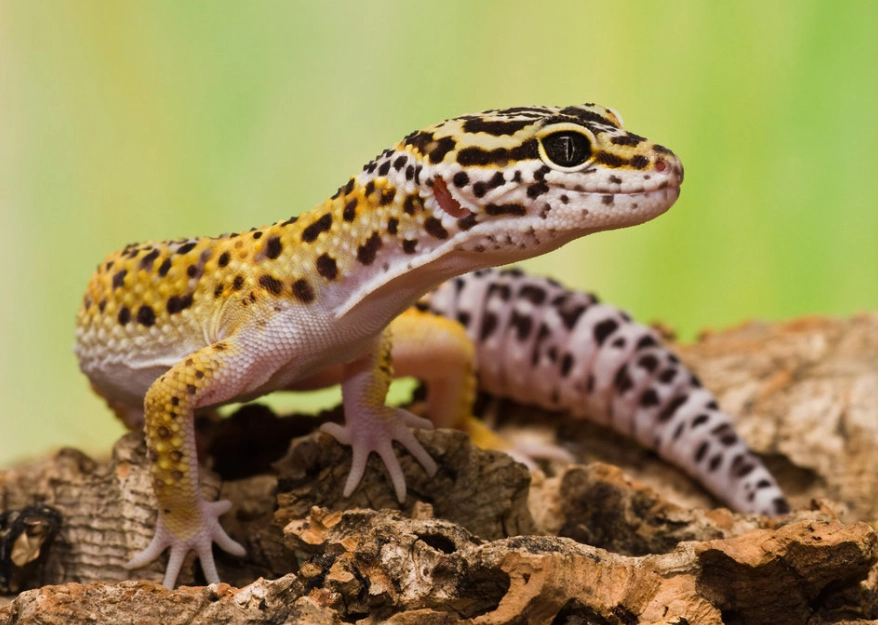
What Are the Actual Numbers?
Vague advice is useless. You need targets. These ranges are widely supported by experienced breeders and exotic veterinarians. Organizations like the Association of Reptilian and Amphibian Veterinarians (ARAV) emphasize species-specific thermal gradients as fundamental to health.
- Daytime Gradient:
- Warm/Basking Side Surface Temp: 88-92°F (31-33°C)
- Cool Side Ambient Temp: 70-77°F (21-25°C)
- Nighttime Temperature (Overall):
- Safe Range: 70-75°F (21-24°C) is ideal.
- Absolute Minimum: Do not let the tank, even on the cool side, drop below 65°F (18°C) for extended periods.
So, if your house stays at 72°F or above at night, you might be able to turn all heat sources off. But most homes, especially in winter or in cooler climates, dip below this. My house gets to 68°F at night in winter. That's too close to the minimum for comfort. That's why Sheldon's UTH kicks in.
Gadgets and Controls: Don't Fly Blind
This is the part most beginner guides gloss over, but it's the most important for safety and answering "Do I turn the heat lamp off at night for a leopard gecko?" with confidence. You cannot manually manage these temperatures 24/7. You need automation.
1. A Dimming Thermostat (for light-emitting daytime lamps): This doesn't just turn the lamp on/off; it smoothly dims it up and down to hold a precise temperature. Prevents sudden blasts of heat or cooling.
2. An On/Off or Pulse Thermostat (for CHEs, UTHs, DHPs): These are less expensive and work by cutting power when the set temperature is reached. Perfect for nighttime heat sources.
3. Digital Thermometers with Probes: Have at least two. Place one probe on the basking surface, and one on the cool side. Check them regularly.
4. Timers: Plug your daytime light/heat into a simple mechanical timer. Set it for 12-14 hours on, 10-12 hours off. It's foolproof.
Investing in a thermostat is non-negotiable. It prevents cooking your gecko if the room gets hot or a malfunction occurs. It's the single best purchase for peace of mind. The RSPCA's leopard gecko care guide explicitly states the need for thermostats with all heat sources. It's that basic.
Untangling the Web: Your Questions, Answered
Putting It All Together: A Sample Daily Routine
Let's visualize a complete, safe 24-hour cycle to eliminate all doubt.
7:00 AM: Daytime timer clicks on. Halogen basking lamp warms up, reaching 90°F on the basking spot by 8 AM. Room daylight or a separate UVB light (a topic for another day) also comes on.
Throughout the Day: Your gecko thermoregulates. Basking after eating, wandering to the cool side to chill out.
7:00 PM: Timer clicks off. The bright halogen lamp goes dark. The room gets dim/night lighting.
The Night Shift Begins: The under-tank heater, which has been maintaining a low 80s temperature under the warm-side hide during the day, is now regulated by its thermostat to a nighttime setting of 74°F. The air in the tank gradually cools to match your room temperature, but the floor under the favorite hide remains pleasantly warm.
Overnight: Your gecko sleeps, digests, and rests in that gentle, residual ground heat. No disruptive lights, no chills.
7:00 AM: Cycle repeats.
See? The question "Do I turn the heat lamp off at night for a leopard gecko" becomes a simple part of an automated, natural cycle. You're not just turning something off; you're transitioning to a different, more appropriate type of heat.
The Final Word: Safety, Rhythm, and Peace of Mind
So, after all this, where do we land? The anxiety around the question "Do I turn the heat lamp off at night for a leopard gecko" comes from a good place—you care about your pet's comfort. The key is to redirect that care into setting up a system that works automatically, mimicking nature's rhythms.
Turn off the light. Absolutely. Provide gentle, non-light-emitting warmth if your nights are cool. Absolutely. Use thermostats and timers to make it foolproof. Absolutely.
When you get this right, you'll notice a difference. Your gecko will have a predictable routine. Their colors might even look brighter (stress can dull them). You'll sleep better knowing they're not shivering in the dark or living in an eternal, stressful sunset from a red bulb.
It's not the most glamorous part of pet ownership, but nailing the temperature gradient—day and night—is the bedrock of leopard gecko health. It's what allows all the other fun parts, like feeding and handling, to happen with a happy, healthy animal. So go check your setup. Get a thermostat if you don't have one. And finally, put that nighttime worry to bed for good.
Reader Comments