So you're curious about how big a Leachianus gecko gets. It's the first question everyone asks, and for good reason. The answer isn't just a number—it's the single most important factor that dictates everything about keeping one. We're not talking about a slight upgrade from a Crested Gecko. We're talking about a heavy-bodied, prehistoric-looking giant that can fill your hand and then some. Forget the cute, petite lizard image. Owning a "Leachie" is a commitment to housing a substantial animal.
Let's cut to the chase. A typical adult Leachianus gecko (Rhacodactylus leachianus) ranges from about 10 to 17 inches (25 to 43 cm) in total length and can weigh between 150 to over 400 grams. But that's like saying "cars go fast." It misses the nuance, the drama, and the crucial details you need to know.
What You'll Learn in This Guide
Why Their Size Is a Game-Changer for Owners
This isn't an academic measurement. The size of a Leachianus gecko translates directly into practical, daily realities.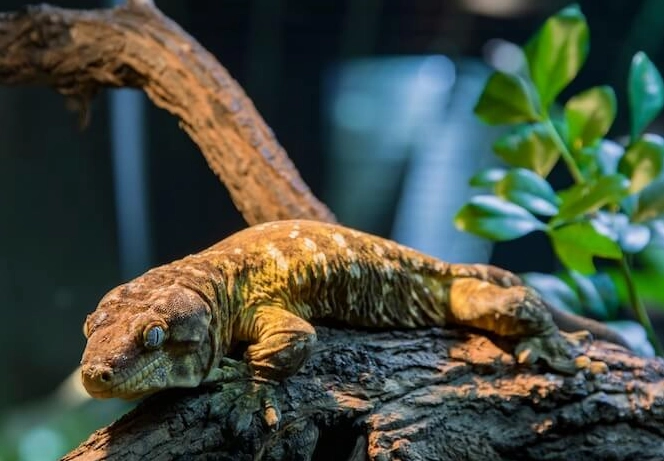
First, space. A 12-inch gecko doesn't need a 12-inch cage. It needs room to climb, explore, thermoregulate, and feel secure. An undersized enclosure is the number one mistake I see. It leads to stress, poor feeding, and can literally stunt their growth. Their size demands a vertical palace, not a glass box.
Second, handling dynamics. A 300-gram gecko has power. Their grip is formidable, and a startled jump from your hand carries real weight. Handling is less about delicate perching and more about confident, supported holds. You're interacting with a substantial creature.
Finally, cost and commitment. Larger enclosures cost more to buy, heat, and decorate. Food consumption is higher. Everything scales up. Their impressive size is matched by an impressive lifespan of 20+ years. You're signing up for a long-term relationship with a large, charismatic reptile.
Size Breakdown by Locale: From Island Giants to Dwarf Forms
Here's where internet averages fail you. "Leachianus gecko" is an umbrella term for several distinct populations, or "locales," from different islands in New Caledonia. Their size differences are dramatic. Choosing a locale is essentially choosing your gecko's size class.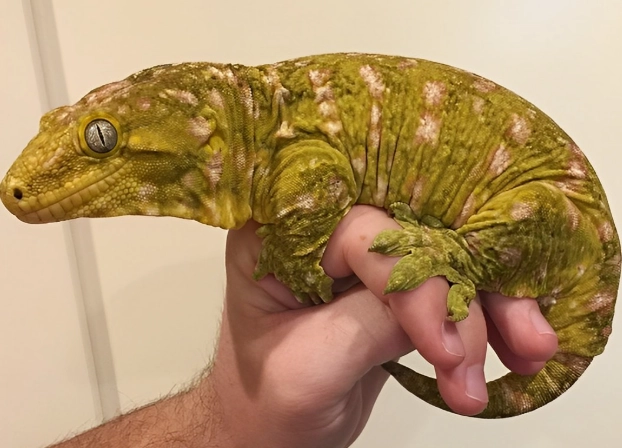
| Locale (Island/Area) | Typical Adult Total Length | Typical Adult Weight | Key Characteristics |
|---|---|---|---|
| Grande Terre (Mainland) | 14 - 17+ inches (35 - 43+ cm) | 250 - 400+ grams | The true giants. Massive heads, robust bodies. Often considered the "classic" large Leachie. |
| Pine Island (Île des Pins) | 12 - 15 inches (30 - 38 cm) | 180 - 300 grams | Still very large, but often slightly more slender than Grande Terre. Known for vibrant green and white patterning. |
| Nuu Ana / Nuu Ami | 11 - 14 inches (28 - 35 cm) | 150 - 250 grams | Popular "mid-sized" locales. Excellent patterning and often more readily available than the giants. |
| Morocco / Brosse | 10 - 12 inches (25 - 30 cm) | 120 - 200 grams | Considered smaller or "dwarf" forms. Ideal for keepers who want the Leachie personality in a more compact package. |
See the range? A top-end Grande Terre specimen can be nearly twice the mass of a small adult Morocco. This is why asking "How big do they get?" is incomplete. You must ask, "How big does THIS specific locale get?"
I made the mistake early on of getting a "Leachie" without pinning down the locale. I was told it was a "mix" and hoped for the best. It ended up being a smaller island form, which was fine, but my enclosure plans were overkill. Knowing the locale removes the guesswork.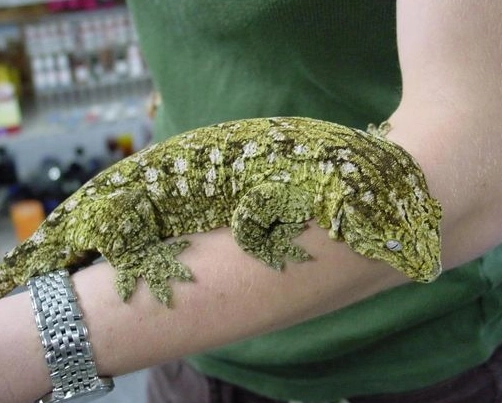
The Growth Journey: From Hatchling to Behemoth
They don't hatch big. A newborn Leachianus is a tiny, fragile-looking thing, often just 3-4 inches long and weighing 5-8 grams. The transformation is astonishing.
The First Year: The Rapid Growth Phase
This is where you see the most dramatic change. With proper feeding (a diet of Crested Gecko Diet (CGD) like from Pangea Reptile or Repashy, supplemented with appropriate insects), a healthy baby can reach 40-80 grams in the first year. You'll notice sheds every few weeks.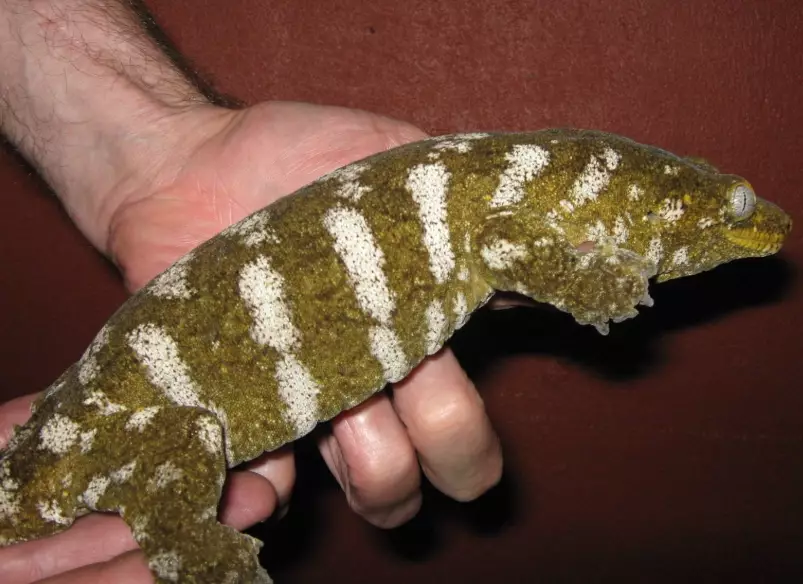
Years 2-3: Filling Out
Growth in length slows, but they pack on mass. This is when the head broadens, the body becomes stockier, and they truly start to look like a miniature dinosaur. They'll reach a significant portion of their adult weight during this period.
Years 4+: Maturity and Fine-Tuning
By year four, most are close to their full size, though some giants may continue adding subtle bulk for another year or two. Growth is negligible after this point. This is their prime adult stage, where their personality and feeding response are fully established.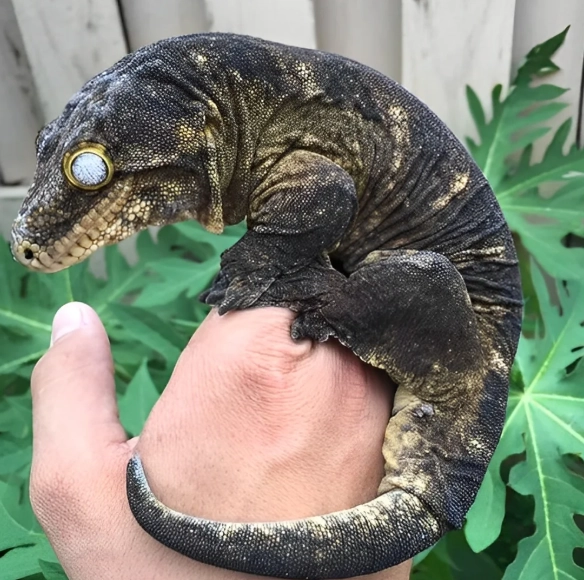
A Note on Growth Rates: Don't panic if your gecko isn't hitting "average" weights you see online. Like people, they have different metabolisms and genetic blueprints. Consistent weight gain over time is more important than hitting arbitrary monthly milestones. A sudden plateau or weight loss, however, warrants a husbandry check-up.
What Really Determines How Big Your Leachie Gets
Four main factors dictate final size:
1. Genetics (Locale): This is the biggest one, as the table shows. You can't make a Morocco locale grow to Grande Terre size. Choose your starting point based on the adult size you're prepared for.
2. Nutrition: This is where keepers have control. A diet solely of crickets will lead to nutritional deficiencies and poor growth. A high-quality, complete CGD is the cornerstone. Occasional treats like gut-loaded roaches or silkworms are great, but CGD should make up the majority of the diet for balanced growth.
3. Housing and Stress: An insecure gecko in a barren, cramped, or overly exposed tank will not thrive. Chronic stress suppresses appetite and diverts energy. A properly sized, well-planted, and cluttered terrarium promotes natural behaviors and healthy growth.
4. Individual Variation: Even within a single clutch from the same locale, you'll get a range. One sibling might top out at 280 grams, another at 350 grams. Appreciate your gecko as an individual.
Size and Housing: The Terrarium Reality Check
Let's get specific, because vague advice like "a tall tank" isn't helpful.
For a single adult of a medium or larger locale (Nuu Ana, Pine Island, Grande Terre), the absolute minimum should be 18" x 18" x 24" (45cm x 45cm x 60cm). And honestly, that feels cramped to me for a full-grown giant.
My strong recommendation, and what I use for my adult Pine Island male, is a 24" x 18" x 24" (60cm x 45cm x 60cm) or, even better, something taller like a 24" x 18" x 36". The extra height is not a luxury; it's essential for creating a thermal gradient and allowing for robust climbing structures.
For the smaller dwarf locales, an 18" x 18" x 24" can be perfectly adequate for life.
What goes inside is just as crucial. You need multiple sturdy horizontal branches at different diameters to exercise their feet and jaws. You need cork bark tubes and/or PVC pipe hides that are snug—these giants love a tight, secure sleeping spot. You need live or sturdy artificial plants to break up site lines and provide humidity. A big gecko will bulldoze flimsy decorations.
The takeaway? Budget for the adult enclosure from day one. Start a juvenile in a well-set-up adult enclosure with plenty of hiding spots. It's easier than upgrading every year and less stressful for the animal.
Your Top Leachianus Size Questions Answered
So, how big do Leachianus geckos get? Big enough to command respect. Big enough to require thoughtful planning and investment. Their size is their defining feature—a feature that brings unique challenges and unparalleled rewards. By understanding the full scope of their dimensions, from locale variations to housing demands, you set the stage for a thriving giant in your care. Don't just be ready for a big gecko; be ready for everything that comes with it.
Reader Comments