You're thinking about getting a red tail boa, or maybe you already have a young one. The question isn't just curiosity—it's practical. How big will this snake get? Will it fit in that enclosure you're eyeing? Can you handle it alone when it's full-grown? Let's cut straight to the point: a well-cared-for red tail boa (Boa constrictor imperator or B. c. constrictor) typically reaches 6 to 10 feet (1.8 to 3 meters) in length and can weigh 20 to 60 pounds (9 to 27 kg). But that's just the headline. Whether your boa lands on the smaller or much larger end of that spectrum depends on a handful of critical factors we need to unpack.
What's Inside?
Why Knowing Their Full Size Really Matters
This isn't just trivia. Understanding the potential size of a red tail boa is the foundation of responsible ownership. I've seen too many people buy a cute 2-foot baby boa only to face a housing crisis three years later.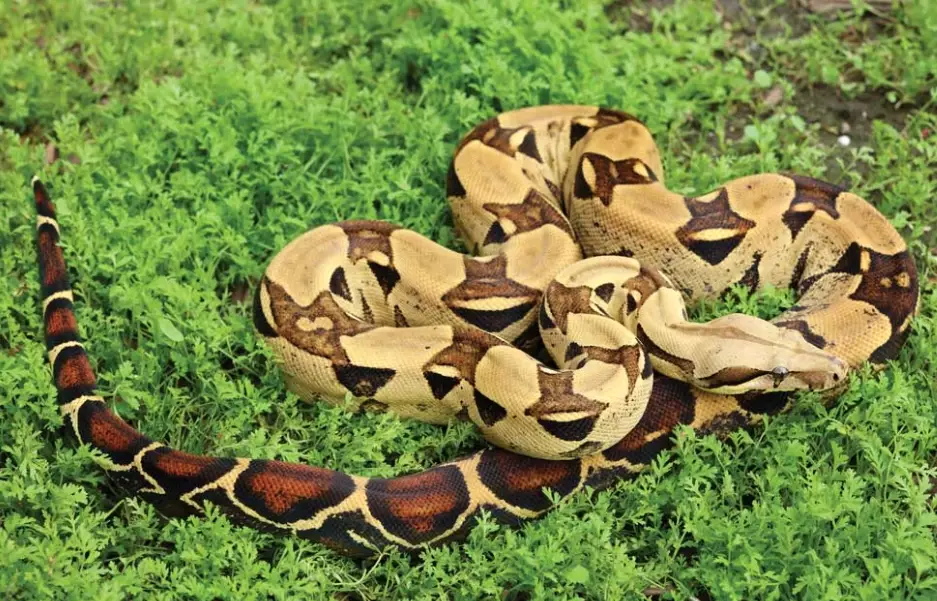
Your initial purchase decisions—the enclosure, the heating equipment, even the room you plan to keep it in—are all dictated by the animal's adult dimensions. A common question I get is, "What size tank should I start with?" My answer usually surprises new owners: think about the final enclosure first. Planning for a juvenile setup that can be expanded is smart, but knowing the end goal prevents costly upgrades and stress for the snake. A cramped boa is an unhappy, potentially unhealthy boa.
Then there's the handling aspect. A 5-foot boa is manageable for one person. A thick, muscular 9-foot female is a powerful animal. You need to be prepared for that strength and know how to support its body safely.
Male vs. Female & Subspecies: The Size Breakdown
Here’s where we get into the specifics. Not all "red tail boas" are the same, and sex plays a huge role.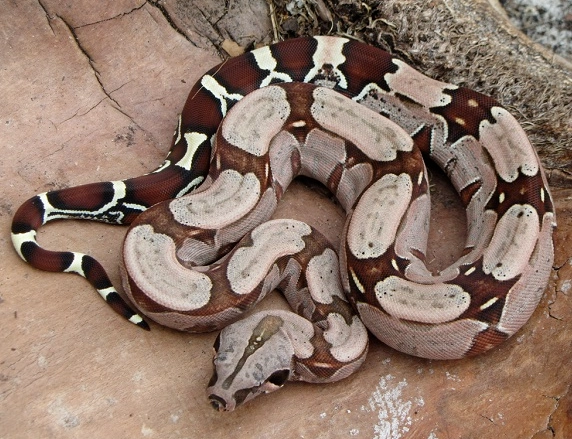
The Common (Colombian) Red Tail Boa
This is the boa you most commonly see in the pet trade, often labeled Boa constrictor imperator. For these guys, size is heavily influenced by sex:
- Males: Generally stay smaller and more slender. You can expect most males to top out between 6 and 8 feet, with 7 feet being a very common maximum. Their weight usually stays under 30 pounds.
- Females: They are the giants. Females are typically thicker-bodied and longer. A mature female commonly reaches 7 to 9 feet, and it's not rare for well-established ones in spacious enclosures to hit 10 feet. They can easily weigh 30-50 pounds.
True Red Tail Boas & Other Subspecies
This is a point of confusion. The "true" red tail boa (Boa constrictor constrictor) from Suriname, Guyana, and Peru is often said to get larger. In reality, while they can be massive, they are less common in captivity. Reputable sources like The Reptile Database note the significant size variation across their range. An Argentine boa (B. c. occidentalis), while not a "red tail," is often part of this conversation and is known for its robust build, sometimes exceeding the bulk of common boas.
The takeaway? Unless you specifically sought out and paid a premium for a documented true B.c. constrictor, you almost certainly have a common B.c. imperator. Plan for the 6-10 foot range.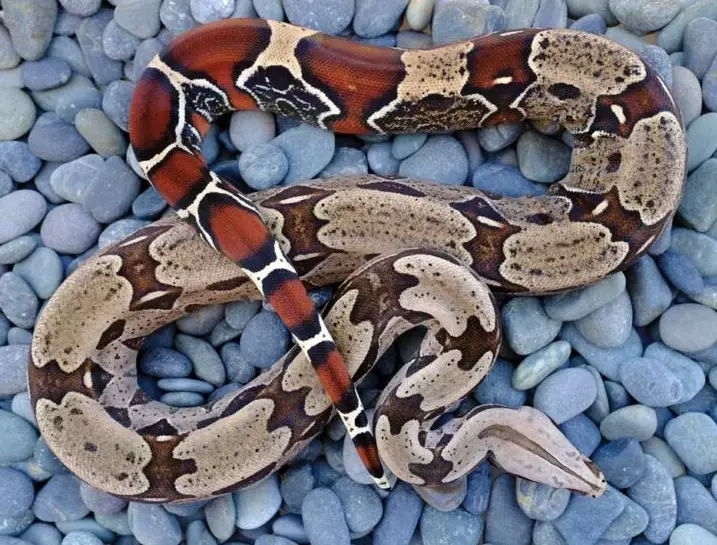
Growth Rate and What Influences It
Red tail boas aren't fast growers like some pythons. They have a slow, steady growth curve that can last 4-6 years before they approach their full length. Girth and weight can continue to increase slowly after that.
| Life Stage | Typical Age | Approximate Length | Key Notes |
|---|---|---|---|
| Neonate | 0-6 months | 18-24 inches | Tiny and delicate. Feeding on pinky or fuzzy mice. |
| Juvenile | 6 months - 2 years | 3-5 feet | Rapid growth phase. Moves up to adult mice or small rats. |
| Sub-Adult | 2-4 years | 5-7 feet | Growth slows. Body starts to fill out significantly. |
| Adult | 4+ years | 7-10 feet | Reaches sexual maturity. Length gains minimal, girth increases. |
Several factors directly impact how big and how fast your boa gets:
Feeding Schedule: This is the biggest lever. Overfeeding is the most common mistake. Power-feeding (offering food too frequently) doesn't create a longer snake; it creates an obese snake. A fat boa is unhealthy, prone to heart and liver issues, and won't live as long. Stick to an appropriate schedule: every 7-10 days for juveniles, moving to every 10-14 days for sub-adults, and every 3-6 weeks for healthy adults.
Enclosure Size: A snake kept in a tub or tank that's too small can have its growth stunted. It's a stress response. Providing ample space allows for proper exercise and muscle development, leading to a healthier, more proportionally sized animal.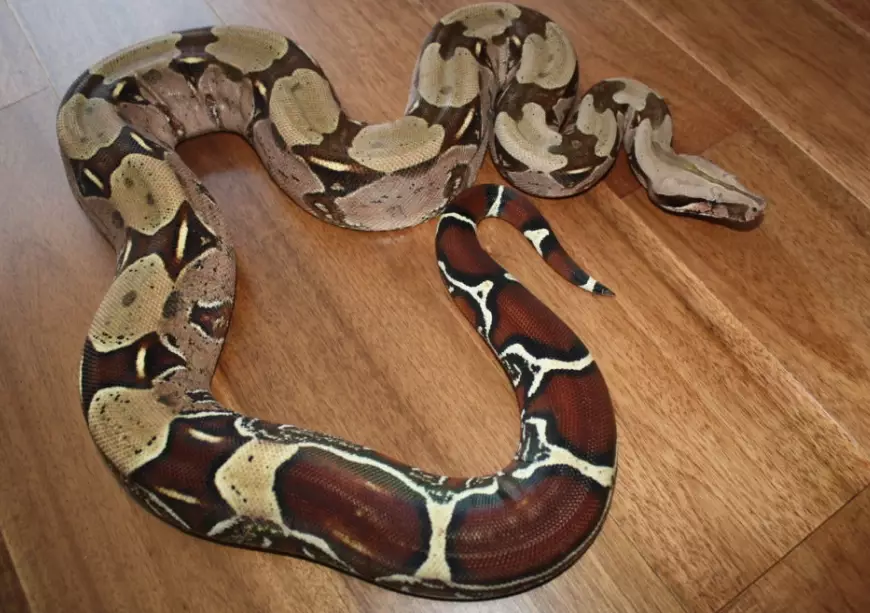
Genetics: Like people, some boas are just genetically programmed to be bigger or smaller. You can't change this.
Temperature & Health: Consistent, proper heating is crucial for metabolism and digestion. A snake that is chronically too cold won't digest efficiently and won't grow well. Conversely, parasites or chronic illness will hinder growth.
How to Prepare for Their Adult Size
Let's talk logistics. Planning ahead saves money and your sanity.
The Enclosure: The minimum rule of thumb is that the enclosure's length plus width should equal or exceed the snake's length. For an 8-foot female, that means an enclosure at least 6 feet long and 2 feet wide, though bigger is always better. PVC cages are the gold standard for adults—they hold heat and humidity well and are lightweight. A common final enclosure size is 6'L x 2'W x 2'H or 8'L x 2'W x 2'H. Start planning for where that will go in your home.
Heating & Lighting: Heating a large enclosure requires more robust equipment. A single heat mat won't cut it. You'll likely need a radiant heat panel (RHP) or multiple ceramic heat emitters controlled by a high-quality thermostat. The cost goes up with the size.
Feeding Costs: An adult female boa will eat large or extra-large rats. You need a reliable frozen-thawed rodent supplier. Buying in bulk saves money.
Handling & Safety: Never handle a large boa alone if you aren't confident. Have a hook to gently tap-train and guide its head. Support its body fully—never let it dangle. Always let someone know when you're handling a large constrictor. It's just common sense.
Common Size Misconceptions and Mistakes
After keeping and breeding boas for over a decade, I've seen patterns.
Myth 1: "A heavier boa is a healthier boa." Wrong. Obesity is rampant in captive boas. A healthy boa should have a muscular, rounded-triangle body shape, not a round, sausage-like body. You should be able to see a subtle ridge along its spine. Fat boas die younger.
Mistake: Chasing Maximum Size. Some owners want the biggest boa on the block. This often leads to overfeeding and improper care. Your goal should be a healthy, fit animal that lives 25-30 years, not a record-breaking giant at age 8.
Myth 2: "They only grow as big as their enclosure." This is partially true but in the worst way. Stunting growth through chronic stress in a tiny cage is animal cruelty, not a size management technique. It leads to spinal kinks, poor muscle tone, and a shortened lifespan.
The subtle error I see? Owners misjudging girth for length. They think their 6-foot boa is "huge" because it's very thick, but it's actually on the shorter side. Focus on overall body condition, not just one dimension.
Your Red Tail Boa Size Questions Answered
My red tail boa is 3 years old and only 4 feet long. Is something wrong?
Possibly. While growth rates vary, a 3-year-old boa should typically be in the 4.5 to 6-foot range. Being significantly smaller could point to a few issues: chronic underfeeding (prey size too small or frequency too low), incorrect temperatures hindering metabolism, or underlying health problems like parasites. Review your husbandry—especially temperatures in the hot spot (88-90°F) and cool end (78-80°F)—and feeding regimen. A vet check for parasites is a good next step.
Can I keep my adult boa in a 55-gallon tank?
Almost certainly not. A standard 55-gallon tank is about 4 feet long. Even for a small male boa that reaches 6 feet, this is inadequate. The snake would be unable to fully stretch out, leading to stress and poor muscle tone. For any adult red tail boa, you need a custom enclosure or a large PVC cage that meets the length+width rule. A 55-gallon is only suitable for a juvenile for the first couple of years.
How can I tell if my young boa is a male or female to predict its size?
You can't reliably tell by just looking. Sexing boas requires a technique called "popping" (for very young neonates) or probing, which should only be done by an experienced breeder, vet, or herpetologist. Probing involves gently inserting a smooth, lubricated metal probe into the cloaca to measure the depth of the hemipenial pockets. Males have much deeper pockets. Never attempt this yourself if you're untrained, as you can seriously injure the snake. When you purchase the boa, ask the breeder for their sexing method and if they guarantee the sex.
Do boas ever stop growing, or do they grow their whole life?
They exhibit what's called indeterminate growth. This means they don't have a hard stop like humans do. However, after reaching sexual maturity (around 3-4 years), their length increase slows to a crawl—maybe an inch or two over several years. Most of the "growth" you see in a mature adult is weight gain and girth increase, not length. So for practical planning purposes, you can consider them mostly full-length by age 5 or 6.
What's the biggest red tail boa ever recorded?
Claims of 12, 13, or even 14-foot red tail boas are common in folklore but are almost always exaggerations or misidentifications (often involving other species like anacondas). According to authoritative records, such as those cited in herpetological literature, the maximum verified length for Boa constrictor is generally accepted to be around 13-14 feet, but specimens over 10 feet are exceptionally rare in captivity or the wild. The largest reliably measured individuals usually fall between 9 and 10.5 feet. Don't expect your pet to reach these extremes.
So, how big will your red tail boa get? If you have a male, plan for a 6-8 foot companion. If you have a female, be ready for a 7-10 foot powerhouse. Feed appropriately, provide a spacious and warm home, and you'll have a healthy, impressive snake that showcases its natural size—not one shaped by the limitations of poor care. Their size is part of their majesty, and respecting it is the first step to a fantastic decades-long partnership.
Reader Comments