Quick Guide
- Why Night Heat Isn't Optional (The Science Bit, Simplified)
- Your Arsenal: Tools for Nighttime Heating
- The Setup: Creating the Perfect Night Environment
- Common Mistakes (The “What Not to Do” List)
- Seasonal Changes and Special Cases
- Answering Your Night Heat Questions (FAQs)
- Putting It All Together: A Sample Night Routine
So your leopard gecko is settled in, looking cute as ever during the day. But what happens when the sun goes down? If you're like I was when I started out, you might be staring at that tank at 10 PM, wondering if your little buddy is shivering in the corner. Figuring out how to keep leopard gecko warm at night is one of those things that seems simple until you dive in. Then you're hit with terms like "thermal gradient," "belly heat," and debates about colored bulbs that can make your head spin.
I remember my first winter with my gecko, Gex. The room temperature dropped more than I expected, and I woke up to find him sluggish and refusing food. That panic—scouring forums at 2 AM—is something I don't want any new owner to go through. Nighttime heating isn't just about comfort; it's about digestion, immune function, and overall well-being. Get it wrong, and you're looking at potential health issues like impaction or respiratory infections. Get it right, and you have a thriving, active pet.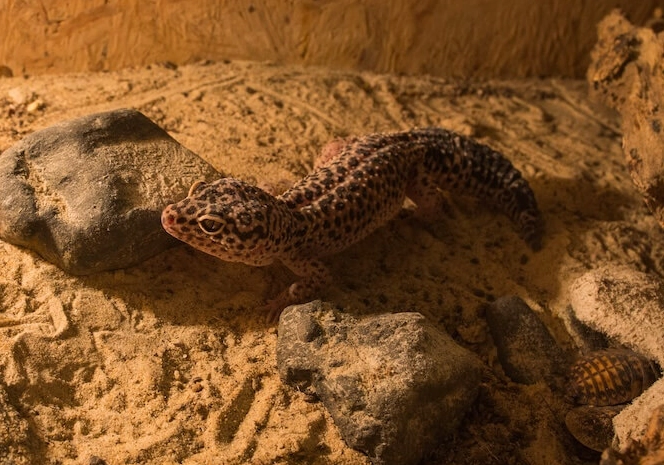
The core of the issue is that leopard geckos are crepuscular. They're most active at dawn and dusk. In the wild, the desert floor retains heat long after the sun sets. Our job is to mimic that in a glass box without creating a 24/7 sauna or, worse, disrupting their natural day-night cycle with bright lights. It's a balancing act.
Let's cut through the confusion and talk about what actually works, what doesn't, and why some popular advice might be setting you—and your gecko—up for failure.
Why Night Heat Isn't Optional (The Science Bit, Simplified)
Leopard geckos are ectotherms. They don't generate their own internal heat like we do. They rely on their environment to regulate their body temperature. This isn't a passive process; they actively move between warmer and cooler spots to manage everything from digesting that juicy cricket to fighting off germs.
At night, a drastic temperature crash signals to their body that it's time to shut down. Metabolism slows. If they've eaten recently, the food just sits there in their gut, undigested. This is a fast track to serious problems. A consistent, appropriate night temperature keeps their internal engine idling smoothly, ready for their active periods.
Think of it like this: you wouldn't want to sleep in an unheated garage in winter, even under blankets. Your gecko feels the same about a cold terrarium.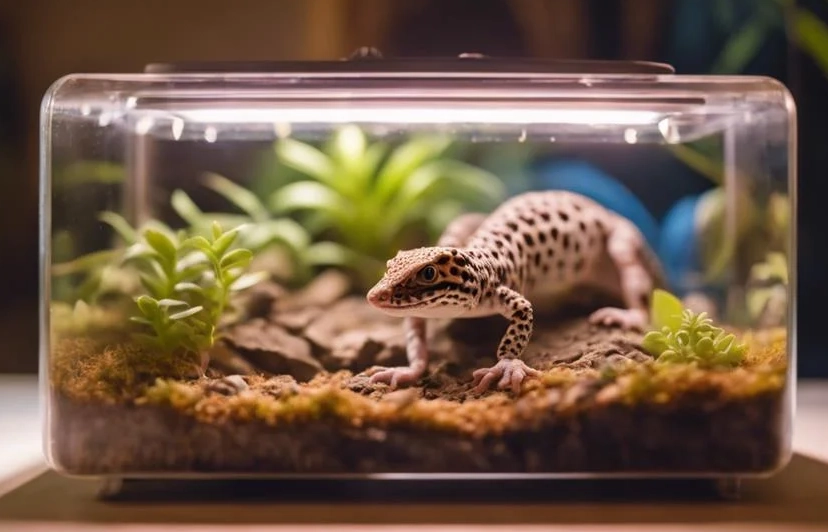
The Magic Number Range: While daytime basking spots should be around 88-92°F (31-33°C), the ambient temperature on the warm side at night should not fall below 70-75°F (21-24°C). The cool side can dip a bit lower, but a universal plunge below 65°F (18°C) is a red flag. This is the foundational rule for how to keep leopard gecko warm at night effectively.
Your Arsenal: Tools for Nighttime Heating
Alright, so we know we need heat. But what kind? The pet store aisle is overwhelming. Here’s a breakdown of the most common tools, from the tried-and-true to the “just don't bother.”
Under Tank Heaters (UTH) / Heat Mats: The Belly Heat Standard
This is the go-to for most experienced keepers, and for good reason. Leopard geckos absorb heat remarkably efficiently through their bellies. A UTH stuck to the bottom outside of the tank (never inside!) on one side creates that essential warm floor they can lounge on.
The Crucial Caveat: You must use a thermostat. I can't stress this enough. An unregulated heat mat can easily reach temperatures over 110°F, which can cause severe thermal burns in minutes. A thermostat probe placed between the mat and the glass tank floor (or sandwiched in the substrate above it) will cycle the mat on and off to maintain your set temperature.
I use a simple on/off thermostat for my mats, and it's been flawless for years. It’s the single most important purchase for safe heating.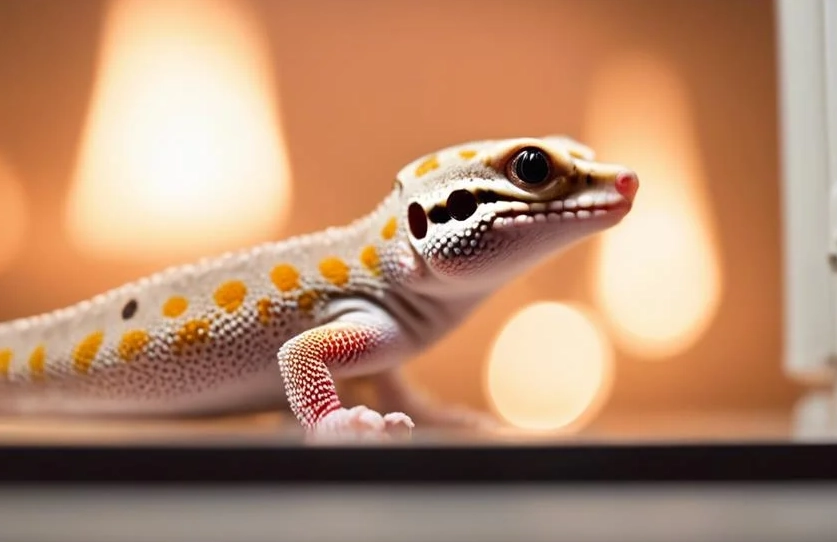
Ceramic Heat Emitters (CHEs): The Invisible Workhorse
If your room gets particularly cold at night, a UTH alone might not keep the air temperature up enough. This is where a Ceramic Heat Emitter shines. Screw it into a ceramic-based dome lamp fixture (plastic will melt!), and it emits pure infrared heat with zero light.
It’s perfect for maintaining ambient temperatures without messing up your gecko's circadian rhythm. Again, pair it with a thermostat. CHEs get extremely hot and are a fire risk if knocked over or used improperly.
I have a CHE on a dimming thermostat in Gex's tank set to kick in if the room temp falls below 70°F. It's my safety net during cold snaps.
Deep Heat Projectors (DHPs): The Next-Gen Option
A newer technology that's gaining fans. DHPs, like those from Arcadia, produce infrared-A and infrared-B, which is said to penetrate tissue more effectively than the infrared-C from CHEs, mimicking the sun's warmth more closely. They also produce no light.
They're more expensive upfront but can be more efficient. For the average keeper, a CHE does the job wonderfully, but if you're a tech enthusiast or have a particularly tricky setup, a DHP is worth researching. You'll still need that appropriate fixture and a thermostat.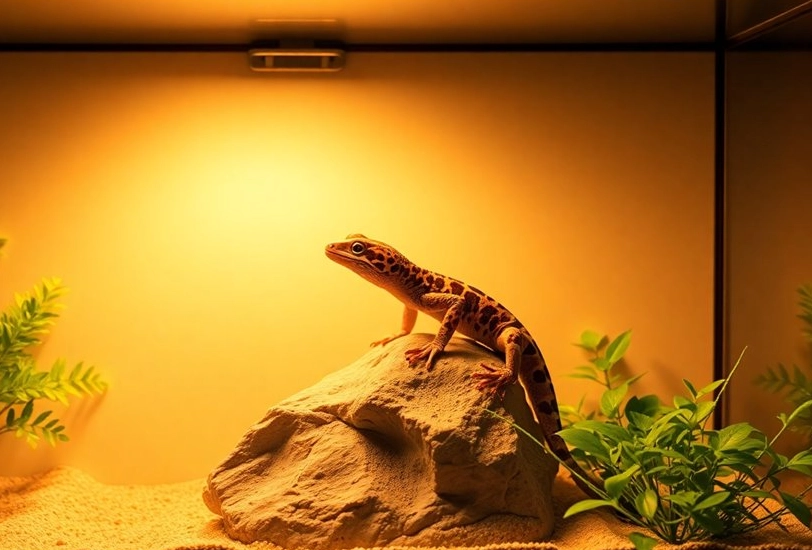
What to Avoid: Colored “Night” Bulbs
Here’s my strong opinion: avoid red, blue, or black “nocturnal” bulbs. The marketing says reptiles can't see the light. That's largely a myth. Studies, including those referenced by reptile welfare advocates, suggest many reptiles can see these wavelengths. A red bulb can turn night into a perpetual, washed-out twilight, disrupting their sleep patterns and stress levels.
I tried a red bulb early on. Gex became less active and seemed to hide more during his normal active hours. When I switched to a CHE, his behavior normalized within days. Heat without light is the goal.
Personal Frustration: It annoys me that these colored bulbs are still sold as primary night heat sources in big-box pet stores. They're a solution to a problem that's better solved with a CHE or a well-regulated UTH. Save your money.
The Setup: Creating the Perfect Night Environment
Choosing your heater is only half the battle. How you set it up determines success or failure. This is where most guides stop, but it's where the real details matter.
The Thermal Gradient is Non-Negotiable. Your tank must have a warm side and a cool side, even at night. The warm side floor/area should be in that 70-75°F range, while the cool side can be a few degrees cooler. This allows your gecko to self-regulate. A single, uniform temperature is unnatural.
Insulation Matters. If your tank is in a drafty room or on a cold surface, you're fighting a losing battle. Consider insulating the back and sides of the tank with foam board (on the outside!). Ensure the tank lid is secure but not completely airtight. Placing the tank on a wooden stand instead of a cold metal frame can make a noticeable difference.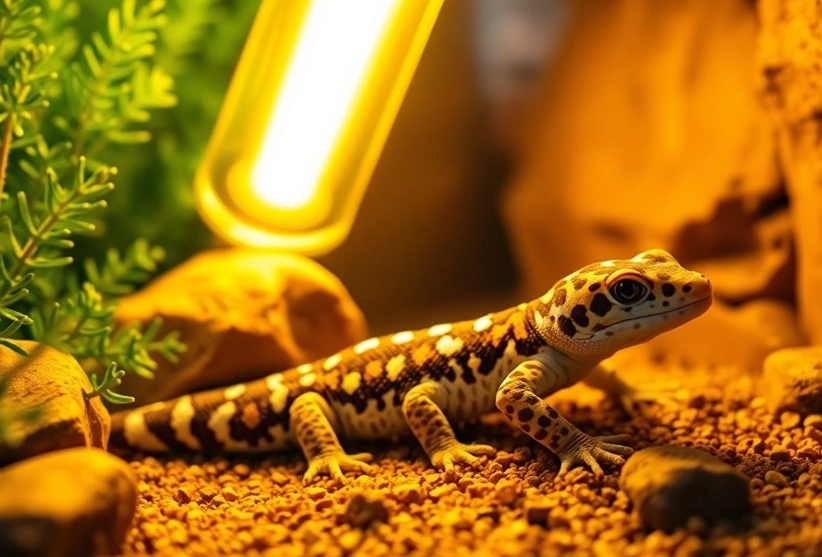
Substrate Choice is Key. If using a UTH, the substrate above it must allow heat to pass through. Paper towel, slate tiles, or a very thin layer of reptile-safe sand are excellent conductors. Avoid thick layers of loose substrate like mulch or coconut fiber over the heat mat, as they will insulate and trap heat, potentially causing the mat to overheat while preventing warmth from reaching your gecko.
Here’s a quick comparison of common night heating methods to help you decide:
| Heating Method | Best For | Pros | Cons | Essential Accessory |
|---|---|---|---|---|
| Under Tank Heater (UTH) | Providing essential belly heat; primary or supplemental heat. | Imitates natural ground heat, energy-efficient, silent. | Only heats surface it's attached to; doesn't warm air much; burn risk without thermostat. | High-quality thermostat (on/off type works). |
| Ceramic Heat Emitter (CHE) | Raising ambient air temperature; backup for cold rooms. | No light emitted, good for ambient warmth, long-lasting. | Requires ceramic lamp fixture, gets very hot externally, dries air slightly. | Ceramic socket fixture & dimming thermostat. |
| Deep Heat Projector (DHP) | Enthusiasts seeking more natural infrared spectrum; ambient heat. | Penetrating heat spectrum, no light emitted. | Expensive, requires specific fixture (deep dome), still new tech. | Deep dome fixture & dimming thermostat. |
| Colored "Night" Bulb | Not recommended for leopard geckos. | Widely available. | Can disrupt sleep cycles, provides unnatural light, often inefficient as a heat source. | N/A |
Common Mistakes (The “What Not to Do” List)
I've made a few of these myself, and I see them constantly in online groups. Avoiding these will put you ahead of 90% of beginners.
- Guessing the Temperature: Don't rely on the strip thermometer from a kit. It's notoriously inaccurate. Invest in a digital thermometer/hygrometer with a probe. Place the probe on the substrate where your gecko hangs out. Trust the numbers.
- Using a Heat Rock: Just don't. They are notorious for developing hot spots and causing severe burns. They are an outdated and dangerous product.
- Turning Off All Heat: Unless your room is consistently in the mid-70s year-round, some form of supplemental heat at night is necessary. A total cooldown is for brumation (reptile hibernation), which is a deliberate, managed process, not for everyday care.
- Overcomplicating It: You don't need five different heat sources. Start simple: a UTH on a thermostat on one side of the tank. Monitor temps. Only add a CHE or DHP if your ambient temps are still too low. More gear means more points of failure.
Figuring out how to keep leopard gecko warm at night is often about avoiding these pitfalls as much as it is about implementing perfect solutions.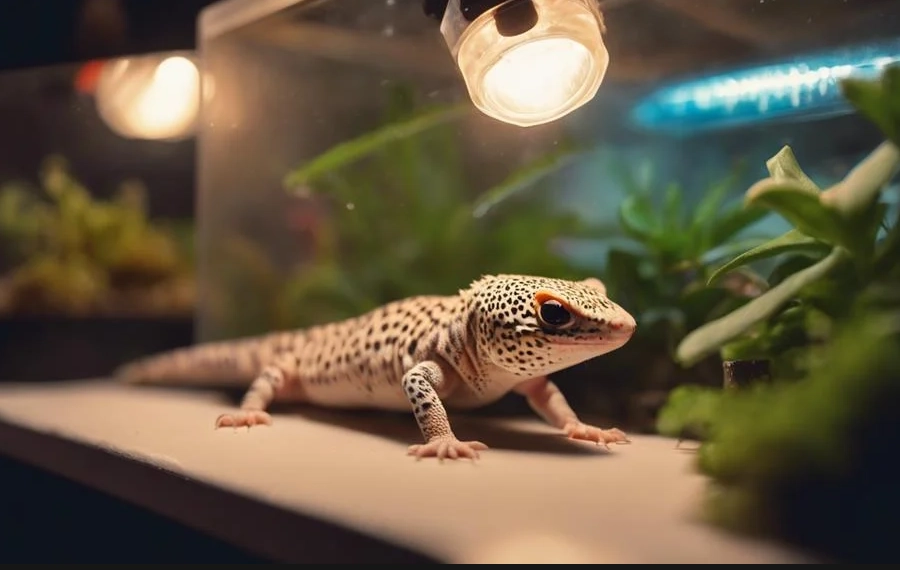
Seasonal Changes and Special Cases
Your heating needs aren't static. A setup that works in July might fail in January.
Winter: Your home heating system runs, but the air is drier and room temps can fluctuate more. Drafts from windows are a bigger issue. This is when your thermostat and CHE safety net really earn their keep. Check temperatures more frequently. You might need to adjust your thermostat setting a degree or two.
Summer: The opposite problem. Air conditioning can blast cold air. Ensure the tank isn't in the direct path of an AC vent. Nighttime heating might barely run, but the UTH should remain plugged into the thermostat—it will simply stay off more often if the room is warm.
For Sick or Juvenile Geckos: Consistency is even more critical. A sick gecko's immune system is compromised, and a cold tank adds immense stress. Juveniles are less resilient to temperature swings. Err on the side of slightly more stable, gentle heat. Avoid any temperature drops.
When Gex had a minor health hiccup last year, my vet specifically asked about my nighttime temperatures. Having my digital logs showing stable 73-74°F on the warm side gave her one less thing to worry about and let us focus on the real issue. Good record-keeping helps you and your vet.
Answering Your Night Heat Questions (FAQs)
Learning how to keep leopard gecko warm at night means being ready to adjust based on your specific setup and environment. There's no perfect one-size-fits-all answer, just solid principles.
Putting It All Together: A Sample Night Routine
Let's make this practical. Here's what my current setup and check-in routine looks like, which has worked flawlessly for years.
My Gear:
- 40-gallon glass tank.
- 8" x 8" UTH on the left side, stuck to the bottom exterior.
- On/off thermostat with probe fixed on the glass *inside* the tank, under the paper towel substrate, right over the UTH.
- 100W CHE in a ceramic dome fixture on the left side, positioned above the screen lid.
- Dimming thermostat for the CHE, with its probe dangling mid-height on the warm side.
- Two digital thermometers: one probe on warm side substrate, one on cool side.
My Settings:
- UTH Thermostat: Set to 90°F. This creates a warm floor of about 88-90°F.
- CHE Thermostat: Set to 73°F. It only turns on if the ambient air on the warm side drops below this.
My Evening Check (takes 60 seconds):
- Glance at the digital thermometer readouts. Warm side substrate: 89°F. Cool side: 75°F. Perfect.
- Listen. The UTH thermostat clicks occasionally. The CHE is silent (it's summer, so it's not on).
- Look at Gex. He's usually peeking out of his warm hide. Active and alert.
That's it. No fuss. The systems run themselves. My job is just to verify they're working.
Ultimately, mastering how to keep leopard gecko warm at night boils down to a few unwavering principles: provide belly heat, maintain a gradient, use thermostats religiously, avoid light at night, and let your gecko's behavior and accurate tools guide you. It's not about creating a tropical paradise at 3 AM; it's about providing a stable, gentle warmth that lets your desert-dwelling friend rest and digest in peace.
Start simple, monitor closely, and adjust as needed. Your gecko will thank you with years of healthy activity. And you'll sleep better too, knowing you've got the night shift covered.
Reader Comments