Getting your white leopard gecko's tank setup right isn't just about aesthetics; it's the single most important factor for their long-term health, happiness, and that stunning white coloration. A poor setup leads to stress, refusal to eat, and metabolic bone disease. I've seen it happen too many times. The good news? Setting up a proper habitat is straightforward once you know the non-negotiable elements. This guide cuts through the fluff and gives you the exact, actionable steps I've used for over a decade, whether you're starting with a hatchling or upgrading an adult's home.
What's Inside This Guide?
- Understanding Your White Leopard Gecko's Core Needs
- Choosing the Right Tank or Enclosure
- Essential Equipment Shopping List
- Step-by-Step Tank Assembly & Layout
- Daily & Weekly Maintenance Routine
- Top 5 Costly Setup Mistakes (And How to Avoid Them)
- Thinking Ahead: Bioactive & Advanced Setups
- Your Pressing Questions, Answered
Understanding Your White Leopard Gecko's Core Needs
Forget the color for a second. A white leopard gecko, like any leopard gecko (Eublepharis macularius), is a crepuscular, terrestrial lizard from arid regions of Afghanistan, Pakistan, and India. That mouthful tells us everything. Crepuscular means they're active at dawn and dusk, not in pitch darkness. Terrestrial means they're ground dwellers, not climbers. Arid means dry, but not devoid of humidity. Their three non-negotiable needs are a heat gradient, a humid hide, and plenty of security. Mess up any of these, and you'll see problems fast.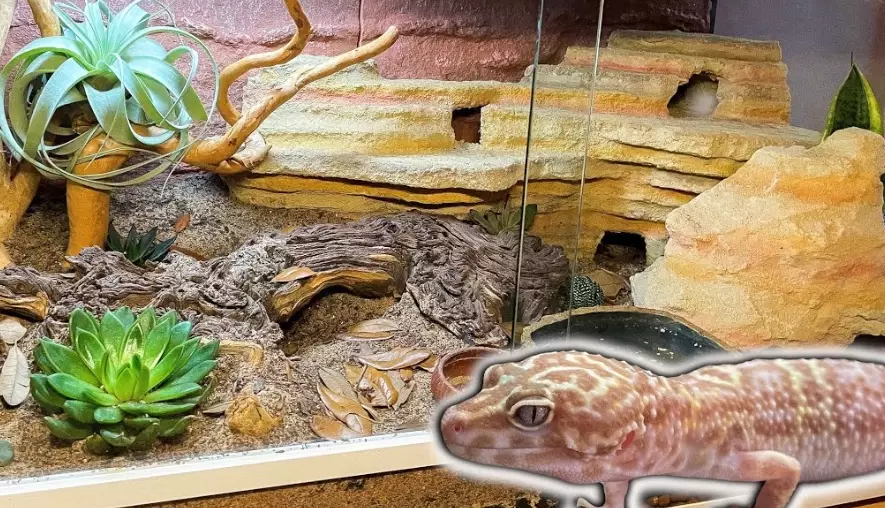
I made the mistake early on of focusing on making the tank look "cool" with tall branches. My gecko ignored them. He wanted flat rocks and tight spaces. The tank is for them, not your Instagram feed.
Choosing the Right Tank or Enclosure
Size comes first. The old 10-gallon minimum is outdated and cruel for an adult. It offers no space for a proper temperature gradient. The absolute minimum for one adult gecko is a 20-gallon long tank (30" x 12" x 12"). I personally start juveniles in a 10-gallon but upgrade them by 6 months. For a pair (only if you're experienced), a 40-gallon breeder is the starting point.
Glass Terrariums vs. PVC Cages vs. Plastic Tubs
You have options, each with pros and cons.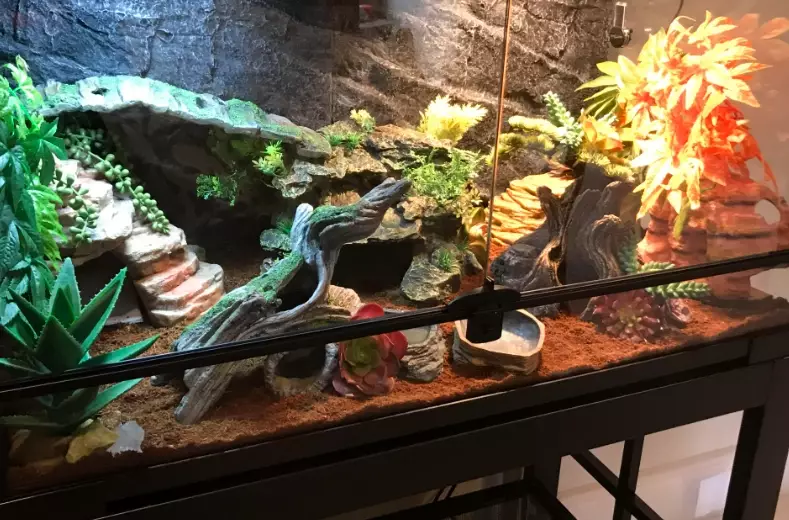
- Glass Aquariums (20-gallon long): The most common. Readily available, good for viewing. The big downside? They suck at holding heat and humidity. You'll need a tight-fitting screen lid (clips are a must to prevent escapes).
- Front-Opening PVC Enclosures: My professional preference. Brands like Zen Habitats or custom ones hold heat and humidity far better, open from the front (less stressful for the gecko), and look sleek. They cost more upfront but are more efficient long-term.
- Plastic Storage Tubs (Sterilite, Rubbermaid): A fantastic, budget-friendly option, especially for quarantine or breeding racks. You need to drill small holes for ventilation and install a mesh panel for a heat lamp. It's not pretty, but it's highly functional.
Whatever you choose, ensure it has a secure lid. Leopard geckos are escape artists.
Essential Equipment for Your White Leopard Gecko Tank
Here’s your shopping list. Don't skip items; each serves a critical purpose.
| Category | Specific Item & Purpose | My Personal Recommendation / Note |
|---|---|---|
| Heating | Under Tank Heater (UTH) or Heat Mat: Placed under ONE SIDE of the tank to create a warm floor. Essential for digestion. Thermostat: NON-NEGOTIABLE. Plugs between the UTH and wall to regulate temperature, preventing burns. |
Use a UTH sized for 1/3 of the tank floor. Zoo Med or Fluker's brands are reliable. For a thermostat, the Inkbird ITC-308 is a budget-friendly workhorse. Never use a heat rock. |
| Lighting & Day/Night Cycle | Simple LED or low-wattage lamp: For a day/night cycle (12 hours on, 12 off). Optional: Low-output UVB Light (T5 5.0 or T8 5.0): Growing evidence suggests benefits for gecko health, but it requires careful setup. |
A basic desk lamp with an LED bulb works. If using UVB, ensure it's linear, not compact, and provide plenty of shaded hides. Research from the Journal of Herpetological Medicine and Surgery supports cautious UVB use. |
| Monitoring | Two Digital Thermometer/Hygrometer Combos: One for the warm end, one for the cool end. Analog/dial types are notoriously inaccurate. | Govee or Zoo Med digital probes. Stick them at ground level where your gecko lives, not up on the glass wall. |
| Substrate (Flooring) | For Beginners/Juveniles: Paper towel, slate tile, or non-adhesive shelf liner. For Experienced Keepers: A deep, soil/sand/clay mix for a naturalistic or bioactive setup. |
Start simple. Paper towel is safest and easiest to monitor health. I personally dislike calci-sand or pure sand—impaction risk is real, despite marketing. |
| Hides & Security | Warm Hide: Placed over the UTH. Cool Hide: Placed on the unheated side. Humid Hide: A sealed hide with damp sphagnum moss or paper towel inside for shedding. |
Three is the magic number. The humid hide can be a simple plastic container with a hole cut in it. Ensure all hides are snug and have a single, small entrance. |
| Other Essentials | Shallow Water Dish: Always with fresh water. Calcium Dish: A small bottle cap with pure calcium carbonate (without D3) left in the tank. Decor: Flat rocks, fake/real plants, cork bark for clutter and exploration. |
The water dish goes on the cool side. Clutter is key—an empty tank is a stressed gecko. It makes them feel exposed. |
The Biggest Mistake I See: People buy a "kit" from a pet store. These almost always include dangerous or useless items: colored night lights (disrupt their cycle), heat rocks (cause severe burns), and incorrect substrate. You're better off buying piece by piece.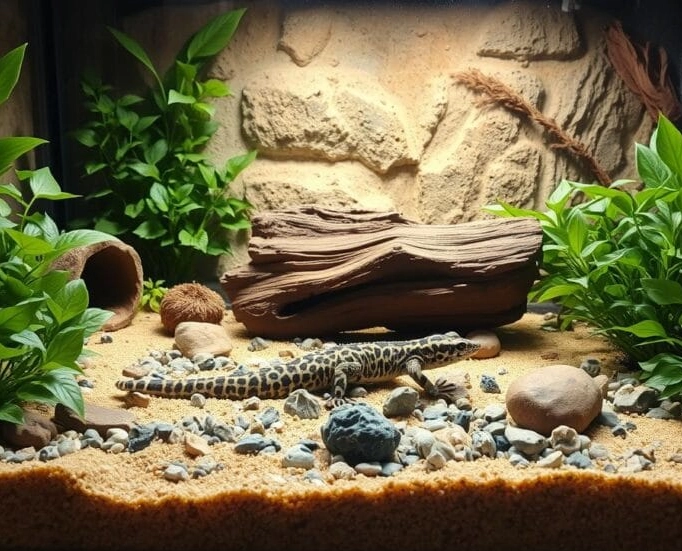
Step-by-Step Tank Assembly & Layout
Let's build a tank for a hypothetical gecko, "Snow." We're using a 20-gallon long glass tank.
- Clean & Place the Tank: Wash the tank with warm water (no harsh chemicals). Place it on a sturdy, level stand. Never place the UTH on an uneven surface.
- Install Heating: Apply the UTH to the OUTSIDE bottom glass, on one end. Plug it into the thermostat. Place the thermostat probe INSIDE the tank, directly on the glass over the UTH, and secure it with a dab of hot glue or tape. Set the thermostat to 88-92°F (31-33°C). This gives a surface temperature of about 90°F.
- Add Substrate: Lay down your chosen substrate. If using tile or liner, cut it to fit. For paper towel, use 2-3 layers.
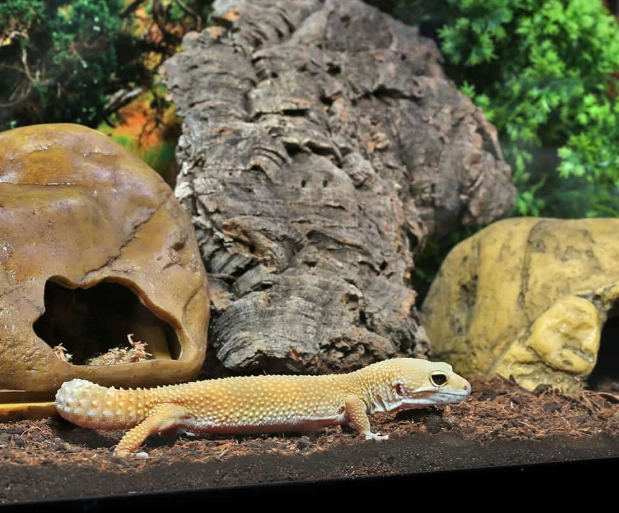
- Place Hides & Decor: Put the warm hide directly over the heated spot. Place the cool hide on the opposite end. Put the humid hide in the middle or on the cool end. Fill the remaining space with decor—cork flats, fake plants, a flat basking rock under the heat lamp if using one.
- Add Dishes & Final Touches: Place the water dish on the cool side. Put the calcium dish in a corner. Install your digital thermometers: one probe near the warm hide entrance, one by the cool hide.
- Test & Wait: Turn everything on and let the tank run for at least 24-48 hours before introducing your gecko. Monitor the temperatures closely. Adjust the thermostat as needed. The cool side should settle between 70-77°F (21-25°C).
Daily & Weekly Maintenance Routine
A clean tank is a healthy tank. Here's the routine that prevents bigger problems.
Daily: Spot clean feces and urates. Check water dish, refill with fresh water. Glance at thermometers to ensure gradients are stable.
Weekly: Remove and replace paper towel substrate (if using). Clean water and calcium dishes with reptile-safe disinfectant (like F10SC or diluted vinegar). Wipe down decor if soiled.
Monthly: Full deep clean. Remove everything, wash the tank and all items with reptile-safe disinfectant, rinse thoroughly, and completely replace substrate.
Watch your gecko's behavior. Are they using all hides? Are they active in the evening? Consistent hiding on the cool side might mean it's too hot. Glass surfing often means stress from an inadequate setup.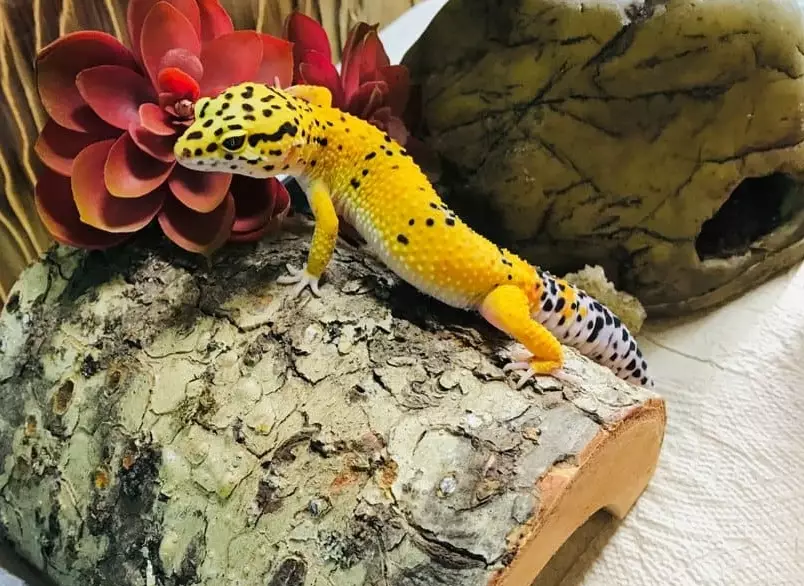
Top 5 Costly Setup Mistakes (And How to Avoid Them)
- No Thermostat: This can literally cook or freeze your gecko. A UTH plugged directly into the wall can reach over 110°F. Fix: Buy a thermostat before you buy the gecko.
- Tank Too Small: A 10-gallon offers no gradient. Stress and thermal regulation issues are guaranteed. Fix: Start with a 20-gallon long minimum.
- Wrong Substrate: Loose sand, especially for juveniles, leads to fatal impaction. Fix: Use paper towel, tile, or a proper soil mix if going naturalistic.
- Insufficient Hides/Clutter: An open tank is terrifying for a prey animal. Fix: Three hides minimum, plus visual barriers like plants and cork.
- Misplaced Heat Source: Heat lamps that dry out the tank or heat rocks that burn. Fix: Primary heat should be a regulated UTH for belly heat. Overhead heat is secondary and must be controlled.
Thinking Ahead: Bioactive & Advanced Setups
Once you've mastered the basics, a bioactive setup can be a rewarding project. It uses a deep drainage layer, a soil substrate, clean-up crews (springtails and isopods), and live plants to create a self-cleaning, natural ecosystem. It's more work upfront but less daily maintenance long-term. It's also the best way to naturally maintain humidity for shedding. Resources like the Bioactive Dude on YouTube or the Biodude's website are great places to start researching. Don't jump into this as a beginner.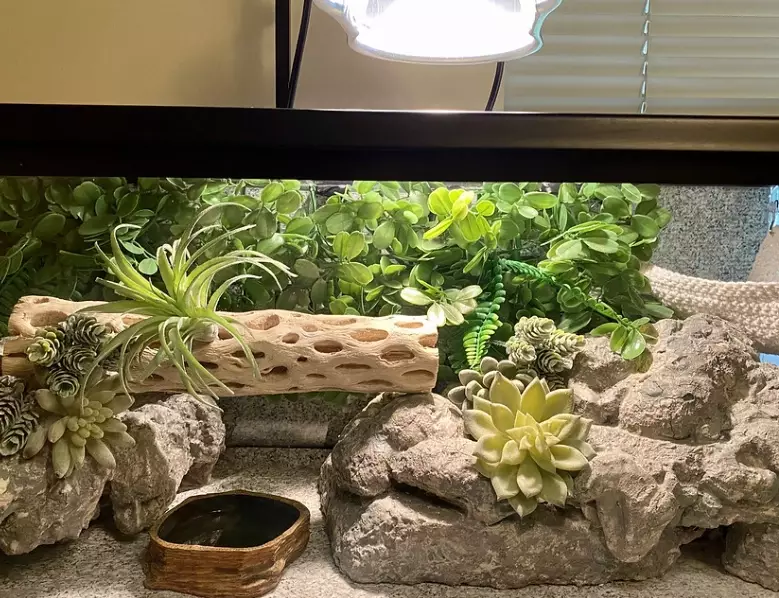
Reader Comments