Let's cut to the chase. If you're asking whether your leopard gecko (often called a spotted gecko) needs a heat lamp, the short answer is no, not necessarily a lamp. But—and this is the critical part—they absolutely require a dedicated, reliable heat source. The real question isn't about lamps; it's about providing the correct belly heat they need to survive and thrive. Getting this wrong is the single biggest mistake I see new owners make, and it leads to a host of health problems like lethargy, refusal to eat, and severe digestive issues. I've been keeping and breeding leopard geckos for over a decade, and I can tell you that understanding their heating needs is non-negotiable.
What's Inside This Guide
Why Belly Heat is Non-Negotiable for Leopard Geckos
Leopard geckos are ectotherms. They don't generate their own body heat like we do. They rely on their environment to regulate their internal temperature. This isn't just about comfort; it's about basic biological function. Their metabolism, digestion, immune system, and overall activity levels are directly tied to temperature.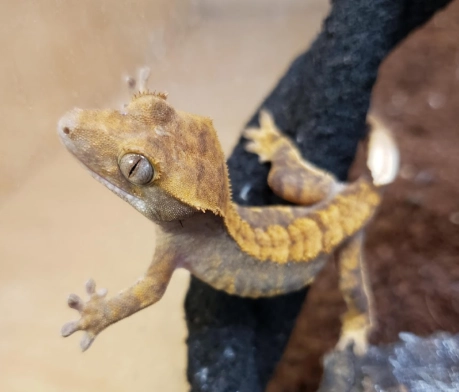
Think about it this way. In their native rocky, arid habitats from Afghanistan to Northwest India, they warm themselves by basking on sun-heated rocks and ground. That heat comes from below. Their bodies are adapted to absorb that belly heat or contact heat to kickstart their digestive processes. A common misconception is that any heat source will do. It won't. Overhead heat from a lamp warms the air and the gecko's back, but it often fails to provide the deep, penetrating warmth their gut needs to process food. This is why a gecko under just a heat lamp might seem warm but still regurgitate its meals or become impacted.
Key Takeaway: Leopard geckos require an under-tank heat source (UTH) to mimic the natural, conductive heat from the ground. This is their primary need. Ambient air temperature is secondary but still important.
Heat Mat vs. Heat Lamp: The Great Debate (With a Clear Winner)
So, if a heat lamp isn't ideal as the primary source, what should you use? Let's break down the two main contenders.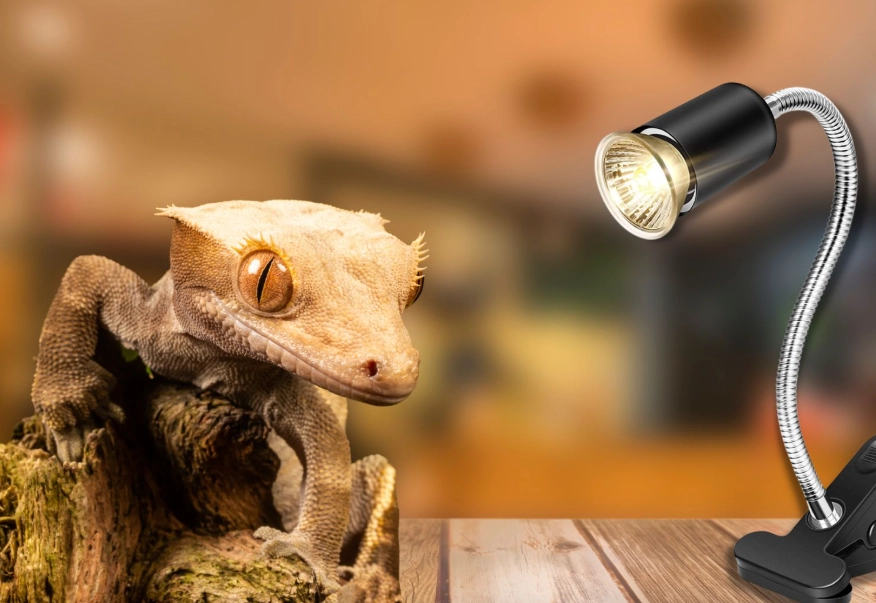
The Undertank Heating Pad (UTH): The Essential Workhorse
This is my go-to recommendation for every single leopard gecko enclosure. A high-quality heating pad, attached to the outside bottom of the tank (never inside!), should cover roughly one-third of the floor space. It's plugged into a thermostat—this is not optional. A thermostat controls the pad's output to prevent burns and maintain a precise temperature.
Why it wins: It provides the direct, consistent belly heat geckos are built for. It's energy-efficient, silent, and doesn't disrupt their day/night cycle since it produces no light. It creates a perfect localized hot spot for digestion.
The Heat Lamp: The Situational Tool
Heat lamps (incandescent bulbs, ceramic heat emitters) have their place, but usually as a supplement, not the main event.
You might need a low-wattage ceramic heat emitter (CHE) or a deep heat projector (DHP) in addition to a heat mat if:
- Your room temperature consistently drops below 65°F (18°C). The UTH heats the floor, but a CHE can help maintain safe ambient air temps.
- You have a very large enclosure (over 40 gallons) where a single UTH struggles to create a warm enough air temperature on the hot side.
- You live in an exceptionally cold climate and struggle to keep the overall enclosure warm.
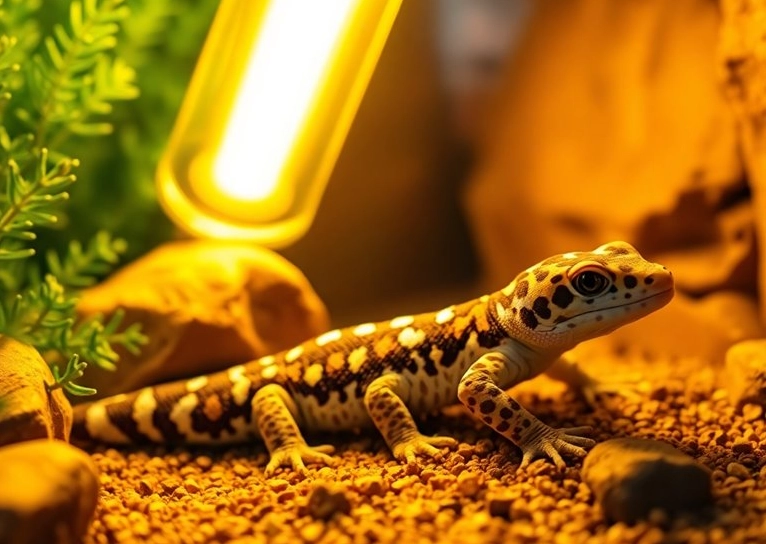
The mistake is using a bright white or colored heat lamp as the sole source. It dries out the air excessively, often fails to provide adequate belly heat, and can stress a nocturnal animal if used at night.
Personal Experience: Early on, I used a red "night heat" bulb for a gecko. He became lethargic and stopped eating. I switched to a UTH with a thermostat, and within two days, he was back to his active, hungry self. The bulb was heating the air, but his belly was cold. Lesson learned the hard way.
How to Set Up the Perfect Temperature Gradient
Your goal isn't to make the whole tank toasty warm. You need a temperature gradient. This means a warm end and a cool end, allowing your gecko to self-regulate by moving between them.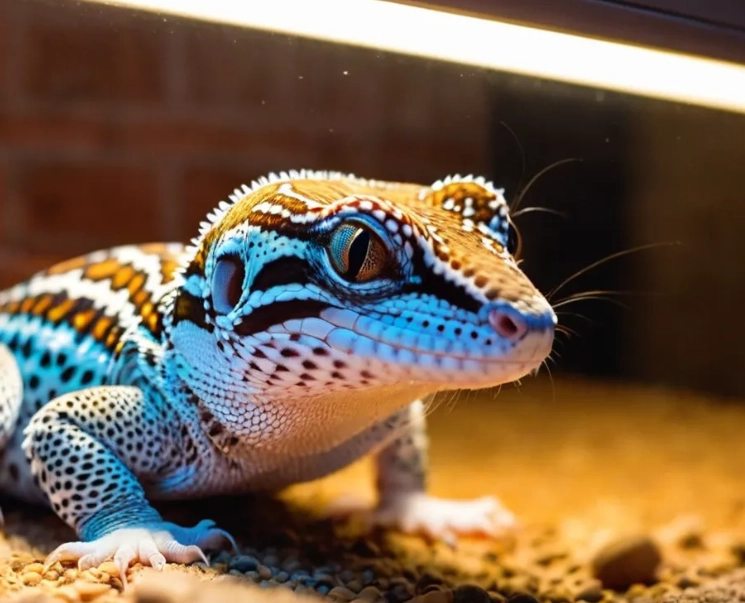
Here’s the step-by-step setup I recommend to every owner:
- Place the Heating Pad: Attach the UTH to the outside bottom of the glass, on one side of the tank. It should cover 1/3 of the floor area.
- Use a Thermostat Probe: Place the thermostat probe inside the tank, directly on the glass floor over the center of the heating pad. Secure it with a dab of hot glue or aquarium-safe silicone so it doesn't move. This measures the temperature your gecko actually experiences.
- Set the Temperature: Set the thermostat to achieve a surface temperature of 88-92°F (31-33°C) on that spot. This is the "hot spot." Use a digital infrared temperature gun to verify this. Don't guess.
- Create the Cool Side: The opposite side of the tank should have no direct heat source. Aim for ambient temperatures of 75-80°F (24-27°C) there.
- Add a Hide on Each Side: Put a humid hide in the middle or cool side, and a dry hide directly over the hot spot. Your gecko will digest in the warm hide and thermoregulate as needed.
The gradient is crucial. Without a cool retreat, your gecko can overheat and become stressed.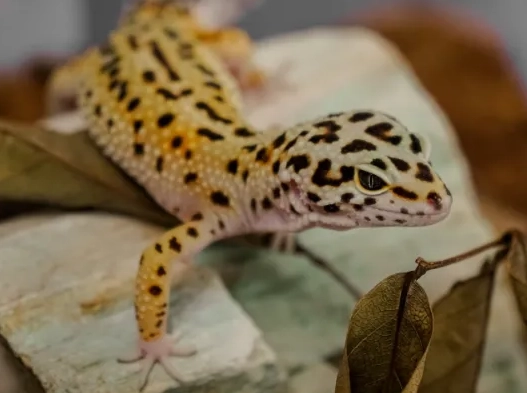
5 Common Heating Mistakes and How to Fix Them
I've seen these over and over. Avoiding them will save you and your gecko a lot of trouble.
Mistake 1: Using a Heat Rock. These are notoriously dangerous. They often have hot spots that can cause severe thermal burns on a gecko's belly. Fix: Throw it away. Use a regulated UTH instead.
Mistake 2: No Thermostat. Plugging a heat mat directly into the wall is a recipe for disaster. An unregulated mat can reach temperatures over 110°F+ and cause burns or worse. Fix: Buy a reliable on/off or pulse thermostat. It's as essential as the heat mat itself.
Mistake 3: Measuring Air Temperature Only. You check a stick-on thermometer on the side wall and it reads 85°F, so you think you're fine. But the floor your gecko is lying on could be 100°F or 70°F. Fix: Use a digital thermometer/hygrometer for ambient readings, and always use an infrared temperature gun to check the actual floor surface temperature.
Mistake 4: Too Small of a Heat Mat. A tiny 4"x5" mat under a 20-gallon tank creates a postage-stamp-sized warm area. Your gecko can't get its whole body on it to warm its core. Fix: The mat should cover about 1/3 of the tank's floor space. For a standard 20-gallon long tank (30"x12"), an 11"x11" mat is a good starting point.
Mistake 5: Assuming Room Temperature is Enough. "My house is 72 degrees, that's warm, right?" For a leopard gecko, that's a uniformly cool environment with no digestive hot spot. They will become sluggish and stop eating. Fix: Provide that directed belly heat gradient as described above.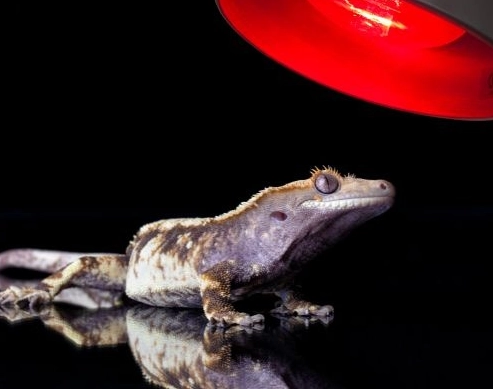
Your Heating Questions, Answered
My leopard gecko spends all its time in the warm hide. Is that okay?
It's perfectly normal, especially after eating. They need that heat to digest. As long as it occasionally comes out to explore, drink, and eventually defecate (usually in the cool side), this behavior is fine. It becomes a concern only if it never leaves the warm hide, which could indicate the cool side is too cold or the overall tank is stressful.
Do I need to turn the heat off at night?
No. In the wild, the ground retains heat after sunset. A sudden drop to room temperature is stressful and halts digestion. Your heat source should run 24/7. If you're using a UTH with a thermostat, it will simply maintain the set temperature day and night. If you're supplementing with a ceramic heat emitter for ambient warmth, that should also stay on. The key is no light at night.
What wattage heating pad do I need for a 20-gallon tank?
Focus on the size, not the wattage. A manufacturer's "20-gallon" size mat is designed to cover the appropriate area. The wattage just determines how hard it has to work to reach temperature. A higher-wattage mat on a thermostat will cycle on and off less frequently than a lower-wattage one struggling to keep up. For most brands, an 8-watt or 10-watt pad in the correct physical dimensions is sufficient for a standard 20-gallon long tank.
Can I use a heat lamp instead of a mat if I put a flat stone under it?
This is a clever thought, but it's inconsistent and inefficient. The stone will only be warm when the lamp is on and directly shining on it. It cools quickly. It also creates a very hot surface directly under the lamp and a cool surface just inches away. A UTH provides even, consistent heat across the entire covered area, which is what your gecko needs for reliable thermoregulation. The stone-under-lamp method is a hack that often falls short.
My gecko is digging in the cool side. Does this mean it's too hot?
Not necessarily. Digging is natural behavior. However, if it's constantly trying to burrow under the substrate on the cool side, it might be seeking even cooler temperatures. First, verify your temperatures with a temp gun. Is the hot spot over 95°F? Is the cool side above 82°F? If so, adjust your thermostat down slightly. Also, ensure the cool hide is truly snug and dark, offering a sense of security as well as coolness.
So, back to the original question: does a spotted gecko need a heat lamp? The definitive answer is no, they need a properly regulated under-tank heating pad more than anything else. A lamp might play a supporting role in specific situations, but the UTH is the undisputed cornerstone of leopard gecko heating. Investing in that setup—mat, thermostat, and temp gun—isn't just buying equipment; it's providing the fundamental environmental cue that tells your gecko's body, "It's safe to eat, digest, and live well." Skip the guesswork, get the right gear, and you'll have a vibrant, healthy pet for years to come.
Reader Comments