In This Guide
- What Exactly Is a Mud Turtle, Anyway?
- A Quick Tour of Common Mud Turtle Species
- Setting Up the Perfect Mud Turtle Home
- Feeding Your Mud Turtle: It's Not Just Turtle Pellets
- Health and Common Problems
- Frequently Asked Questions (The Real Ones People Ask)
- Wrapping It Up: Is a Mud Turtle Right for You?
Let's be honest, when most people think of pet turtles, they picture those little red-eared sliders in the plastic bowl with the palm tree. But if you've dug a bit deeper (pun intended), you've probably stumbled upon the mud turtle. And now you're curious. I get it. I was in your exact spot years ago, scrolling through forums late at night, trying to figure out if this quirky, often overlooked turtle was the right fit for my home.
It wasn't an easy decision. Information felt scattered, and some care sheets seemed to contradict each other. That's why I wanted to put this guide together—not as a dry, scientific paper, but as a real talk conversation from someone who's been through the mud (again, pun intended) and back with these fascinating creatures.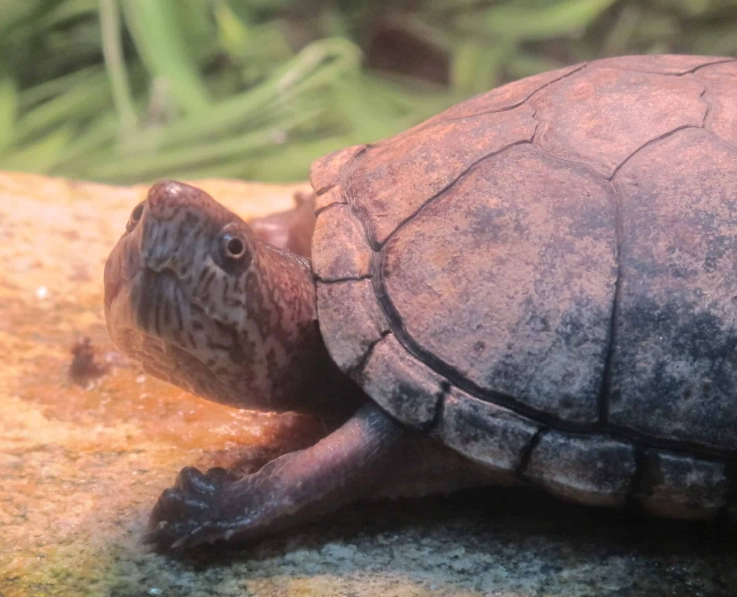
A mud turtle isn't just a smaller version of a common aquatic turtle. They have their own personality, their own specific needs, and honestly, their own brand of charm. Getting it right from the start makes all the difference for their health and your enjoyment.
We're going to cover everything. Not just the basic "feed it and clean the tank" stuff, but the nitty-gritty details that actually matter when you're living with one. What's their personality really like? How do you set up a tank that mimics their natural habitat so they feel at home? What are the common mistakes new owners make? We'll get into all of that.
What Exactly Is a Mud Turtle, Anyway?
First things first, let's clear up the name. "Mud turtle" usually refers to turtles in the genus Kinosternon. They're part of the larger family Kinosternidae, which also includes musk turtles. Sometimes people use the names interchangeably, which can be confusing. For this guide, we're focusing on the true mud turtles.
You can spot a mud turtle by a few key features. They tend to have highly domed, dark shells, often brown or black. Their plastron (the bottom shell) is pretty unique—it's hinged! Not as dramatically as a box turtle's, but they can pull it up tight against the top shell for protection. Their skin is usually dark with lighter speckles or stripes, and they have these little barbels (whisker-like projections) on their chin. It's a great look.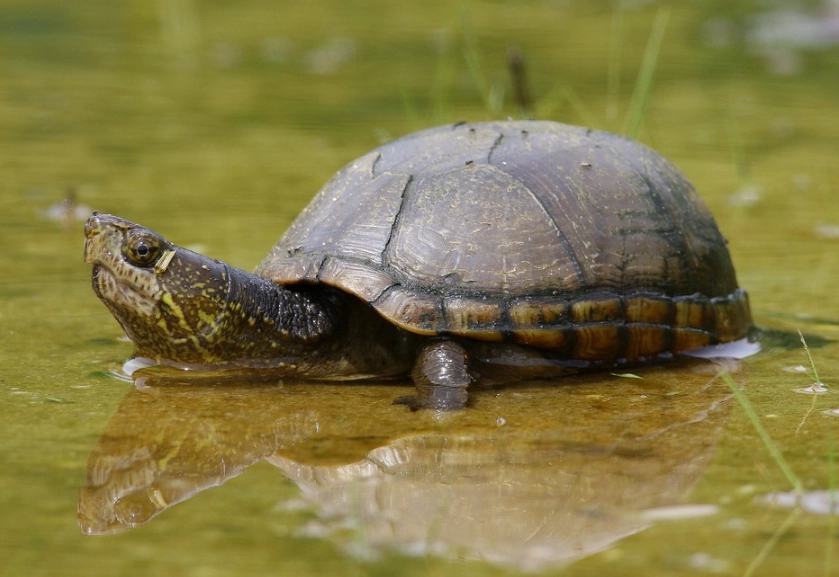
Size is a big plus for many owners. Most mud turtle species stay quite small, typically between 3 to 5 inches (8 to 13 cm) in shell length as adults. This makes them a more manageable pet turtle compared to some species that can grow over a foot long.
Small size, big personality. That's the mud turtle motto.
In the wild, you'll find mud turtles in slow-moving or still bodies of water with soft bottoms—think ponds, marshes, ditches, and yes, muddy streams. They're not strong, graceful swimmers like sliders. They're more like the bottom-walkers of the turtle world, prowling along the substrate looking for food. They spend a surprising amount of time buried in that mud or leaf litter, which is where their name truly comes from.
A Quick Tour of Common Mud Turtle Species
Not all mud turtles are the same. Knowing which species you have (or are looking at) is crucial because their care can have subtle differences. Here's a breakdown of the ones you're most likely to encounter in the pet trade or in care discussions.
| Species (Common Name) | Scientific Name | Average Adult Size | Key Distinguishing Features & Notes |
|---|---|---|---|
| Eastern Mud Turtle | Kinosternon subrubrum | 3-4 inches (7-10 cm) | Very common in the pet trade. Smooth, dark shell, plain yellowish plastron. One of the most adaptable species for captivity. |
| Mississippi Mud Turtle | Kinosternon subrubrum hippocrepis | 3-5 inches (8-13 cm) | A subspecies of the Eastern. Often has two distinct light stripes on the head. Readily available and hardy. |
| Yellow Mud Turtle | Kinosternon flavescens | 4-5 inches (10-13 cm) | Throat and neck are distinctly yellow. Requires very clean water and can be slightly more sensitive. |
| Striped Mud Turtle | Kinosternon baurii | 3-4 inches (7-10 cm) | Has three light stripes running down its head. Smaller and often more secretive. A personal favorite for its markings. |
I started with an Eastern mud turtle. It was sold to me just as a "common mud turtle," and it took me a while to positively ID it. That's why I recommend snapping a clear photo if you're unsure and checking resources like the IUCN Red List or the Reptile Database to understand their natural range and status. It connects you to the animal in a different way.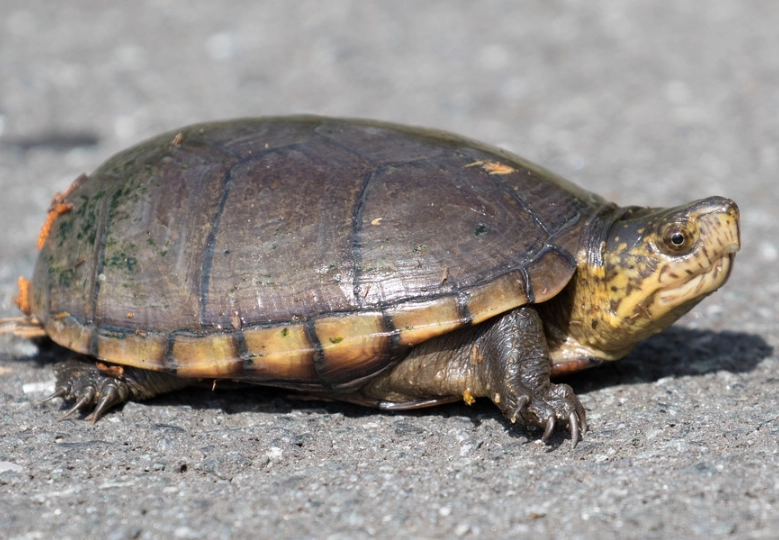
Important Note on Sourcing: Always, always try to acquire a mud turtle from a reputable breeder, not taken from the wild. Captive-bred turtles are healthier, less stressed, and it's better for wild populations. Some species have protections, so know your local laws. The U.S. Fish & Wildlife Service website is a good starting point for regulations in the United States.
Setting Up the Perfect Mud Turtle Home
This is where most people get it wrong, and I did too at first. You can't just plop a mud turtle into a basic fish tank with a rock. Their setup needs to reflect how they live in the wild.
The Tank: Size and Water
Bigger is always better. The old "10 gallons per inch of shell" rule is a bare minimum, and for an active animal, it feels cramped. For a single adult mud turtle, I'd start at a 40-gallon breeder tank (that's the wider, shorter version). It gives them more floor space to roam, which they use more than water column height.
Water depth is a common point of confusion. Unlike a painted turtle that loves to swim, a mud turtle is a poor swimmer. They need to be able to easily touch the bottom and push their heads above water without struggling. A good rule is water depth no more than 1.5 to 2 times their shell length. For a 4-inch turtle, that's 6-8 inches of water. Deeper than that, and they can drown if they can't find a resting spot. I learned this the hard way with a too-tall decorative piece—the poor thing was exhausted trying to get air.
Pro Tip: Create a sloping bottom. Use larger, flat stones or a piece of slate to build up one end of the tank gradually. This gives you a deep end for a good filter current and a very shallow end where the turtle can sit completely submerged but with its head easily out. They love this.
Filtration: Non-Negotiable
Turtles are messy. A filter rated for an aquarium twice the size of your tank's water volume is the standard advice, and it's true. Canister filters are the gold standard because they offer superior mechanical, chemical, and biological filtration. A Hang-On-Back (HOB) filter can work for a smaller setup, but you'll be cleaning it constantly.
The goal is crystal clear water with minimal nitrates. Poor water quality is the number one cause of health issues like shell rot and skin infections in captive mud turtles. I run an external canister filter, and the difference in water clarity and my turtle's activity level was night and day compared to my first underpowered internal filter.
Land Area: The Basking Spot
Yes, they need to get completely out of the water. Even though they love the mud, they need a dry, warm spot to regulate their body temperature and dry their shell to prevent fungal growth. This isn't optional.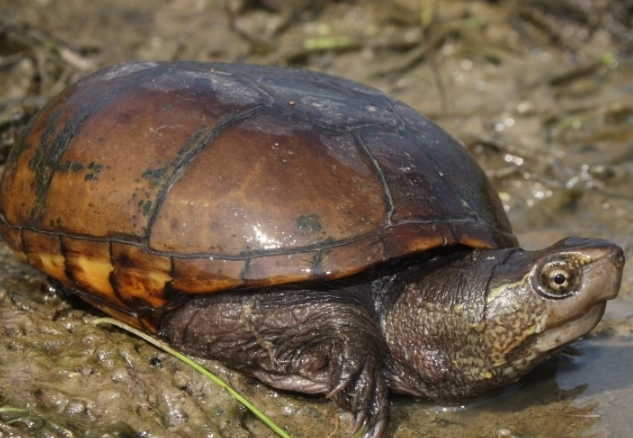
The basking area should be large enough for the turtle to sit comfortably fully out of the water. You can use commercial turtle docks, stack smooth river rocks, or use a large piece of driftwood. Above it, you need two lights:
- A Heat Lamp: This creates the basking temperature. You want the surface of the basking spot to be around 85-90°F (29-32°C). Use a digital thermometer with a probe to check this—don't guess.
- A UVB Lamp: This is critical. Turtles need UVB light to synthesize vitamin D3, which allows them to use the calcium in their diet. Without it, they develop Metabolic Bone Disease (MBD), a horrible softening and deforming of the shell and bones. Use a linear fluorescent or compact UVB bulb designed for reptiles, replaced every 6-12 months as the UV output decays.
I made the UVB mistake early on. I thought the "full spectrum" plant light I had was enough. It wasn't. My turtle's shell growth started to look slightly uneven before a vet caught it. A lesson learned.
Substrate and Decor
This is the fun part. Bare bottom tanks are easy to clean but offer zero enrichment. Mud turtles are foragers. They love to sift through sand or very fine, smooth gravel looking for food. A sand substrate is ideal—it's natural, and they can bury themselves in it. Just make sure it's aquarium-safe sand, rinsed thoroughly.
Add hiding places. PVC pipes cut in half, clay pots on their side, or commercial reptile hides give them security. Plants are tricky because turtles will often uproot or eat them. Anubias or Java fern attached to driftwood or rocks can sometimes survive. Otherwise, use sturdy silk plants.
Feeding Your Mud Turtle: It's Not Just Turtle Pellets
In the wild, a mud turtle's diet is incredibly varied. They're opportunistic omnivores, eating whatever they can catch or find. Replicating this variety is key to good health in captivity.
A high-quality commercial turtle pellet should form the staple of their diet. Look for brands with a good protein source (like fish or shrimp meal) listed first and added vitamins and minerals. But that's just the base.
You need to supplement regularly with live or frozen foods. This is what makes them thrive. Here's a list of favorites I rotate through:
- Protein Sources: Earthworms (absolute favorite), bloodworms, blackworms, chopped nightcrawlers, small crickets, dubia roaches (appropriately sized), frozen/thawed shrimp or krill, very occasional bits of cooked, unseasoned fish or chicken (as a rare treat).
- Plant Matter: This is often overlooked. Offer leafy greens like dandelion greens, collard greens, and turnip greens. Avoid spinach and kale in large amounts due to oxalates. They might also nibble on duckweed or other aquatic plants in their tank.
How much and how often? For a growing juvenile, feed small amounts daily. For a healthy adult, feeding every other day or 4-5 times a week is sufficient. Offer an amount of food roughly the size of the turtle's head (excluding the neck). Overfeeding leads to obesity, pyramiding of the scutes (lumpy shell growth), and pollutes the water faster.
I feed in a separate, small plastic container filled with a few inches of tank water. It keeps the main tank cleaner and lets me monitor exactly how much the turtle eats. Plus, it's fun to watch them hunt the worms.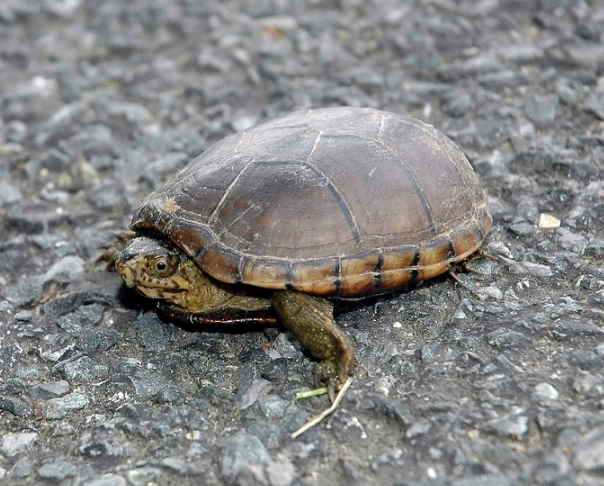
Health and Common Problems
A well-cared-for mud turtle can live for decades—seriously, 20-30 years or more is possible. Their health hinges on the environment you create. Here are the big things to watch for.
Shell Rot
This is a bacterial or fungal infection of the shell. It looks like white, fuzzy, or pitted spots on the shell, sometimes with a foul smell. It's almost always caused by poor water quality or an inadequate basking area that doesn't let the shell dry completely. Treatment involves improving husbandry (clean water, proper basking), and in advanced cases, a vet may need to prescribe topical or injectable antibiotics.
Metabolic Bone Disease (MBD)
As mentioned, this comes from a lack of UVB light and/or dietary calcium. The shell becomes soft and malformed, the jaw may soften making eating difficult, and the legs may swell. It's preventable. Ensure a strong UVB source and dust food with a calcium powder (without vitamin D3) a couple of times a week.
Respiratory Infections
Signs include lethargy, loss of appetite, wheezing, bubbles from the nose or mouth, and swimming lopsided (one lung affected). Often caused by water that's too cold or drastic temperature fluctuations. Maintaining a stable water temperature in the mid-70s°F (around 24°C) and a proper basking gradient is crucial. This requires a vet visit for antibiotics.
Find a vet before you have an emergency. Not all vets see reptiles.
Regular observation is your best tool. Know what your turtle's normal behavior is—how active it is, how much it eats—so you can spot changes early.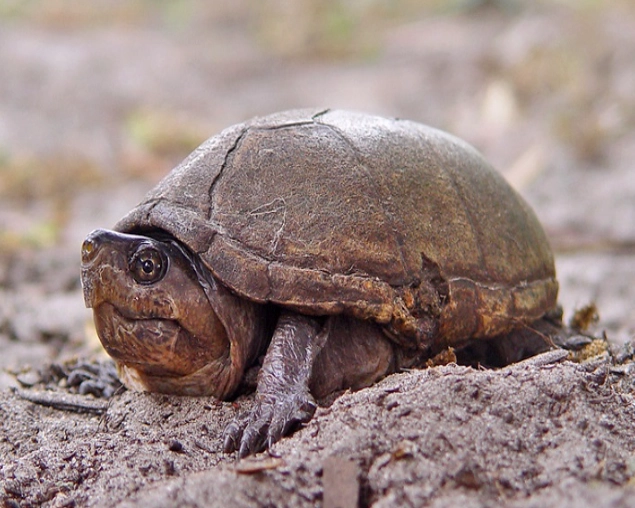
Are mud turtles good pets?
They can be wonderful pets for the right person. They're small, relatively low-maintenance compared to a dog, and fascinating to observe. However, they are not cuddly, they require a significant initial investment in equipment, and they are a long-term commitment. They're a "watch and learn" pet, not an interactive one. If you want an animal that shows affection, look elsewhere.
Do mud turtles bite?
They can, but it's usually out of fear or mistaken identity (thinking your finger is food). They have strong jaws for their size, and a bite can pinch and draw blood. Handle them minimally, always support their body fully, and never approach from above (like a predator). Most mud turtles become tolerant of gentle handling over time but rarely "enjoy" it.
Can I keep more than one mud turtle together?
This is risky. Turtles are not social animals. Cohabitation, especially in a tank that's too small, often leads to bullying, competition for food and basking spots, and injuries. Males can be particularly aggressive towards each other. If you attempt it, you need a massive tank (75+ gallons) with multiple distinct basking areas, hiding spots, and feeding stations, and you must be prepared to separate them at the first sign of aggression. For beginners, one turtle per enclosure is the safest rule.
Why is my mud turtle always hiding/buried?
Because that's what they do! In the wild, hiding is how they avoid predators and ambush prey. A mud turtle that is constantly buried or hiding during the day is often just behaving normally, especially if it's new to your home. If it's also refusing food and this behavior is sudden, then it could indicate stress or illness. But generally, don't expect a basking turtle spectacle 24/7. Their activity peaks at dawn, dusk, and during feeding.
What's the difference between a mud turtle and a musk turtle?
They're cousins in the same family. Musk turtles (genus Sternotherus) are often smaller, have more pronounced stripes on the head, and are famous for releasing a musky odor from glands when frightened (mud turtles can do this too, but it's less potent). Care requirements are very similar. The common "stinkpot" turtle is a musk turtle, not a mud turtle.
Wrapping It Up: Is a Mud Turtle Right for You?
Deciding to bring a mud turtle into your life shouldn't be an impulse. Look at the checklist below and be honest with yourself.
You might be ready for a mud turtle if you:
- Are fascinated by aquatic reptile behavior.
- Have the space and budget for a proper 40+ gallon tank setup with strong filtration, heating, and UVB lighting.
- Are committed to weekly partial water changes and filter maintenance.
- Can provide a varied diet beyond just pellets.
- Understand this is a pet you'll likely have for most of your adult life.
- Have access to an exotic veterinarian.
If you checked those boxes, then welcome to the club. It's a rewarding hobby. There's a quiet joy in watching your little ecosystem thrive and seeing your turtle exhibit natural behaviors in a home you built for it.
Start by researching reputable breeders. Join online forums (but take advice with a grain of salt). Get your tank set up and cycled before you bring the turtle home. It makes the transition so much smoother.
And remember, every mud turtle has its own personality. Some are bold, some are shy. Some are voracious eaters, some are picky. Be patient, observe, and adjust. That's the real secret to success with these incredible little creatures.
Reader Comments