My Frog Care Highlights
You know that frog. The one with the big, dopey smile and the bright green skin that looks almost plastic. The one that seems to appear on every poster about Australia's wildlife, usually clinging to a leaf or someone's window. That's the Australian Green Tree Frog, and honestly, it's probably one of the most charming amphibians on the planet. But there's a lot more to this creature than just its photogenic face. Whether you're thinking of getting one as a pet (they're surprisingly popular) or you just want to know more about the wild ones singing on your porch, you've come to the right place.
I remember the first time I saw one in person, not in a tank but in the wild up in Queensland. It was plonked on a downpipe after a summer rain, looking profoundly content and utterly unbothered by my presence. That's their vibe. Chill. Adaptable. A bit goofy. Over the years, through keeping them and talking to breeders and herpetologists, I've learned what makes Litoria caerulea tick. And sometimes, what makes them a bit of a pain to care for—nobody talks about how messy they can be!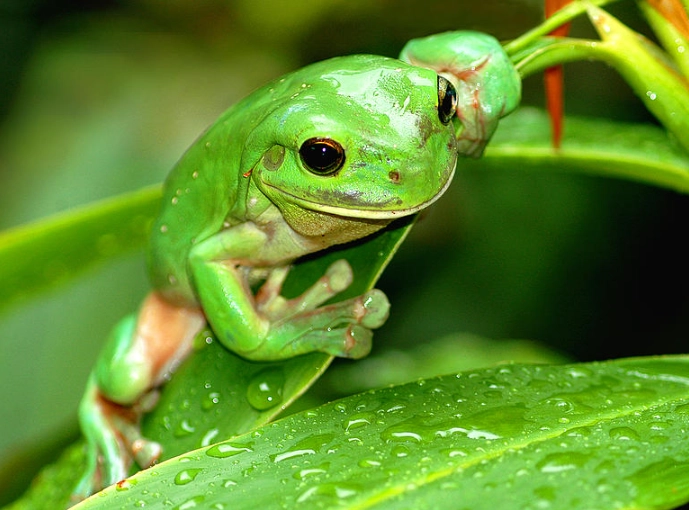
This guide is going to dig into everything. We'll start with what they are, where they come from, and why they're so unique. Then, if you're the hands-on type, we'll get into the nitty-gritty of keeping one healthy and happy in your home. We'll bust some myths, talk about common problems (yes, including that weird brown color they sometimes turn), and answer the questions you're actually typing into Google.
What Exactly is an Australian Green Tree Frog?
Let's clear up the name game first. This frog has more aliases than a secret agent.
- Australian Green Tree Frog: The straightforward, geographical name. Most commonly used.
- White's Tree Frog: This name is used more often, especially in the pet trade. It honors John White, who first described the species for European science in 1790. Honestly, in pet circles, you'll hear "White's" more than "Australian."
- Dumpy Tree Frog: This one is spot on.
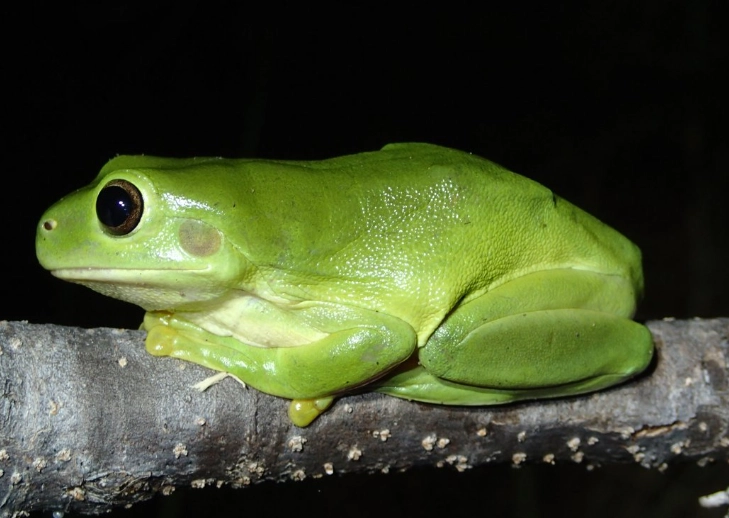
Their scientific name is Litoria caerulea. "Litoria" is a genus of tree frogs common in Australasia, and "caerulea" is Latin for blue. Blue? Yep, the first preserved specimens sent to Europe had a blueish tint, which is where the name stuck, even though live ones are famously green.
Quick Physical Rundown: Imagine a frog that looks like it's made of soft, plush rubber. They have a robust, almost portly body (hence "dumpy"), with smooth skin. Their most famous feature is the large, adhesive toe pads on each digit, perfect for climbing glass and sticking to vertical surfaces. Their eyes have a horizontal pupil, and they often have a permanent, gentle smile. Adults typically range from 4 to 4.5 inches (10-11.5 cm) in length, with females being slightly larger.
How long do these cheerful guys live? In the wild, life is tougher—maybe 5-8 years with predators and drought. But in captivity, with proper care, an Australian Green Tree Frog can easily live 15 years, sometimes pushing past 20. That's a long-term commitment, longer than many dogs! It's something a lot of impulse buyers at pet stores don't consider.
Three Core Things That Make Them Special
- The Secretion: Their skin produces peptides with mild antimicrobial and antiviral properties. It's a built-in defense mechanism. While not harmful to humans (always wash your hands before and after handling!), it's a fascinating bit of amphibian biochemistry. Don't believe the old wives' tale about them being "toxic"—they're not.
- The Climb: Those toe pads are a marvel of natural engineering. They use a combination of capillary adhesion and friction, allowing the frog to scale smooth surfaces with ease. Watching a White's Tree Frog methodically climb the glass of its terrarium is weirdly mesmerizing.
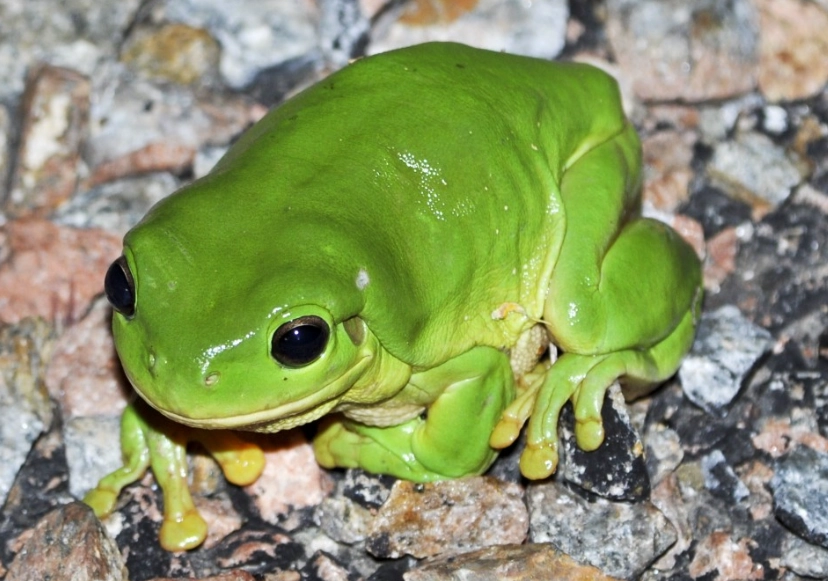
- The Voice: The call isn't a classic "ribbit." It's a slow, deep, repetitive "crawk-crawk-crawk" or a shorter "bark." It's not unpleasant, but a mature male in breeding condition can be surprisingly loud for its size. If you're a light sleeper and his tank is in your bedroom... you've been warned.
Where Do They Live? From the Wild to Your Home
In the wild, the Australian Green Tree Frog is a true survivor, found across northern and eastern Australia, and even in southern New Guinea. They're not picky. You'll find them in tropical rainforests, but also in dry woodlands, swamps, and most famously, around human habitation. They love water tanks, downpipes, outdoor toilets, and well-lit bathrooms. They've adapted brilliantly to living alongside us.
Their range is vast, but they follow a simple rule: access to water for breeding and plenty of insects to eat. During the dry season, they'll find a cool, damp hideaway—a tree hollow, a gap behind some siding—and enter a state of torpor, emerging with the rains. The Australian Museum has some great resources detailing their natural distribution and ecology, which is worth a look for the wildlife curious.
This adaptability is precisely why they do so well in captivity. They aren't as delicate as some tropical frogs. They can handle a wider range of conditions, which, I have to admit, makes them one of the better "beginner" tree frogs. I said "better," not "perfect." They still have specific needs.
Caring for Your Australian Green Tree Frog: A Step-by-Step Guide
Alright, so you've decided to bring one of these charismatic green guys home. Setting up before you get the frog is non-negotiable. A stressed frog in a temporary tub is a sad sight. Here's the real-world, no-fluff breakdown.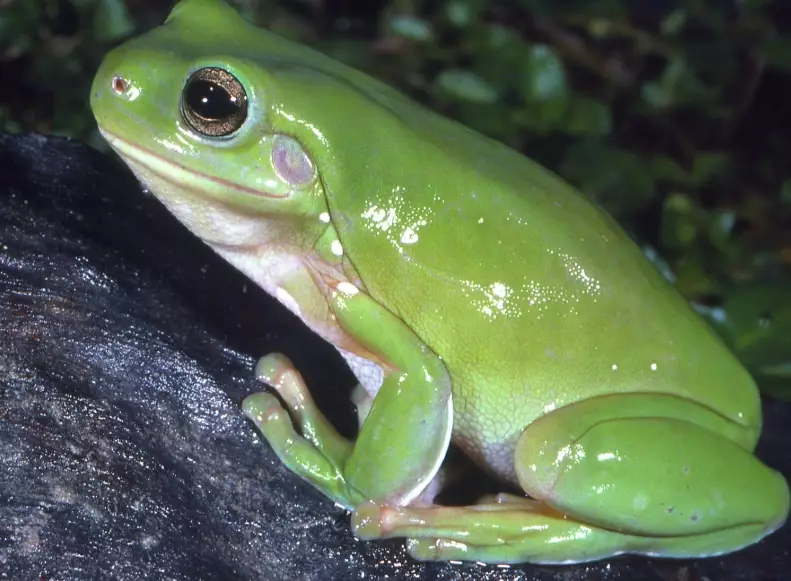
The Tank: Building a Miniature Jungle
A single adult frog needs a minimum of a 20-gallon tall tank. But bigger is always, always better. I personally wouldn't go smaller than 30 gallons for one. They use the space, especially the height. The tank must be secure—a tight-fitting, ventilated lid is mandatory. These frogs are escape artists, and a dried-up frog behind your bookshelf is a tragedy.
Essential Shopping List: Tall glass tank, secure mesh/ventilated lid, substrate (coconut fiber or organic topsoil), large, sturdy branches and vines for climbing, plenty of live or artificial plants for cover, a large, shallow water dish, a hygrometer, and two thermometers (one for the warm side, one for cool).
Substrate: Avoid gravel or small bark chips they could accidentally swallow. Coconut fiber or organic, fertilizer-free topsoil is perfect. It holds moisture and is safe.
Decoration: Think vertical. They are tree frogs. Use branches, cork bark tubes, and vines to create a climbing network. Live plants like pothos, philodendron, or bromeliads are fantastic—they help with humidity and look amazing. Just make sure they're non-toxic and securely potted. Fake plants work too, and are easier to clean.
Provide multiple hiding spots. A hollow log or a commercially available "frog hut" gives them a place to feel secure during the day.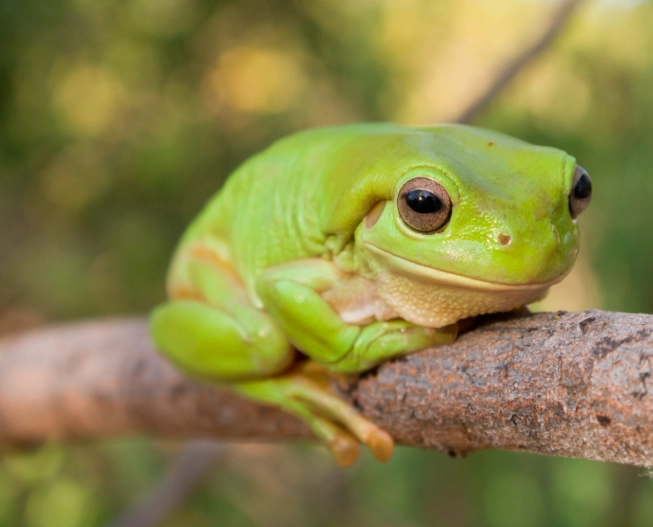
Climate Control: It's All About the Numbers
This is where many new keepers slip up. The Australian Green Tree Frog might be hardy, but it still needs the right environment.
| Parameter | Optimal Range | Why It Matters | How to Achieve It |
|---|---|---|---|
| Temperature | Day: 75-80°F (24-27°C) Night: 68-75°F (20-24°C) |
Consistent warmth aids digestion and immune function. A nighttime drop is natural. | Use an under-tank heater on one side, controlled by a thermostat. Avoid heat lamps directly overhead as they can dry out the frog. |
| Humidity | 50-60% (Spike to 70% during misting) | Critical for skin health and hydration. Too low = dehydration. Too high = bacterial blooms. | Daily misting with dechlorinated water. A shallow water dish adds to humidity. A hygrometer is essential to monitor levels. |
| Lighting | Moderate, indirect light. 10-12 hour day/night cycle. | Regulates their circadian rhythm. They don't require special UVB lighting if fed a proper diet, but some keepers use low-level UVB for potential benefits. | Room ambient light is often enough. Avoid direct sunlight on the tank (causes overheating). Use a simple timer for tank lights if used. |
The water dish is crucial. It must be large enough for the frog to sit in (they soak to hydrate and shed), but shallow enough for an easy exit. Change the water every single day without fail. Stagnant water is a bacteria factory.
Feeding: The Bug Buffet
Australian Green Tree Frogs are voracious, opportunistic eaters. In the wild, they'll eat insects, spiders, and even small mammals or other frogs. In captivity, we stick to insects.
- Staple Diet: Gut-loaded crickets, dubia roaches, and black soldier fly larvae are excellent staples. "Gut-loading" means feeding the insects nutritious food 24-48 hours before offering them to your frog. You are what your food eats.
- Occasional Treats: Waxworms, hornworms, and silkworms. These are higher in fat, so use sparingly.
- What to Avoid: Wild-caught insects (pesticides!), fireflies (toxic), and insects that are too large. A good rule is nothing wider than the space between the frog's eyes.
Supplementation is NOT optional. Captive insects are nutrient-poor. You must dust the feeder insects with a high-quality calcium powder (with Vitamin D3) at almost every feeding for juveniles, and 2-3 times a week for adults. Once a week, use a multivitamin powder. This prevents Metabolic Bone Disease (MBD), a common, crippling, and fatal condition in captive amphibians. The Journal of the American Veterinary Medical Association has published on amphibian MBD, highlighting its prevalence in improper husbandry.
How much to feed? A young, growing frog might eat daily. A healthy adult only needs feeding 2-3 times a week. Offer 4-6 appropriately sized insects per feeding. Watch for obesity—a frog that is starting to look like a green tennis ball is being overfed.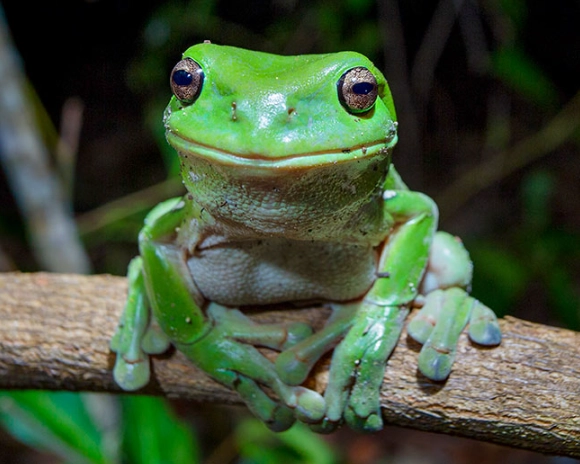
Handling and Interaction: Look, Don't Squish
They are handleable, but with major caveats. Frogs breathe and drink through their skin. The oils, salts, and lotions on our hands can harm them.
Always wash your hands thoroughly with warm water (no soap!) before and after any handling. Keep handling sessions brief—a few minutes at most—and infrequent. They are display pets, not cuddle buddies.
When you do pick them up, be gentle and let them walk onto your hand. Never grab or squeeze. Support their whole body. Some individuals tolerate it better than others. Mine would just sit there, bemused. Others will panic and jump. Respect their personality.
Keeping Your Frog Healthy: Common Issues & Prevention
Even with great care, problems can arise. Knowing the signs is half the battle. Always have a vet who sees exotic pets (herp vet) lined up before you need one.
| Problem | Symptoms | Likely Cause | Action & Prevention |
|---|---|---|---|
| Red-Leg Disease | Reddening of the skin on belly/legs, lethargy, loss of appetite. | Bacterial infection (often Aeromonas). Often linked to poor water quality or dirty substrate. | VET IMMEDIATELY. This can be fatal fast. Prevent with impeccable tank hygiene: daily water changes, spot-cleaning waste, full substrate changes monthly. |
| Metabolic Bone Disease (MBD) | Soft or rubbery jaw, bowed limbs, difficulty climbing, tremors, lethargy. | Chronic calcium and/or Vitamin D3 deficiency. | VET. Advanced cases are tragic. Prevention is simple: consistent, proper supplementation and gut-loading as described above. |
| Skin Issues (Fungal/Bacterial) | Cloudy patches on skin, sores, excessive shedding issues. | Often secondary to stress, injury, or persistently incorrect humidity. | Improve husbandry. A vet can prescribe topical or bath treatments. Ensure humidity is in the correct range. |
| Impaction | Bloating, no feces. Frog may sit in a hunched position. | Ingestion of indigestible substrate (e.g., gravel, moss) or overly large prey. | Feed in a separate, bare-bottom container or on a clean dish. Use safe substrate. If suspected, a warm, shallow bath may help, but vet consult is wise. |
| Obesity | Excessive fat pads behind the eyes, general roundness, lethargy. | Overfeeding, especially high-fat insects. | Reduce feeding frequency and portion size. Increase activity with more climbing opportunities. |
A Note on Color Change: People panic when their bright green frog turns brown or bronze. This is usually normal. Australian Green Tree Frogs can change color based on temperature, humidity, stress, or even to blend in with their background. A healthy frog will often return to green when conditions change or it relaxes. If the brown color is accompanied by other symptoms (lethargy, not eating), then investigate further.
Your Australian Green Tree Frog Questions, Answered
Let's tackle the stuff you're actually searching for.
The Joy of the Green Tree Frog
There's a simple magic to keeping an Australian Green Tree Frog. Coming home to see that placid, smiling face peeking out from behind a leaf. Watching the careful, deliberate placement of each sticky toe pad as it explores its glass world. It's a low-maintenance, high-fascination window into a different kind of life.
They teach patience and attention to detail. A clean tank, the right humidity, a properly dusted cricket—these small acts add up to a long, healthy life for your amphibian friend. It's a deeply satisfying hobby.
Just remember, they're a living creature with specific needs, not a decoration.
If you provide that, you'll be rewarded with years of companionship from one of nature's most charming and resilient amphibians. Whether you call it an Australian Green Tree Frog, a White's Tree Frog, or just a dumpy green buddy, it's a fantastic creature worth understanding and protecting, both in the wild and in our homes.
Reader Comments