Your Leopard Tortoise Journey
So you're thinking about getting a Leopard Tortoise. That's fantastic. I remember the first time I saw one – those stunning, intricate patterns on the shell that look like they were painted by hand, and that calm, deliberate way they move around. It's easy to see why they're such popular pets. But here's the thing I wish someone had told me right at the start: they're not just a "set it and forget it" pet. A Leopard Tortoise is a long-term commitment, often living 50 years or more. That's potentially a lifetime companion.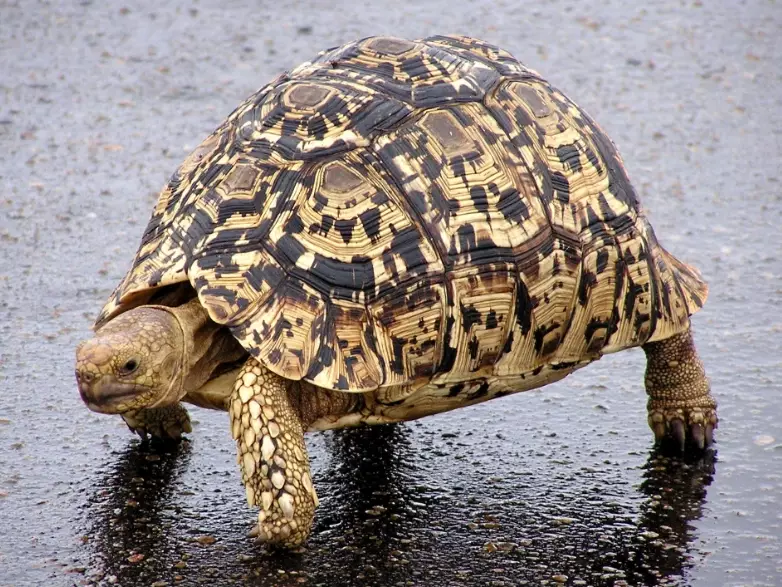
I've seen too many people fall in love with the idea, bring one home, and then struggle because they weren't prepared for the reality. The wrong food leads to shell deformities. A small tank becomes a prison. It's not fair to the animal, and it's heartbreaking for the owner. This guide is here to make sure that doesn't happen to you. We're going to walk through everything, from picking a healthy tortoise to creating a mansion of a habitat and understanding their quirky dietary needs. Think of this as the manual you should get with every Leopard Tortoise.
Getting to Know the Leopard Tortoise
Let's start with the basics. The Leopard Tortoise (Stigmochelys pardalis, though you might still see the old name Geochelone pardalis floating around) is native to the savannas of Eastern and Southern Africa. They're the fourth largest tortoise species in the world. That "leopard" name comes from those gorgeous black and yellow markings on their high-domed shells, which are most vivid in juveniles and often fade or become more muted as they age.
There's some debate about subspecies, but most herpetologists these days recognize two main types: the more common Stigmochelys pardalis pardalis and the sometimes larger Stigmochelys pardalis babcocki. For a pet owner, the care is essentially identical. What matters more is their temperament. In my experience, and from talking to countless breeders, they're generally quite personable and less shy than some other tortoise species. They can learn to recognize their keeper, especially if you're the one with the tasty dandelion greens.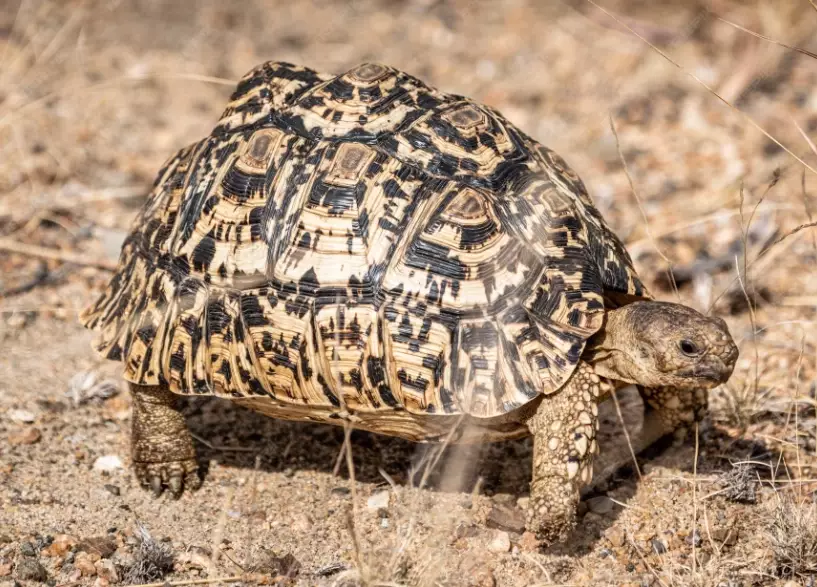
But they are not cuddly. They are wild animals at heart. Handling should be minimal and respectful. Their size is the other big factor. A hatchling might fit in your palm, but a full-grown adult can reach 16 to 18 inches and weigh over 40 pounds. Males tend to be larger and have a more concave plastron (the bottom shell) and a longer, thicker tail. Females are generally rounder. This growth isn't fast – it's a marathon, not a sprint – but you need to plan for that eventual size from day one.
Creating the Perfect Leopard Tortoise Habitat
This is where most first-time owners make their biggest mistake. They buy a cute little tortoise table for a hatchling and think it'll last a year. It won't. Your Leopard Tortoise's enclosure needs to be thought of as a permanent, expansive home. The golden rule is bigger is always better. There is no such thing as too much space for a roaming animal like this.
Indoor Enclosures: The Baby Phase and Bad-Weather Backup
For hatchlings and juveniles, or for adults during cold winters if you live in a non-tropical climate, you'll need an indoor setup. A simple glass aquarium is a poor choice. It lacks ventilation and can create a stagnant, humid environment. It also stresses the tortoise because they can see out but not get through the walls.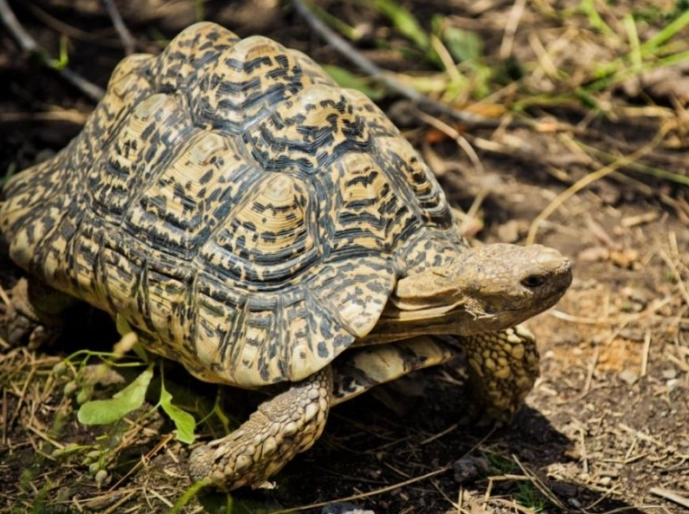
What works much better is a custom-built wooden tortoise table or a large, modified stock tank. The sides need to be high enough to prevent climbing escapes (they're more determined than you think) and opaque. For a hatchling, a minimum floor space of 4 feet by 2 feet is a starting point. But honestly, I'd go bigger if you can. They use every inch.
The substrate is crucial. You want something that holds a bit of moisture, allows for digging, and is safe if ingested a little. My go-to mix is about 60% organic topsoil (with no fertilizers or pesticides) and 40% play sand. Some people add a bit of coconut coir. Avoid cedar or pine shavings – the oils are toxic. Avoid plain newspaper or reptile carpet too; they don't allow for natural behaviors.
The Dream: An Outdoor Leopard Tortoise Pen
If your climate permits (think warm, dry summers), an outdoor enclosure is not just a luxury; it's the single best thing you can do for your Leopard Tortoise's physical and mental health. Natural sunlight is irreplaceable. The space to roam is vital. An outdoor pen should be heavily fortified against predators (raccoons, dogs, birds of prey) and escape. Walls should be solid and at least 18-24 inches high, sunk into the ground a bit to stop digging. Some owners even add a lip at the top facing inward to prevent climbers.
What to put inside? Think like a landscape designer for a tortoise. You need:
- Sunny basking areas with flat stones that absorb heat.
- Shady retreats provided by shrubs, half-buried clay pots, or wooden hides.
- Varied terrain – gentle slopes, different textures.
- Edible plants like hibiscus, hostas, and safe grasses they can graze on.
- A shallow water dish for soaking and drinking, sunk into the ground so they can get in and out easily.
The pen must have a secure, waterproof, and heated nighttime shelter where the tortoise can sleep safely. This is non-negotiable, even in warm climates, for protection from nighttime chill and predators.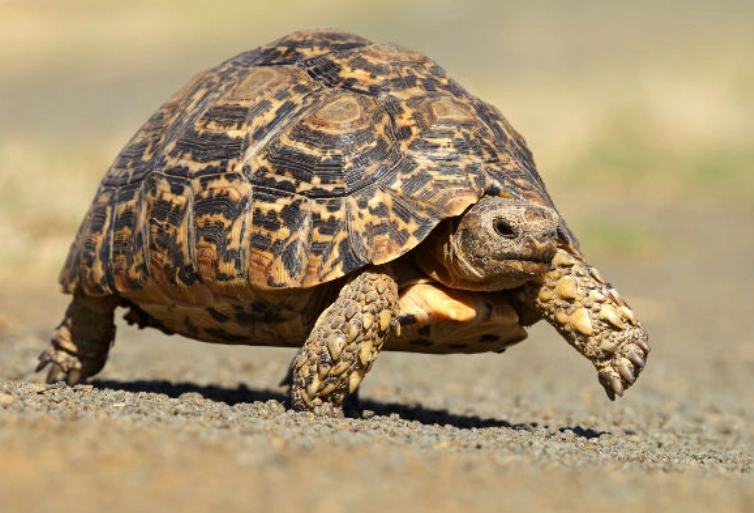
Heating and Lighting: Non-Negotiable Essentials
Leopard Tortoises are ectotherms. They rely on their environment to regulate their body temperature. Getting this wrong messes up their digestion, immune system, and overall well-being.
You need to create a temperature gradient. One end of the enclosure (the basking spot) should be around 95-100°F (35-38°C). The ambient temperature on the warm side should be 80-85°F (27-29°C), and the cool side can drop to 70-75°F (21-24°C). At night, a drop to 65-70°F (18-21°C) is acceptable. Use a good-quality ceramic heat emitter or a radiant heat panel connected to a thermostat for night heat. For basking, a halogen flood bulb on a timer works well.
Now, lighting. This is the part people often cheap out on, and it's a disaster. UVB lighting is absolutely critical. It allows the tortoise to synthesize vitamin D3, which is needed to absorb calcium for strong bones and shell. Without it, they get Metabolic Bone Disease (MBD), a painful and crippling condition.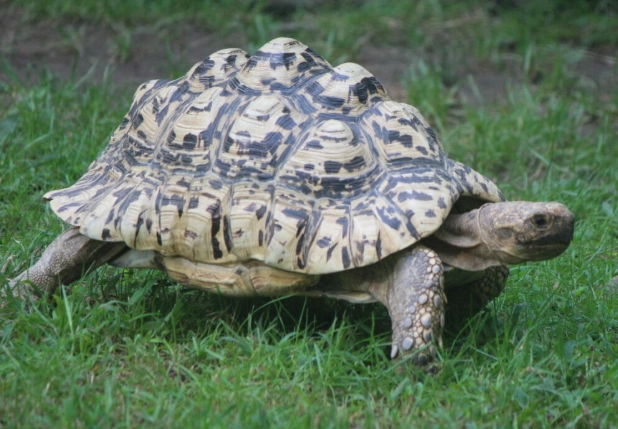
For indoor setups, you need a strong, linear fluorescent UVB tube (like a T5 HO 10.0 or 12.0) or a mercury vapor bulb that provides both heat and UVB. The bulb must be replaced every 6-12 months, as the UV output degrades even if the light still works. The UV Guide UK is an fantastic, science-based resource for understanding UVB distances and requirements. No amount of dietary calcium can fix a lack of UVB.
What to Feed Your Leopard Tortoise (It's Not What You Think)
If I had a dollar for every time I've seen someone feed a Leopard Tortoise lettuce, fruit, or worse, dog food... Let's clear this up. Leopard Tortoises are strict herbivores with a need for high fiber, high calcium, and very low protein and fat. Their natural diet is grasses, weeds, leaves, and flowers.
The ideal diet is built on a foundation of broad-leaf grasses and weeds. Think Timothy hay, orchard grass, dandelion greens, endive, escarole, mulberry leaves, hibiscus leaves and flowers. Variety is key to prevent deficiencies and boredom.
Here’s a quick table to break down the food categories:
| Food Category | Examples (The Good Stuff) | Frequency | Notes |
|---|---|---|---|
| Staple Greens (80-90% of diet) | Dandelion greens & flowers, endive, escarole, turnip greens, mustard greens, cactus pads (opuntia), hibiscus leaves. | Daily | Rotate through at least 3-4 different types weekly. |
| Grasses & Hay | Timothy hay, orchard grass, Bermuda grass. Fresh if possible, soaked hay for young tortoises. | Daily, especially for adults | Essential for fiber and beak/wear. Chop finely for hatchlings. |
| Occasional Treats (10% or less) | Carrot tops, bell pepper (small amount), zucchini, pumpkin, squash. | Once or twice a week | Adds variety but is not nutritionally complete. |
| Calcium-Rich Toppers | Calcium carbonate powder (without D3 if using proper UVB), cuttlebone piece in enclosure. | Light dusting 3-4 times a week for juveniles, 1-2 for adults | Critical for shell development. |
| AVOID Completely | Fruit (causes digestive upset), beans/legumes, spinach/chard (high oxalates), meat/dairy, iceberg lettuce (no nutrients). | Never | These can cause serious health issues. |
How much to feed? A good rule of thumb is an amount of leafy greens roughly the size of the tortoise's shell. For a growing juvenile, you can offer food twice a day. Adults do fine with one larger feeding. Always remove uneaten food at the end of the day.
Water is simple but important. Provide a shallow, sturdy dish they can climb into for a soak. Leopard Tortoises absorb a lot of water through their cloaca during soaks, which helps with hydration and passing waste. Change the water daily without fail.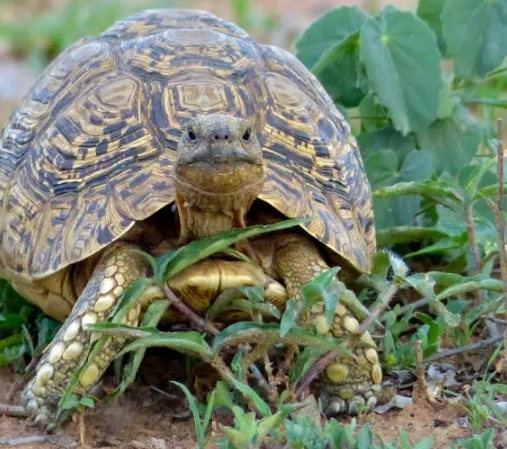
Common Health Issues and How to Spot Them
A healthy Leopard Tortoise is alert, has clear eyes and nostrils, eats regularly, and produces firm, well-formed feces. Their shell should be hard and smooth, with even growth. Here are the red flags to watch for:
- Respiratory Infection: Bubbly or runny nose, wheezing, lethargy, keeping eyes closed. Often caused by temperatures that are too cold or too damp. This needs a vet immediately.
- Metabolic Bone Disease (MBD): Soft shell, pyramiding (raised, pyramid-like scutes), rubbery jaw, lethargy, swollen limbs. Caused by incorrect calcium-to-phosphorus ratio and/or lack of UVB. Prevention is key; treatment is long and difficult.
- Parasites: Weight loss despite good appetite, abnormal stools (runny, white urates), lethargy. A fecal exam by a vet can identify internal parasites like worms or protozoa.
- Shell Rot: Soft, smelly, discolored patches on the shell, often on the plastron. Caused by a fungal or bacterial infection in a dirty, damp environment. Requires cleaning and topical/oral medication.
The most important piece of advice I can give: Find a reptile-savvy veterinarian BEFORE you have an emergency. Not all vets see reptiles. The Association of Reptilian and Amphibian Veterinarians (ARAV) has a find-a-vet tool on their website. A yearly check-up, including a fecal exam, is a great preventative measure.
Handling, Behavior, and Enrichment
Handle your Leopard Tortoise gently and only when necessary – for health checks, enclosure cleaning, or moving them. Always support their entire body from underneath. Never pick them up by the sides of their shell; it's frightening for them and can damage the connection between the shell and their spine.
Their behavior tells you a lot. If they're hiding all the time, something's wrong (too cold, sick, or stressed). Basking for hours is normal. Digging is a natural behavior. They might even "charge" at your feet or hand, which is usually a territorial or curious display, not aggression.
Enrichment is about making their life interesting. Scatter food so they have to forage. Change the layout of their enclosure occasionally (but keep hides in familiar spots). Provide different textures – a flat rock here, a patch of sod there. For an outdoor tortoise, the changing seasons and natural environment provide endless enrichment.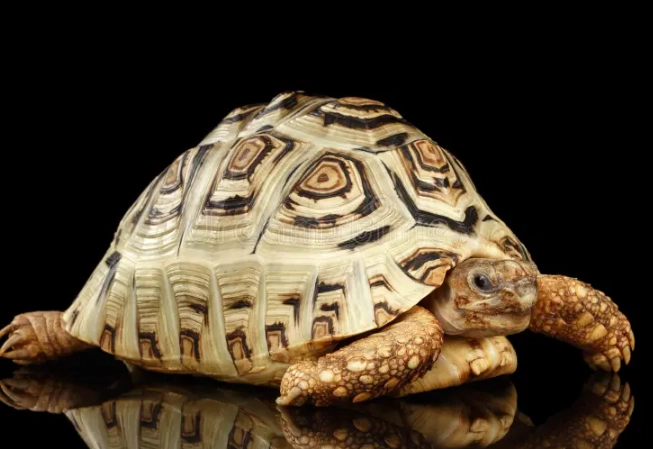
Frequently Asked Questions (The Stuff You're Actually Searching For)
The Bottom Line
Caring for a Leopard Tortoise is incredibly rewarding, but it's a responsibility measured in decades, not years. It requires space, specific equipment (especially for UVB and heat), and a commitment to a specialized diet. If you can provide that, you'll be rewarded with a fascinating, long-lived companion whose beautiful shell is a testament to your good care. Do your homework, set up the habitat first, and then find your tortoise. That's the recipe for success.
It's a big decision. But if you've read this far, you're clearly the type of person who wants to do it right. And that's the best first step any future tortoise keeper can take.
Reader Comments