You just brought home your tiny, striped leopard gecko hatchling, and now, two months in, you're peering into the tank thinking… is it supposed to be this small? Or is mine growing too fast? I remember that exact feeling with my first gecko, Apollo. One day he seemed like a little worm with legs, and seemingly the next, he had some substance to him. But there was a period of constant worry. Is he eating enough? Is his tail fat enough? Let's cut through that uncertainty right now.
The short, direct answer: a healthy 2-month-old leopard gecko is typically between 4 to 5.5 inches (10 to 14 cm) long from snout to tail tip. But here's the kicker—length alone is a pretty lousy indicator of health. Weight is the king. A robust two-month-old should weigh between 8 to 15 grams. If yours fits in that range, you're likely doing great. If not, don't panic. We'll figure out why.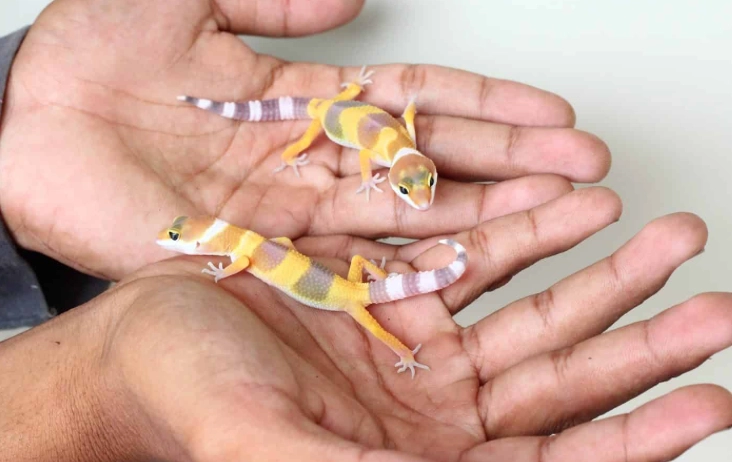
What's Inside: Your Quick Growth Guide
The Average Size of a 2-Month-Old Leopard Gecko
Let's get specific. When people ask about size, they usually mean length. At two months old, most leopard geckos have outgrown their extremely fragile hatchling phase but are still undeniably juveniles. You can expect a length in the 4 to 5.5-inch range. To visualize that, it's about the length of a standard computer mouse or a large index card.
But I need to stress this again: weight is what truly matters. A gecko can be long but skinny and unhealthy, or shorter but dense and perfectly healthy. I use a simple digital kitchen scale that measures in grams. Weighing my geckos weekly was a game-changer—it gave me hard data instead of guesswork.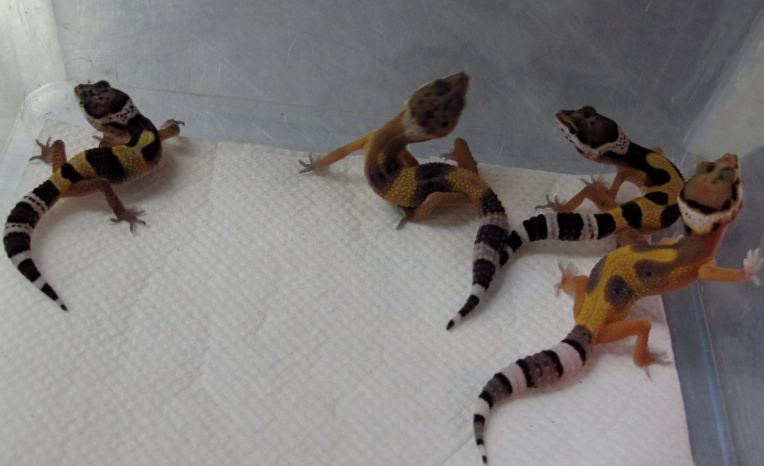
Pro Tip from Experience: New owners often fixate on length and miss the tail. The tail is the fat storage organ. A healthy 2-month-old should have a tail that's roughly the same width as its head, or slightly wider. A skinny, pinched tail (like a rat's tail) is a red flag for underfeeding or illness, regardless of overall length.
Here’s a more detailed breakdown of what to expect in the first few months. This isn't a rigid schedule, but a guideline. Some geckos, often males or those from larger genetic lines, will be on the upper end.
| Age | Average Length (Snout to Tail) | Average Weight | Key Developmental Stage |
|---|---|---|---|
| Hatchling (0-1 month) | 3 - 4 inches | 2 - 4 grams | Extremely fragile, pattern may be faint. |
| 2 Months Old | 4 - 5.5 inches | 8 - 15 grams | Patterns brighten, more active, tail begins to plump. |
| 3-4 Months Old | 5 - 7 inches | 15 - 25 grams | Rapid growth phase, sexual dimorphism may start to show. |
| 6 Months Old | 6 - 8 inches | 25 - 40 grams | Approaching sub-adult size, growth rate slows. |
How to Measure Your Baby Leopard Gecko Accurately (Without Stressing It)
You want to check on your gecko's progress, but the last thing you want to do is cause stress by manhandling it. Here's my low-stress method:
For Weight: This is non-negotiable. Get a small digital scale (they're cheap online). Use a lightweight plastic container. Place the container on the scale, tare it to zero, then gently place your gecko inside. Do this quickly and calmly, ideally at a time of day when they're naturally less active. A weekly log is perfect.
For Length: This is trickier. The best method is to use a clear ruler placed against the outside of the glass tank when your gecko is walking along the side. Wait for it to stretch out naturally. You'll get a good estimate. Trying to straighten a squirmy baby gecko against a ruler is inaccurate and stressful for both of you.
4 Key Factors That Dictate Your Gecko's Size at 2 Months
Why is one 2-month-old gecko 12 grams and another only 9? It's rarely just one thing. Here are the big four: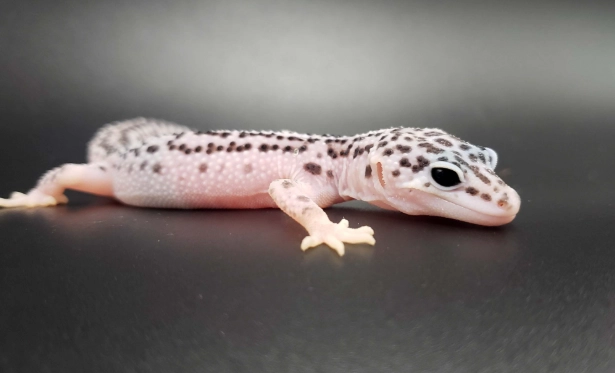
1. Genetics and Morph
This is the starting hand. Some bloodlines are simply bred for larger size (like "giant" or "super giant" morphs). A normal/wild-type leopard gecko will generally follow the standard chart. Fancy morphs like Mack Snows or Tangerines aren't inherently bigger or smaller, but their specific lineage matters. If you got your gecko from a breeder, ask about the parents' size.
2. Feeding Schedule and Diet Quality
This is the biggest variable under your control. At two months, they should be fed daily. Not every other day—daily. The staple should be appropriately sized gut-loaded insects: small crickets, small dubia roach nymphs, or black soldier fly larvae. The prey item should be no wider than the space between the gecko's eyes. Dusting with a calcium supplement (without D3 for daily use, with D3 a couple times a week) and a multivitamin once a week is critical for bone development.
3. Tank Temperature and Digestion
This is the silent growth killer. Leopard geckos are ectotherms. They need belly heat to digest. If the warm hide floor temperature isn't consistently between 88-92°F (31-33°C), measured with a digital probe thermometer, they cannot properly digest their food. They might eat, but they won't absorb the nutrients efficiently, leading to poor growth. An under-tank heater regulated by a thermostat is essential—not an optional accessory.
4. Individual Metabolism and Health
Just like people, some are naturally faster growers. Also, a gecko that had a perfect start with the breeder will hit the ground running. One that had parasites (like coccidia or pinworms, common in reptiles) will struggle to grow, no matter how much it eats. This is why a vet check for a fecal exam is a great idea for any new gecko, especially if it's lagging behind.
"Is My Gecko Too Small?" A Practical Troubleshooting Guide
Your gecko is 2 months old and weighs 7 grams. What now? Don't just hope it catches up. Run through this checklist.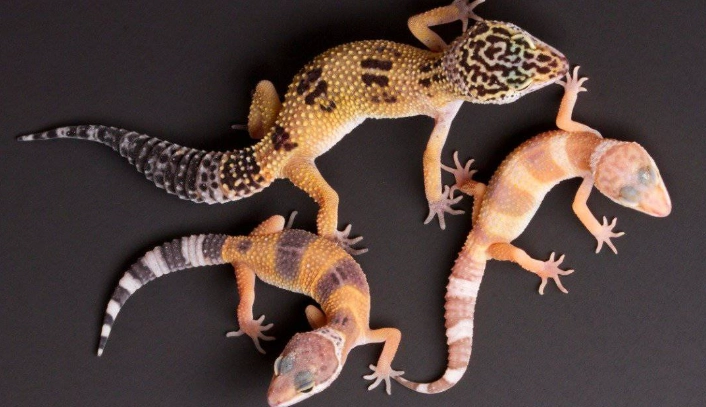
First, audit the food. Are you offering enough prey items daily? A good rule is as many appropriately-sized insects as the gecko will eat in a 10-15 minute session. For a small 2-month-old, that might be 5-8 small crickets. Are you gut-loading the insects (feeding them nutritious food 24 hours before offering them) or just feeding them cardboard?
Second, verify the heat. This is the most common error. You have a heat mat, but is it on a thermostat? What does the probe thermometer read on the tank floor under the warm hide? If it's 80°F, that's your problem. Crank it up to 90°F.
Third, consider stress. Is the tank in a high-traffic area? Are there loud noises? Do you have multiple geckos housed together (which you shouldn't)? Stress suppresses appetite.
If food, heat, and stress are all optimal, and the gecko is still not gaining weight or is losing weight, it's time to consider internal parasites. A reptile veterinarian can perform a simple fecal float test to check. Resources like The Association of Reptilian and Amphibian Veterinarians (ARAV) website can help you find a qualified vet.
Action Plan: How to Promote Healthy, Steady Growth
Let's move from problem-solving to optimization. Here’s how to set your 2-month-old up for a lifetime of good health.
Stick to a Daily Feeding Ritual. Offer food in the evening when they're naturally awake. Use feeding tongs to encourage movement and ensure they see the prey. Remove any uneaten insects after 15 minutes.
Diversify the Diet. While crickets or dubias are great staples, try adding different feeders for variety and nutrition. Small mealworms (sparingly, as they're fatty), black soldier fly larvae (high in calcium), and small silkworms are excellent options. A varied diet is a healthy diet.
Weigh Weekly, Log It. This is your single best tool for monitoring health. A steady upward trend is what you want. Plateaus or drops are your cue to investigate.
Provide a Perfect Environment. Beyond heat, ensure humidity in the moist hide is correct (for shedding), and the tank has plenty of clutter and hides to make the gecko feel secure. A secure gecko is a hungry gecko.
I made the mistake early on of focusing only on length. I had a gecko that was a decent length but stayed skinny. Once I focused on weight and tail thickness, and fixed my slightly-low temperatures, she filled out beautifully within a month.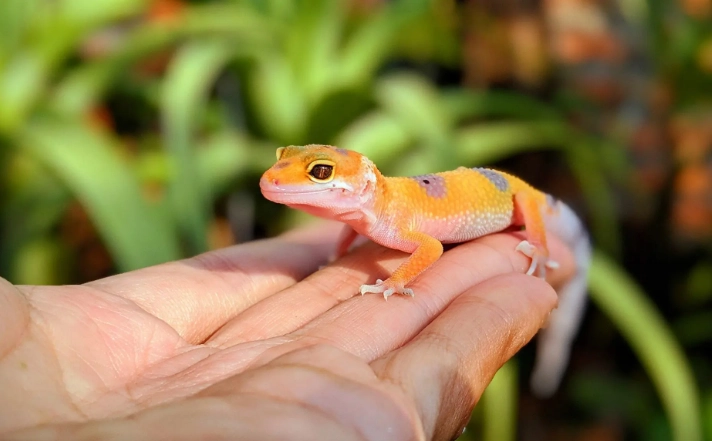
Your Top Baby Gecko Size Questions, Answered
What is the average length and weight of a 2-month-old leopard gecko?
A healthy 2-month-old leopard gecko typically measures between 4 to 5.5 inches (10 to 14 cm) from snout to tail tip. A more critical metric is weight, which should fall in the range of 8 to 15 grams. Geckos on the lower end might be slightly behind, while those at the higher end are often robust, fast-growing individuals.
My 2-month-old gecko is smaller than average. Should I panic?
Not necessarily. First, check your feeding routine. Are you offering appropriately sized insects (no bigger than the space between the gecko's eyes) daily? Is the tank temperature on the warm side a steady 88-92°F? Often, size lag is due to insufficient food intake or incorrect temperatures hindering digestion. If husbandry is perfect and the gecko is active and alert, it may just be a slower grower. Consult a reptile vet if you also notice lethargy, weight loss, or sunken eyes.
How can I accurately track my baby leopard gecko's growth?
The most reliable method is weekly weigh-ins using a small digital gram scale. Record the weight in a log. Consistent weight gain, even if small, is the primary sign of health. For length, use a clear plastic ruler against the enclosure glass as the gecko walks by for a rough estimate. Avoid handling a new or skittish gecko just to measure it, as stress can do more harm than good.
At what age is a leopard gecko considered full-grown?
Leopard geckos reach their full adult length of 7 to 10 inches by around 12 to 18 months of age. However, they continue to fill out and gain muscle mass until they are about 2 years old. A 2-month-old is very much a juvenile with lots of growing ahead, provided its nutritional and environmental needs are consistently met.
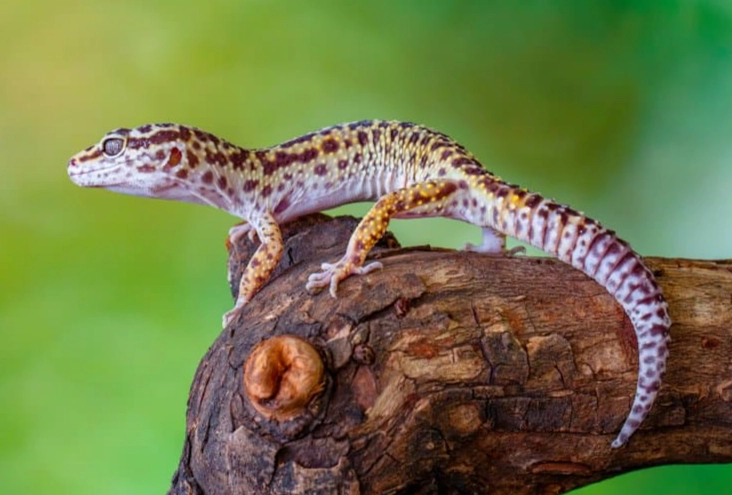 So, how big is a 2-month-old leopard gecko? Now you know it's not just a number. It's a story told by the gram scale, the width of the tail, and the conditions in the tank. Focus on weight, master the basics of heat and feeding, and you'll watch that tiny hatchling transform into a sturdy, beautiful adult gecko. It's one of the most rewarding parts of keeping these fantastic reptiles.
Reader Comments