You just brought home that tiny, wide-eyed baby leopard gecko. It's adorable, but now you're staring at a tub of crickets and a bag of white powder, thinking, "How much of this do I actually give it?" Get the baby leopard gecko feeding schedule wrong, and you're looking at stunted growth, a condition called Metabolic Bone Disease (MBD), or a gecko that just… gives up on eating.
I've raised dozens of these little guys from hatchlings. The biggest mistake I see? Owners treating them like tiny adults. A baby gecko is a growth machine. Its feeding needs are intense, specific, and non-negotiable for the first six months. Let's cut through the noise and build a schedule that works.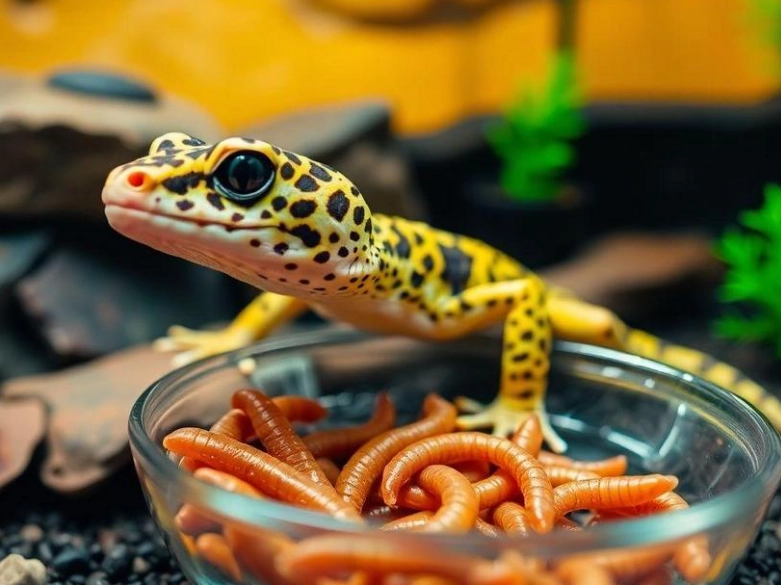
In This Guide
What to Feed a Baby Leopard Gecko: The Live Food Essentials
Forget pellets, fruit, or any pre-packaged "gecko food." Baby leopard geckos are strict insectivores. Their diet needs to be live, moving, and packed with the right nutrients. Variety isn't just nice; it's critical to prevent nutritional gaps and picky eaters.
The Staple Insects (The 80% of their diet):
- Small Crickets (1/4" or pinhead): The classic choice. They're active, stimulating to hunt, and excellent for "gut-loading" (feeding nutritious food to the crickets 24-48 hours before they become gecko food).
- Dubia Roach Nymphs (Extra Small): My personal favorite. They're meatier, quieter than crickets, can't climb smooth surfaces, and have a better calcium-to-phosphorus ratio. If you can get them, use them.
- Black Soldier Fly Larvae (Nutrigrubs): A nutritional powerhouse. They're high in calcium naturally, so they reduce your supplementing workload. They're also soft-bodied and easy for babies to digest.
The Occasional Treats (The 20%):
- Small Mealworms: They're fatty and have more chitin (hard shell). Offer them once or twice a week, but don't make them the main course. A diet of only mealworms is a recipe for impaction in a baby.
- Small Silkworms: Excellent soft-bodied option, but can be pricey and hard to find.
Creating a Baby Leopard Gecko Feeding Schedule That Works
Here's the part everyone searches for: the actual schedule. This isn't one-size-fits-all, but a framework based on age and size. A hatchling (0-3 months) is a different animal from a sub-adult (6-10 months).
The golden rule for babies under 6 months: Feed them every single day. Yes, every day. They have minuscule fat stores and are putting all their energy into growing.
| Age/Size | Feeding Frequency | Amount Per Feeding | Key Focus |
|---|---|---|---|
| Hatchling (0-3 months) | Daily | 5-8 appropriately sized insects (no wider than the space between the gecko's eyes) | High-frequency, high-nutrition. Growth is explosive. |
| Juvenile (3-6 months) 15-25 grams |
Daily, possibly skipping one day a week if very plump | 8-12 insects | Steady growth. You can start introducing slightly larger prey. |
| Sub-Adult (6-10 months) 25-35 grams |
Every Other Day | 10-15 insects | Transition phase. Monitor body condition to adjust. |
How to Know if the Schedule is Right
The schedule above is a map, but your gecko's body is the compass. A healthy baby leopard gecko should have a plump tail (its fat storage), a rounded belly after eating, and visible growth every few weeks. If the tail is skinny like a rat's tail, increase the amount or frequency. If the belly looks distended all the time and the gecko seems lethargic, you might be overfeeding.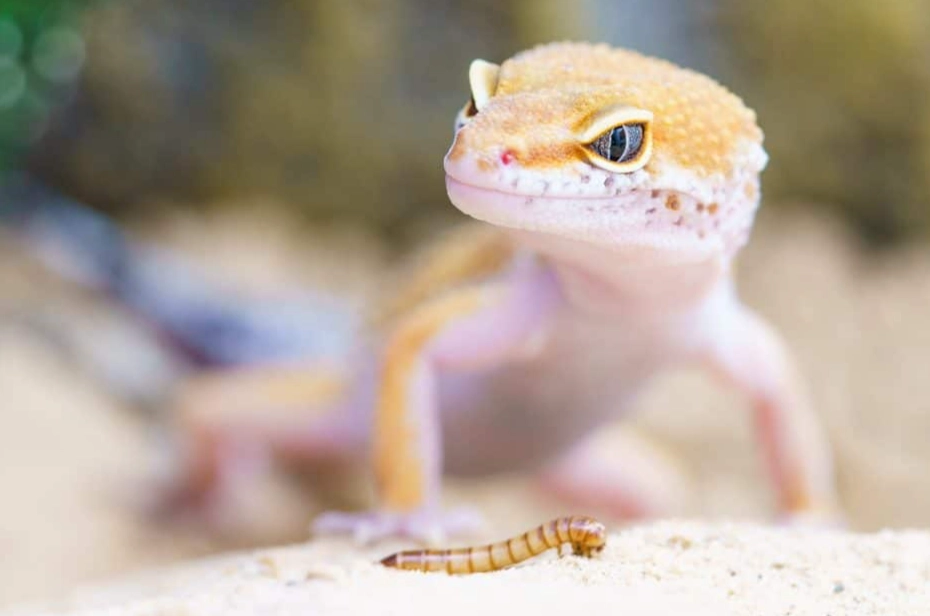
How to Feed Your Baby Leopard Gecko: A Step-by-Step Guide
Feeding time is more than dumping bugs in a tank. Doing it right prevents escapees, ensures supplementation, and reduces stress.
- Prepare the Insects: 24 hours before feeding, place your crickets or roaches in a container with gut-load food (commercial gut-load formula, carrots, squash, leafy greens). This transfers nutrients to your gecko.
- Dust the Insects: Just before feeding, place the insects in a small bag or deli cup with a pinch of calcium powder (without D3). Shake gently to coat them lightly. For two feedings a week, use a calcium powder with D3. For one feeding a week, use a multivitamin powder.
- The Feeding Method:
- Option A (Tank Feeding): Use long, soft-tipped feeding tweezers to offer insects one by one. This allows you to monitor exact intake and ensures every insect is dusted.
- Option B (Feeding Dish): For worms (mealworms, BSFL), use a shallow, escape-proof dish (like a bottle cap sunk into the substrate). Dump the dusted worms in. This prevents them from burrowing and getting lost.
- Supervise: Never just leave a pile of crickets in the tank, especially overnight. They can bite and harass your gecko. A 15-20 minute supervised session is perfect.
- Clean Up: Remove any uneaten insects after the session.
Essential Supplements: The Key to Preventing Metabolic Bone Disease
This is where most new owners slip up, often with tragic results. Insects alone don't have the right calcium-phosphorus balance for reptiles. Without proper supplementation, your gecko will pull calcium from its own bones, leading to MBD—soft, rubbery jaws, bent limbs, seizures, and death.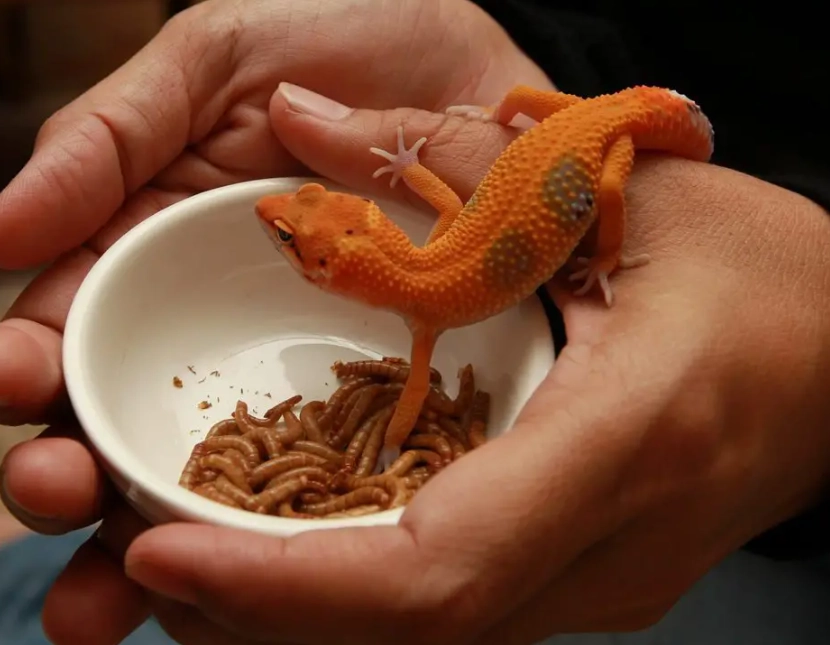
You need three powders:
- Plain Calcium Carbonate (No D3): This should be available at all times in a tiny bottle cap in the enclosure. The gecko will lick it as needed.
- Calcium with D3: Used for dusting insects 2-3 times a week. D3 helps the gecko absorb the calcium from its gut.
- High-Quality Reptile Multivitamin: Contains Vitamin A (critical for eye and skin health) and other trace minerals. Use this to dust insects once a week.
I made the mistake early on of only using calcium with D3 at every feeding. It can lead to vitamin D toxicity over a long period. The separate, plain calcium dish lets them self-regulate, which is a game-changer.
Setting Up the Perfect Feeding Environment
Your gecko won't eat if it's stressed or cold. Digestion is powered by heat.
- Temperature is King: The warm hide must be 88-92°F (31-33°C). Use an under-tank heater regulated by a thermostat. A baby gecko with a cold belly cannot digest its food, leading to regurgitation and impaction.
- Feed in the Evening: Leopard geckos are crepuscular. They naturally become active and hungry at dusk. Trying to feed them at noon is often futile.
- Minimize Stress: Don't loom over the tank. Move slowly. If you're using tweezers, avoid quick, jerky movements. Let the gecko focus on the prey, not the giant predator above.
Monitoring Health: Is Your Baby Gecko Eating Enough?
Track two things: Weight and Poop.
Get a small digital gram scale. Weigh your baby once a week, at the same time of day (before feeding is best). You should see a steady upward trend. Chart it. No guesswork.
Poop is a health report card. Healthy baby gecko poop has three parts: a firm, dark brown/black fecal portion, a white urate (the solid urine), and sometimes a little liquid. Runny, all-green, or foul-smelling poop can signal parasites or illness. No poop for over a week in a baby is a red flag for impaction.
Common Mistakes in Baby Leopard Gecko Feeding (And How to Avoid Them)
After years in reptile communities, I see the same errors repeated.
Getting your baby leopard gecko feeding schedule right is the single most important thing you'll do in its first year. It's not complicated, but it requires consistency and attention to detail. Follow this guide, watch your gecko thrive, and enjoy the journey of watching that tiny hatchling grow into a robust, healthy adult.
Reader Comments