In This Article
Okay, let's be real. You probably saw a picture of a cute little frog clinging to a window or heard a strange, melodic trill on a summer night and got curious. Maybe you're even thinking about getting one as a pet. I get it. I was there too, years ago, staring at a tiny green blob in a pet store. That's how my journey with these little climbers began. The term "American tree frog" is a bit of a catch-all, honestly. It doesn't refer to just one frog. It's like saying "American dog" – you need to know the breed. In the frog world, this usually means the ones from the genus Hyla or Dryophytes, with the Gray Tree Frog complex being the absolute superstar. They're the ones you're most likely to meet, both in the wild and in a terrarium.
This guide is everything I wish I had when I started. We're not just going to skim the surface. We're digging into what makes these frogs tick, how to care for them if you go that route, and why they're such fascinating little pieces of a local ecosystem. From their mind-blowing color-changing skin to that iconic call that defines humid evenings, we're covering it all.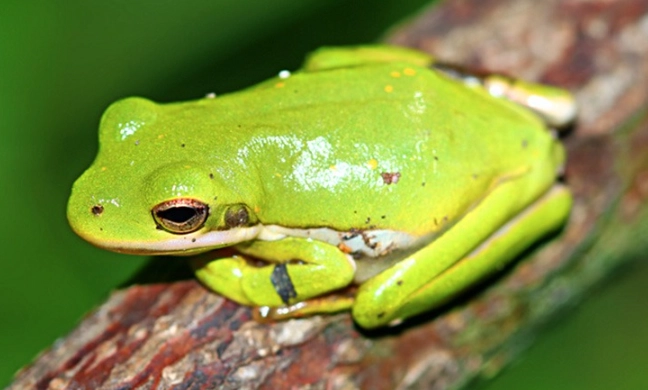
Who Are These "American Tree Frogs" Anyway?
First things first, let's clear up the identity crisis. When people search for "american tree frog," they're often picturing one of a few key players. It's confusing because they can look so different! A single frog can change from gray to green. So, who's who?
The undisputed champions of the category are the Gray Tree Frogs. And here's the first curveball: there are two of them that look identical. The Gray Tree Frog (Hyla versicolor) and the Cope's Gray Tree Frog (Hyla chrysoscelis). You can't tell them apart by looking – they're twins. The difference is in their calls and their genetics (one has twice as many chromosomes as the other!). For a pet owner or a casual observer, you usually just need to know you have a Gray Tree Frog. Their range is massive, covering most of the eastern United States and creeping into Canada. The North Carolina Herpetological Society has great range maps if you're curious about your specific area.
But the American tree frog family is bigger. You've also got:
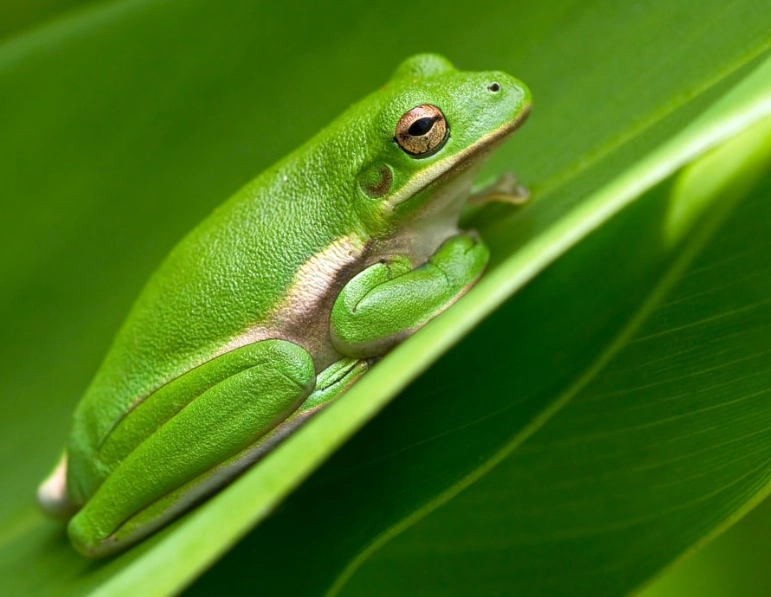
- Green Tree Frog (Hyla cinerea): The bright, lime-green Southerner with a white stripe down its side. Less common in the pet trade outside its native range, but stunning.
- Pine Woods Tree Frog (Hyla femoralis): Smaller, with a distinctive " Morse code" pattern of dots on its thighs.
- Barking Tree Frog (Dryophytes gratiosus): The big, bold one with a call that really does sound like a distant dog.
See what I mean? It's a diverse group. For the rest of this article, when I say "tree frog," I'm often leaning on my experience with the Gray Tree Frog, as it's the most representative and commonly kept. But a lot of the care principles overlap.
The Magic Trick: How Do They Change Color?
This isn't just cool, it's practical science. An American tree frog doesn't change color to match any background like a chameleon (that's a myth for them too, by the way). Their color change is a slower response to temperature, humidity, activity level, and even mood. Special cells in their skin called chromatophores expand or contract. More green when they're warm, active, and humid? Often. More gray, brown, or almost black when they're cool, resting, or stressed? Yep. I've watched my own frog go from moss-green during the day to a stony gray by night. It's a survival tool, helping them regulate temperature and hide from sharp-eyed predators like birds.
Setting Up Shop: The Perfect American Tree Frog Habitat
This is where most beginners slip up. You can't just put a frog in a tank with a bowl of water. These are arboreal animals. They live in trees and shrubs. Their world is vertical. If you give them a horizontal tank, you're wasting 80% of the space they want to use.
Think tall, not long.
A good minimum for one or two American tree frogs is a 18"x18"x24" tall terrarium. Bigger is always better. Screen tops are essential for ventilation, but you'll need to balance that with maintaining humidity – more on that in a second.
The Must-Have Layers of a Tree Frog Palace
Building their home is like crafting a tiny, living slice of forest. You need layers.
1. The Drainage Layer: The very bottom. This is non-negotiable if you're planting live plants (which you should). Use hydroballs or large aquarium gravel. It keeps the soil above from becoming a soggy, rotten mess. Stagnant water is a big no-no.
2. The Substrate: The "floor." Coconut fiber (like Eco Earth) mixed with organic potting soil (no fertilizers or chemicals!) and maybe some sphagnum moss is perfect. It holds moisture for humidity and is safe if your frog accidentally grabs a mouthful while hunting.
3. The Hardscape & Plants: This is the fun part. You need sturdy branches, vines, and cork bark tubes arranged at various heights. Then, add live plants. Pothos is the indestructible champion – it grows like crazy, provides huge leaves for hiding, and helps clean the air. Philodendron, ferns, and bromeliads (which can hold water in their centers!) are also fantastic. Live plants aren't just pretty; they create a stable, bioactive environment that manages waste and humidity. The Frog Forum has incredible, detailed threads on bioactive setups from experienced keepers.
4. The Climate Controls:
- Temperature: They don't need tropical heat. A gradient from about 75°F (24°C) during the day down to 65-68°F (18-20°C) at night is perfect. A low-wattage heat bulb on one side of the tank can create this gradient. Avoid heat rocks – they can cause terrible burns.
- Humidity: This is crucial. Aim for 50-70%. Mist the tank heavily once or twice a day with dechlorinated water. A fogger or misting system is a luxury, but a good spray bottle works fine. A hygrometer is a cheap and essential tool to keep tabs on it.
- Lighting: They don't need special UVB light for calcium like some reptiles, but a simple low-output LED plant light on a 12-hour timer is great for your plants and establishes a day/night cycle for the frog.
Keeping Your American Tree Frog Fed and Healthy
What do American tree frogs eat? In the wild, they're opportunistic hunters of anything small enough to fit in their mouths. In captivity, variety is the spice of life – and the key to health.
Staple Diet: Crickets are the go-to. But don't just dump in crickets from the pet store. You have to "gut-load" them first. This means feeding the crickets nutritious foods (like carrots, oats, commercial gut-load) for 24-48 hours before offering them to your frog. A well-fed cricket is a nutritious meal. A hungry cricket is just an empty shell.
Diet Variety: To prevent nutritional deficiencies, rotate in other feeders:
- Dubia roaches (excellent protein, less noisy than crickets)
- Black soldier fly larvae (high in calcium)
- Occasional waxworms or silkworms as a treat (these are fatty)
The Critical Step: Dusting. This is non-negotiable. You must dust the insects with vitamin and mineral supplements. A plain calcium powder at most feedings, and a calcium powder with D3 and a multivitamin powder once or twice a week. This prevents Metabolic Bone Disease (MBD), a horrible and common condition in captive frogs that leads to soft, deformed bones. I learned this the hard way with my first frog years ago, and it was a stressful, expensive vet visit. Don't skip the dusting.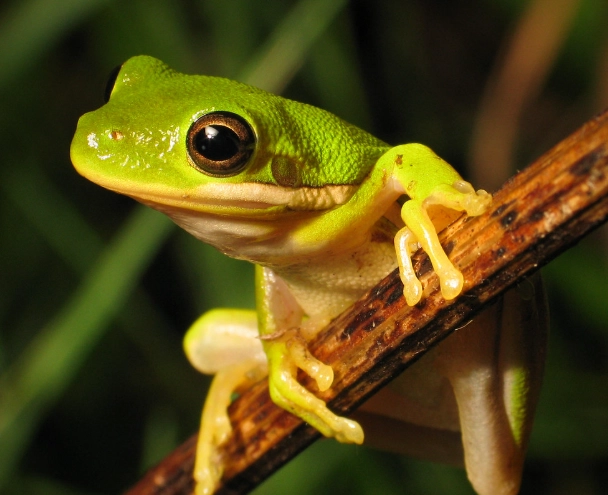
| Feeder Insect | Nutritional Benefit | Feeding Frequency | Notes |
|---|---|---|---|
| Crickets | Good all-around protein | Staple, 3-4 times a week | Must be gut-loaded. Can be noisy. |
| Dubia Roaches | High protein, low fat | Staple rotation, 2-3 times a week | Quiet, can't climb smooth surfaces. Check local laws. |
| Black Soldier Fly Larvae | High natural calcium | Great regular feeder, 1-2 times a week | Often don't need calcium dusting. Wriggle to attract frogs. |
| Waxworms | High fat | Treat only, once every 2 weeks | Like frog candy. Can cause obesity. |
Common Health Issues to Watch For
Even with perfect care, things can happen. Being observant is your best tool.
- Red-Leg: A serious bacterial infection. Symptoms include redness on the belly and thighs, lethargy. Caused by poor water quality or dirty conditions. Requires an exotic vet immediately.
- Metabolic Bone Disease (MBD): As mentioned. Lethargy, difficulty climbing, swollen or rubbery jaw. Preventable with proper dusting and diet.
- Skin Issues: Cloudy eyes, sloughing skin, sores. Often related to poor water quality (chlorine!) or incorrect humidity.
- Parasites: Weight loss despite eating, abnormal feces. A fecal exam by a vet can diagnose this.
The bottom line? Find an exotic veterinarian before you have an emergency. Not all vets see frogs. The Association of Reptilian and Amphibian Veterinarians (ARAV) has a find-a-vet tool that's invaluable.
The Sound of Summer: Understanding Tree Frog Calls
You can't talk about American tree frogs without talking about the noise. For many, the call is the first introduction. The Gray Tree Frog's call is a short, melodic trill. The Green Tree Frog sounds like a duck's quack. The Barking Tree Frog... well, you get it.
Why do they call? It's almost always the males, and it's for two main reasons: to attract females and to tell other males to back off from their territory. The speed and pitch can vary with temperature. On cooler nights, the Gray Tree Frog's trill slows down. It's a fascinating natural thermometer if you learn to listen.
If you have a male American tree frog as a pet, be prepared for occasional calling, especially in the evening after misting (which simulates rain, a trigger for breeding behavior). It's not overly loud, but it's a distinctive part of living with them. I find it charming, but if you're a light sleeper, maybe don't keep the tank in your bedroom.
Frequently Asked Questions (The Real Stuff People Ask)
The Bigger Picture: Conservation and Your Role
Most common American tree frog species aren't currently endangered, but they face threats. Habitat loss is the biggest one. Pesticides and pollution in waterways affect them at the tadpole stage. Climate change can disrupt breeding cycles.
What can you do? If you're a pet owner, commit to captive care and never release a pet into the wild. It can introduce diseases and disrupt local populations. If you're a nature lover, create a frog-friendly backyard! A pesticide-free garden with a small, shallow water feature and plenty of native plants can become a haven for local tree frogs. You can even participate in citizen science projects. Organizations like the USGS Amphibian Research and Monitoring Initiative (ARMI) track amphibian populations, and local herpetological societies often have monitoring programs.
In the end, whether you're caring for one in a tank or listening to a chorus outside your window, American tree frogs are a small but vital part of the world. They're insect controllers, a food source for other animals, and a simple indicator of environmental health. Their resilience is amazing, but it's not infinite. Understanding them, respecting their needs, and appreciating their role is what it's all about. That tiny frog clinging to your window is a whole world of adaptation and survival, right there for you to see.
Reader Comments