What You'll Find Here
- Red-Eyed Tree Frog Fast Facts (At a Glance)
- From the Canopy to Your Home: Natural History & Habitat
- The Heart of the Matter: Red-Eyed Tree Frog Care Guide
- Understanding Their Behavior: What's "Normal"?
- Common Health Issues to Watch For
- Breeding Red-Eyed Tree Frogs
- Your Red-Eyed Tree Frog Questions, Answered
- Final Thoughts
Okay, let's talk about the poster child of the amphibian world – the red-eyed tree frog. You've seen the pictures. That insane neon green body, those crazy orange feet, and of course, those massive, piercing red eyes that seem to stare right into you. It's the frog that makes everyone say, "Whoa, is that real?" I remember the first time I saw one in person at a reputable breeder's setup. It was clinging to a leaf, perfectly still, and then it blinked. That slow, deliberate blink with those red eyes... it felt less like looking at a pet and more like making contact with a tiny, alien jewel. Totally captivating.
But here's the thing a lot of websites gloss over in their rush to show you the pretty pictures. That stunning appearance is a full-time survival job in the rainforest. It's not just for our Instagram feeds. And bringing that piece of living rainforest into your home? It's a big commitment. It's not like getting a hamster. This guide isn't going to just tell you they're cool (they are) and easy (they can be, with work). We're going to dig into the nitty-gritty, the stuff you actually need to know before you fall in love with those eyes. From mimicking their Central American home to understanding why they're so darn still all day, we're covering it all. I'll even share a few things I messed up when I started, because nobody gets it perfect right away.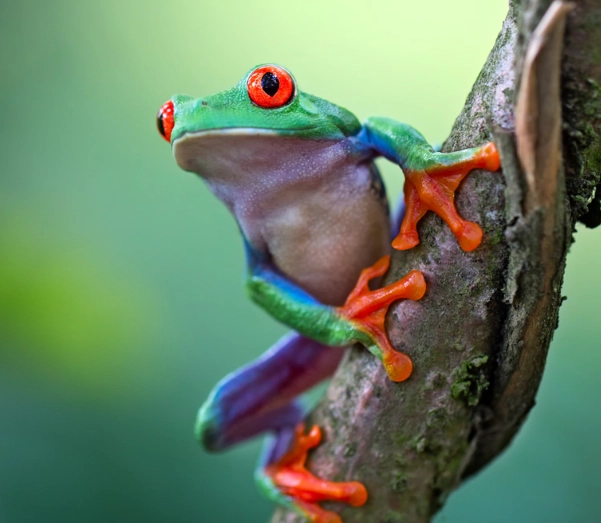
Bottom Line Up Front: The red-eyed tree frog (scientifically Agalychnis callidryas) is a spectacular, nocturnal tree frog from Central America. They are intermediate-level pets. Their care is very specific—think high humidity, vertical space, and live insects—but incredibly rewarding if you're willing to invest in a proper setup. They are display animals, not for handling.
Red-Eyed Tree Frog Fast Facts (At a Glance)
Before we dive deep, let's get the key stats on the table. This is the cheat sheet.
| Aspect | Details | Why It Matters |
|---|---|---|
| Scientific Name | Agalychnis callidryas | Helps with accurate research and identification. |
| Natural Range | Humid lowlands from southern Mexico through Central America to northern Colombia. | Informs their need for warm, wet, tropical conditions. |
| Adult Size | Females: 2.5 to 3 inches (6-7.5 cm); Males: Slightly smaller, 2 to 2.5 inches (5-6 cm). | Determines the size of the enclosure you'll need. |
| Lifespan | Typically 5 years in captivity, but can live up to 8-10+ with exceptional care. | A medium-term pet commitment. |
| Activity Cycle | Strictly nocturnal (active at night). | You'll observe them mostly in the evening/night. They sleep during the day. |
| Key Care Level | Intermediate. Not for absolute beginners. | Requires consistent humidity, temperature, and diet management. |
See? Not a "set it and forget it" pet. But if that table hasn't scared you off, you're probably the right kind of person to keep reading.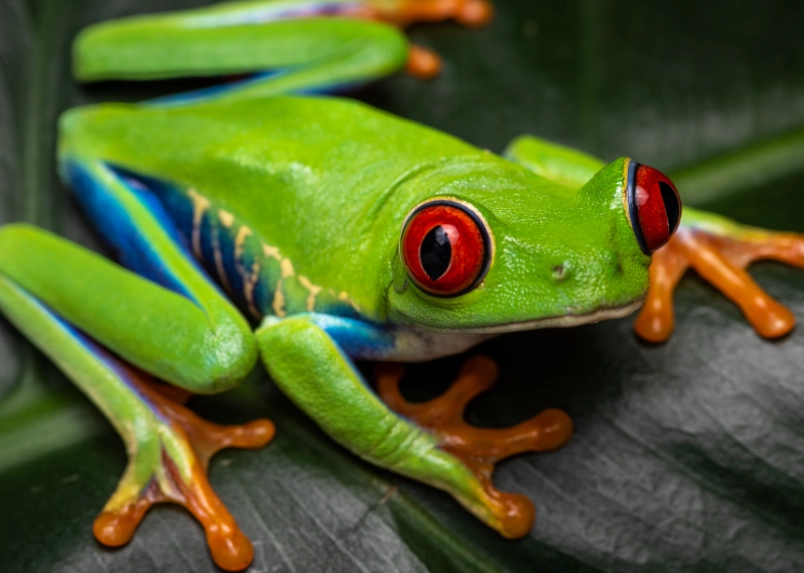
From the Canopy to Your Home: Natural History & Habitat
You can't hope to care for an animal properly if you don't know where it comes from. The red-eyed tree frog's entire existence is shaped by the rainforest. We're not just talking about a vague "wet place." We're talking about the specific micro-world of the lowland tropical rainforest, where it's hot, it's muggy, and everything is dripping with life 24/7. According to the Smithsonian's National Zoo & Conservation Biology Institute, these frogs spend almost their entire lives in the trees and shrubs near rivers and ponds. They rarely, if ever, touch the ground.
That last point is crucial. In the wild, a red-eyed tree frog's world is vertical. Up and down. Leaves, branches, vines. The ground is for emergencies and tadpoles. This is the single biggest mistake I see in beginner setups—a tank that's too short. You're essentially giving a mountain goat a one-story apartment. It'll live, but it won't thrive.
Their famous coloration is a textbook example of predator defense. During the day, they tuck their bright orange feet and blue-and-yellow flanks under their body, close their big red eyes, and press themselves against a green leaf. They become a lump. A green lump. It's called cryptic coloration. If a predator (like a snake or bird) does disturb them, they flash open their eyes, reveal their crazy-colored sides and feet, and leap away in a burst of confusing color. That split-second of surprise is all they need. It's not just pretty; it's a highly evolved survival tactic.
Anatomy of a Living Gem
Let's break down that iconic look, piece by piece. It's not random.
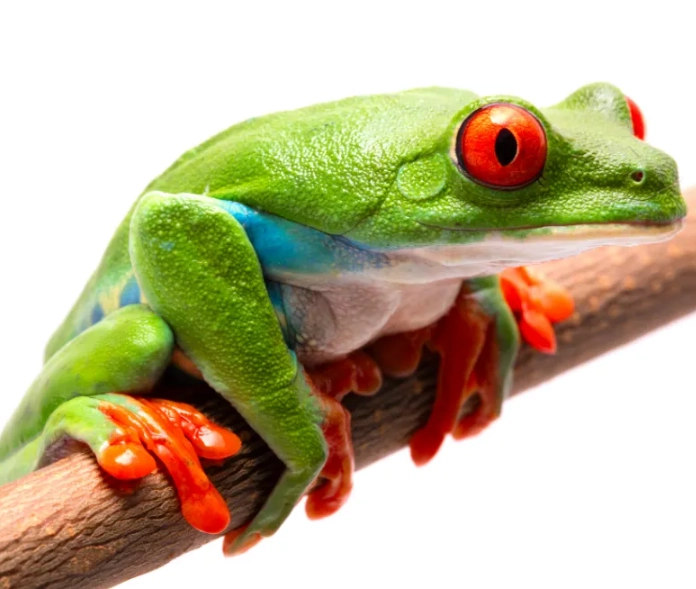
- Those Red Eyes: They aren't just for show. The vibrant red is thought to startle predators (as mentioned), but the vertical pupil is a dead giveaway of their nocturnal lifestyle. It allows for excellent night vision. They can also see almost 360 degrees around them, which is handy when you're snack-sized in a jungle.
- Neon Green Skin: This is their primary camouflage color. It blends perfectly with the broad leaves of their rainforest home. Their skin is also very delicate and permeable, which is why water quality and humidity are non-negotiable. They drink and breathe through it.
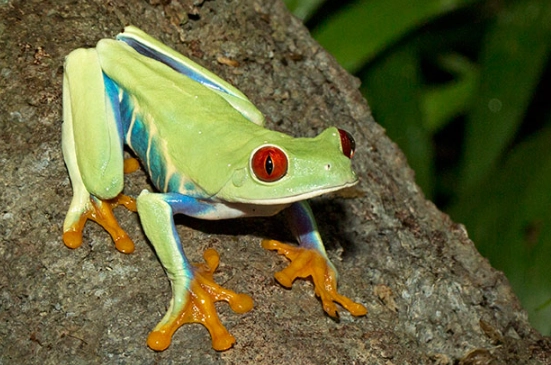
- Orange Toe Pads & Blue/Yellow Flanks: The flash colors. Hidden until needed. The toe pads are oversized and sticky, allowing them to climb smooth surfaces like glass and broad leaves with ease. Watching a red-eyed tree frog deliberately place a foot is mesmerizing—it's like they have built-in suction cups.
So when you're looking at your pet red-eyed tree frog, you're not just looking at a pet. You're looking at millions of years of evolutionary fine-tuning for one specific environment. Our job is to recreate the key parts of that environment as best we can.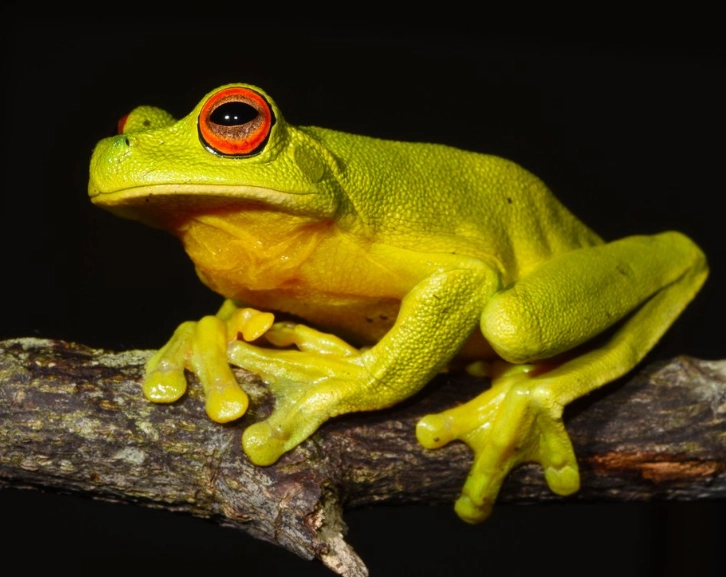
The Heart of the Matter: Red-Eyed Tree Frog Care Guide
This is the meat and potatoes. The "how-to." I'm going to structure this like a checklist, because that's how my brain works when I'm setting something up. Get this part right, and 90% of your potential problems vanish.
Housing: Building a Vertical Paradise
Forget fish tanks. Think "vivarium" or "terrarium." Specifically, a tall, tropical, bioactive vivarium is the gold standard. Bioactive means you create a living ecosystem with plants, microfauna (like springtails and isopods), and a drainage layer. It's more work upfront but pays off massively in maintenance and frog health. If that sounds intimidating, a well-planted non-bioactive terrarium works too, but you'll need to clean it more often.
Enclosure Size & Type: For a pair of red-eyed tree frogs, the absolute minimum is an 18"x18"x24" (Height is the last number! And it's the most important!). That's 45x45x60 cm. Personally, I'd go bigger if you can—a 24"x18"x24" or even taller. They use every inch of height. Glass terrariums with front-opening doors are best (like those from Exo Terra or Zoo Med). They hold humidity well and make access easy without disturbing the whole canopy.
Heating & Lighting: They don't need baking heat. A gentle gradient is key.
- Temperature: Daytime ambient: 75-80°F (24-27°C). A slight nighttime drop to 70-75°F (21-24°C) is fine and natural. Avoid heat rocks or under-tank heaters as a primary source—they can cause burns. A low-wattage heat bulb or ceramic heat emitter on a thermostat, placed at the top of one side of the tank, works perfectly.
- Lighting: They don't require special UVB lighting like some reptiles, but it's a hot topic. Some advanced keepers swear by low-level UVB (like a 2.0 or 5.0 bulb) for potential physiological benefits. The consensus is it's not strictly necessary if their diet is properly supplemented, but it may contribute to overall well-being. What you must have is a gentle, full-spectrum LED light for your live plants. This goes on a 12-hour on/12-hour off timer to simulate a natural day/night cycle.
Humidity & Hydration: This is non-negotiable. Aim for 70-80% humidity at all times. It will spike after misting and drift down, but never let it drop below 60% for long. You'll need:
- A good digital hygrometer (those analog dials are often junk).
- A hand mister or, better yet, an automated misting system (like MistKing or Exo Terra Monsoon) set to mist 1-3 times daily for 30-60 seconds. This also provides drinking water, as they lick droplets from leaves.
- A shallow water dish is still a good idea, but change the water daily with dechlorinated water. Tap water chlorine/chloramine is harmful.
Watch Out: High humidity without ventilation leads to stagnant, moldy air. Ensure your terrarium has a mesh top or ventilation panels. It's a balance—wet but fresh. If you see condensation constantly covering the glass, you might need to adjust misting or increase ventilation slightly.
Substrate, Plants & Décor: The Rainforest Floor and Canopy
This is where you get creative and make it look like a slice of nature.
Substrate Layers (for Bioactive):
- Drainage Layer: 1-2 inches of expanded clay balls (LECA) or aquarium gravel at the very bottom. This prevents a soggy, rotten substrate.
- Separator: A mesh screen or barrier fabric to keep soil out of the drainage layer.
- Substrate: 3-4 inches of a tropical bioactive mix (like ABG mix—a blend of tree fern fiber, orchid bark, charcoal, peat, and sphagnum moss). This holds moisture and supports plant roots and your clean-up crew.
- Leaf Litter: A top layer of magnolia or oak leaves (baked to sterilize). This looks natural, holds humidity at the soil level, and provides food/hiding for isopods and springtails.
Plants, Plants, and More Plants: Live plants are not optional. They maintain humidity, provide hiding spots, and look amazing. Go for sturdy, tropical plants that can handle high humidity and low light.
- Champions: Pothos (indestructible), Philodendron, Snake Plant (Sansevieria), Bromeliads (they hold water in their centers—a frog favorite!), Ficus pumila (creeping fig), and various ferns.
Plant them directly in the substrate or in pots hidden by décor.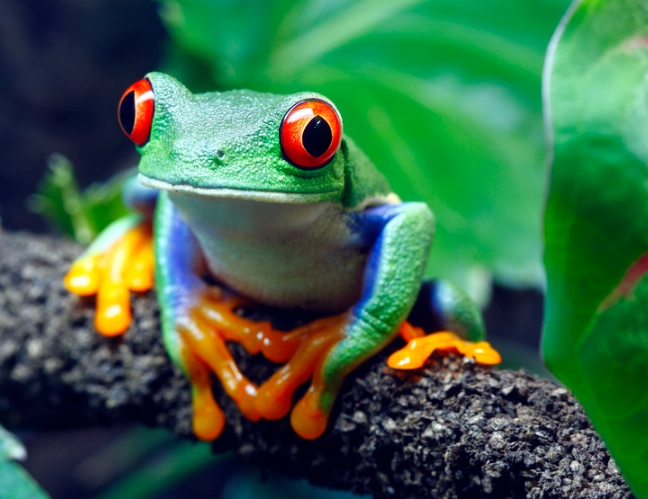
Décor & Climbing Structures: This is the "furniture."
- Branches & Cork Rounds: Use grapevine, ghost wood, or cork bark. Create a network of climbing paths at different levels. Secure them well so they don't collapse.
- Background: A foam or cork tile background isn't just pretty; it provides more surface area for climbing and helps insulate the tank.
- Hiding Spots: Dense plant clusters, hollow cork rounds, or broad leaves (like a large bromeliad) give them secure places to sleep during the day.
Feeding Your Red-Eyed Tree Frog: The Insect Buffet
They are strict insectivores. No fruit, no veggies. Just moving prey. Their feeding response is triggered by motion.
Staple Diet: Gut-loaded crickets are the most common feeder. "Gut-loading" means feeding the crickets nutritious foods (commercial gut-load, veggies like squash and carrot) 24-48 hours before feeding them to your frog. This passes the nutrition on.
- Other great feeders: Dubia roaches (excellent nutrition), black soldier fly larvae (calci-worms), and occasional treats like silkworms or hornworms.
- Size: Prey should be no wider than the space between the frog's eyes.
- Schedule: Feed adults 2-3 times a week, as many appropriately-sized insects as they will eat in 15-30 minutes. Juveniles may need feeding every other day.
Supplementation - The Critical Step: This is where many new keepers fail. Feeder insects are not nutritionally complete on their own. You must dust them with vitamin and mineral powders.
- Calcium + D3: Dust insects at almost every feeding for growing frogs, and 1-2 times a week for adults. D3 helps them utilize the calcium, which is vital for preventing Metabolic Bone Disease (MBD)—a crippling and fatal condition.
- Multivitamin: Dust insects once a week. This provides other essential vitamins like A.
Put the insects and a pinch of powder in a bag or cup, shake gently to coat them, and then feed immediately.
Pro Tip: Feed at dusk or after lights-out. Shine a dim red or blue night-light (they can't see red well) so you can watch. It's a fascinating spectacle. They'll sit motionless, then SLAP—their sticky tongue shoots out and grabs the cricket. Misses happen, but they're usually pretty accurate.
Understanding Their Behavior: What's "Normal"?
If you expect a playful, active pet like a dog, you'll be disappointed. A red-eyed tree frog's normal behavior is largely defined by stillness and patience.
- The Daytime Lump: Seeing them pressed flat against a leaf, eyes closed, unmoving for 10 hours straight is 100% normal. They are sleeping. Do not disturb them. This is their vulnerable time.
- Nighttime Activity: After lights out, they will become active. You might see them repositioning, climbing, hunting, or even taking a dip in the water dish. They are not social with each other, but they often tolerate company and may even sleep in small groups.
- Handling? No. This is a big one. They are not for handling. Their skin is extremely sensitive to oils, salts, and chemicals on our hands. Handling causes them immense stress. The only times you should touch them are during essential tank maintenance or health checks, and even then, wear clean, damp, powder-free gloves. They are look-don't-touch pets. I know it's tempting, but trust me, a stressed frog is an unhealthy frog.
Common Health Issues to Watch For
Even with perfect care, things can happen. Knowing the signs is half the battle. A good exotic veterinarian who sees amphibians is worth their weight in gold—find one before you have an emergency.
- Metabolic Bone Disease (MBD): The big one. Caused by lack of calcium/D3. Symptoms include lethargy, swollen or rubbery jaw ("rubber jaw"), bowed legs, and difficulty climbing. It's preventable with proper supplementation.
- Red-Leg Syndrome: A serious bacterial infection. Symptoms include redness or hemorrhaging on the belly and thighs, lethargy, and loss of appetite. Requires immediate veterinary antibiotic treatment.
- Skin Infections (Fungal/Bacterial): Appear as cloudy patches, sores, or sloughing skin. Often linked to poor water quality, dirty conditions, or injuries.
- Parasites: Internal parasites from feeder insects can cause weight loss despite eating. A vet can do a fecal exam.
- Dehydration/Emaciation: A frog that looks "skinny" (prominent hip bones), has sunken eyes, or has trouble shedding is likely dehydrated or malnourished. Review your misting and feeding/gut-loading protocols.
Breeding Red-Eyed Tree Frogs
This is advanced-level herpetoculture and not something to attempt casually. It requires simulating a rainy season, having a separate tadpole rearing setup, and a lot of specific knowledge. For most keepers, it's enough to know that it's possible. If you're interested, resources from serious breeding communities and societies like the Dendroboard community are invaluable. They breed on leaves overhanging water, and the tadpoles wriggle free and drop in when they hatch.
Your Red-Eyed Tree Frog Questions, Answered
- Reputable Breeders: This is the best option. Captive-bred (CB) frogs are healthier, hardier, and free of parasites. They are also not depleting wild populations. Look for breeders at reptile expos or on dedicated forums.
- Specialty Reptile/Amphibian Shops: Some independent shops source from good breeders.
Final Thoughts
Keeping a red-eyed tree frog is a unique and deeply rewarding experience. It's less about interactive play and more about the quiet satisfaction of creating a tiny, thriving ecosystem and being a steward for a truly remarkable creature. It teaches you about humidity, ecosystems, and patience.
But let's be blunt. It's also a responsibility. You're signing up for daily misting, weekly feeding prep, and constant monitoring of conditions. You're committing to not handling your pet. If you want something to cuddle, get a different pet.
If, after all this, you're still fascinated by those iconic red eyes and are willing to put in the work to build them a proper home, then welcome. You're in for an amazing journey into the world of arboreal amphibians. Start by researching and buying the enclosure and supplies first. Get it set up and running stable for a week or two before you even think about bringing a frog home. That's the single best piece of advice I can give you.
Good luck, and enjoy your little piece of the rainforest.
Reader Comments