Key Highlights
- Meet the Spotted Gecko: More Than Just a Pretty Face
- The Foundation: Setting Up Your Gecko's Forever Home
- Feeding Your Spotted Gecko: It's Not Just Crickets
- Handling, Health, and Spotting Trouble
- Deep Dive: Your Top Spotted Gecko Care Questions Answered
- Putting It All Together: A Weekly Care Checklist
Let's be real. You see those cute, spotted lizards with their big eyes and smiling faces, and you think, "I want one!" They seem like the perfect low-maintenance pet. And in many ways, they are. But here's the thing – "low-maintenance" doesn't mean "no-maintenance." I learned that the hard way with my first gecko, Pico. I made a bunch of rookie mistakes that, thankfully, he survived. But it taught me that proper spotted gecko care isn't just about throwing some crickets in a tank. It's about creating a tiny, perfect slice of their natural world in your home.
This guide is everything I wish I'd known back then. We're going to ditch the confusing jargon and get straight to the practical, actionable stuff. Whether you're thinking about getting your first gecko or you're a seasoned keeper looking to fill in some knowledge gaps, you're in the right place.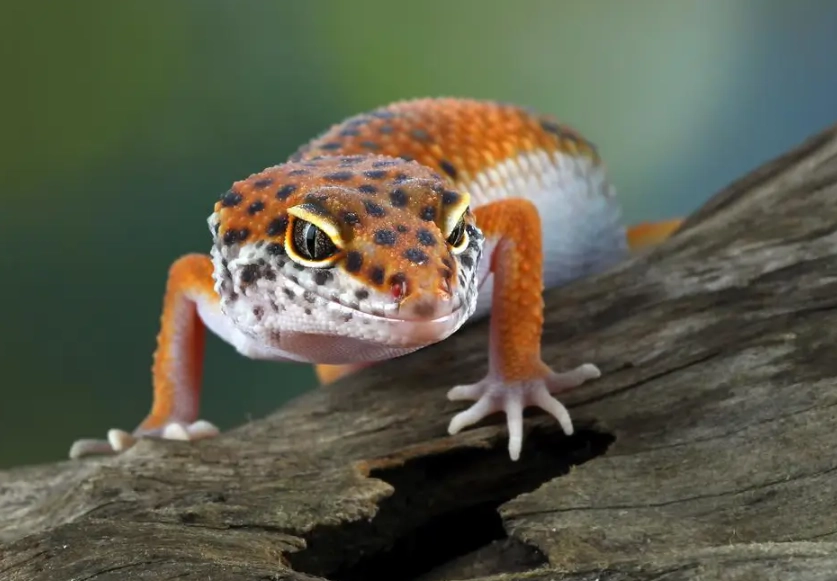
We'll cover the absolute essentials and then some. And I'll throw in my own opinions and screw-ups along the way, because let's face it, not everything you read online works perfectly in real life.
Meet the Spotted Gecko: More Than Just a Pretty Face
When most people say "spotted gecko," they're almost always talking about the Leopard Gecko (Eublepharis macularius). They're the classic, the poster child. Those fat-tailed geckos you see sometimes? Different species, with slightly different needs. So for this guide, we're focusing on the leopard gecko, the ultimate beginner-friendly spotted lizard.
Why are they so popular? Well, they're terrestrial (ground-dwelling), which means you don't need a towering jungle gym of a tank. They're crepuscular, most active at dawn and dusk, so they're not purely nocturnal ghosts you never see. They have eyelids (unlike many geckos) which gives them that charming, expressive look. And perhaps best of all, they are generally docile and can become quite tolerant of gentle handling.
But that docile nature can be a double-edged sword. They won't scream or throw a fit if their environment is wrong. They'll just... slowly get sick. That's why understanding their needs upfront is the most responsible thing you can do.
The Foundation: Setting Up Your Gecko's Forever Home
This is where most first-timers either nail it or fail spectacularly. The enclosure isn't just a box; it's their entire universe. Get this right, and half your spotted gecko care battles are already won.
Tank Size and Type
The old rule of a 10-gallon tank for a single gecko? I think it's outdated and stingy. Can a gecko survive in it? Probably. Will it thrive? Unlikely. It leaves almost no room for a proper temperature gradient or enrichment.
My personal minimum, and what's increasingly recommended by experienced keepers, is a 20-gallon long tank for one adult gecko. That extra floor space is gold. For a pair (and we'll talk about cohabitation later), you'd want to go even bigger, like a 30-gallon breeder or a 40-gallon.
Glass aquariums with a secure mesh lid are the standard. But front-opening terrariums (like those from Exo Terra or Zoo Med) are fantastic. They're easier to access for cleaning and feeding without scaring your gecko by looming from above. I switched to a front-opener years ago and never looked back.
The Non-Negotiables: Heating and Lighting
This is the most critical piece of your setup, hands down. Geckos are ectotherms. They don't make their own heat; they rely on their environment to regulate their body temperature, which drives everything from digestion to immune function.
You need to create a temperature gradient. One end of the tank should be warm, the other end should be cool. This allows your gecko to self-regulate by moving around.
- Warm Side/Basking Area: The surface temperature right under the heat source should be about 88-92°F (31-33°C). You measure this with a digital infrared temperature gun (a must-have tool, trust me). The air temperature on the warm side can be a few degrees cooler.
- Cool Side: This should be between 75-80°F (24-27°C).
- Nighttime: Temperatures can safely drop to the low 70s (around 21-23°C). You usually don't need supplemental heat at night unless your house gets very cold.
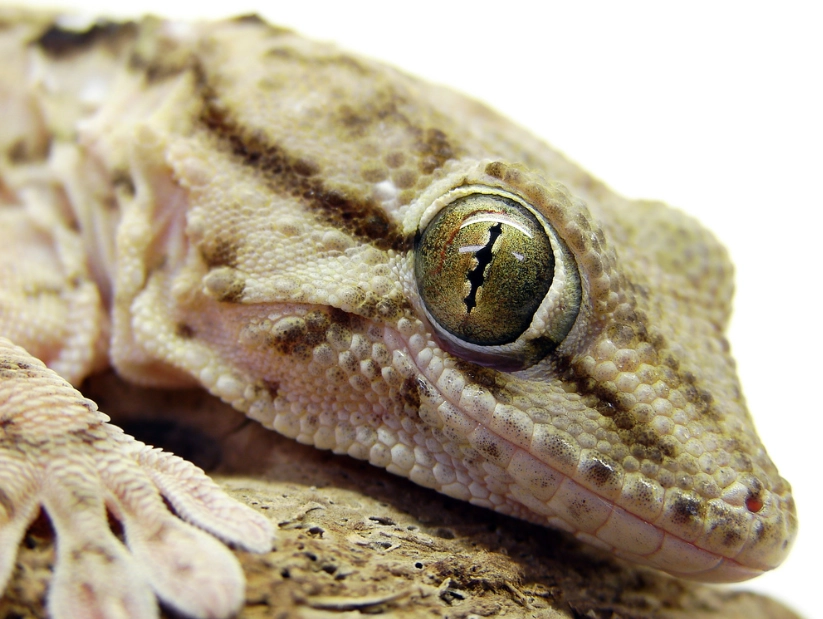
How to Heat: Under-tank heating pads (UTH) are the most common and effective method for leopard geckos. They provide belly heat, which is great for digestion. Stick it to the bottom outside the glass under one end of the tank. You MUST plug it into a thermostat. An unregulated heat mat can easily overheat and burn your gecko. I use a simple on/off thermostat, and it's been flawless.
Some people also use ceramic heat emitters (CHEs) or deep heat projectors (DHPs) in a lamp above the tank, especially for larger enclosures. These are good options but can dry out the air more.
What about Light? Leopard geckos don't strictly require UVB lighting if they're getting proper calcium and vitamin D3 in their diet. However, the reptile-keeping community is moving towards providing low-level UVB (like a ShadeDweller or Reptisun 5.0 tube) as a best practice. It allows for more natural behaviors and can contribute to long-term health. It's not a basking lamp, just a gentle, full-spectrum light on a 12-hour on/off cycle to simulate day/night. I added one a few years ago and think it's worth the investment.
Humidity and Hydration
Leopard geckos come from arid regions, but they still need some humidity, especially for shedding. The ambient humidity in the tank should be around 30-40%. You measure this with a digital hygrometer (the little analog dial ones are often inaccurate).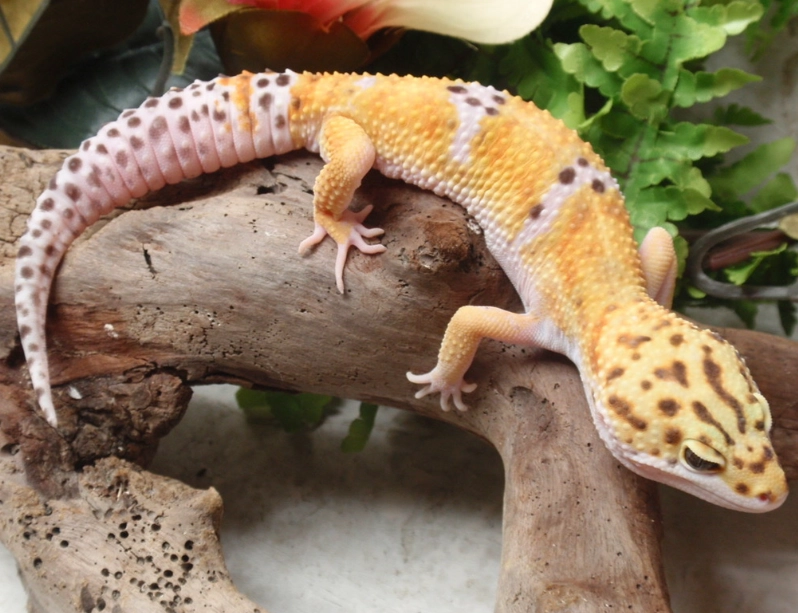
The key is a humid hide. This is a dedicated hide (like a small plastic container with a hole cut in the side) filled with moist substrate like sphagnum moss, damp paper towels, or eco-earth. Place it on the warm side of the tank. The heat will evaporate the water, creating a nice, steamy little spa inside. This is where your gecko will go when it's time to shed its skin. Without it, they can get stuck shed, particularly on their toes, which can lead to infection or even loss of toes.
Always provide a shallow, sturdy water dish with fresh water. Change it daily. They will drink from it, and some might even soak in it. Use spring water or dechlorinated tap water.
Substrate: The Great Debate
Oh boy, this topic can start fights in online forums. The substrate is what lines the bottom of the tank. Let's break down the options, from safest to most controversial.
| Substrate | Pros | Cons | My Verdict |
|---|---|---|---|
| Paper Towels | Super cheap, extremely easy to clean, completely safe (no impaction risk). Great for quarantine, sick geckos, or beginners. | Looks ugly, offers no enrichment, doesn't hold burrows. | The perfect starter substrate. No shame in using it forever. |
| Non-Adhesive Shelf Liner | Easy to wipe clean, reusable, comes in patterns, safe. | Can be slippery, doesn't allow digging. | A solid, low-maintenance choice. |
| Tile (Slate, Ceramic) | Very easy to clean, holds heat well from under-tank heaters, looks nice, safe. | Heavy, can be cold if unheated, no digging. | An excellent, natural-looking permanent option. |
| Prepared Natural Substrates (e.g., Zoo Med's Reptisoil, Exo Terra's Stone Desert) |
Allows for natural digging/burrowing, looks fantastic, holds humidity for humid hides. | More expensive, requires more cleaning, slight impaction risk if gecko is unhealthy or fed on it. | The best choice for a naturalistic, "bioactive-lite" setup for healthy adult geckos. |
| Sand (Calcium or Otherwise) | Looks "desert-like." | High risk of impaction (intestinal blockage), especially for juveniles. Can irritate eyes. Doesn't hold burrows well. | I don't recommend it. The risks outweigh any aesthetic benefit. In the wild, they live on hard-packed soil and rock, not loose sand dunes. |
My journey? I started with paper towels, moved to tile for years (loved it), and now I have my current gecko, Dot, on a mix of Reptisoil and playsand (about 70/30 mix) in a deep layer so she can dig. She's a healthy adult, and I feed her in a dish, not on the substrate. I would never put a baby gecko on this mix.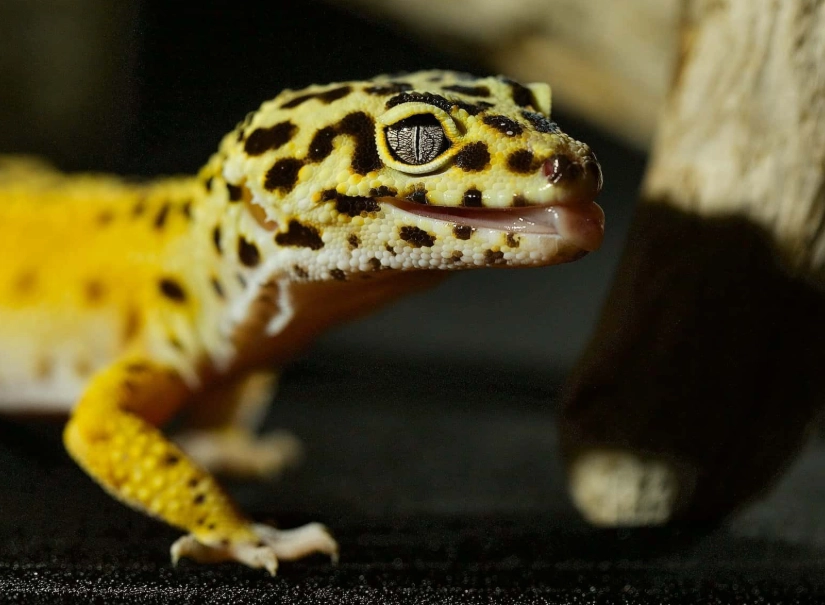
Furniture and Enrichment
A bare tank is a boring tank. Your gecko needs places to hide, climb, and explore.
- Hides: You need at least three. One on the warm side (can be the humid hide), one on the cool side, and one in the middle if possible. They should be snug—geckos feel secure in tight spaces. Commercial reptile hides, flower pots on their sides, or plastic containers work great.
- Climbing: Low branches, cork bark flats, or secure rocks. They aren't avid climbers like crested geckos, but they appreciate some texture and variety.
- Other: Fake or safe live plants (like succulents) add clutter and make the tank feel more secure. A flat rock under the heat source makes a nice basking spot.
Feeding Your Spotted Gecko: It's Not Just Crickets
This is the fun part for most owners. Leopard geckos are insectivores. They eat bugs. That's it. No fruit, no veggies. A proper diet is the cornerstone of good spotted gecko care.
Staple Feeder Insects
Variety is key to good nutrition. Rotate through these staples:
- Dubia Roaches: My absolute favorite feeder. Nutritious, can't climb smooth surfaces, don't smell, don't chirp. They're perfect if they're legal in your area (they're not in Florida, for example).
- Crickets: The classic. They're fine, but they smell, they die easily, and they can bite your gecko if left uneaten. I find them annoying.
- Black Soldier Fly Larvae (Nutrigrubs, Calciworms): Fantastic. High in calcium, they don't need dusting, and they're soft. Great for all ages.
- Mealworms: Convenient because they last a long time in the fridge. Higher in fat and chitin (shell). Good as part of a rotation, but not a sole diet.
- Superworms: Larger and higher in fat. Only for adult geckos as an occasional treat, not a staple.
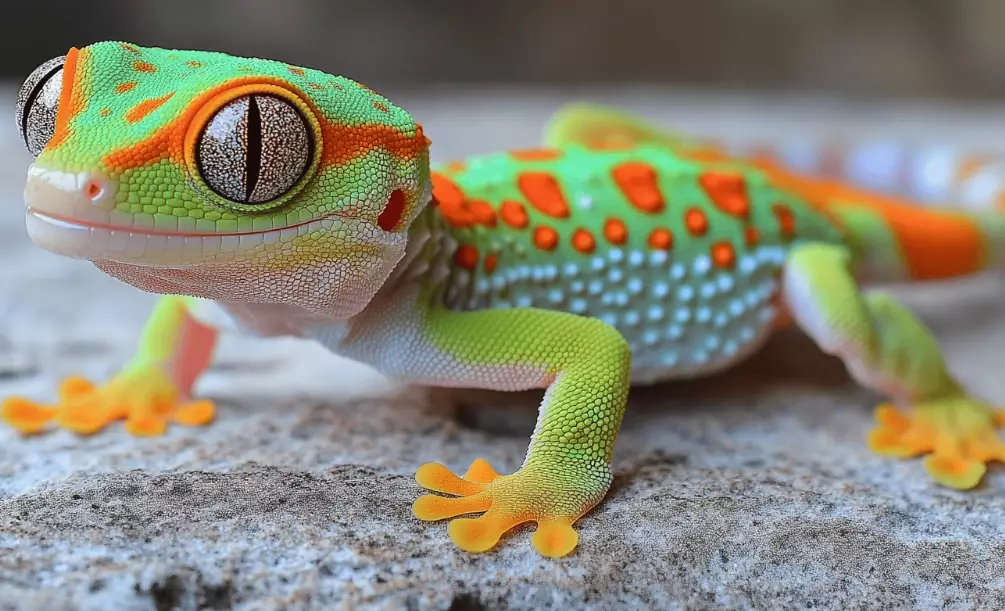
The Supplementation Game
This is non-negotiable. Feeder insects are not nutritionally complete on their own. You need to "dust" them with powdered supplements.
- Calcium (without D3): This should be available in a small, shallow dish (like a bottle cap) in the enclosure at all times. Your gecko will lick it as needed. This is crucial for preventing Metabolic Bone Disease (MBD), a devastating and common illness.
- Calcium (with D3) & Multivitamin: You will dust the insects with these. The schedule can vary, but a common and simple one is:
- Dust with Calcium + D3 at one feeding.
- Dust with a good Multivitamin (like Repashy Calcium Plus or Herptivite) at the next feeding.
- Rotate through the week, with maybe one "un-dusted" feeding.
If you are using a UVB light, you may be able to use calcium without D3 for dusting more often, as the gecko can synthesize its own D3. It's a bit nuanced, but the dish of plain calcium is always the safety net.
How Much and How Often?
- Babies/Juveniles (0-6 months): Feed daily, as many appropriately-sized insects as they will eat in 10-15 minutes. Size rule: no insect wider than the space between the gecko's eyes.
- Sub-Adults (6-12 months): Feed every other day.
- Adults (12+ months): Feed every 2-3 days. A good portion is 6-10 appropriately sized insects per feeding. Adults can get fat! Watch the base of the tail—it should be plump but not wider than the gecko's head. A skinny tail is a problem, but a bulbous, sausage-like tail is too.
Always feed in the evening when they are starting to become active. I use a feeding dish with smooth, high sides so the bugs can't escape. It also keeps them from ingesting substrate.
Handling, Health, and Spotting Trouble
Building Trust and Handling
Give a new gecko at least a full week, preferably two, to settle in with no handling. Just change water and feed. Let them learn their home is safe.
Start by just putting your hand in the tank, motionless, for a few minutes each day. Let them investigate you. Then, slowly try to scoop them up from below—never grab from above like a predator. Support their whole body. Keep handling sessions short (5-10 minutes) at first.
Some will never love it, but most will tolerate it calmly. Always wash your hands before and after. And never grab them by the tail! They can drop their tails as a defense mechanism (called autonomy). It will grow back, but it will look stubby and different.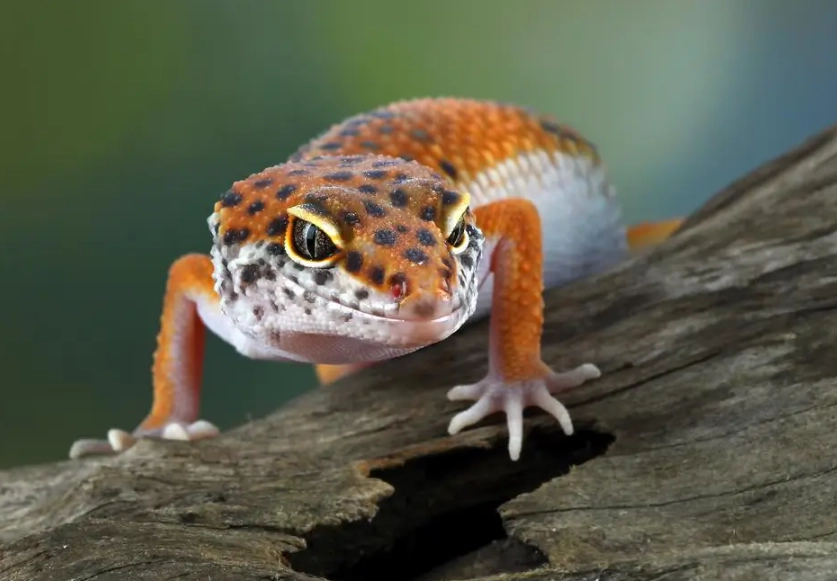
Common Health Issues to Watch For
Prevention is best, but know the signs of illness. A good spotted gecko care routine involves weekly "wellness checks."
- Metabolic Bone Disease (MBD): Limping, rubbery jaw, bent limbs, tremors. Caused by lack of calcium/D3. Preventable with proper supplementation.
- Impaction: Lethargy, loss of appetite, a swollen belly, no droppings. Caused by eating indigestible substrate or overly large feeders. Requires a vet.
- Parasites: Weight loss despite eating, runny or foul-smelling stools. Needs a vet for a fecal exam.
- Respiratory Infection: Wheezing, bubbles in nose/mouth, mucus, breathing with mouth open. Often due to low temperatures or too-high humidity. Needs a vet for antibiotics.
The single best thing you can do is find a vet who specializes in exotics or reptiles before you have an emergency. A regular cat/dog vet often lacks the specific knowledge. The Association of Reptilian and Amphibian Veterinarians (ARAV) has a useful find-a-vet tool.
Deep Dive: Your Top Spotted Gecko Care Questions Answered
Putting It All Together: A Weekly Care Checklist
Let's simplify this into a routine.
Daily: Check temperatures (gun the basking spot), check cool side temp/humidity, offer fresh water, spot clean any obvious waste, observe your gecko's activity and appearance.
Every 2-3 Days (Adults): Feed a dusted meal. Re-moisten the humid hide if needed.
Weekly: Change the water dish thoroughly. Clean and disinfect the food dish. Remove and replace soiled substrate (if using loose sub). Check that all equipment (heater, thermostat, lights) is working.
Monthly: Deep clean the entire enclosure. Remove everything, wash with a reptile-safe disinfectant (like F10SC or diluted chlorhexidine), rinse thoroughly, dry, and re-setup. This is a good time to refresh your plain calcium dish.
Look, it seems like a lot at first. But once your routine is set, it takes maybe 15-20 minutes of active care a day, mostly just observing and feeding. The payoff is a healthy, fascinating pet that can be with you for decades.
The core of spotted gecko care is simple: give them a warm, safe, appropriately-sized home, feed them a variety of gut-loaded and supplemented bugs, and pay attention. They'll reward you with their quirky personalities and serene presence.
Got more questions? Dive deeper into reputable resources like the care guides on Reptiles Magazine or the detailed husbandry articles from Anapsid.org, which is a fantastic, vet-reviewed repository of reptile information. Happy keeping!
Reader Comments