Let's be honest, the first time you see a Gold Dust Day Gecko, it stops you in your tracks. It's like someone dipped a tiny, elegant dinosaur in glitter and electric green paint. I remember visiting a reptile expo years ago, and one look at a display of Phelsuma laticauda (that's the scientific name, rolls off the tongue, doesn't it?) and I was hooked. But here's the thing everyone forgets to mention right away – that dazzling beauty comes with a very specific set of needs. They're not your average beginner reptile, and jumping in without knowing the details is a fast track to stress for both you and the gecko.
This guide isn't just a rehash of the same old facts. We're going to dig into what it really takes to keep a gold day gecko thriving, not just surviving. I'll share some hard-won lessons from my own experience and from chatting with much better breeders than I am. We'll cover the big questions: Are they good pets? What's their real lifespan in captivity? How do you set up a proper home that mimics their native Madagascar? And crucially, can you actually handle them?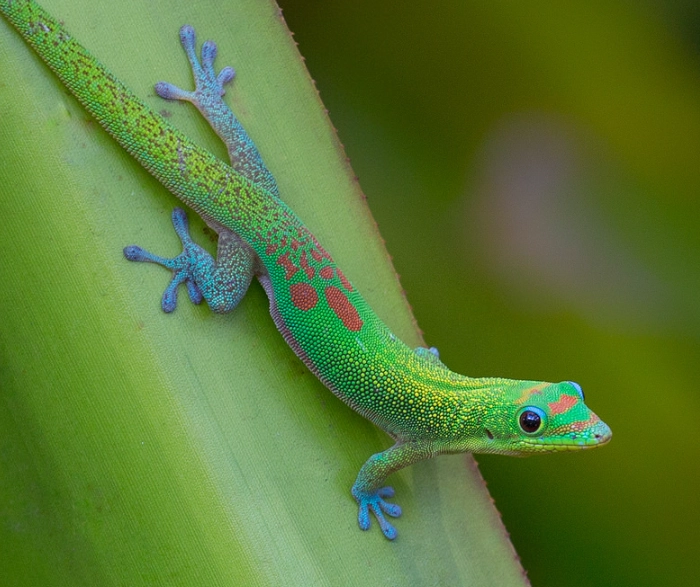
Spoiler: the handling part is where a lot of new owners get disappointed.
What Exactly is a Gold Dust Day Gecko?
In This Guide
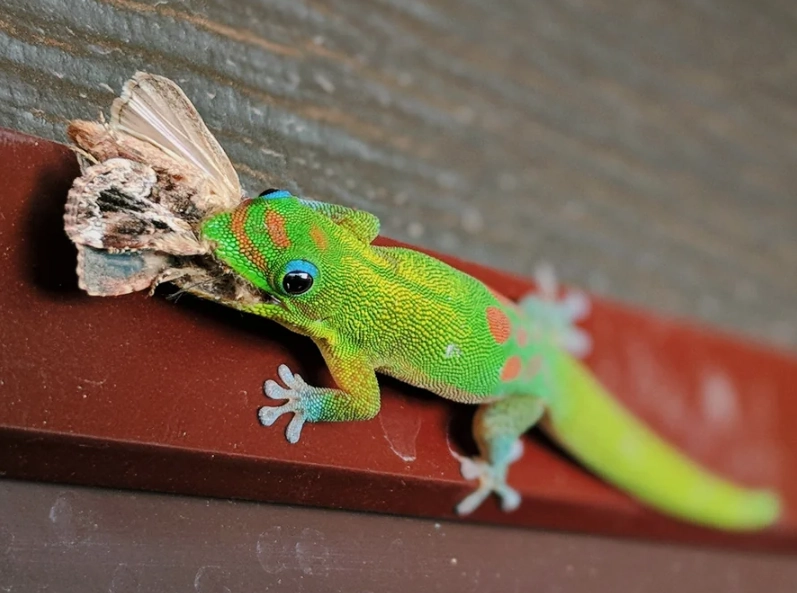
Before we get into tanks and thermometers, let's understand the animal itself. The gold dust day gecko is a small, diurnal (active during the day) lizard native to northern Madagascar and a few surrounding islands. They've also been introduced to places like Hawaii, which tells you they like warm, humid climates. In the wild, you'll find them clinging to trees, banana plants, and the walls of buildings, always on the hunt for insects and sweet nectar.
Their look is unmistakable. A vibrant, almost neon-green body serves as the canvas. Running down the back, you'll usually see three rusty-red bars or dots. But the real showstopper is the "gold dust" – those shimmering, metallic gold speckles scattered across the neck and shoulders that catch the light perfectly. Their feet are another marvel, equipped with specialized lamellae (tiny hair-like structures) that let them climb glass with ease. Seriously, don't think a smooth-sided tank will contain them.
A word on size.
They're not huge. Adults typically top out at 4 to 6 inches from snout to vent, with the tail adding another few inches. Females tend to be a bit smaller and less vividly colored than males. Males also develop pronounced femoral pores on their underside and have broader heads. It's a subtle difference, but you notice it once you've seen a few.
The Real Deal on Gold Day Gecko Care & Lifespan
This is where the rubber meets the road. A lot of pet sites will casually say "intermediate care level," but what does that mean in practice? It means you can't cut corners. Do it right, and your gecko can be a part of your life for a good while.
In captivity, with optimal care, a gold dust day gecko can live between 6 to 10 years. Some well-documented individuals have even pushed past that. I've heard of a few hitting 12, but that's exceptional. The key phrase is "optimal care." Neglect the basics, and that lifespan plummets. The most common culprits? Poor diet leading to metabolic bone disease (MBD), and chronic stress from incorrect housing.
So, what does optimal care look like? It's a pyramid of needs.
The Non-Negotiables: Habitat Setup
You can't just throw a gold day gecko in a fish tank with a heat lamp. Their enclosure is their entire world. For a single adult, the absolute minimum is an 18x18x24 inch tall terrarium. But if you ask me, that's cramped. Go bigger if you can – a 24x18x24 or larger gives them room to explore and display natural behaviors. Height is more important than floor space because they love to climb.
The environment inside needs to replicate a tropical forest edge. That means two things above all else: heat and humidity.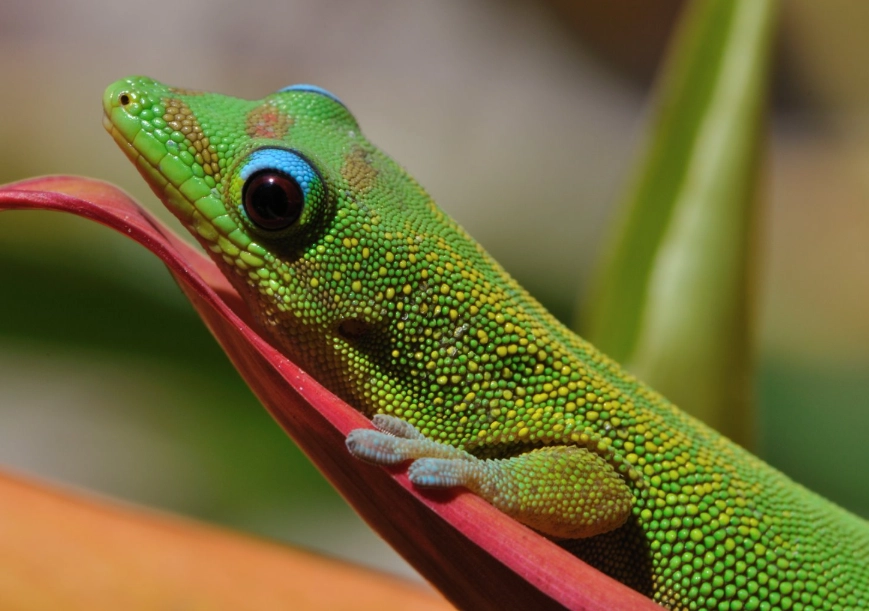
- Temperature: Create a gradient. A basking spot should be around 85-88°F (29-31°C). The cooler end of the tank can drop to 75-80°F (24-27°C). Nighttime temps can dip to 70-75°F (21-24°C). No heat rocks – they're terrible and can cause burns. Use an overhead heat lamp (like a low-wattage halogen) controlled by a thermostat. This is non-negotiable for safety.
- Humidity: This is the one beginners mess up most. Aim for 60-80% relative humidity. It sounds high, but it's essential for proper shedding and respiratory health. You'll need a good digital hygrometer (those analog dials are often wrong). Maintain humidity through misting the enclosure heavily once or twice daily with dechlorinated water. A misting system is a great investment for consistency. Live plants also help hold moisture.
- Lighting: They are diurnal and benefit greatly from full-spectrum UVB lighting. A low-output UVB lamp (like a 5.0 or 2.5 linear T5 bulb) running for 10-12 hours a day helps them metabolize calcium properly, preventing MBD. This is another area where skipping to save money will cost you in vet bills later.
Now for the fun part: decorating. Bare tanks are stressful tanks. You need to provide cover and climbing opportunities.
- Substrate: Go for something that retains moisture but doesn't mold easily. A mix of coconut fiber, orchid bark, and sphagnum moss works well. Avoid sand or gravel.
- Plants: Live plants are fantastic. They boost humidity, provide hiding spots, and look amazing. Pothos, snake plants, bromeliads, and dwarf schefflera are all sturdy choices. Just make sure they're safe for reptiles and pesticide-free.
- Hardscape: Cork bark rounds, branches, and bamboo poles are perfect for climbing. Create a network of pathways from the bottom to the top of the tank. The more hiding spots and visual barriers, the safer your gecko will feel.
Feeding Your Tiny Hunter: The Gold Day Gecko Diet
In the wild, their menu is diverse. We need to replicate that variety. The core of their diet should be live, gut-loaded insects.
| Insect | Frequency | Notes |
|---|---|---|
| Small Crickets | Staple, 4-6 every other day | Gut-load with veggies 24hrs before feeding. |
| Dubia Roach Nymphs | Excellent staple | More nutritious, less smelly than crickets. |
| Black Soldier Fly Larvae (Calciworms) | 2-3 times a week | High in natural calcium, no dusting needed. |
| Small Mealworms | Occasional treat | Higher in chitin, can be hard to digest. |
| Waxworms | Rare treat only | Like candy – very fatty, can cause addiction. |
Every single insect, except for the Calciworms, needs to be dusted with a high-quality calcium + D3 supplement at least twice a week. Once a week, use a multivitamin powder instead. This supplementation is critical to prevent metabolic bone disease, which is a slow, painful killer.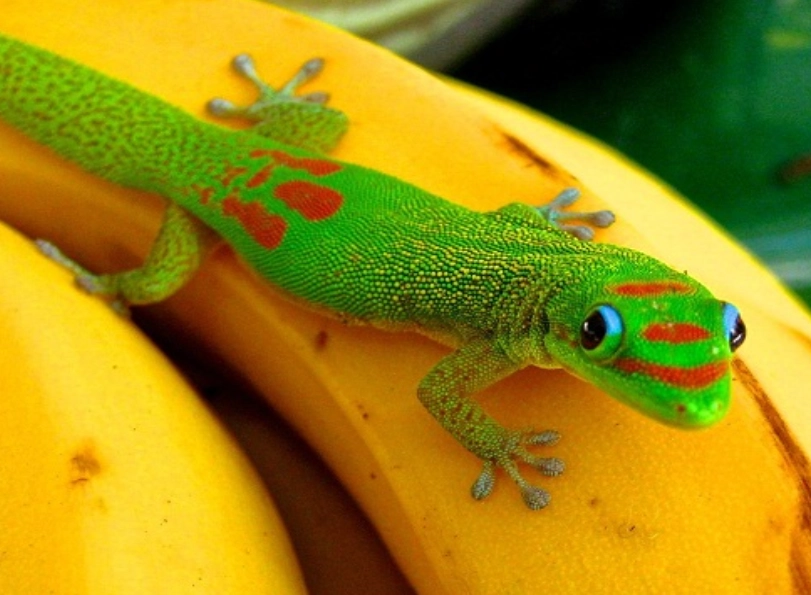
But there's a twist.
Gold dust day geckos also have a serious sweet tooth. They love fruit-based diets. You should offer a commercial "gecko diet" like Repashy Crested Gecko Diet or Pangea Fruit Mix once or twice a week. Mix it to a ketchup-like consistency and offer it in a small bottle cap or ledge cup. Watching them lick it up is one of the cutest things you'll ever see. Some will also lap at mashed ripe fruits like mango, papaya, or banana, but the commercial diets are more nutritionally complete.
Fresh, clean water should always be available via a shallow dish and from droplets on leaves after misting. They often prefer to drink from leaves rather than a bowl.
Handling, Behavior, and the Big Question: Are They Good Pets?
This is the million-dollar question, and the answer isn't a simple yes or no. It's a "yes, but..."
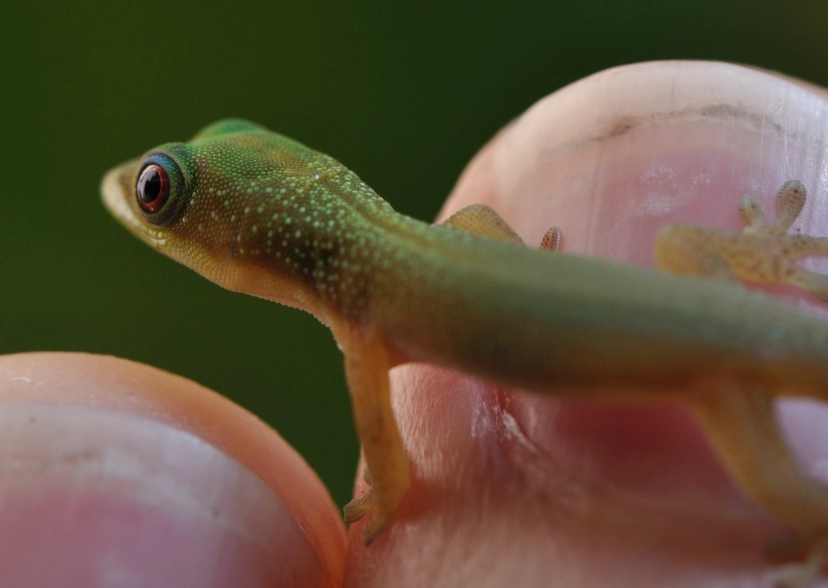
Gold dust day geckos are not handleable pets in the way a bearded dragon or leopard gecko is. Their skin is delicate and can tear easily if they struggle. More importantly, they are fast, flighty, and stress easily. Being grabbed by a giant predator (you) is a terrifying experience for them. Forcing handling leads to dropped tails (which, unlike some geckos, do not fully regenerate in a perfect way) and a terrified animal that hides whenever you approach.
So why keep one?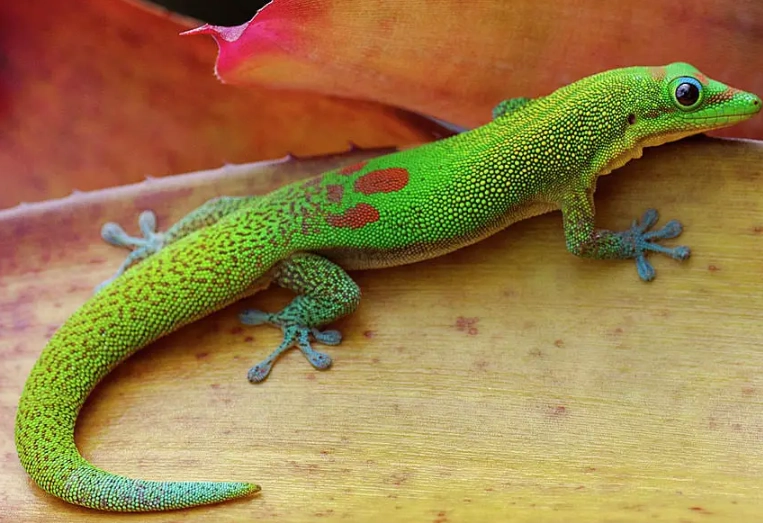
Because they are phenomenal display animals. The joy comes from observation. Watching a male display his colors, seeing them hunt crickets with laser focus, observing them lap up their fruit mix – it's all incredibly rewarding. With immense patience, you can build a level of trust where they will eat from your hand or even walk onto your hand voluntarily if you place it in the tank as a bridge. But this takes months, sometimes years, of consistent, non-threatening interaction.
Their behavior is fascinating. Males can be territorial with each other, so housing them together is a bad idea unless you have a massive, expertly designed terrarium. A male-female pair can work, but be prepared for breeding and have a plan for the eggs. Females can sometimes be housed together, but you must watch for bullying.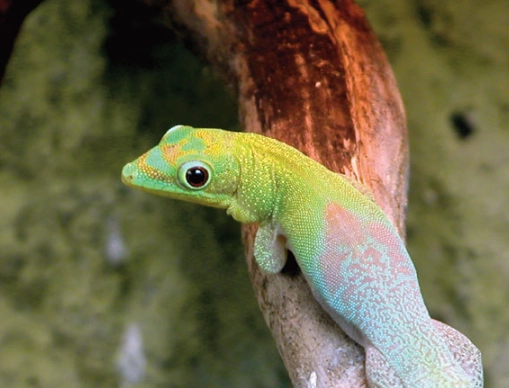
Common Health Issues to Watch For
Even with perfect care, things can go wrong. Knowing the signs can save your gecko's life.
- Metabolic Bone Disease (MBD): The big one. Symptoms include tremors, soft or rubbery jaw, bowed legs, difficulty climbing, and lethargy. It's caused by lack of calcium, lack of UVB, or improper calcium/phosphorus balance. Prevention is 100% possible with proper UVB and supplementation.
- Stomatitis (Mouth Rot): Look for redness, swelling, or cheesy-looking pus around the mouth. Often caused by stress or injuries from crashing into decor. Requires a vet for antibiotic treatment.
- Parasites: Weight loss despite good appetite, runny or smelly stools. A fecal exam by a reptile vet can diagnose this.
- Dysecdysis (Bad Shed): Stuck shed, especially on toes and the tip of the tail. This can constrict blood flow and lead to loss of digits or tail tips. Caused by low humidity. Boosting humidity and providing a rough surface (like cork bark) to rub against usually fixes it.
Finding a good reptile vet before you have an emergency is one of the smartest things you can do. Not all vets see exotics, so do your research. Resources like the Association of Reptilian and Amphibian Veterinarians (ARAV) directory can help you find a qualified professional.
Gold Dust Day Gecko FAQs: Your Questions Answered
Final Thoughts: Is This the Right Pet For You?
Owning a gold dust day gecko is a commitment to creating and maintaining a tiny, perfect slice of the tropics on your desk or shelf. It's not a low-maintenance pet. You'll be misting, feeding live insects, checking temperatures, and cleaning regularly.
The reward is unparalleled. There's a deep satisfaction in seeing that flash of green and gold thrive because of the environment you built. You're not just keeping a pet; you're curating a living ecosystem.
If you want a pet to hold and snuggle, look elsewhere. But if you're captivated by natural beauty, fascinated by animal behavior, and get joy from the details of care, then a gold day gecko might just be your perfect match. Do the research, set up the tank perfectly before you bring one home, and you'll be rewarded with years of watching one of nature's most stunning small creatures.
Just remember to lock the lid.
Reader Comments