So you've fallen for a fancy leopard gecko. Maybe it's a blazing orange Tangerine, a stark black and white Blizzard, or a delicate patternless Mack Snow. That first glimpse is powerful. But here's the thing almost no one tells you right away: caring for a $300 "fancy" morph is exactly the same as caring for a $50 "normal." The glittering price tag doesn't come with a different instruction manual. Success hinges on nailing the fundamentals—heat, humidity, food, and space—with an obsessive level of detail most guides gloss over. I've seen stunning geckos wither in beautiful, expensive enclosures because the owner missed one critical, boring detail. Let's fix that.
Your Quick Care Guide
What Exactly Is a "Fancy" Leopard Gecko?
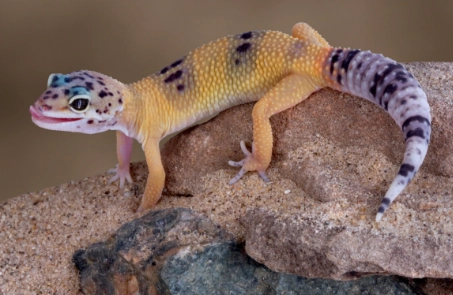
The term "fancy" is just a pet store label for any leopard gecko that isn't the wild-type yellow with black spots. It refers to morphs—genetic variations that affect color, pattern, and sometimes scale texture. Think of it like cat breeds. A "normal" is a tabby. A "fancy" could be a Siamese, a Persian, a Sphynx. The care needs are 99% identical, but some morphs have tiny quirks.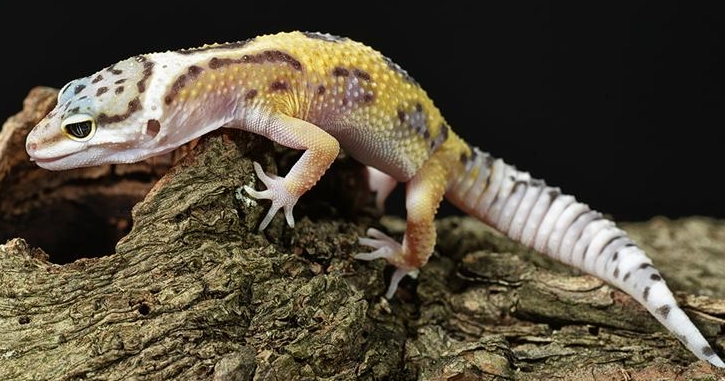
Common fancy morphs you'll see include:
- Albinos (Tremper, Bell, Rainwater): Lack black pigment, have pinkish eyes. They can be more light-sensitive.
- Patternless (Murphy's Patternless, Blizzard): Solid colors, from yellow to white to gray. Super clean look.
- Hypermelanistic (Black Night, Melanistic): Extra dark pigment. These are often very expensive.
- MacK Snow & Super Snow: Reduced yellow pigment, giving a black-and-white or gray-and-white appearance. Super Snows have solid black eyes.
The biggest mistake? Assuming a rarer morph is "delicate." It's not. A poor setup will kill a normal gecko just as fast as a Black Night. The genetics affect appearance, not hardiness. Your job is to provide an environment where any leopard gecko can thrive.
Setting Up the Perfect Home
This is where most people fail, not out of neglect, but out of trusting bad advice. You need a thermal gradient. Not just a "warm side." A gradient. One end hot for digesting food, one end cool for regulating body temp, and a middle ground. Your gecko will cruise between them all day.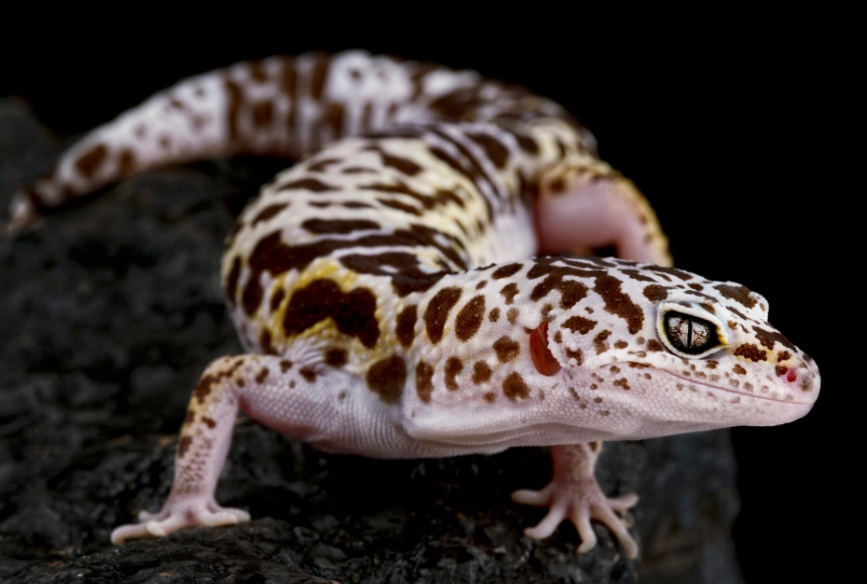
Heating: The Non-Negotiable
Under-tank heater (UTH) connected to a thermostat. This is the golden rule. Heat mats, heat tape—it must be regulated. Set the thermostat probe between the mat and the bottom of the tank. Aim for a surface temperature (measured with a temp gun) of 90-95°F (32-35°C) directly above the mat. The cool end should be 75-80°F (24-27°C).
Humidity & The Moist Hide
Leopard geckos are desert animals, but they need humidity to shed. The ambient room humidity (30-40%) is fine. The critical piece is a humid hide. Take a small plastic container, cut a hole in the side, and fill it with damp (not wet) sphagnum moss or paper towels. Place it on the warm side. This little box is your gecko's spa. It prevents bad sheds where skin gets stuck on their toes and tail—a common, preventable emergency.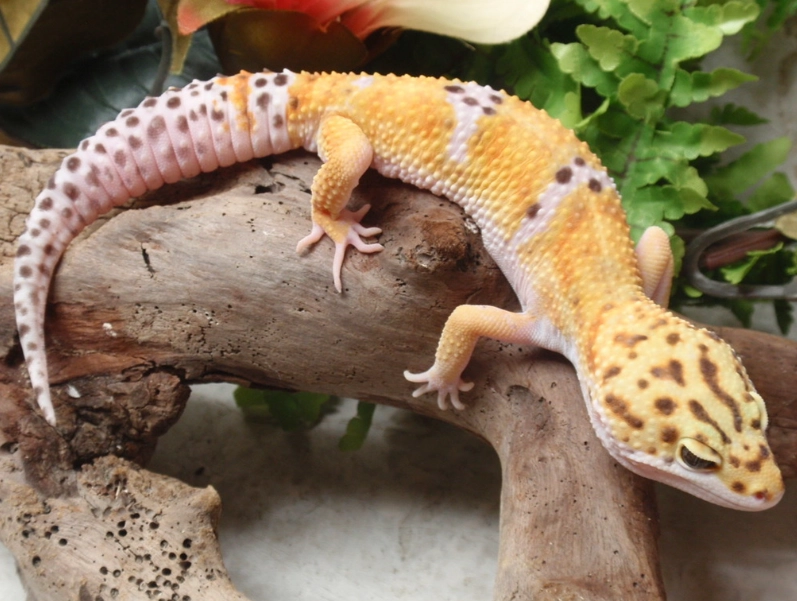
Substrate: The Controversy
Keep it simple and safe. For beginners and most keepers, the best options are:
- Paper towel: Boring, but ultra-safe, hygienic, and cheap. Perfect for quarantine or monitoring health.
- Slate or ceramic tile: Looks great, files nails down, easy to clean, holds heat well.
- Prepared, soil/sand mixes: If you want a naturalistic bio-active tank, this is advanced. It requires research. Never use pure sand, calcium sand, or reptile carpet (it harbors bacteria and can snag toes).
Decor & Enclosure Size
A 20-gallon long tank is the minimum for one adult. Bigger is always better. They walk around! Fill the space with:
- At least two hides (one warm dry, one cool dry, plus the moist hide).
- Some clutter like fake plants or cork rounds to make them feel secure.
- A shallow water dish.
- A flat rock under the heat for basking.
It shouldn't look like a prison cell. Give them things to explore.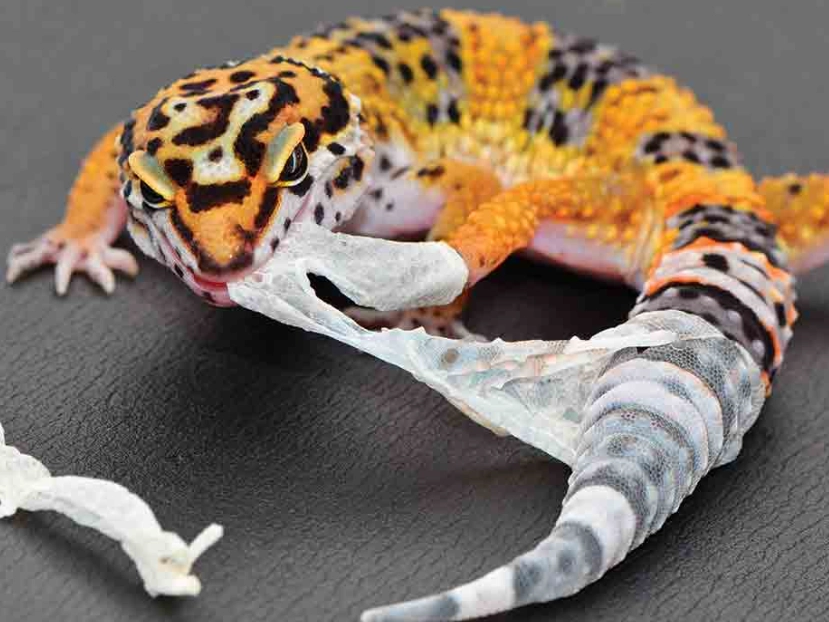
Feeding for Health and Color
You are what you eat, and so is your gecko. A dull diet makes for a dull gecko, even a fancy one. Their food needs to be nutritious before it goes in their mouth.
Staple Feeders: Dubia roaches, discoid roaches, black soldier fly larvae, crickets. Mealworms and superworms are okay as part of a mix, but they're fatty and have less nutritional value than roaches.
The Critical Step Everyone Skips: Gut-Loading. 24-48 hours before feeding, give your insects a nutritious salad. Carrots, sweet potato, leafy greens, squash. This pumps them full of vitamins that get passed to your gecko. Don't feed your insects junk.
Dusting Schedule: This isn't random. Use a plain calcium powder (without D3) in a tiny dish left in the enclosure. They'll lick it as needed. Then, dust insects at feeding time:
| Supplement | Frequency | Notes |
|---|---|---|
| Calcium with D3 | Once a week | Essential for bone health if no UVB light is used. |
| Multivitamin | Once a week | Look for one containing Vitamin A (retinol, not just beta-carotene). |
How much to feed? For a growing juvenile, daily. For a healthy adult, every other day or 2-3 times a week. Offer as many appropriately-sized insects as they'll eat in 10-15 minutes. The insect should be no wider than the space between the gecko's eyes.
Spotting Trouble Early
Fancy geckos get the same illnesses as normals. Catching them early is everything.
- Stuck Shed: White, papery skin stuck on toes, tail tip, or eyes. Soak in shallow lukewarm water and gently rub with a Q-tip. Improve the humid hide.
- Weight Loss: The tail is the fat store. A plump, carrot-shaped tail is healthy. A skinny, whip-like tail means trouble. Weigh your gecko monthly with a gram scale.
- Lethargy & Not Eating: Almost always a temperature issue first. Check your hot spot with a temp gun. If temps are correct and it persists, vet time.
- Runny, smelly stools: Could be parasites. A fecal exam by a reptile vet is needed.
Find a reptile vet before you have an emergency. The Association of Reptilian and Amphibian Veterinarians (ARAV) has a finder tool on their website.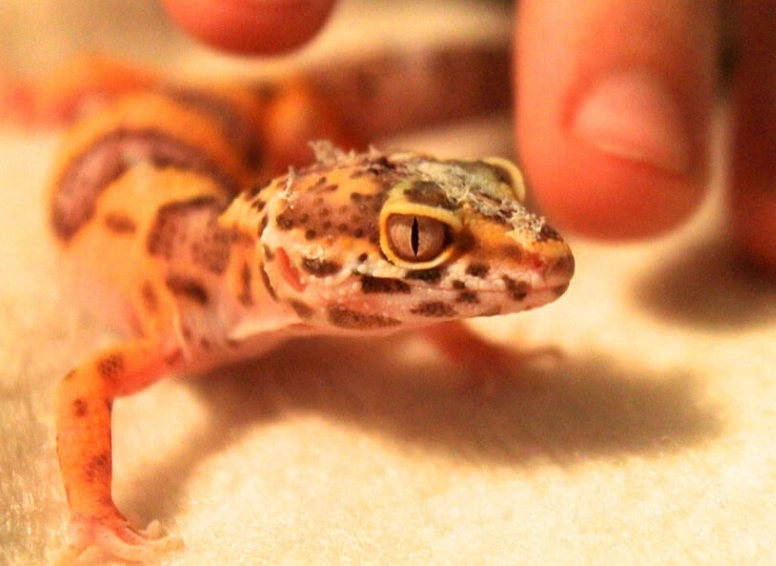
Your Fancy Gecko Questions Answered
The bottom line is this. A fancy leopard gecko is a leap into deeper reptile keeping. The allure is the beauty, but the reward is mastering the craft of care. Get the boring stuff right—the thermostat, the humid hide, the gut-loaded insects—and that stunning animal will not just survive, but will actively thrive, displaying all the curious, quirky behaviors that make them such great pets. Start with the foundation. The fancy part takes care of itself.
Reader Comments