Quick Navigation
Let's be honest, the name alone is enough to grab anyone's attention. Satanic leaf-tailed gecko. It sounds like something from a fantasy novel, not a real animal creeping through the rainforests of Madagascar. But that's the magic of it. This little lizard, scientifically known as Uroplatus phantasticus, is one of nature's most masterful illusionists. I remember the first time I saw a clear photo of one—I spent a good five minutes just trying to figure out where the gecko ended and the leaf began. It's that good.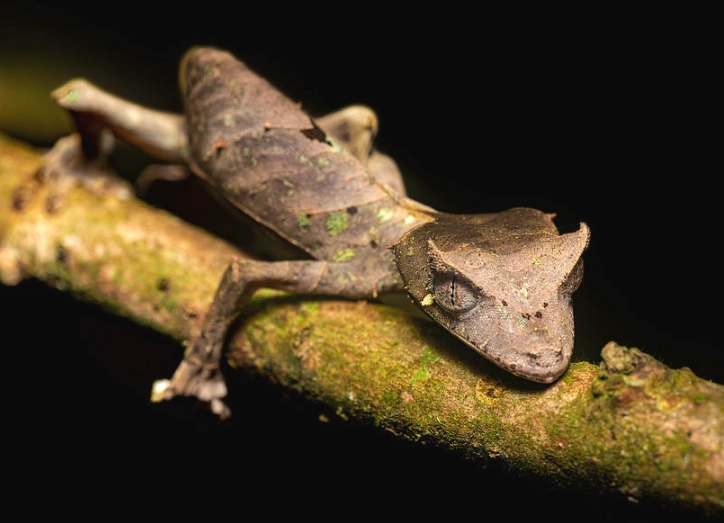
If you're here, you're probably caught in that same spell. Maybe you're a reptile enthusiast dreaming of owning one of these living artworks. Maybe you're a student working on a project. Or maybe you're just plain curious about one of the planet's weirdest and most wonderful creatures. Whatever brought you, you've come to the right place. We're going to dive deep into the world of the satanic leaf-tailed gecko, stripping away the myths and laying out the hard, fascinating facts. We'll talk about where they live, how they survive, and the sobering reality of what it takes to care for one in captivity. It's not a simple pet, and anyone telling you otherwise hasn't done their homework.
So, What Exactly Is a Satanic Leaf-Tailed Gecko?
Let's start with the basics. The satanic leaf-tailed gecko is a species of gecko belonging to the genus Uroplatus, which is endemic to Madagascar. "Endemic" means they are found nowhere else on Earth naturally. The genus name, Uroplatus, comes from Greek words meaning "tail" and "flat," which is a perfect description of their most famous feature. The species name, phantasticus, well, that speaks for itself.
They are small, usually reaching about 2.5 to 3.5 inches (6 to 9 cm) in total length, with a good chunk of that being their incredible, flat, leaf-shaped tail. Their bodies are a mottled mix of browns, tans, greys, and sometimes even hints of orange or purple, perfectly mimicking lichen-covered bark or a dead, crumpled leaf. They have notches and skin flaps along their jawline, limbs, and above their eyes that break up their outline spectacularly. When they press themselves against a branch during the day, they literally disappear.
And those eyes. Large, lidless, and often a stunning marbled red or orange, they give the gecko an intense, almost otherworldly stare—which likely contributed to the "satanic" part of its common name. It's less about evil and more about looking utterly bizarre and captivating.
Natural Habitat: Life in the Malagasy Rainforest
You can't understand this animal without understanding its home. The satanic leaf-tailed gecko inhabits the primary and secondary rainforests of eastern Madagascar. Think dense, humid, and lush. They are arboreal, meaning they live their entire lives in the trees, rarely if ever descending to the forest floor.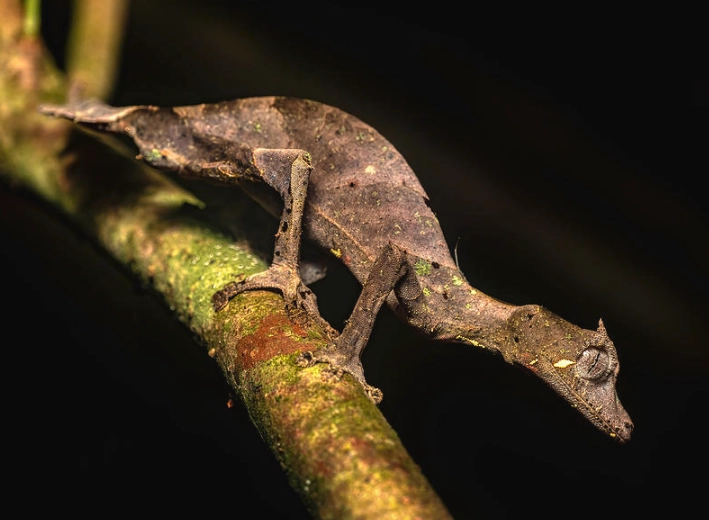
Their world is one of vertical trunks, moss, lichen, lianas, and a constant cycle of wet and dry. Temperatures are moderate, and humidity is consistently high, often near 80% or more, especially at night and in the early morning. This environment is the single most important factor in their biology and, consequently, in their care. Replicating this microclimate is the biggest hurdle for any keeper.
According to the International Union for Conservation of Nature (IUCN) Red List, which assesses the conservation status of species, Uroplatus phantasticus is currently classified as Least Concern. However, this status is deceptive and comes with a major caveat. The IUCN notes that while the species has a relatively wide distribution, its forest habitat is declining rapidly due to slash-and-burn agriculture, logging, and human expansion. So, while they aren't imminently threatened with extinction, the pressure on their home is relentless and severe.
| Habitat Characteristic | Details |
|---|---|
| Location | Eastern Madagascar rainforests |
| Elevation | Typically 300 to 1000 meters above sea level |
| Climate | Humid tropical; distinct wet and drier seasons |
| Daytime Temp (Approx.) | 72-78°F (22-26°C) |
| Nighttime Temp (Approx.) | Can drop to 65-70°F (18-21°C) |
| Humidity | 75-100%, especially at night |
| Primary Threats | Deforestation, habitat fragmentation, pet trade (regulated) |
The Art of Disappearing: Behavior and Camouflage
This is where the satanic leaf-tailed gecko truly shines. Its camouflage isn't just a passive color match; it's a full-body performance. During the day, it finds a vertical perch, often on a small sapling or a thin branch. It then flattens its body, tucks its limbs in, and lets its head hang down. The skin flaps align with the bark, the tail curls or hangs to look like a withered leaf, and even the gecko's posture mimics a dead piece of vegetation.
Some individuals will even sway gently in a breeze, enhancing the illusion. It's a breathtaking example of crypsis. At night, they become active hunters. They move slowly and deliberately along branches, using their large eyes and excellent night vision to spot prey. Their hunting style is a patient stalk, followed by a lightning-fast lunge to grab an insect with their mouth.
When threatened, a satanic leaf-tailed gecko has a few tricks. First, it will rely on its camouflage, staying perfectly still. If discovered, it may open its mouth wide, revealing a bright red or orange interior, and let out a loud, distress call—a sharp squeak or scream meant to startle a predator. It might also stand tall on its legs to appear larger. As a last resort, it can voluntarily drop its tail (a process called autotomy). The wriggling, detached tail distracts the predator while the gecko makes its escape. The tail will regrow, but the new one is often smoother and less perfectly "leaf-like" than the original.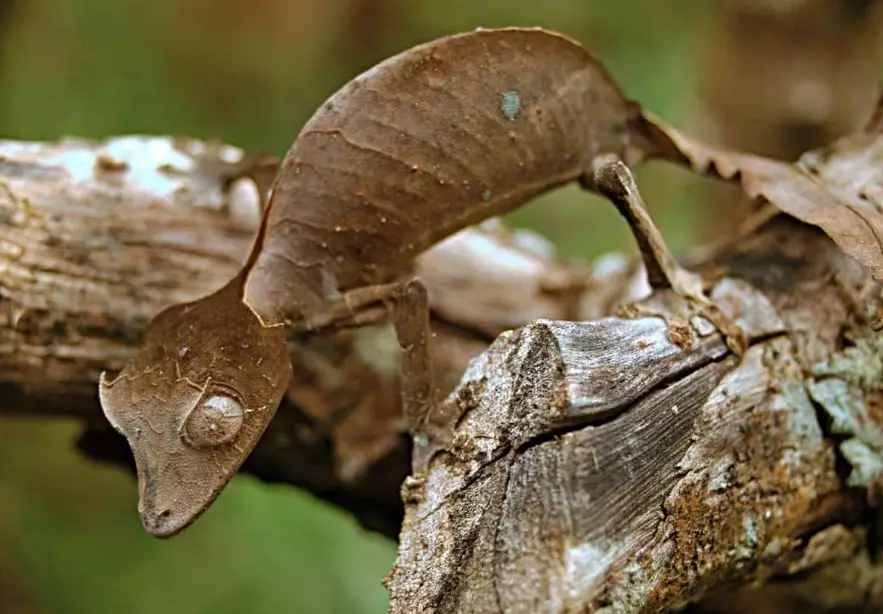
Considering a Satanic Leaf-Tailed Gecko as a Pet? Read This First.
This is the section most people are here for, and it's the one I need to be most honest about. I've kept reptiles for years, and I would still think twice before taking on a satanic leaf-tailed gecko. They are what we in the hobby call an "intermediate to advanced" species, and for very good reasons.
Their care is almost entirely about replicating that specific Malagasy rainforest microclimate. Fail at that, and the gecko will fail to thrive. It's that simple. They are also almost entirely nocturnal, so you won't get a pet that's active during the day, lounging under a heat lamp. Your interaction will be with a hidden, sleeping lizard by day and, if you're lucky, a shadowy hunter by night. For some, that's the appeal—a living piece of art. For others, it's a disappointment.
The Non-Negotiable Enclosure Setup
Getting the housing right is 90% of the battle. A small, dry tank will lead to a dead gecko. It's not an exaggeration.
- Enclosure Type: A tall, front-opening terrarium is best. Screen tops let out too much humidity. Aim for at least 18" x 18" x 24" (H) for a single adult, but bigger is always better. Height is more important than floor space.
- Substrate: You need something that holds moisture to maintain humidity. A deep layer of a moisture-retentive mix like coconut fiber, orchid bark, or a bioactive substrate is ideal. This also allows for live plants.
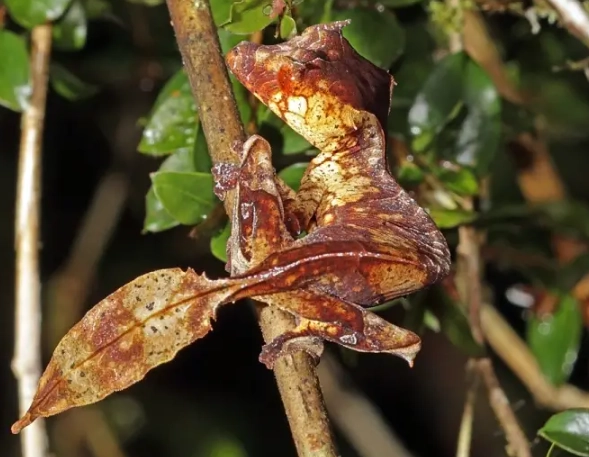
- Plants & Decor: This is crucial. You must provide dense, vertical climbing structures. Use cork bark tubes, branches, and vines to create a complex network. Live plants like pothos, philodendron, bromeliads, and air plants are excellent—they help with humidity, look beautiful, and give the gecko more hiding spots. The goal is to make the gecko feel hidden and secure from all angles.
- Lighting & Heating: They do not need intense, desert-like heat. A low-wattage heat source (like a ceramic heat emitter or a very low-wattage basking bulb) on one side of the enclosure can create a gentle temperature gradient. The key is no bright, hot basking spot. They need a consistent day/night cycle, so use a low-level UVB light (like a shadedweller or 5.0 UVB tube). While their need for UVB is debated, providing low levels is considered best practice for calcium metabolism and overall well-being. Research from institutions like the California Academy of Sciences, which works with rare herpetofauna, emphasizes creating holistic, naturalistic environments.
- Humidity: This is the killer. You must achieve high humidity, especially at night. This is done through a combination of a moisture-retaining substrate, live plants, and misting. You will need a high-quality misting system (automatic is highly recommended) to spray the enclosure heavily once or twice a day, simulating rain and dew. A hygrometer is essential to monitor levels. The enclosure should dry out slightly during the day but become very humid at night.
| Care Parameter | Target Range | How to Achieve It |
|---|---|---|
| Day Temperature | 72-78°F (22-26°C) | Room temp often sufficient; low-wattage heat emitter if needed |
| Night Temperature | 65-72°F (18-22°C) | Allow for a natural drop; turn off day heat |
| Daytime Humidity | 60-75% | From substrate evaporation and morning mist |
| Nighttime Humidity | 80-100% | Heavy evening misting with automated system |
| Lighting Cycle | 12 hours on, 12 hours off | Timer for lights; use low-level UVB |
| Enclosure Size (Min) | 18"x18"x24"H | Tall, front-opening glass or PVC terrarium |
Diet and Feeding: The Insect Menu
In the wild, the diet of a satanic leaf-tailed gecko consists of whatever small invertebrates it can catch—crickets, moths, flies, spiders. In captivity, we need to provide a varied diet.
Gut-loaded (well-fed) crickets and dubia roaches are excellent staples. You should also offer other feeders like black soldier fly larvae, silkworms, and occasional waxworms or hornworms as treats. The prey size should be appropriate—nothing wider than the space between the gecko's eyes. Dust the insects with a high-quality calcium supplement (with D3 if no UVB is provided, without D3 if UVB is present) at most feedings, and with a multivitamin once a week.
Feed at night, when the gecko is active. Place the insects in the enclosure near where the gecko perches. Some keepers use feeding ledges. You'll need to observe to ensure it's eating, as uneaten crickets can harass a sleeping gecko during the day.
Watching a satanic leaf-tailed gecko hunt is a lesson in patience and precision. They don't just snap; they calculate.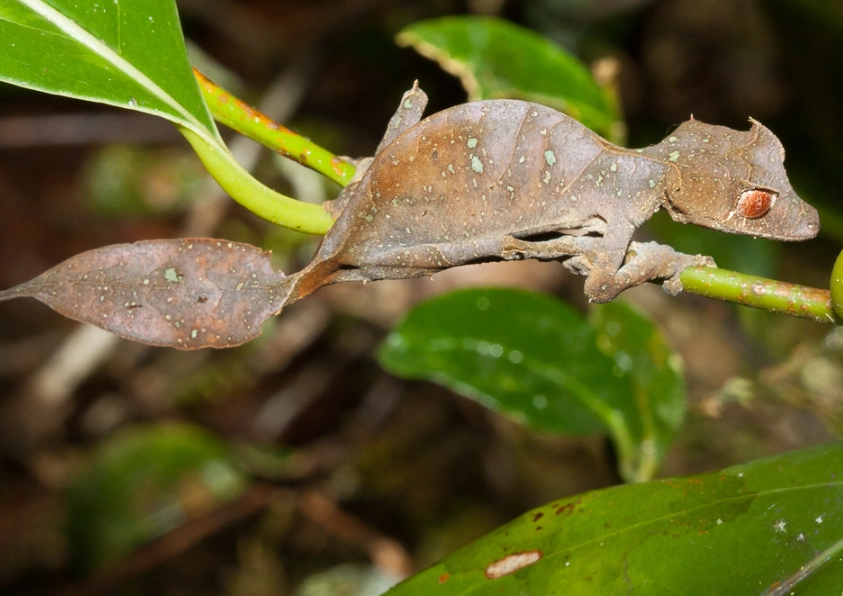
Common Questions About Satanic Leaf-Tailed Geckos
Let's tackle some of the specific things people always want to know.
Are they venomous or dangerous?
Not at all. They are completely harmless to humans. The "satanic" name is purely for dramatic effect based on their unusual appearance. They have small teeth and could give a defensive nip if severely provoked, but it would be no worse than a pinprick.
How long do they live?
In captivity, with excellent care, a satanic leaf-tailed gecko can live between 5 to 10 years, possibly longer. Their lifespan in the wild is likely shorter due to predation and environmental factors.
Can you house them together?
Generally, no. Males are territorial and will fight, sometimes to the death. Even male-female pairs should only be housed together by experienced breeders with very large, carefully managed enclosures. For a pet owner, a single gecko per enclosure is the only responsible rule.
Where can you buy one?
This is critical. Always purchase from a reputable, specialized breeder who can provide information about the gecko's history and health. Captive-bred (CB) specimens are vastly preferable to wild-caught (WC). Wild-caught animals are often stressed, carry parasites, and struggle to adapt to captivity, leading to high mortality. Buying captive-bred supports sustainable practices and gives you a healthier, hardier pet. Expect to pay a significant amount for a healthy, captive-bred satanic leaf-tailed gecko, often several hundred dollars. The price reflects their breeding difficulty and specialized care needs.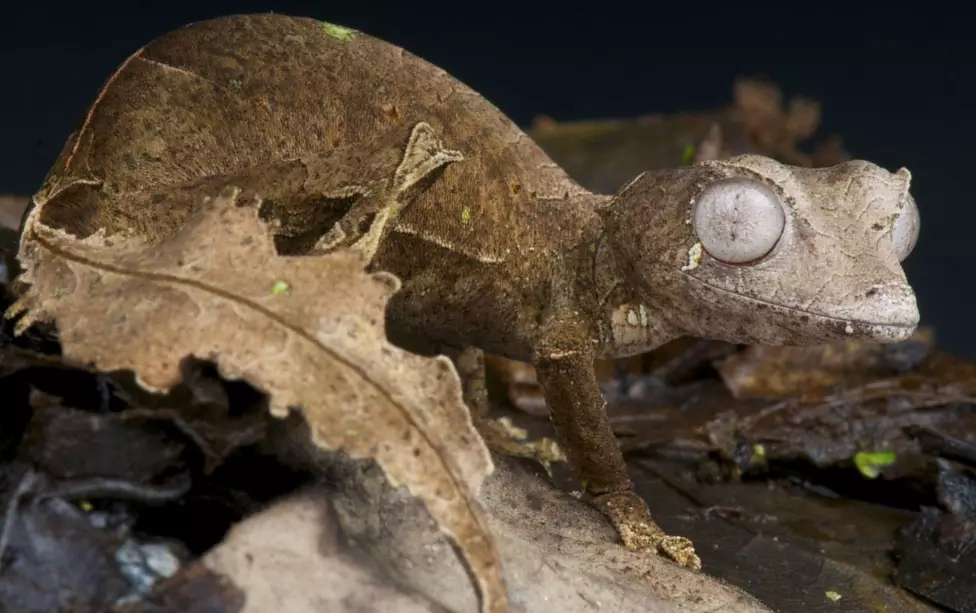
How can you tell if it's healthy?
A healthy satanic leaf-tailed gecko should have clear, bright eyes, a plump tail (its fat reserve), and be alert and reactive (at night). It should have good muscle tone and no visible retained shed on its toes or body. Lethargy during its active period, a severely sunken tail, stuck shed, or mucus around the nose or mouth are red flags requiring a veterinarian specializing in reptiles (an exotics vet).
Conservation and Ethics: The Bigger Picture
Owning any animal from a fragile ecosystem like Madagascar comes with ethical responsibility. While Uroplatus phantasticus is not the most threatened of its genus (some, like U. giganteus, are far rarer), the entire ecosystem is under siege.
By choosing a captive-bred gecko, you are not contributing to the removal of animals from the wild. Furthermore, supporting organizations that work on habitat conservation in Madagascar is a great way to give back. The Wildlife Conservation Society's Madagascar program is one example of many groups working on the ground to protect these irreplaceable forests.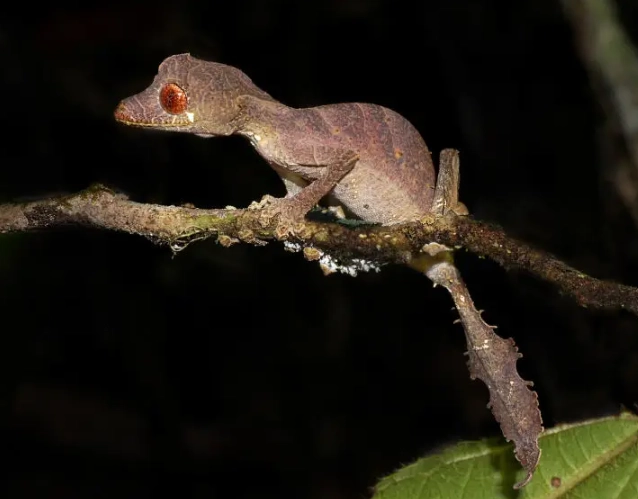
Good keepers also participate in the community, sharing knowledge and experiences. Detailed husbandry data helps everyone improve care standards. For instance, a 2013 study published in Salamandra journal provided valuable insights into the reproductive biology of Uroplatus geckos, information that directly informs better breeding practices in captivity.
The satanic leaf-tailed gecko is a testament to evolution's creativity. It's a fragile, mesmerizing, and demanding creature. It teaches us that the most incredible pets are often not the cuddliest, but the ones that challenge us to look closer, to understand a completely different way of life, and to recreate a tiny piece of a distant, vanishing world on our shelf. If you're willing to put in the work—and it is serious work—the reward is the privilege of caring for one of nature's most perfect illusions.
Just don't expect it to be easy. And for goodness' sake, don't buy one on a whim because it looks cool. That's a surefire path to disappointment, for you and the gecko.
Reader Comments