Your Quick Guide to Squirrel Tree Frogs
- What Exactly Is a Squirrel Tree Frog?
- Life in the Wild: Where and How They Live
- Considering a Squirrel Tree Frog as a Pet? The Honest Care Guide
- Health and Common Problems: What to Watch For
- Breeding Squirrel Tree Frogs: A Advanced Endeavor
- Conservation: Why Backyard Matters
- Your Squirrel Tree Frog Questions, Answered
- Final Thoughts
You're outside on a warm, humid evening in the southeastern US, maybe after a rainstorm. The air is thick, and the world is buzzing with life. Then you hear it – a short, raspy, almost duck-like quack coming from the bushes or a tree. It's not a bird. It's not an insect. Chances are, you've just heard the call of the squirrel tree frog (Hyla squirella).
These little frogs are masters of disguise and full of personality, but information about them can be surprisingly scattered. If you've found one in your yard, are thinking about caring for one, or just want to know what that noise is, you've come to the right place. I've spent a lot of time around these guys, both in the wild and talking to folks who keep them, and I want to give you the straight story – the good, the tricky, and the absolutely fascinating.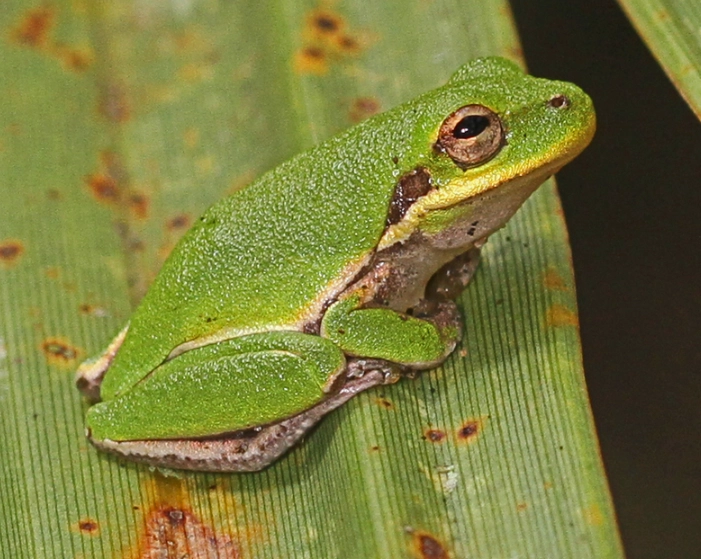
What Exactly Is a Squirrel Tree Frog?
Let's clear up the basics first. The squirrel tree frog isn't related to squirrels, of course. The name comes from its call, which some people think sounds like a squirrel's chatter. I've always thought it was more of a nasal quack, but the name stuck. Scientifically, it's Hyla squirella. They're part of the huge tree frog family and are cousins to the more famous American green tree frog.
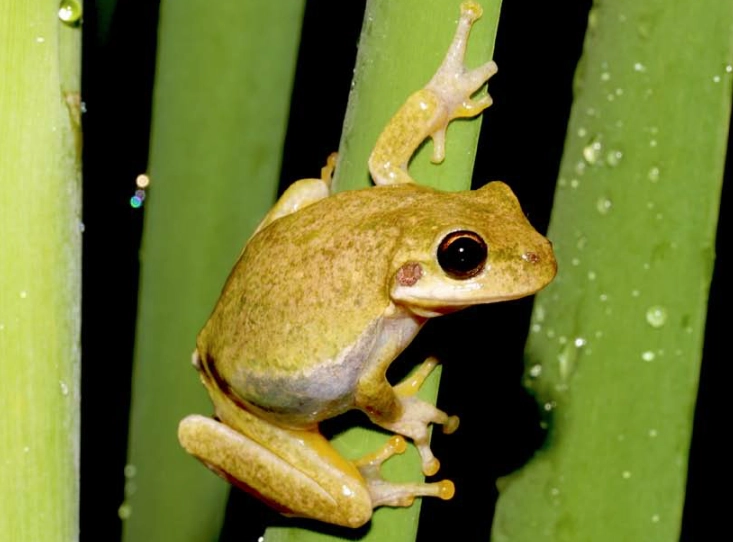
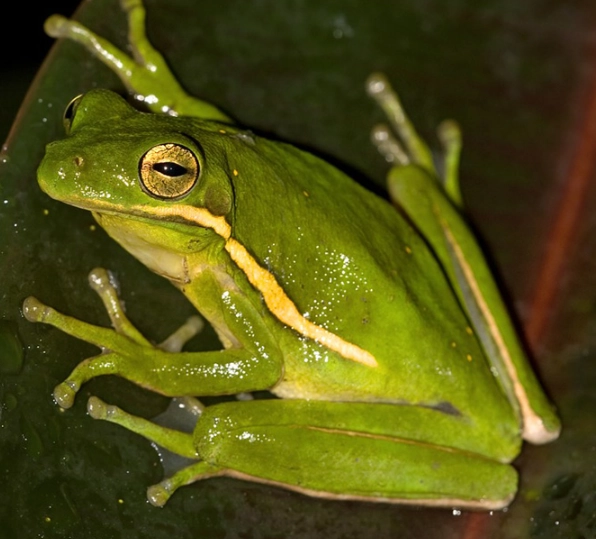
Their claim to fame is their camouflage. I've seen one sitting on a green leaf, bright emerald. An hour later, after moving to a brown branch, the same frog could be a dusty chocolate color. It's not instant like a chameleon, but it happens over minutes to hours, and it's incredibly effective. This ability makes pinning down a single "look" for the squirrel tree frog pretty hard. They're the shape-shifters of the frog world.
How to Spot One: Identification Made (Almost) Easy
So with all that color-changing, how do you know you're looking at a Hyla squirella and not another species? You look for the clues that don't change.
- Size & Build: They're small. Adults typically range from 1 to 1.5 inches (2.5 to 3.8 cm) in length. They're fairly slender tree frogs with long legs and large toe pads for climbing.
- The Unchanging Mark: Look for a light-colored stripe along the upper jaw. It's usually pretty crisp and runs from the nose back towards the ear. This is a key field mark.
- Eye Line: A dark, horizontal bar often runs through the eye, which can help break up their outline.
- Belly: The underside is usually granular (not smooth) and white or cream-colored.
- Sound: When in doubt, listen. Their call is a harsh, nasal "quank" or "waaank," often repeated in short series. It lacks the melodic, bell-like tone of the green tree frog. The University of Georgia's Savannah River Ecology Lab has excellent, verified recordings if you want a reference.
Honestly, the first few I identified, I was guessing. It was that jaw stripe that finally made me confident.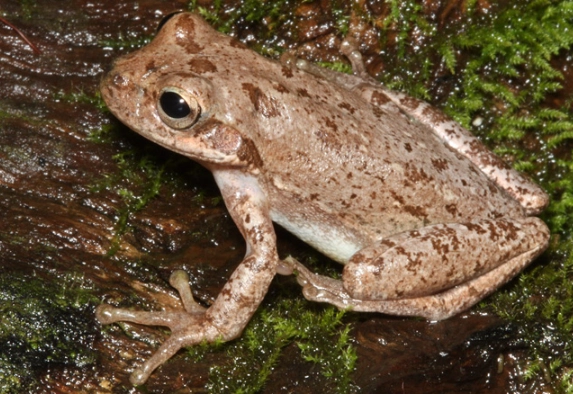
Common Look-Alikes: Don't Get Fooled
This is where a lot of online guides fall short. They show a picture of a green squirrel tree frog and call it a day. But in the field, you need to compare. Here’s a quick breakdown of who’s who.
| Species | Key Differences from Squirrel Tree Frog | Habitat Overlap? |
|---|---|---|
| American Green Tree Frog (Hyla cinerea) | Larger (up to 2.5 inches), almost always bright green with a clean, bold white or yellow stripe down its side. Smooth skin. Call is a clear, repeated "queenk-queenk-queenk." | Yes, very common. |
| Gray Tree Frog (Hyla versicolor/chrysoscelis) | Larger, chunkier, with rough, warty skin. Has a bright yellow or orange flash coloration on inner thighs. Call is a short, melodic trill. | Yes, but often in slightly drier woods. |
| Cope's Gray Tree Frog (Hyla chrysoscelis) | Virtually identical to Gray Tree Frog in appearance; differentiated mainly by call (faster, harsher trill) and genetics. | Yes. |
| Barking Tree Frog (Hyla gratiosa) | Much larger (up to 3 inches), rounder body with distinct, dark round spots. Call is a loud, hollow "donk" or "toonk." | Yes, in parts of its range. |
See? The squirrel tree frog is the small, smooth one with the jaw stripe. Once you get that in your head, it gets easier.
 Hearing that quack in the twilight never gets old. It's the sound of a humid summer night.
Life in the Wild: Where and How They Live
Squirrel tree frogs are true sons and daughters of the Southeast. Their range stretches from coastal Virginia all the way down through Florida, and west to Texas. They've also been introduced to places like the Bahamas. They're not picky about real estate, which is why they're so successful. You'll find them in pine forests, hardwood hammocks, flooded ditches, swamps, and, most commonly for people, in suburban gardens and on the walls of houses near lights (which attract their insect prey).
They're opportunistic breeders. Unlike frogs that need permanent ponds, squirrel tree frogs will use any temporary, fish-free water source: drainage ditches, flooded fields, wheel ruts, even large puddles or water-filled buckets after a heavy rain. This strategy avoids predators like fish that would eat their eggs and tadpoles. The tadpoles develop quickly, racing to metamorphose before their puddle dries up.
Their diet is purely insectivorous. Moths, flies, mosquitoes, ants, small beetles – anything they can catch with that lightning-fast, sticky tongue. In your garden, they're providing free pest control.
Considering a Squirrel Tree Frog as a Pet? The Honest Care Guide
Alright, this is the big one. You've seen pictures, maybe heard one, and you're intrigued by the idea of keeping a little color-changing frog. Can it be done? Yes. Is it as simple as a fish tank? Absolutely not. Let's walk through it.
I remember setting up my first arboreal frog tank. I made mistakes – it was too dry, the plants died. It's a learning process. The goal is to recreate a slice of their humid, vertical world.
The Non-Negotiables: Habitat Setup
Think vertical. A standard horizontal reptile tank is a waste of space for an animal that loves to climb. A tall terrarium (often called a vivarium) is essential. For a pair or small group, an 18x18x24 inch tall tank is a good starting point.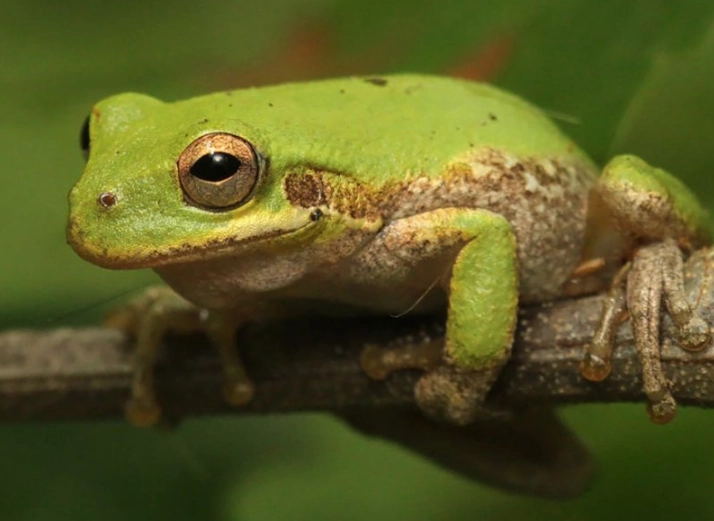
- Substrate: Something that holds moisture but doesn't stay soggy. A mix of coconut fiber, sphagnum moss, and orchid bark works well. Avoid gravel or anything they could accidentally ingest.
- Climbing & Hiding: This is the fun part. Use branches, cork bark tubes, and live or sturdy artificial plants (like Pothos or Philodendron) to create a dense network of climbing and hiding spots. They feel secure when they can hide during the day.
- Water: A shallow, clean water dish is needed. They will soak in it. The water must be dechlorinated – tap water contains chlorine/chloramines that can harm their permeable skin. Use a reptile water conditioner.
- Heating & Lighting: They don't need intense basking heat. Room temperature (70-78°F or 21-25°C) is usually fine. A low-wattage heat pad on the side of the tank can help if your room is cold. They don't require special UVB lighting like some reptiles, but a gentle, full-spectrum light on a timer (12 hours on/off) helps regulate their day/night cycle and keeps plants healthy.
- Humidity: This is critical. Aim for 60-80% humidity. You'll achieve this by misting the tank with dechlorinated water once or twice daily and having a moisture-retentive substrate. A hygrometer (humidity gauge) is a cheap and vital tool. Low humidity leads to disastrous skin problems.
What to Feed Your Frog (And What to Do When They Won't Eat)
In captivity, a varied diet is key. The staple should be appropriately sized live insects:
- Flightless Fruit Flies (Drosophila melanogaster): Perfect for young, small frogs.
- Pinhead Crickets: Another great starter food.
- Small Crickets: The workhorse diet for adults.
- Other Treats: Occasionally, you can offer small waxworms, black soldier fly larvae, or tiny silkworms for variety.
Here's the crucial part: You must "gut-load" and dust the insects. Gut-loading means feeding the crickets nutritious foods (commercial gut-load diet, veggies) 24 hours before feeding them to your frog. This passes nutrients on. Dusting means lightly coating the insects with a vitamin/mineral powder supplement (containing calcium and vitamin D3) right before feeding. Do this 2-3 times a week. Without this, your frog will develop severe nutritional deficiencies, like Metabolic Bone Disease, which is a slow, terrible death.
Now, the big worry for new owners: "My squirrel tree frog isn't eating!" This is a common panic point. First, don't panic. New frogs can take several days to a week to settle in and start feeding. Ensure your temperatures and humidity are correct – if it's too cold, their metabolism slows. Try different prey. Sometimes offering a wiggling insect right in front of their face with soft-tipped tweezers can trigger a feeding response. If refusal persists beyond 10 days, or if the frog is losing weight, consult an exotic veterinarian. It could be stress, illness, or parasites.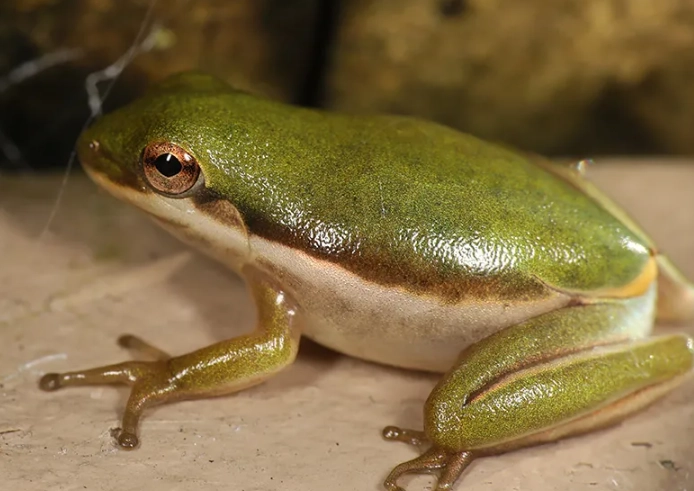
Health and Common Problems: What to Watch For
A healthy squirrel tree frog is alert, has clear eyes, and jumps away when approached (during the night). Its skin should look smooth and moist, not dry or sloughing.
Common health issues often stem from husbandry mistakes:
- Skin Infections (Red-Leg): This is a bacterial infection often caused by poor water quality or abrasive surfaces. Look for reddening on the belly or legs, skin ulcers, or lethargy. It requires immediate veterinary treatment with antibiotics.
- Nutritional Deficiencies: As mentioned, caused by not dusting/gut-loading prey. Symptoms include lethargy, weak bones (difficulty climbing, bowed limbs), and tremors. Prevention is 100% easier than cure.
- Dehydration/Dry Skin: Skin looks dull, wrinkled, or is shedding in patches. Frog may sit in the water dish constantly. Fix your humidity and misting routine immediately.
- Parasites: Internal parasites (from wild-caught prey or an infected frog) can cause weight loss despite eating. A fecal exam by a vet can diagnose this.
The best resource for understanding amphibian diseases in depth is the AmphibiaWeb project, which is a collaborative effort led by UC Berkeley. It's a treasure trove of scientifically vetted information.
Breeding Squirrel Tree Frogs: A Advanced Endeavor
I'll be frank: breeding most tree frogs in captivity is not for beginners. It often requires simulating seasonal changes (a "rainy season") through careful manipulation of temperature, humidity, and light cycles. For the squirrel tree frog, you typically need to create a cooler, drier period for a few months, then gradually warm and mist heavily to simulate spring/summer rains.
If successful, the female will lay small clutches of eggs on vegetation just above the water line in a dedicated breeding tank. The tadpoles will drop into the water when they hatch. Raising tadpoles requires clean, aerated water and specific foods like spirulina powder and finely crushed algae wafers. The metamorphosis from tadpole to tiny froglet is one of nature's great miracles, but it's a fragile, labor-intensive process.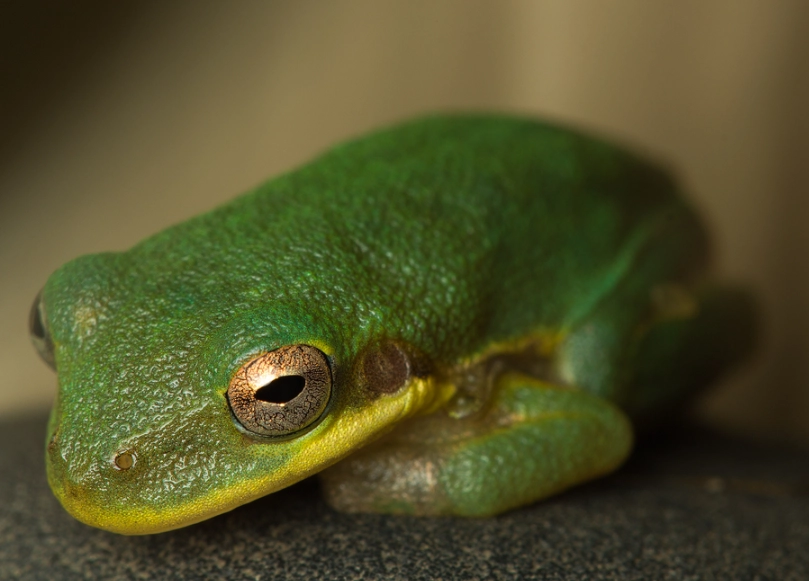
Conservation: Why Backyard Matters
The squirrel tree frog is currently listed as a species of "Least Concern" by the IUCN, meaning its overall population is stable. But "common" doesn't mean invincible. Their reliance on small, temporary wetlands makes them vulnerable to habitat loss and pollution. The widespread use of pesticides and herbicides can poison their insect food source and contaminate the water they breed in.
What can you do? If you live in their range, you can make your yard frog-friendly.
- Create a Frog Pond: A simple, shallow, fish-free pond with gently sloping sides and native plants can become a breeding haven.
- Go Chemical-Free: Reduce or eliminate pesticide use. Let the frogs handle the bugs.
- Provide Cover: Leave leaf litter, logs, and dense shrubbery. These provide daytime hiding spots and hunting grounds.
- Watch the Roads: On rainy nights, frogs are on the move. Be cautious when driving.
- Report Sightings: Citizen science projects like iNaturalist help scientists track species distribution and health over time. Uploading a photo of a squirrel tree frog in your garden contributes to real science.
Protecting them isn't just about one species; it's about preserving the health of the entire ecosystem they're a part of. The U.S. Fish and Wildlife Service has resources on backyard habitat conservation that apply broadly.
Your Squirrel Tree Frog Questions, Answered
Are squirrel tree frogs poisonous?
No. They are not poisonous to humans or pets. Like all amphibians, they have sensitive skin that can absorb chemicals, so you should always wash your hands before and after handling them (for their protection and yours), but they do not produce toxins.
How long do squirrel tree frogs live?
In the wild, their lifespan is likely 2-4 years, facing predators and environmental challenges. In captivity, with excellent care, they can live 5 years or more.
Can squirrel tree frogs live with other frogs?
Generally, it's not recommended, especially for beginners. Mixing species can spread disease, cause competition for food, and lead to stress. If you attempt it, it should only be with similar-sized, similar-temperament species (like other small Hyla tree frogs) in a very large, well-researched setup. Housing a squirrel tree frog with a larger, more aggressive frog is a recipe for disaster.
Why is my squirrel tree frog always brown?
Don't worry! It's not sick. Color is primarily a response to background, temperature, humidity, and even mood. A frog that feels secure and is on a green plant may turn green. One that is stressed, cooler, or on a brown substrate will often stay brown. As long as it's eating and behaving normally, the color is just fashion.
Do they make good pets for kids?
This is a personal call, but my opinion is: not really. They are fragile, nocturnal, and require very specific, consistent care (maintaining humidity, feeding live insects, supplementing). The handling must be minimal and supervised with washed hands. The daily care is better suited for a dedicated teen or adult. A child's pet should be more robust and interactive.
Final Thoughts
The squirrel tree frog is a remarkable little animal. It's a master of camouflage with a quirky call, a beneficial garden resident, and a challenging but rewarding pet for the right person. The key takeaway is respect – for their needs in captivity and for their role in the wild.
Whether you're just learning to identify the frog quacking outside your window or you're meticulously planning a bioactive terrarium, I hope this guide gave you the practical, no-nonsense information you were looking for. It's all about observing, learning, and appreciating one of the small, fascinating threads in the web of life. Now go listen on a humid night. You'll hear them.
Reader Comments