Quick Navigation
Let's be honest, the first thing that grabs you about a day gecko is the color. I mean, come on. They look like they've been painted by some hyper-enthusiastic artist who only had the brightest greens, reds, and blues on their palette. But after keeping a few of these guys over the years, I've learned there's a whole lot more beneath that dazzling exterior. They're not just vivarium decorations; they're complex, active little reptiles with very specific needs.
If you're here, you're probably thinking about getting one, or you just got one and are realizing there's more to it than the pet store let on. Maybe you saw one clinging to a glass wall, those sticky toe pads splayed out, and thought "I need that in my life." I get it. I've been there.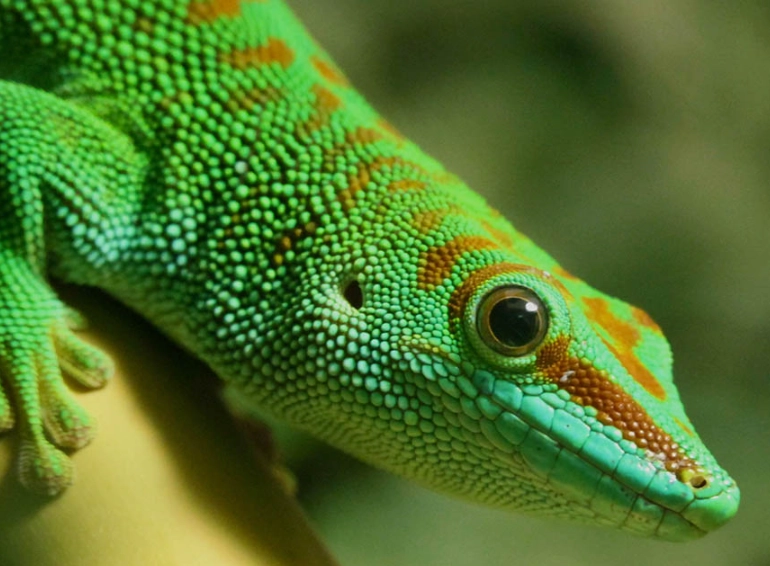
The core thing you need to know right away: Day geckos are diurnal, tropical lizards primarily from Madagascar and surrounding islands. Unlike most geckos, they're active during the day, which is a huge part of their appeal. You actually get to watch them! But that tropical part? It's non-negotiable. Get the humidity wrong, and you'll have a very sad, struggling lizard on your hands.
So, What Exactly Is a Day Gecko?
We throw the term "day gecko" around, but it actually refers to all the species within the genus Phelsuma. That's the scientific name you'll see floating around. They're part of the larger Gekkonidae family, but they've carved out their own unique niche. The most famous member, by far, is the Madagascar giant day gecko (Phelsuma grandis). You've seen it. Bright green body, red markings on the back, a red stripe from the nostril to the eye. It's the poster child.
But there are dozens of other species and subspecies, ranging from the tiny, jewel-like Phelsuma klemmeri to the stunning electric blue Phelsuma serraticauda. What binds them all together are those key traits: diurnal activity, mostly arboreal (tree-dwelling) lifestyles, and an inability to vocalize (no chirps or barks like some other geckos). They communicate through color, posture, and some quick head-bobbing.
One of the coolest things about them? Their feet. They have lamellae—microscopic hair-like structures—on their toe pads that allow them to climb virtually any surface, including smooth glass. It's a masterpiece of evolution. Watching a day gecko sprint up a vertical pane is a never-ending source of fascination.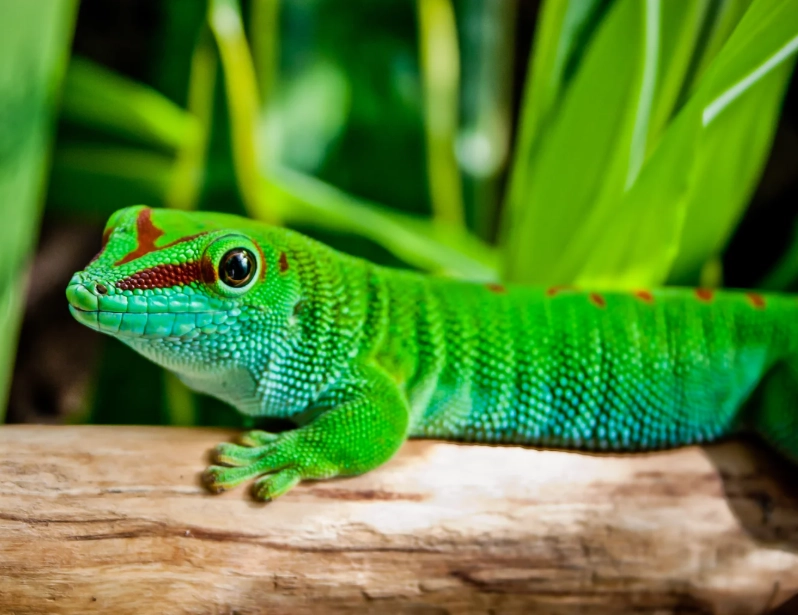
Choosing Your Day Gecko: A Breakdown of Popular Species
This is where most people make their first big decision. You can't just walk in and get "a day gecko." The species you choose dictates the size of enclosure, the care difficulty, and even your long-term enjoyment. A nervous, flighty species might always hide, while a bolder one will put on a show.
Let's cut through the noise. Here’s a real-talk comparison of the most common day geckos you'll find in the pet trade.
| Species (Common Name) | Scientific Name | Adult Size | Color & Key Features | Temperament & Care Level |
|---|---|---|---|---|
| Madagascar Giant Day Gecko | Phelsuma grandis | 10 - 12 inches | Vibrant green with red dorsal spots/blotches and head stripes. Large, robust. | Often bold, can be hand-tame with patience. Intermediate care. Needs large space. |
| Gold Dust Day Gecko | Phelsuma laticauda | 4 - 5 inches | Bright green with gold/yellow speckles on the neck and back, blue eye rings. | Fast, skittish, excellent display animal but not for handling. Beginner-Intermediate. |
| Standing's Day Gecko | Phelsuma standingi | 9 - 10 inches | More muted green or turquoise with a pattern of dark bars or chevrons. Pronounced head. | Generally calmer than giants. Can be shy. Intermediate care. |
| Pebble or Lined Day Gecko | Phelsuma lineata | 4 - 5 inches | Green with distinct black lines running from snout to tail. Striking pattern. | Active and visible, but very fast. Best as a display pet. Beginner-Intermediate. |
| Klemmer's Day Gecko | Phelsuma klemmeri | 3 - 4 inches | Stunning powder blue head, yellow neck, and turquoise body. Tiny and slender. | Delicate, social (can be kept in pairs/groups). Expert-level care due to humidity/food needs. |
See? Not all day geckos are created equal.
My personal take? For a first-time owner, the Gold Dust Day Gecko is a fantastic starting point. They're hardy, their needs are well-documented, and they're absolutely stunning in a well-planted terrarium. Just go in with the expectation that you'll be watching it, not holding it. The giant day gecko is amazing, but leaping from a 5-inch gecko to a 12-inch one is a bigger jump in responsibility than people think, especially regarding cage size and food costs.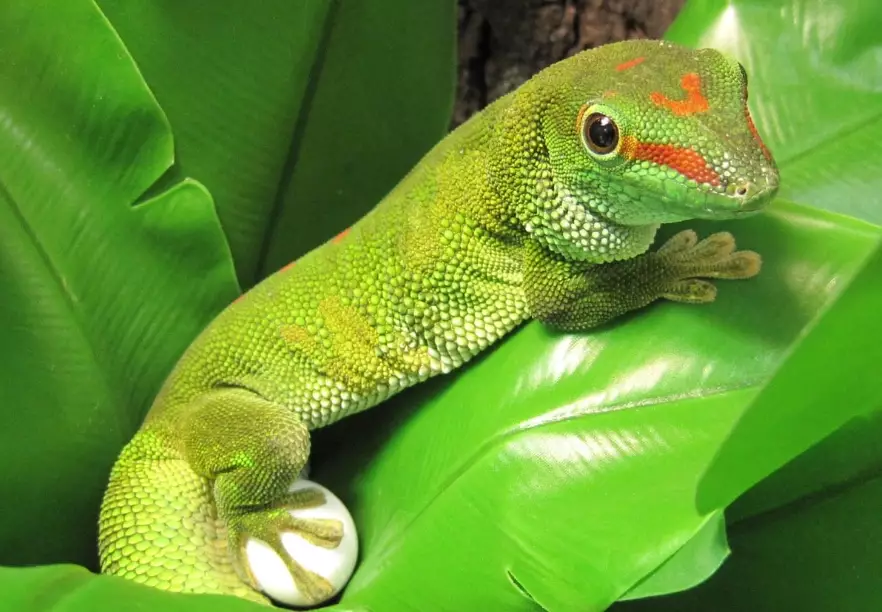
A word of caution on "beginner" labels: Even the easiest day gecko species requires a significant upfront investment in proper equipment (lights, heating, hygrometers) and daily attention to humidity and temperature. If you want a pet you can ignore for a weekend, a day gecko is not it. Their skin is also incredibly delicate and can tear easily, which is the main reason handling is discouraged.
Building a Day Gecko Paradise: The Habitat Setup
This is the most important part of keeping any day gecko healthy and happy. You're trying to replicate a slice of a Malagasy rainforest. Fail here, and nothing else matters.
The Enclosure: Size and Type
Bigger is always, always better. The old minimums you see online (e.g., 12x12x18 for a small species) are just that—minimums. They allow for survival, not thriving.
- For small species (Gold Dust, Lined): Start at 18x18x24 inches (Tall). A 24x18x24 is even better.
- For large species (Giant, Standing's): You're looking at 24x18x36 inches as a good minimum. I know someone who keeps a breeding pair of giants in a 48x24x48, and their behavior is completely different (more active, more natural) than in a smaller tank.
Screen vs. Glass? For day geckos, you need glass or acrylic (like a front-opening terrarium). Screen cages lose humidity way too fast. You'll be spraying constantly. A glass terrarium with a screened top section for ventilation is the gold standard.
Heating and Lighting: Non-Negotiables
This is a two-part system, and both parts are critical.
- Heat Source: You need a temperature gradient. One end (the basking spot) should be 85-90°F (29-32°C). The cool end should be around 75-78°F (24-26°C). Nighttime temps can drop to 70-75°F. A low-wattage halogen bulb or a deep heat projector on a thermostat is the safest way to achieve this. Never use heat rocks.
- UVB Lighting: This is the part beginners often miss. Day geckos are diurnal baskers. They require UVB light to synthesize vitamin D3, which is essential for calcium absorption and preventing Metabolic Bone Disease (MBD). A quality, linear T5 HO UVB bulb (like a Zoo Med ReptiSun 5.0 or Arcadia Forest 6%) covering about 1/3 of the enclosure length is mandatory. Replace it every 10-12 months, even if it still lights up—the UV output decays.

Pro Tip: Put your lights (heat and UVB) on a timer. 12 hours on, 12 hours off mimics a natural cycle and takes the guesswork out of your day. Your day gecko will settle into a predictable routine.
Humidity and Hydration: Creating the Rainforest
This is the trickiest part for many keepers. Day geckos need high humidity, but also need it to drop slightly to prevent respiratory infections and mold.
- Target Range: 60-80% humidity. It should spike higher (up to 90-100%) right after misting, then gradually fall.
- How to achieve it: Use a deep substrate that holds moisture (like a mix of coconut fiber, orchid bark, and sphagnum moss). Mist the enclosure heavily 1-2 times daily with a hand sprayer or use an automated misting system (a game-changer for consistency). A small, shallow water dish is still good to have, but most day geckos will drink water droplets from leaves and glass.
You absolutely need a digital hygrometer (those analog dial ones are notoriously inaccurate). Place it in the middle of the enclosure.
Interior Design: Plants, Hides, and Climbing
Go bioactive if you can. It's more work to set up, but less maintenance in the long run and creates a stunning, natural environment. Live plants like Pothos, Snake Plants, Bromeliads, and Ficus are great. They help with humidity and provide hiding spots.
Provide an insane amount of climbing opportunities. Cork bark tubes, bamboo poles, grapevine wood, and magnetic ledges for the glass walls. The goal is to create a 3D playground. Day geckos feel secure when they can move vertically and have plenty of leafy cover to retreat to.
A personal failure of mine early on was making the enclosure too open. I thought it looked "clean." My gecko thought it looked terrifying and spent most of its time in one corner. Adding more clutter (in a nice way) made it much more active.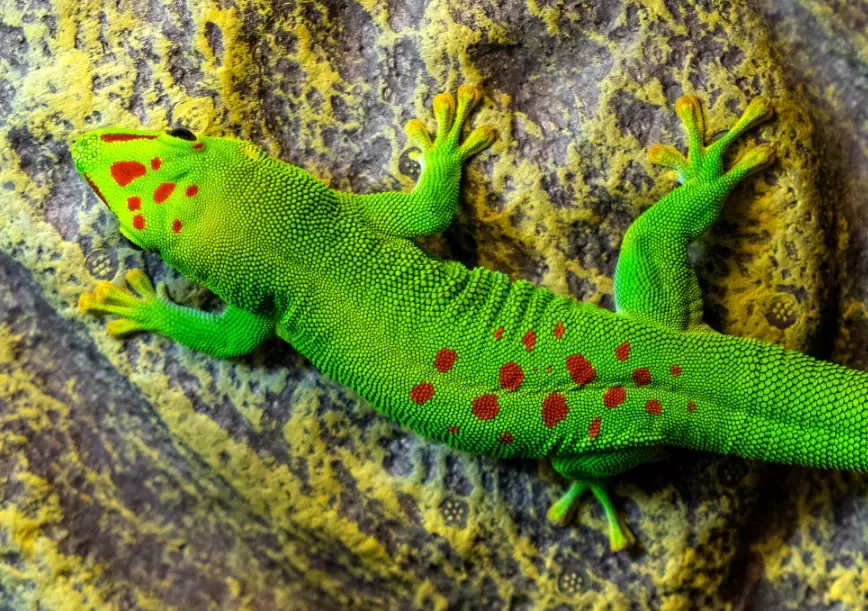
Feeding Your Day Gecko: From Bugs to Banana
Here's where you get to interact a bit. Day geckos are primarily insectivorous but have a famous sweet tooth for fruit and nectar.
Staple Insects: Crickets, dubia roaches, and black soldier fly larvae are excellent staples. The rule of thumb for insect size: nothing wider than the space between the gecko's eyes.
The Critical Part - Gut Loading & Dusting: You are what you eat, and your gecko is what its food eats.
- Gut Load: Feed your feeder insects nutritious foods (commercial gut load, veggies like carrots and squash) for at least 24 hours before offering them to your gecko.
- Dusting: At almost every feeding, you need to dust the insects with a calcium supplement (without D3 if your UVB is correct). 1-2 times a week, use a calcium powder with D3 or a multivitamin powder. This is the frontline defense against MBD.
Fruit & Nectar: This is the fun part. Most day geckos go absolutely nuts for mashed ripe banana, mango, papaya, or apricot. You can also offer commercial crested gecko diet (like Repashy or Pangea) mixed with water—it's a complete, balanced nectar substitute. Offer fruit or diet 1-2 times a week in a small bottle cap or ledge cup.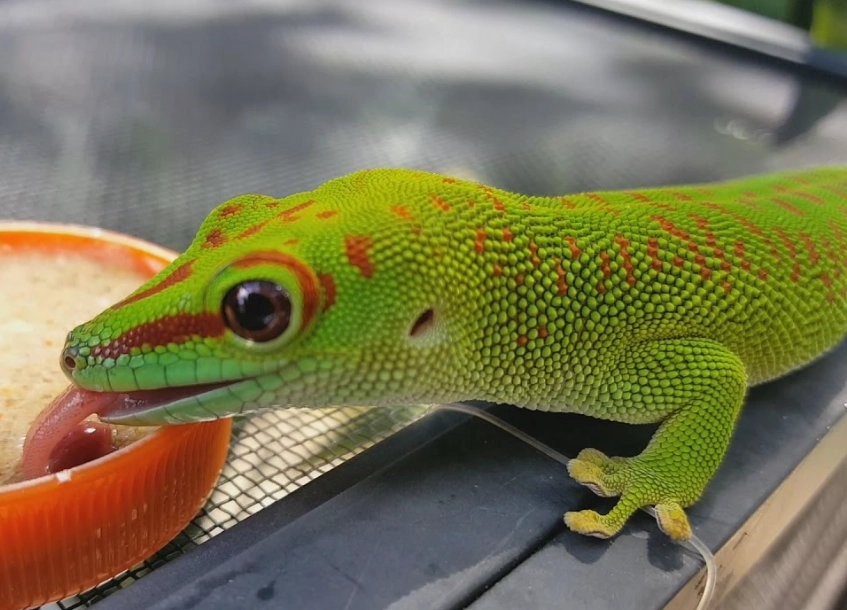
Watching a day gecko lick up banana goo is one of life's simple joys.
Health, Behavior, and Breeding
Knowing what's normal helps you spot problems early.
Common Health Issues:
- Metabolic Bone Disease (MBD): The big one. Symptoms include soft, rubbery jaw, bowed legs, tremors, and difficulty climbing. It's caused by incorrect calcium/D3/UVB balance and is preventable with proper care. The American Veterinary Medical Association (AVMA) has resources on reptile care that underscore the importance of this.
- Stuck Shed: If humidity is too low, shed can stick, especially on toes and the tail tip. This can constrict blood flow and lead to loss of the digit or tail.
- Stress: Constant hiding, lack of appetite, and dark coloration can indicate stress from incorrect temps, lack of hides, or even seeing predators (like a household cat).

Breeding: If you have a male and female, they will likely breed. Females lay two hard, round eggs, often glued to a surface inside a hiding spot. They don't need a male to lay eggs (they'll be infertile). Providing a laying box filled with damp sphagnum moss is crucial for gravid (egg-carrying) females to prevent egg-binding. Incubation is a whole other topic, requiring precise temperature control.
Your Day Gecko Questions, Answered
The Bigger Picture: Conservation and Ethics
It's easy to get caught up in the pet trade, but many Phelsuma species come from Madagascar, a biodiversity hotspot facing massive deforestation. While many day geckos in the pet trade are now captive-bred (which you should always seek out), understanding their wild plight is important.
Organizations like the IUCN Red List assess the threat status of many species. Supporting reputable breeders who work with established captive bloodlines is the most ethical choice. It takes pressure off wild populations and often results in healthier, hardier pets. Before you buy, ask the seller if the animal is captive-bred (CB).
Some zoos with strong conservation programs, like the Chester Zoo, work with and display Malagasy species, contributing to both public education and broader conservation efforts.
Hopefully, this guide has given you a clear, realistic path forward. From picking the right day gecko species to nailing the habitat setup and understanding their quirky needs, it's all about preparation. Good luck, and enjoy the vibrant world of Phelsuma!
Reader Comments