Quick Navigation
Let's talk about one of the most mind-blowing creatures you'll never see in the wild. I'm serious. You could be staring right at one and swear it was just a dead leaf or a piece of bark. That's the magic of the leaf-tailed gecko. The first time I saw a photo of Uroplatus phantasticus, the satanic leaf-tailed gecko, I thought it was a Photoshop job. It looked more like a cartoon character than a real animal. But they're very real, and they're some of the most specialized reptiles on the planet.
These geckos, belonging to the genus Uroplatus (which literally means "tail plate" in Greek), are found only in Madagascar and a couple of tiny nearby islands. That's it. The whole world's population of these incredible leaf-tailed geckos is confined to that one biodiversity hotspot. It's a blessing and a curse—their unique evolution happened in isolation, but it also makes them incredibly vulnerable.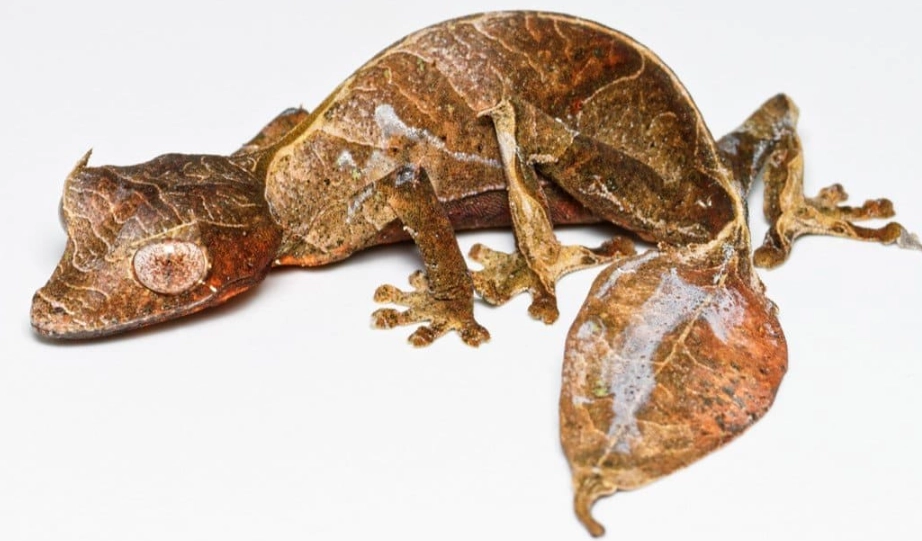
So, what's the big deal about them?
It all comes down to camouflage. We're not talking about your average chameleon color change. This is structural, textural, and behavioral camouflage on a level that feels almost supernatural. Their bodies are flattened. Their skin has fringes, flaps, and patterns that perfectly mimic moss, lichen, and decaying leaves. Some even have notches in their tails that look like bite marks from insects. It's an all-in, head-to-toe commitment to not being seen.
Unraveling the Leaf-tailed Gecko Family Tree
When people say "leaf-tailed gecko," they're usually referring to the whole Uroplatus gang. But within that group, there's surprising diversity. Scientists currently recognize about 20 species, and they range from the tiny, cryptic leaf-look-alikes to larger, bark-imitating giants.
I find it helpful to break them down by their camouflage strategy. It tells you a lot about where they live and how they behave.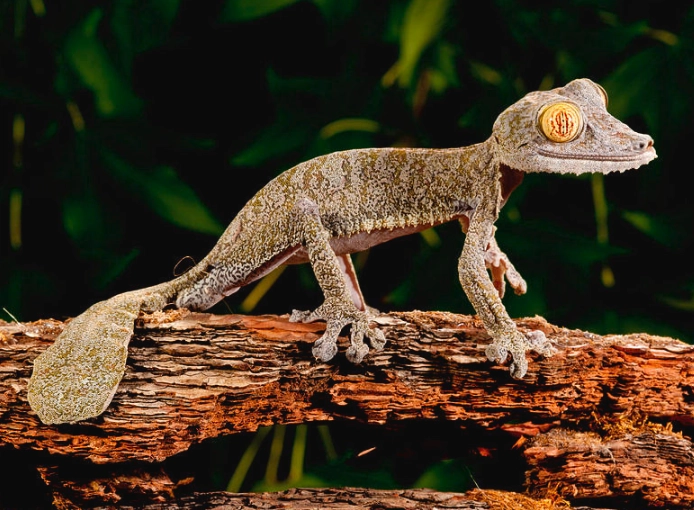
The Leaf Mimics
This is the group that gives the leaf-tailed gecko its famous name. Species like the Satanic Leaf-tailed Gecko (U. phantasticus) and the Mossy Leaf-tailed Gecko (U. sikorae) are the ultimate illusionists. They have extensive skin flaps around their jaws, body, and limbs. Their tails are broad and flat, with deliberate-looking imperfections. By day, they press their entire body against a branch or among leaf litter, eliminating their shadow. They become a three-dimensional leaf. Poof. Gone.
The Bark Mimics
Then you have the giants like the Henkel's Leaf-tailed Gecko (U. henkeli) and the Spearpoint Leaf-tailed Gecko (U. ebenaui). These guys are less about looking like a single leaf and more about blending into the trunk of a tree. Their camouflage is more about color pattern and texture—matching the grays, browns, and greens of lichen-covered bark. They're still unbelievably good at it. You'll be scanning a branch for ten minutes before one suddenly blinks.
Here’s a quick look at some of the most sought-after species, especially in the reptile-keeping community. Remember, "sought-after" doesn't mean easy to keep.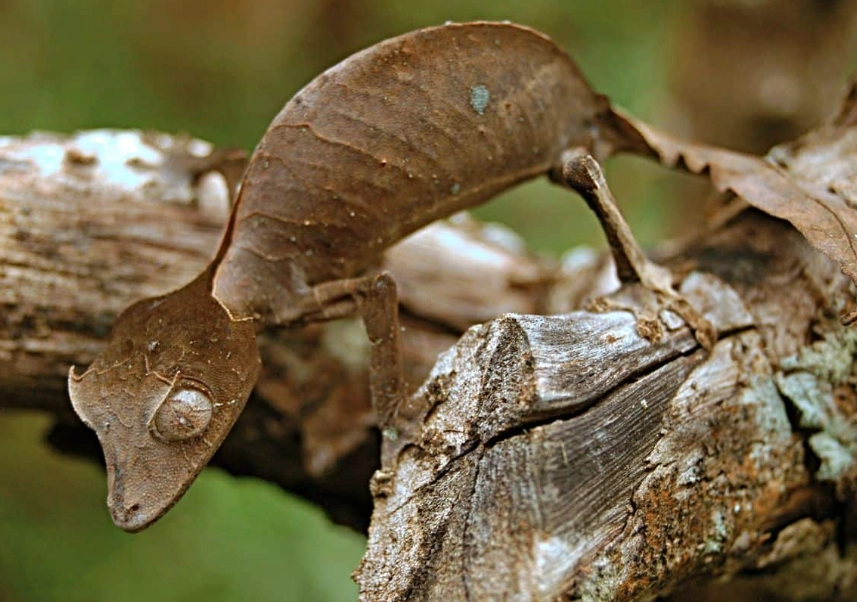
| Common Name | Scientific Name | Key Feature | Difficulty Level (for keepers) |
|---|---|---|---|
| Satanic Leaf-tailed Gecko | Uroplatus phantasticus | Extreme leaf-like tail, small size (~3 inches) | High |
| Mossy Leaf-tailed Gecko | Uroplatus sikorae | Intricate moss-like patterning, larger flaps | High |
| Henkel's Leaf-tailed Gecko | Uroplatus henkeli | One of the largest species (~10 inches), bark mimic | Intermediate-High |
| Giant Leaf-tailed Gecko | Uroplatus fimbriatus | The largest species (up to 12 inches), impressive fringes | Intermediate-High |
| Spearpoint Leaf-tailed Gecko | Uroplatus ebenaui | Smaller bark mimic, pointed snout | Intermediate |
Seeing that "High" difficulty rating might be a buzzkill. I get it. You see these amazing animals and want one. But their specialized needs are a direct result of their evolution. Ignoring that is a fast track to a sick gecko and a lot of heartache.
Life in the Treetops: Habitat and Behavior
To care for a leaf-tailed gecko properly, you have to think like one. And that means understanding the rainforests of Madagascar. We're talking about dense, humid, vertically complex worlds. These aren't desert geckos. They are creatures of moisture, moderate temperatures, and dense cover.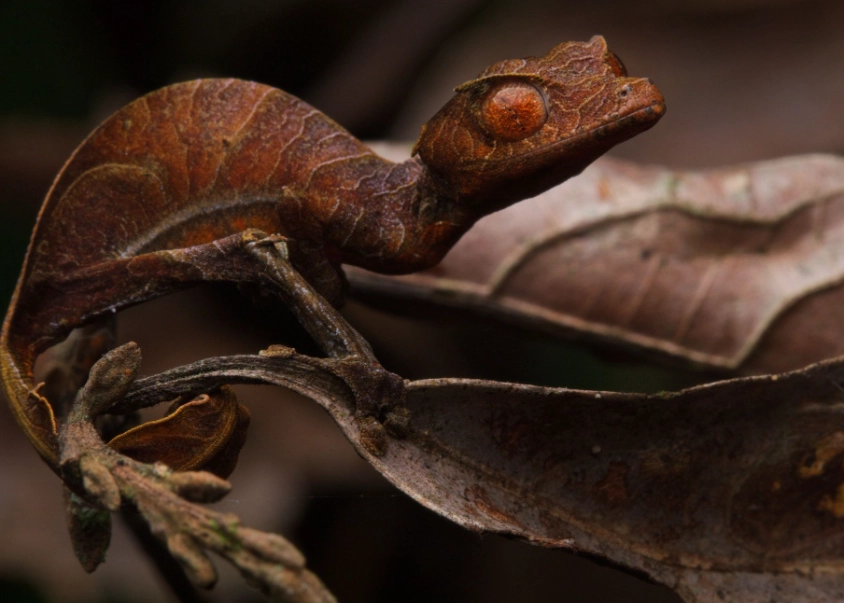
Their entire life is a cycle of hiding and hunting. By day, they are statues. I've read accounts from researchers who only found them because they were specifically looking for them, and even then, it was tough. They pick a spot and commit. Sometimes they'll even sway slightly in a breeze, mimicking a hanging leaf. It's that detailed.
Night is when the forest comes alive for them. That's when the leaf-tailed gecko becomes a predator. They are ambush hunters. They don't chase down food. They wait, perfectly still, on a branch or vine, and snatch any unsuspecting insect that wanders too close. Their diet in the wild is a buffet of crickets, moths, spiders, and the occasional small snail.
But their camouflage isn't just for hunting. It's their primary defense. Madagascar has predators like birds, snakes, and rodents. When you can't run fast and you're not venomous, your best bet is to not be seen in the first place. If a predator does get too close, many leaf-tailed geckos have a final, shocking trick: they open their mouths wide, let out a loud, startling scream, and flash a bright red or orange mouth lining. It's a last-ditch effort to scare something off. Can you imagine being a mouse and seeing that on what you thought was a piece of bark?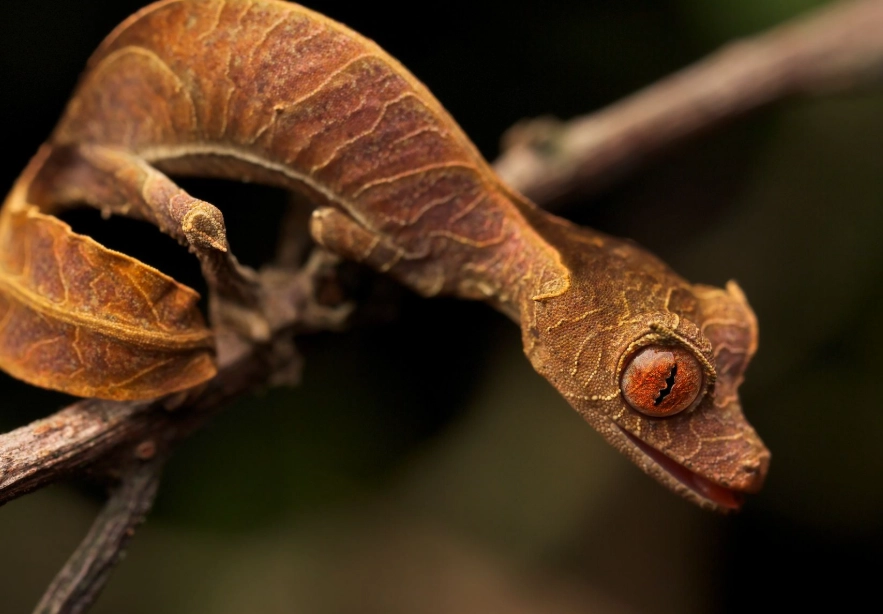
That scream gets me every time. It's so unexpected from such a cryptic animal.
The Realities of Leaf-tailed Gecko Care
This is the part where the dream of owning one of these living works of art meets reality. I'm not here to sell you on getting one. In fact, I'd argue most people shouldn't. But if you're determined, and you've done your homework with easier species first, here's what you're signing up for.
First and foremost: Source a Captive-Bred Animal. This cannot be overstated. The illegal pet trade is a massive threat to wild Uroplatus populations. A reputable breeder will provide a healthier, hardier animal that is accustomed to captivity. Websites like the United States Association of Reptile Keepers (USARK) often have resources and forums to help find ethical breeders. Wild-caught geckos are often loaded with parasites, suffer immense stress, and have a tragically high mortality rate. Just don't do it.
The Enclosure: More Than Just a Tank
You can't put a leaf-tailed gecko in a bare aquarium with a heat lamp and a water bowl. It will die, slowly and miserably. Their enclosure needs to replicate a slice of vertical rainforest.
- Size: Go tall. A 18"x18"x24" tall enclosure is a good minimum for a pair of smaller species like U. phantasticus. For the giants, you're looking at custom-built enclosures that are 2-3 feet tall.
- Substrate & Drainage: A bioactive setup is highly, highly recommended. This means a drainage layer, a substrate barrier, and a rich, soil-based substrate that can support live plants and clean-up crews (springtails and isopods). It manages humidity, waste, and provides a natural environment. The Reptiles Magazine website has some great introductory guides to bioactive terrariums.
- Furnishings: This is where you build their world. You need lots of vertical and diagonal branches of varying thicknesses. Cork bark flats and tubes are excellent. Live plants like Pothos, Philodendron, and Bromeliads are perfect—they hold humidity and provide cover. The goal is to create a dense, cluttered environment where the gecko can choose from multiple perfect hiding spots. If your gecko is always out in the open, your cage is too bare and it's stressed.
The Climate: Humidity and Temperature
This is the trickiest part and where most failures happen. Madagascar's rainforests aren't blazing hot. They're moderate and consistently humid.
- Temperature: A gradient from about 72°F (22°C) on the cool end to 78°F (26°C) on the warm end is ideal. Nighttime drops into the high 60s°F (around 20°C) are fine. Avoid heat spikes above 80°F (27°C). These are cool-forest animals. I used a low-wattage ceramic heat emitter on a thermostat for my setup, placed at the top of one side of the cage.
- Humidity: This is non-negotiable. You need high humidity, typically 70-80%, with a spike to near 100% at night. This is achieved through a combination of a deep, moist substrate, live plants, and misting. You'll need a quality misting system (like a MistKing) or be committed to hand-misting heavily twice a day. A fogger can help at night. You must have good ventilation to prevent stagnant, moldy air—screen tops are essential.
- Lighting: They don't need intense UVB like a bearded dragon, but low-level UVB lighting (like a shadedweller or forest-strength bulb) is increasingly considered beneficial for their long-term health and calcium metabolism. It should be on a 12-hour on/off cycle. No bright, hot basking spots.
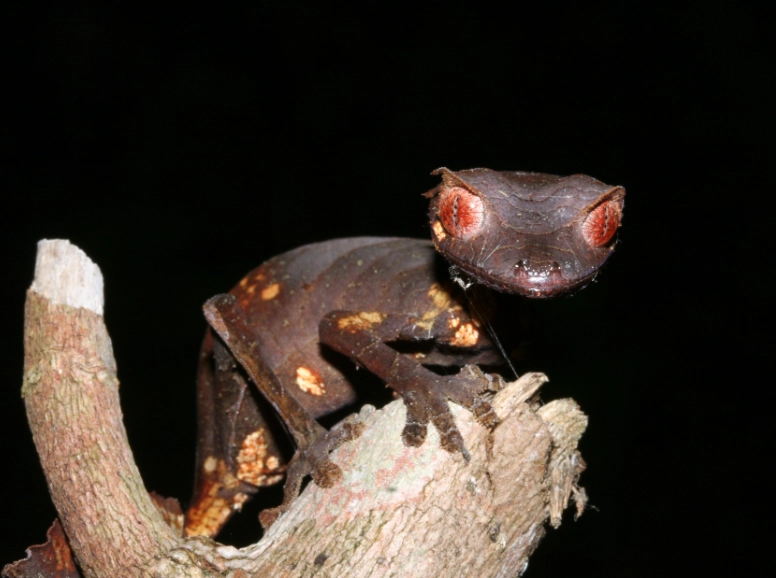
Diet and Handling
Feeding is straightforward: gut-loaded insects. Crickets, dubia roaches, and black soldier fly larvae are staples. Dust them with a high-quality calcium supplement (with D3 if no UVB) and a multivitamin once a week. Offer food at dusk by releasing prey into the foliage.
Now, about handling. Let's be blunt: leaf-tailed geckos are not handleable pets. They are display animals. They are fragile, easily stressed, and their skin can tear. The stress of handling can cause them to drop their tails (which, unlike other geckos, do not regenerate in a perfect leaf shape). The goal is to create a beautiful, thriving ecosystem you can observe, not a toy you can hold. If you need a reptile to cuddle, get a bearded dragon.
I made the mistake of trying to handle mine too often when I first started. He stopped eating for a week. Lesson learned the hard way.
Breeding Leaf-tailed Geckos: A Specialized Endeavor
Successfully breeding Uroplatus in captivity is a significant achievement and is crucial for the hobby's future, taking pressure off wild populations. It's not for the casual keeper.
It typically requires a distinct cooling period (or "winter" period) of 2-3 months with slightly lower temperatures and reduced daylight hours to simulate the Malagasy dry season. This cycles their reproductive systems. After warming back up, introductions are made. Females will lay one or two hard-shelled eggs at a time, often burying them in the substrate or attaching them to a plant. Incubation is a long, patient game—it can take 90 to 120 days at stable, room-ish temperatures.
The hatchlings are tiny, fully-formed replicas of the adults and are incredibly delicate. Raising them requires separate, impeccably maintained enclosures and appropriately sized food (pinhead crickets, fruit flies).
Conservation: The Shadow Over Paradise
We can't talk about leaf-tailed geckos without addressing the elephant in the room: they are in trouble. Every single Uroplatus species is listed on CITES (the Convention on International Trade in Endangered Species) Appendix II, and many are classified as Vulnerable or Endangered on the IUCN Red List.
The threats are the classic, heartbreaking trio:
- Deforestation: Madagascar has lost a huge percentage of its primary rainforest to logging, slash-and-burn agriculture, and charcoal production. The leaf-tailed gecko's world is literally being cut down.
- Illegal Pet Trade: Despite CITES, smuggling persists. Animals are stuffed into horrible conditions and shipped across the world, with many dying in transit. This not only hurts wild populations but also gives responsible keepers a bad name.
- Climate Change: Altering the delicate temperature and humidity balance of their montane forests could render their habitats uninhabitable.
What can you do? Support organizations working on habitat conservation in Madagascar, like the Lemur Conservation Foundation (which often works on broader ecosystem preservation). Be a vocal advocate for buying only captive-bred animals. And share your fascination with these animals to build appreciation, not demand for wild-caught pets.
It's a fragile existence for such a remarkable creature.
Your Leaf-tailed Gecko Questions, Answered
Are leaf-tailed geckos dangerous or venomous?
Not at all. They are completely harmless to humans. Their bite is a weak pinch, if you could even manage to get one to bite you. The scary display is purely for startling predators.
How long do leaf-tailed geckos live?
In captivity, with excellent care, they can live 5 to 10 years, sometimes longer for the larger species. In the wild, their lifespan is likely shorter due to predation and environmental pressures.
Can they change color like chameleons?
They can change their color intensity and pattern to some degree to better match their background, but it's a slower, more subtle process than a chameleon's rapid shifts. They won't turn bright red or blue.
Where can I buy a captive-bred leaf-tailed gecko?
This requires patience. Don't rush. Look for reputable reptile breeders at large reptile expos (like those in Hamburg, PA, or Daytona). Check online classifieds on sites like FaunaClassifieds, but always research the breeder's reputation. Ask for photos of the parents, ask about their setup and feeding routine. A good breeder will ask you just as many questions.
What's the hardest part about keeping them?
Hands down, maintaining perfect, stable humidity without causing respiratory infections or mold outbreaks. It's a constant balancing act between misting and ventilation. The second hardest part is accepting that you'll almost never see them move. You're basically a proud owner of a spectacular, living terrarium decoration.
Do they make good pets for kids?
Absolutely not. They are delicate, require precise environmental control, and offer zero interaction. They are a terrible choice for a child's pet. Get a leopard gecko instead.
So, there you have it. The leaf-tailed gecko is a testament to evolution's creativity—a bizarre, beautiful, and utterly captivating animal. They command respect, not just for their looks, but for their specific needs and precarious place in the world. If you choose to welcome one into your home, do it with eyes wide open, a commitment to replicating their world, and a dedication to supporting their future in the wild. They're not just pets; they're ambassadors from a disappearing forest.
And if you just enjoy them from afar, that's great too. Sometimes the most amazing things are best appreciated without ever touching them.
Reader Comments