So you've fallen for a Harlequin crested gecko. It's easy to see why. Those bold, contrasting patterns splashed across their back and head make them look like living works of art. But here's the thing I tell every new keeper: a Harlequin isn't a different species. It's just a stunning costume worn by the same, wonderfully quirky Correlophus ciliatus underneath. That means their care is, at its core, identical to any other crested gecko morph. But caring for a Harlequin well means understanding not just the basics, but the nuances that keep those vibrant colors shining and that gecko thriving for 15-20 years. Let's get past the pretty pictures and into the practical details.
What's Inside This Guide?
What Exactly Is a Harlequin Crested Gecko?
Forget complicated genetics for a second. A "Harlequin" is simply a crested gecko with a specific pattern. They have a base color (like cream, red, or olive) with large, clearly defined patches or stripes of a contrasting color (like dark brown, black, or orange) running along their sides, back, and legs. The pattern is more extensive than a basic "flame" but doesn't cover the entire back like a "pinstripe."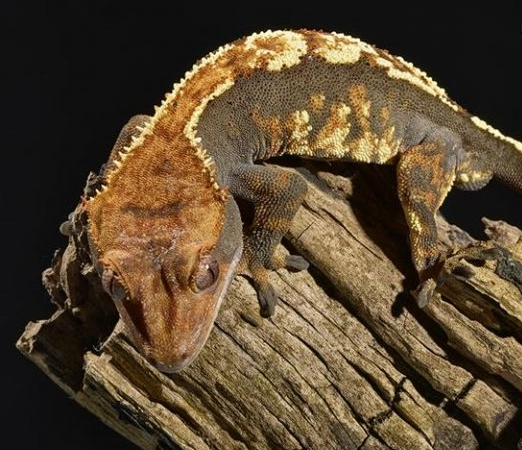
Why does this matter for care? It doesn't, genetically. But visually, it becomes your primary health indicator. A stressed, cold, or sick crested gecko will "fire down," meaning its colors become dull and muted. On a Harlequin, this loss of contrast is glaringly obvious. That vibrant patchwork fades to a muddy, washed-out version. So, caring for a Harlequin successfully means creating an environment where it feels secure enough to stay "fired up" and show off.
Building the Perfect Harlequin Habitat
This is where most mistakes happen. People see a small lizard and think small tank. Wrong. Crested geckos are arboreal—they live in trees. Floor space is irrelevant; vertical space is everything.
Enclosure Size and Type
For a single adult Harlequin, the bare minimum is an 18"x18"x24" tall enclosure. I'm not a fan of minimums. They work, but just barely. I've seen a dramatic difference in activity and boldness when I upgraded my geckos to larger homes. A 24"x18"x24" or even 18"x18"x36" is ideal. It allows for proper thermal gradients, more climbing routes, and lets you create a stunning bioactive display.
Glass terrariums with front-opening doors (like those from Exo Terra or Zoo Med) are the gold standard. Screen tops are okay but make humidity control a constant battle. Avoid fish tanks turned on their side; the ventilation is usually wrong.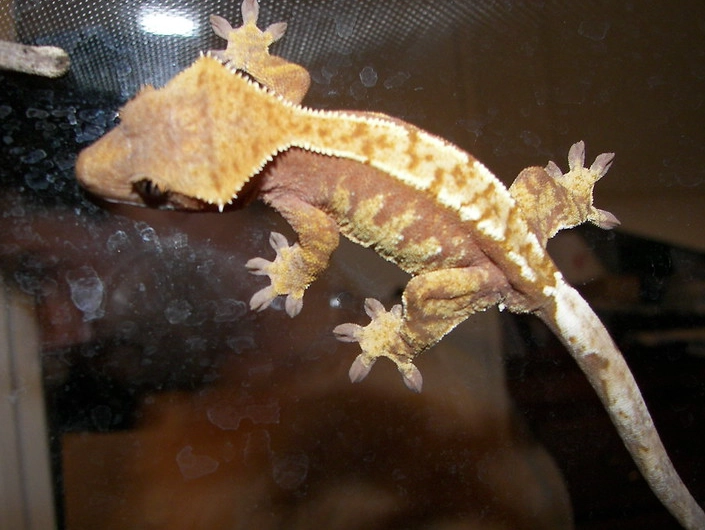
The Non-Negotiables: Heat, Light, and Humidity
This isn't a desert animal. Crested geckos are from New Caledonia, a tropical island. They need moderate warmth and consistent moisture.
| Parameter | Target Range | How to Achieve It | Common Pitfall |
|---|---|---|---|
| Temperature | 72-78°F (22-26°C) during the day. A slight drop to 68-72°F (20-22°C) at night is fine. | Room temperature often works. If your room is cold, use a low-wattage ceramic heat emitter or heat mat on the side of the tank, connected to a thermostat. Never use a heat rock. | Overheating. Temperatures above 82°F (28°C) are dangerous and cause rapid dehydration and stress. |
| Humidity | Spike to 70-80% at night, drop to 50-60% during the day. | Heavy misting with a spray bottle at dusk. Use a substrate that holds moisture (like coconut fiber). A digital hygrometer is essential—the analog dial ones are notoriously inaccurate. | Constant high humidity. It must have a drying-out period during the day to prevent respiratory infections and mold. |
| Lighting | Low-level UVB is beneficial but not strictly required if diet is supplemented. A simple day/night cycle is a must. | A 5.0 or low-output tropical UVB tube, spanning half the enclosure length, is a great addition. Use a timer for 12 hours on/off. | Using bright, hot basking lights. They don't bask like bearded dragons. Bright light stresses them. |
I learned the humidity lesson the hard way. I kept my first tank too damp constantly, and I ended up with a minor mold outbreak and a gecko who started sneezing. Letting the tank dry out a bit each day fixed both issues.
Interior Design: Climbing, Hiding, and Feeling Safe
Bare tanks are stressful tanks. Your goal is to create a 3D jungle gym.
Vertical Structure: Use a variety of branches, vines, and cork bark tubes arranged at different angles and heights. Cover the back and sides with foam background or cork panels to increase usable surface area.
Foliage: This is critical. Live or artificial plants provide cover. Crested geckos feel exposed out in the open. They are not out in the open in their natural habitat. They are in trees, in plants, in leaves. Dense foliage near the top of the tank gives them safe highways to travel.
Hiding Spots: At least two snug hiding places, one in the warmer area and one in the cooler area. Cork bark rounds or commercial reptile hides work well.
Feeding Ledge: A magnetic or suction cup ledge placed midway up the tank is where you'll offer food. Don't put food on the ground; they may not find it.
The Daily & Weekly Care Routine
Feeding Your Harlequin
The diet has been revolutionized by Commercial Crested Gecko Diets (CGD). Brands like Pangea and Repashy are complete diets, meaning they contain all the nutrients, vitamins, and minerals your gecko needs when mixed with water. This is the staple.
Mix the powder with water to a ketchup-like consistency. Too runny and it's messy, too thick and they won't eat it. Offer a fresh spoonful in the feeding ledge every other night for adults. Juveniles can be fed daily. Remove any uneaten food after 48 hours.
Insect Treats: Once a week, you can offer live insects as a treat and enrichment. Appropriate sizes of crickets, dubia roaches, or black soldier fly larvae are great. Always dust these insects with a calcium supplement (without D3 if you are using UVB lighting, with D3 if you are not). This is crucial for preventing metabolic bone disease, a common and fatal condition in reptiles.
Here's the key: variety in the CGD flavors is good. They seem to prefer some over others. I keep a rotation of Pangea's Fig & Insect and Watermelon flavors. My geckos go crazy for the Fig & Insect.
Hydration and Humidity
They rarely drink from a standing water bowl. They lick water droplets off leaves and the glass. That's why the evening misting is so important. It provides their drinking water and spikes the humidity. Use dechlorinated water or rainwater in your spray bottle.
A shallow water bowl on the ground is still a good idea for ambient humidity and as a backup, but don't expect to see them use it often.
Cleaning
Spot clean daily: remove any feces you see. Change the substrate every 4-6 months, or more frequently if you're not using a bioactive setup. Wipe down the glass and decorations with a reptile-safe disinfectant monthly. A bioactive enclosure, with a cleanup crew of isopods and springtails, can drastically reduce this maintenance.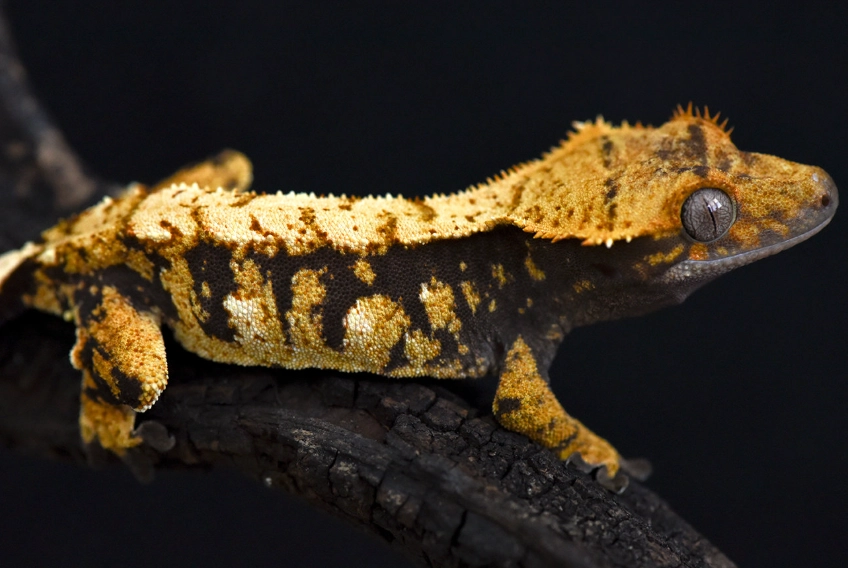
Spotting Health Issues Early
A healthy Harlequin is alert, has clear bright eyes, a plump tail (their fat store), and a regular eating and pooping schedule. Their skin should be smooth, not wrinkled.
Stuck Shed: Low humidity is the usual culprit. Ensure proper misting and a humid hide.
Loss of Appetite: Could be stress (new environment, recent move), incorrect temperatures, or illness. Review your setup first.
Lethargy/Weakness: Often linked to low temperatures or metabolic bone disease (MBD). MBD causes soft, rubbery jaws, swollen limbs, and tremors. It's preventable with proper diet and lighting.
Prolapse: A serious emergency where internal tissue protrudes from the vent. Requires immediate vet care.
The best tool for health is a good digital scale. Weigh your gecko weekly. A steady weight is good. Sudden weight loss is a major red flag, even if they seem active.
Reader Comments