Explore the Sections
Alright, let's talk about one of the coolest little amphibians in North America – Cope's Grey Tree Frog. You've probably heard the name, maybe seen a picture of a cute frog clinging to a window or blending into some bark. But there's a lot more to this guy than just being photogenic. I remember the first time I heard their call on a humid summer night. It was this short, high-pitched trill that cut through the air, and I spent a good hour with a flashlight trying to spot the little musician. Turns out, it's not always easy to tell if you're listening to a Cope's Grey Tree Frog or its nearly identical cousin. That's where things get interesting.
If you're thinking about keeping one as a pet, or you're just a nature nut like me trying to figure out what's living in your backyard, you've come to the right place. We're going to cover everything – and I mean everything – from telling them apart from the Eastern Gray Treefrog, to setting up a tank they'll actually thrive in, to answering those weird questions you're too afraid to ask Google.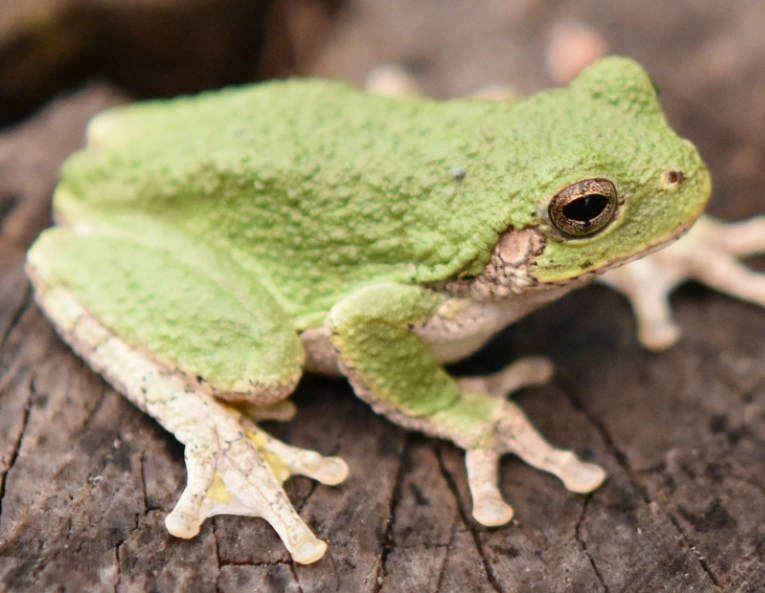
What Exactly Is a Cope's Grey Tree Frog?
Let's start with the basics. Scientifically, it's known as Hyla chrysoscelis. The "Cope's" part honors the famous American naturalist Edward Drinker Cope. These frogs are part of a fascinating biological puzzle. For the longest time, everyone just called them "gray treefrogs." It wasn't until scientists started listening really closely and, later, looking at their DNA, that they realized there were two separate species hiding in plain sight.
Cope's Grey Tree Frog and the Eastern Gray Treefrog (Hyla versicolor) are what we call "cryptic species." They look identical to the naked eye. I mean, seriously, good luck telling them apart from a photo. Their color can change from gray to green depending on their surroundings and mood, they both have those bright yellow-orange patches on the inner thighs, and they hang out in the same kinds of trees. The main giveaway? Their calls and their genetics. Hyla chrysoscelis has a faster, harsher trill and is a diploid species (it has two sets of chromosomes), while H. versicolor is a tetraploid (four sets) with a slower, more melodic trill. Pretty wild, right?
How to Spot One: Identification Made (Somewhat) Easier
Okay, so you're staring at a grayish-green frog on your porch. Is it a Cope's? Here's your field guide, based on my own frustrating and rewarding experiences trying to ID them.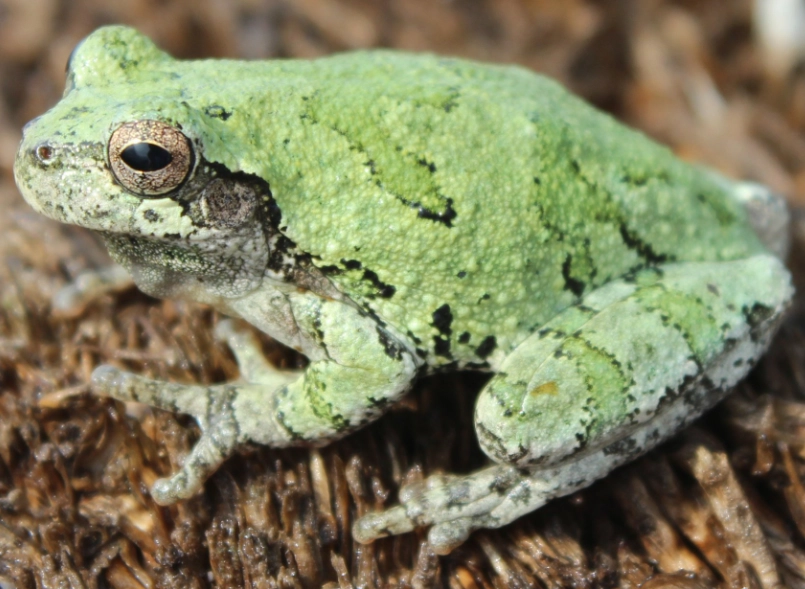
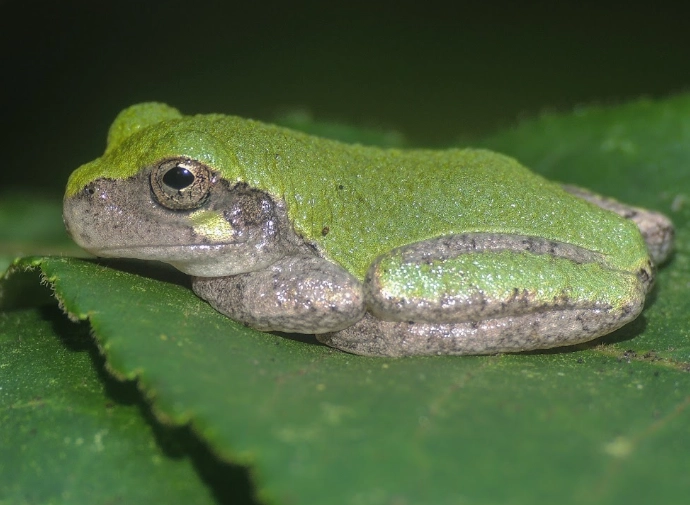
Look: They're relatively small, usually 1.5 to 2 inches from snout to vent. The skin is kinda bumpy or warty (scientific term: granular), which helps with camouflage. The classic mark is the bright, flashy patch of color on the inner hind legs. It's like their secret weapon – you only see it when they jump. Their toes have large, sticky pads for climbing glass, leaves, you name it. A dark-edged "star" or irregular pattern is often present between their eyes.
Listen: This is the most reliable field mark if you're within their overlapping ranges. The call of Cope's Grey Tree Frog is a short, rapid, harsh trill. People often describe it as more mechanical or buzzy compared to the Eastern's call. The rate is faster because, with fewer chromosomes, their muscle cells are smaller and contract quicker. Nature's little detail.
Location, Location, Location: You can't identify what isn't there. Cope's Grey Tree Frog has a huge range across much of the central and eastern United States. According to the U.S. Geological Survey's Nonindigenous Aquatic Species database, their native range stretches from Texas up to South Dakota, east to the Atlantic coast, but they are absent from most of the far Northeast and the Appalachian highlands where the Eastern species dominates. The AmphibiaWeb species account provides excellent detailed maps if you need to check your specific state.
The Great Debate: Cope's Grey Tree Frog vs. Eastern Gray Treefrog
This is the question that trips everyone up. Since you can't see chromosomes, here's a practical breakdown.
| Feature | Cope's Grey Tree Frog (Hyla chrysoscelis) | Eastern Gray Treefrog (Hyla versicolor) |
|---|---|---|
| Call (Trill Rate) | Faster, harsher, more mechanical. ~34-69 pulses per second. | Slower, more melodic, flute-like. ~17-35 pulses per second. |
| Chromosome Count | Diploid (2 sets, 24 total). | Tetraploid (4 sets, 48 total). |
| Primary Range in the East | More southeastern and lower elevation. Avoids coldest areas. | More northeastern and into higher elevations. More cold-tolerant. |
| Skin Texture | Often described as slightly more granular or rough. | Often described as slightly smoother, but this is VERY subjective. |
| Bottom Line for You | If you're in the Deep South or central plains, it's almost certainly Cope's. In a zone of overlap, you need the call. | If you're in Maine or the higher Appalachians, it's almost certainly Eastern. In the overlap zone, trust your ears. |
See what I mean? It's tricky. In the field, I rely 99% on the call. There are some great audio comparisons on the USGS Frogwatch site that can train your ear.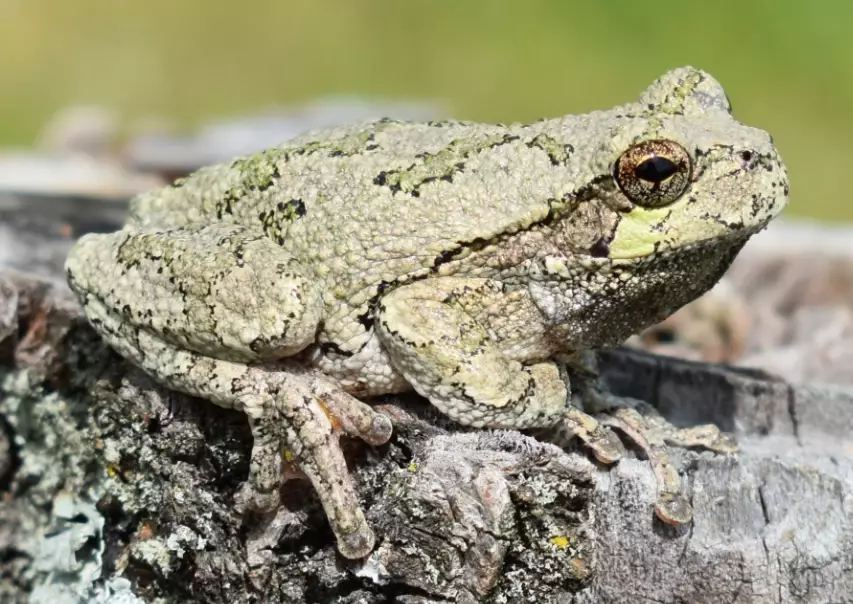
Life in the Wild: Ecology and Behavior
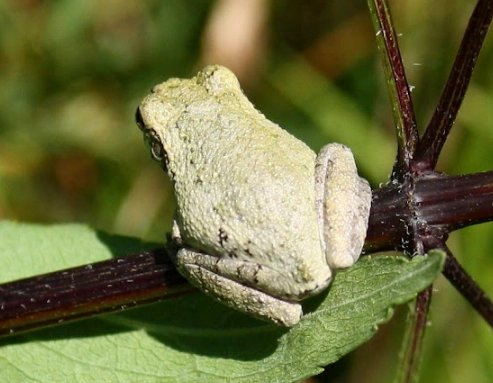
These frogs are masters of adaptation. They spend most of their time high up in trees and shrubs, only coming down to breed in temporary or permanent ponds in the spring and summer. That's why you might find one on your window – they're excellent climbers. Their diet is typical for a frog of their size: a bug buffet. They'll eat moths, flies, spiders, ants, just about any invertebrate they can cram into their mouth.
One of their most amazing survival tricks is freeze tolerance. Yes, you read that right. In the winter, Cope's Grey Tree Frog doesn't burrow deep into the mud like some frogs. It hibernates in tree hollows or under bark. When temperatures plummet, its body produces glycerol, a natural antifreeze, which prevents ice crystals from destroying its cells. The frog can literally freeze solid – its heart stops, breathing stops – and thaw out in the spring perfectly fine. It's one of nature's most incredible feats, though I'll be honest, it still blows my mind every time I think about it.
Thinking of Keeping a Cope's Grey Tree Frog? The Care Guide
This is where most of your searches probably lead. Can you keep one as a pet? The short answer is yes, but it's not a beginner pet like a Betta fish. It requires specific conditions to thrive. I've kept a few over the years, and there's a learning curve. Let's break it down.
The Enclosure: Building a Mini Forest
For a single Cope's Grey Tree Frog, a tall terrarium is non-negotiable. Think vertical space. A 18"x18"x24" tall enclosure is a great starting point for one or two frogs. Screen tops are best for ventilation. These guys need humidity, but stagnant air is a recipe for bacterial and fungal problems.
Substrate: Something that holds moisture but doesn't stay soggy. I've had good luck with a mix of coconut fiber and orchid bark. Avoid gravel or small particles they could accidentally ingest.
Decor: This is the fun part. They need plenty of branches, vines, and broad-leafed plants (live or sturdy artificial) to climb on and hide behind. The goal is to give them choices – a warm spot, a cool spot, a hiding spot. A shallow water dish with dechlorinated water is a must, changed daily. Don't make it too deep; they're climbers, not swimmers.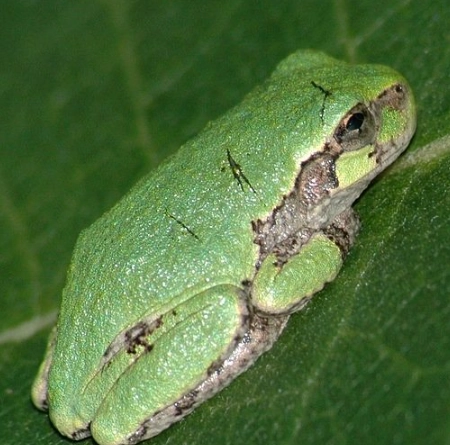
Climate Control: Getting the Numbers Right
This is where many first-time keepers slip up. Cope's Grey Tree Frog is not a tropical frog.
| Parameter | Daytime Range | Nighttime Range | How to Achieve It |
|---|---|---|---|
| Temperature | 70°F - 80°F (21°C - 27°C) | Can drop to 65°F (18°C) | Low-wattage heat bulb or pad on one side only. Use a thermostat! Never use heat rocks. |
| Humidity | 50% - 60% | Can spike to 70-80% | Light misting 1-2 times daily with a spray bottle. A small fogger on a timer can help. |
| Lighting | Low-level UVB is beneficial but not strictly required if diet is supplemented. | Complete darkness. | A low-output 5.0 UVB bulb for 10-12 hours a day can support health. |
The key is a temperature gradient. One side of the tank warm, the other side cool. This lets the frog regulate its own body temperature. A simple digital thermometer/hygrometer combo is a cheap and essential investment.
Feeding Your Cope's Grey Tree Frog
In the wild, they're opportunistic. In captivity, variety is the spice of life – and the key to health.
- Staple Diet: Gut-loaded crickets are the go-to. "Gut-loading" means feeding the crickets nutritious foods (like carrots, greens, commercial gut-load) 24 hours before feeding them to your frog. This passes the nutrition on.
- Treats & Variety: Dubia roaches (if legal in your area), black soldier fly larvae, occasional waxworms or small hornworms. Avoid mealworms regularly as they have a tough exoskeleton.
- Dusting: This is critical. You must dust the insects with a high-quality calcium supplement (with Vitamin D3) at most feedings, and with a multivitamin supplement once a week. This prevents Metabolic Bone Disease (MBD), a common and fatal condition in captive frogs.
- Schedule: Feed juveniles daily, adults every other day. Offer only as many insects as the frog will eat in 15-30 minutes. Remove uneaten prey.
I made the mistake of being inconsistent with supplements early on, and it's a regret. Don't skip it.
Common Health Issues to Watch For
Even with perfect care, things can happen. Here’s what to keep an eye out for:
- Metabolic Bone Disease (MBD): The big one. Symptoms include lethargy, swollen or rubbery jaw, difficulty climbing, and eventually paralysis. Caused by lack of calcium/Vitamin D3. Prevention is everything – proper dusting and UVB lighting.
- Red-Leg Syndrome: A serious bacterial infection. The skin on the legs and belly turns reddish. Often caused by poor water quality or substrate. Requires immediate veterinary care with antibiotics.
- Skin Issues/Fungal Infections: White, cottony patches or sores. Usually a sign of excessive humidity/poor ventilation or stress. A quarantine tank with clean, simple paper towel substrate and a vet visit is needed.
- Parasites: Weight loss despite eating, abnormal feces. A fecal exam by an exotic vet can diagnose this.
Your Questions, Answered (The FAQ Section)
Based on forums, Reddit threads, and my own DMs, here are the things people really want to know.
How long do Cope's Grey Tree Frogs live?
In the wild, maybe 2-5 years with predators and weather. In a well-maintained captive environment, 7-10 years is very achievable, with some reports even longer. They're a commitment.
Are they poisonous to dogs or cats?
Not poisonous, but they can secrete a mildly toxic substance from their skin when stressed. It's meant to deter predators and can irritate a pet's mouth, causing drooling or vomiting. It's not considered dangerous to life, but it's unpleasant. Best to keep pets away from your frog, and always wash your hands before and after handling the frog or anything in its tank.
Can I house two Cope's Grey Tree Frogs together?
Yes, they can be kept in small groups, provided the enclosure is large enough to offer multiple basking and hiding spots. Avoid mixing species. And be prepared for night-time choruses during breeding season, even in captivity!
Do they need a hibernation period in captivity?
It's not strictly necessary for survival, but many advanced keepers believe it promotes long-term health and can stimulate breeding behavior. This involves gradually lowering temperatures and photoperiod over several weeks to simulate winter. This is an advanced technique and should not be attempted without thorough research, as doing it wrong can kill your frog.
Why is my Cope's Grey Tree Frog always hiding?
Because it's a treefrog. They are nocturnal and cryptic by nature. A hiding frog is a happy, secure frog. If it's out all the time, it might be stressed by lack of cover or seeking heat/food. Provide plenty of foliage and hiding places, and observe its activity at night with a red light (which they can't see well).
Beyond the Basics: Cool Facts and Final Thoughts
To wrap this up, here are a few things that make Cope's Grey Tree Frog stand out, beyond the care sheet stuff.
Their color change isn't just for camouflage against predators. It's also influenced by temperature, humidity, and even their activity level. A sleeping frog is often a darker, more camouflaged color.
They're a living lesson in evolution.
The whole story of their discovery – from one species to two – is a perfect example of how science evolves with new tools (like audio analysis and genetics). It makes you wonder what other "identical" species are out there, waiting to be told apart.
If you're keeping one, the joy comes in the subtle moments. Seeing a perfect shed (they eat their skin!), watching them patiently stalk a cricket, or hearing an occasional soft chirp from the tank at night. It's a quiet hobby, but a deeply rewarding one if you're fascinated by these perfect little survivors.
Whether your interest is in herping (finding them in the wild) or herpetoculture (keeping them at home), the Cope's Grey Tree Frog offers a fascinating window into the amphibian world. Just remember: respect the wild populations, always source captive-bred frogs from reputable breeders, and do your homework. A little effort goes a long way in ensuring these remarkable frogs continue to thrive, both in our forests and in our homes.
Reader Comments