Quick Guide
- More Than One Tortoise: Getting to Know the Hermann's
- The Biggest Hurdle: Nailing the Hermann's Tortoise Habitat
- You Are What You Eat: The Hermann's Tortoise Diet
- The Long Haul: Health, Lifespan, and Common Problems
- Breeding and Hibernation: Advanced Topics
- Your Hermann's Tortoise Questions, Answered
I remember the first time I saw a Hermann's tortoise. It was ambling across a sun-drenched path in a friend's garden, its high-domed shell looking like a little mobile rock. I was smitten. But here's the thing I wish someone had told me right then: these creatures aren't just "easy" pets you stick in a box. A Hermann's tortoise is a decades-long commitment to replicating a very specific slice of Mediterranean hillside in your home. They're fantastic, but they demand respect for their needs.
Maybe you've seen pictures of their beautiful yellow and black carapace, or heard about their generally gentle demeanor. It's tempting. But before you dive in, let's strip away the romance and talk about the reality of Hermann's tortoise care. What does it actually take to keep one of these ancient, charismatic reptiles healthy and happy for what could be over half your lifetime?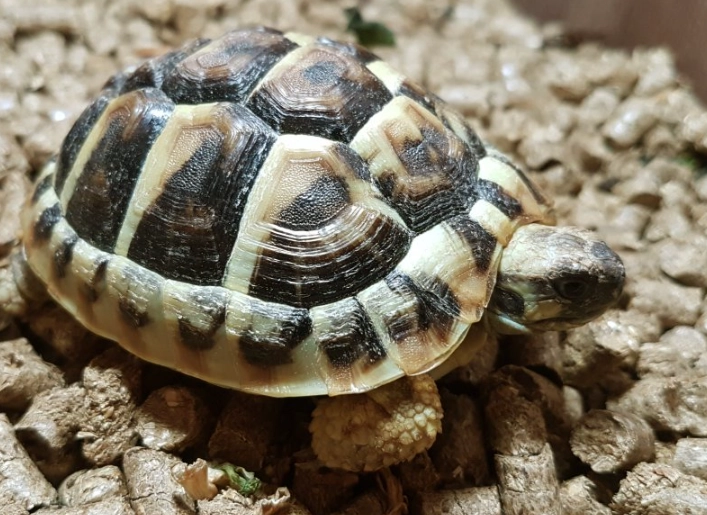
More Than One Tortoise: Getting to Know the Hermann's
First off, not all Hermann's tortoises are the same. This trips up a lot of new owners. There are two main subspecies you're likely to encounter, and knowing which one you have (or are getting) is your first step. The care is similar, but the details—especially size—matter.
| Subspecies | Scientific Name | Average Adult Size | Primary Range | Conservation Status (IUCN) |
|---|---|---|---|---|
| Western Hermann's Tortoise | Testudo hermanni hermanni | 5-7 inches (13-18 cm) | Italy, S. France, Balearic Islands | Near Threatened |
| Eastern Hermann's Tortoise | Testudo hermanni boettgeri | 7-10 inches (18-25 cm) | The Balkans, Greece, Turkey | Near Threatened |
See that "Near Threatened" status? It's crucial. Wild populations are under pressure from habitat loss and the pet trade. This is why you should only ever acquire a captive-bred Hermann's tortoise from a reputable breeder. Not only is it ethical, but a captive-bred tortoise is typically healthier, better adjusted, and free of parasites. I made the mistake early on of not asking enough questions about a tortoise's origin—never again. The IUCN Red List is a sobering resource that reminds us why responsible sourcing is non-negotiable.
Their personality is a big draw. They're not cuddly, but they are curious. My own Hermann's, Tank (yes, an obvious name), recognizes my footsteps and will often amble over, not for affection, but in clear anticipation of food. They have routines and can be quite stubborn about them!
The Biggest Hurdle: Nailing the Hermann's Tortoise Habitat
This is where most first-timers fail, including me at the start. You cannot keep a Hermann's tortoise healthy in a standard glass aquarium or a plastic tub long-term. They need space, specific temperatures, and the right light. Think of building a miniature biome.
Indoor Enclosure (The Table)
For young tortoises or during cold months, an indoor tortoise table is the way to go. It's open-topped, which allows for crucial air circulation and prevents the stagnant, humid air that causes respiratory infections—a common issue in closed tanks.
- Size: Bigger is always better. A minimum for one adult is 4ft x 8ft. Seriously. They walk. A lot.
- Substrate: This is your foundation. I use a mix of topsoil (chemical-free) and play sand (about 70/30 ratio). It holds burrows, is digestible if they accidentally nibble it, and maintains humidity. Avoid bark, gravel, or anything too dry or dusty.
- The Heat & Light Triad: This is non-negotiable and requires three separate fixtures:
- Basking Lamp: A focused spot that creates a "sun patch" of 95-100°F (35-38°C).
- UVB Lamp: A fluorescent tube (like a T5 HO 10.0 or 12.0) that spans half the enclosure. This is how they synthesize Vitamin D3 to use calcium. No UVB = metabolic bone disease (MBD), a slow, painful death. Replace it every 6-12 months, even if it still lights up.
- Ambient Heat/Ceramic Heater: To keep the cool end around 70-75°F (21-24°C) at night. No light, just heat.
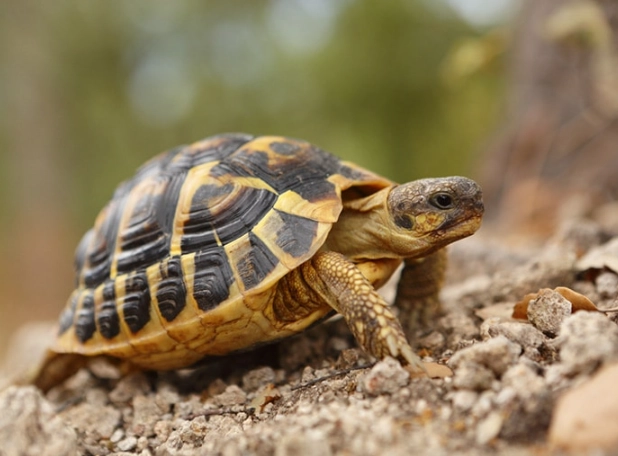
Outdoor Enclosure (The Holy Grail)
If your climate allows for it (safe temperatures for at least part of the year), an outdoor Hermann's tortoise habitat is the single best thing you can provide. Natural sun is superior to any bulb.
It needs to be a fortress. Predator-proof (think raccoons, birds, even loose dogs), escape-proof (they are surprisingly good climbers and diggers), and full of edible weeds, hiding spots, and a shallow water dish. A cold frame or small greenhouse section can extend the usable season. The Tortoise Trust has excellent, detailed blueprints for secure outdoor pens that have saved me a lot of trial and error.
You Are What You Eat: The Hermann's Tortoise Diet
Forget iceberg lettuce. Forget most fruit. A Hermann's tortoise is a strict herbivore adapted to fibrous, calcium-rich, low-protein, low-sugar vegetation. Their gut flora is a delicate ecosystem you must feed correctly.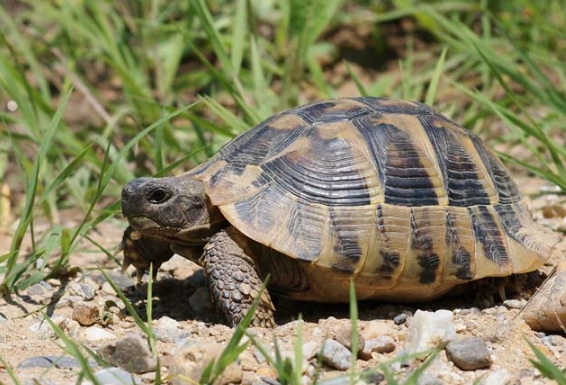
The ideal diet is a varied "weed salad." Here’s a breakdown of what should be on the menu:
- Staples (80% of diet): Dandelion greens & flowers, clover, plantain (the weed, not the fruit), hibiscus leaves/flowers, mallow, prickly pear cactus pads (spines burned off).
- Occasional Treats (20%): Endive, escarole, radicchio, a tiny bit of grated squash or carrot.
- Calcium Source: A constant supply of cuttlebone (the bird kind) in the enclosure for them to gnaw. Lightly dust food with a pure calcium carbonate powder (no D3 if using proper UVB) 2-3 times a week.
- Hydration: A shallow terracotta saucer of fresh water at all times. They drink and soak in it.
What about pellets? Some high-fiber, grass-based pellets can be a good supplement, especially in winter when fresh weeds are scarce. But they should never be the main course. Think of them as a multivitamin, not a meal.
The Long Haul: Health, Lifespan, and Common Problems
With proper care, a Hermann's tortoise lifespan can easily exceed 50 years, with some pushing past 80. You're getting a family heirloom. This longevity means preventing problems is infinitely better than treating them.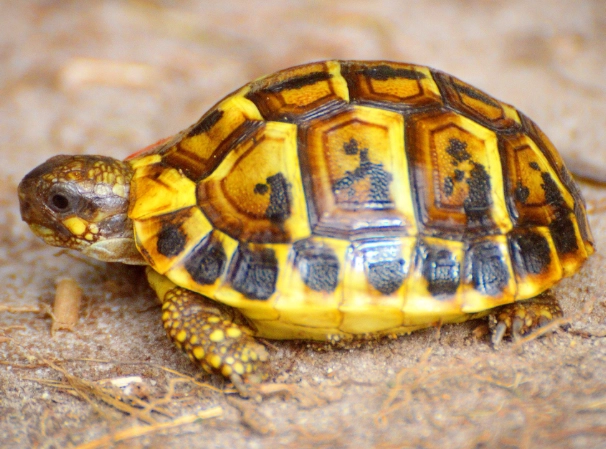
Signs of a Healthy Hermann's Tortoise
- Clear, bright eyes without swelling or discharge.
- Firm, well-formed stools (not runny).
- A hard, smooth shell with no soft spots, pyramiding (raised, bumpy scutes), or visible damage.
- Active and alert, especially when warm.
- Regular eating and drinking.
Red Flags: When to See a Vet
Reptiles hide illness until they're very sick. Any of these warrant a trip to an exotic vet (your regular cat/dog vet likely won't have a clue).
- Respiratory Infection: Bubbles/mucus from nose, wheezing, lethargy. Often caused by incorrect temperatures or humidity.
- Metabolic Bone Disease (MBD): Soft jaw or shell, lethargy, deformed limbs. Caused by lack of UVB and/or calcium.
- Parasites: Weight loss despite eating, abnormal stools. A fecal exam by a vet is a good idea for any new tortoise.
- Shell Rot: Soft, smelly, discolored patches on the plastron (bottom shell). A fungal/bacterial issue from dirty, damp substrate.
Finding a good reptile vet before you have an emergency is part of responsible ownership. The Association of Reptilian and Amphibian Veterinarians (ARAV) has a locator tool that's invaluable.
Breeding and Hibernation: Advanced Topics
These are topics for the committed keeper. I don't recommend either for beginners.
Hibernation (Brumation): Yes, Hermann's tortoises in the wild hibernate. In captivity, it's a carefully controlled process of gradual cooling over weeks, followed by 2-4 months at stable, cold (but not freezing) temperatures (around 40-50°F / 4-10°C). You never hibernate a sick, underweight, or young tortoise. The risks (death, organ failure) are real if done incorrectly.
Breeding: Requires a compatible pair (males can be aggressive), extensive research, and plans for potentially dozens of offspring over a female's long life. It's not something to undertake lightly.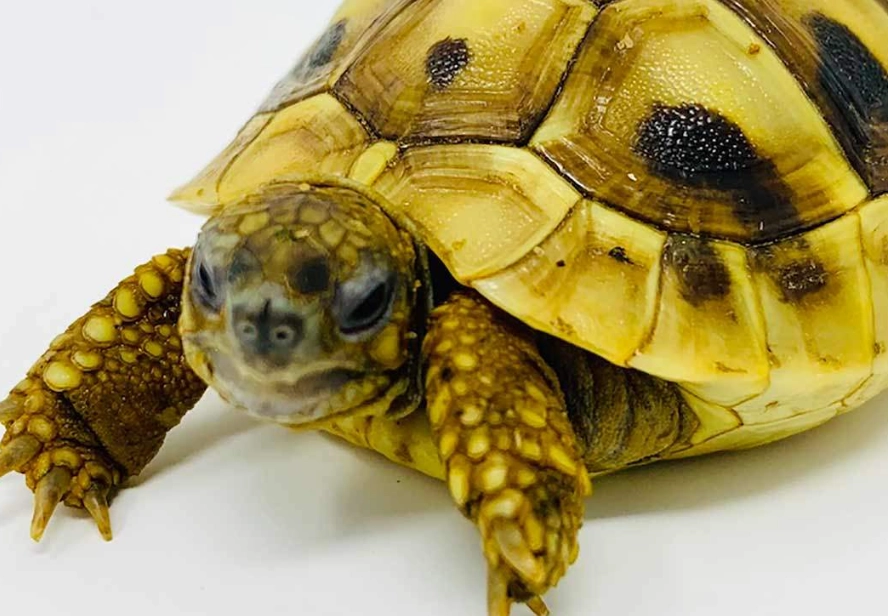
Your Hermann's Tortoise Questions, Answered
At the end of the day, choosing a Hermann's tortoise isn't about getting a "low-maintenance" pet. It's about choosing to become a steward for a small, fascinating piece of the natural world that will depend on you completely for its very long life. The reward is getting to know a creature of immense patience and quiet character.
Look, it's a lot of information. When I first got Tank, I was overwhelmed. But breaking it down—focusing first on the habitat, then the diet, then the routine—made it manageable. The upfront cost for proper setup (lights, table, vet fund) is significant. But the day-to-day, once you're dialed in, is mostly about observation, spot-cleaning, and preparing a fresh weed salad.
If you've read this far, you're already on the right path. You're asking the right questions. A healthy, thriving Hermann's tortoise is a testament to careful, informed care. It's a deeply satisfying journey, but one you have to start with your eyes wide open. Do your homework, connect with reputable breeders or rescues, and build that habitat first. Your future shelled friend will thank you for decades to come.
Reader Comments