In This Guide
- The Sulcata Tortoise: Not Your Average Reptile
- Building a Home for a Hatchling (That Won't Be a Hatchling for Long)
- The Great Outdoors: Planning the Adult Sulcata Tortoise Enclosure
- What to Feed Your Sulcata Tortoise (Hint: It's Not Just Lettuce)
- Health and Common Problems: What to Watch For
- Behavior, Handling, and Enrichment
- Breeding and Hibernation (Brumation)
- The Hard Questions (FAQ)
- Final Thoughts: Is a Sulcata Tortoise Right For You?
I get it. You saw a picture of a baby Sulcata Tortoise, those little domed shells and curious eyes, and your heart melted. They look like living, breathing rocks with personality. How hard could it be? They're slow, they eat lettuce, right?
Let me stop you right there. I've been around these creatures for years, and I've also seen the heartbreaking consequences of impulse buys. The Sulcata Tortoise, also known as the African spurred tortoise, isn't just a pet. It's a decades-long commitment to an animal that will eventually outgrow most dogs and has the potential to rearrange your backyard landscaping with the subtlety of a small bulldozer.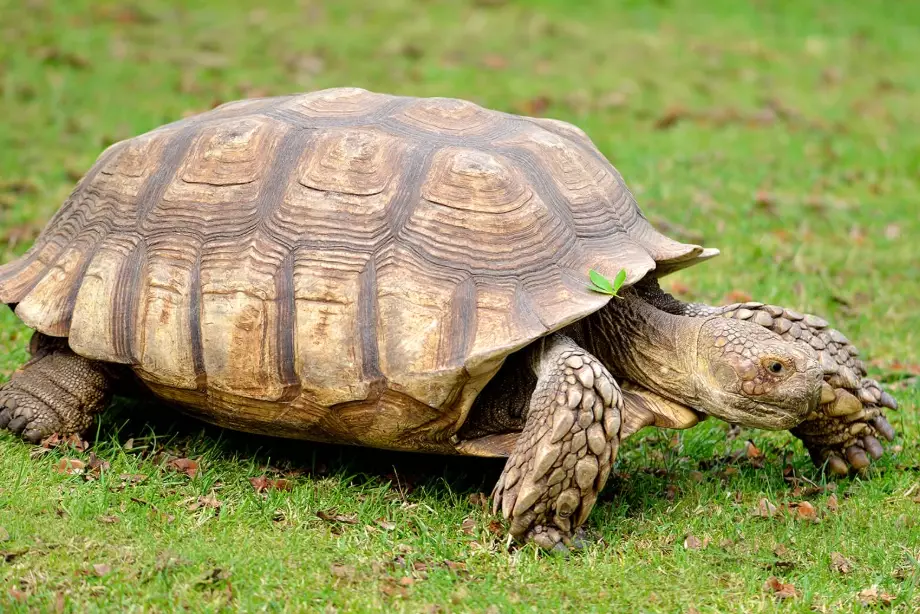
This isn't meant to scare you off. If you're fully prepared, a Sulcata can be an incredibly rewarding companion. But you need to go in with your eyes wide open. This guide isn't a fluffy list of fun facts. It's the real, gritty, sometimes messy details of what caring for a Sulcata Tortoise entails, from that tiny hatchling to the 150-pound behemoth it will become.
The Sulcata Tortoise: Not Your Average Reptile
Native to the southern edge of the Sahara Desert, the Sulcata Tortoise (Centrochelys sulcata) is built for harsh, arid environments. They're the third-largest tortoise species in the world, after the Galapagos and Aldabra giants. That "third-largest" title isn't just a trophy. It's the core of every care challenge you'll face.
Their growth is astonishing. A hatchling fits in the palm of your hand. In five years, it can be the size of a dinner plate. In ten to fifteen years, you're looking at an animal that can easily weigh over 80 pounds. I've met ones pushing 200 pounds. They don't just grow up; they grow out, and they grow strong.
Their lifespan? Easily 70 years or more. You're not getting a pet for your kids' childhood. You're adopting a family heirloom, an animal that will likely outlive you and need provisions in your will. That's not an exaggeration.
Key Facts at a Glance
| Aspect | Details | Why It Matters |
|---|---|---|
| Adult Size | 24-30 inches long, 80-150+ pounds | Indoor tanks become impossible. Requires a custom, secure outdoor space. |
| Lifespan | 70+ years | A lifelong commitment that requires planning for the tortoise's future. |
| Native Habitat | Arid savannas, desert fringes | They need dry heat, not humidity. Cannot tolerate cold, damp conditions. |
| Growth Rate | Very fast for a tortoise | You must plan and build their adult enclosure years in advance. |
| Temperament | Generally docile but incredibly strong and determined. | They will test fences and barriers. "Cuddly" is not an adjective for a 100-pound bulldozer. |
Building a Home for a Hatchling (That Won't Be a Hatchling for Long)
Let's start from the beginning. You've got a baby Sulcata Tortoise. The enclosure is your first major test. That flimsy 20-gallon tank from the pet store? Forget it. It's useless in months.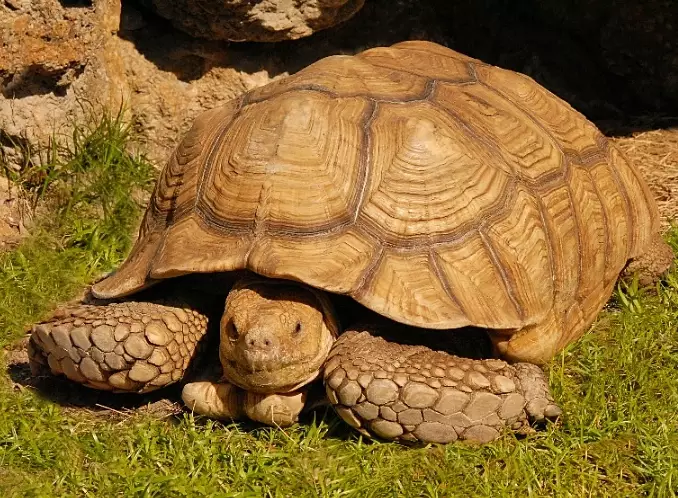
For a young Sulcata, I'm a big fan of using large, shallow plastic storage tubs or building a custom wooden tortoise table. The key is floor space, not height. They need room to wander. A minimum of 4 feet by 2 feet is a good start for a very young one, but you'll need to upgrade fast.
Substrate is crucial. Avoid sand alone (impaction risk) and cedar/pine shavings (toxic fumes). A mix of topsoil (without fertilizers or pesticides) and coconut coir works well. It holds some moisture for burrowing but isn't soggy. They love to dig, even as babies.
Essential Hatchling Setup Checklist:
- Enclosure: Large tortoise table or stock tank (min 4'x2').
- Substrate: 3-4 inches deep of organic topsoil/coconut coir mix for digging.
- Heat: A basking spot of 95-100°F created by a ceramic heat emitter or basking lamp. The cool end should be 75-80°F. No heat at night unless your house drops below 70°F.
- Light: A high-quality UVB lamp (10.0 or equivalent) covering 2/3 of the enclosure, replaced every 6-12 months (they lose potency). This is non-negotiable for calcium metabolism.
- Hides: At least two—one on the warm end, one on the cool end. A simple half-log or upside-down plastic tub with a door cut out works.
- Water: A shallow, heavy ceramic dish they can climb into and out of easily. Change daily.
Heat and UVB are the pillars of reptile health, especially for a Sulcata Tortoise. Without proper UVB, they cannot process calcium, leading to Metabolic Bone Disease (MBD)—a horrific, crippling condition where the shell and bones soften. The basking spot needs to be hot. These are desert animals. Their digestion depends on it.
The Great Outdoors: Planning the Adult Sulcata Tortoise Enclosure
This is where most people fail. You must have a plan for an outdoor enclosure. By the time your Sulcata is 8-10 inches long, it should be spending most of its time outside in appropriate weather. An indoor setup for a full-grown adult is almost always inadequate and cruel.
Your backyard needs to become tortoise-proof. And I don't mean a little chicken wire fence.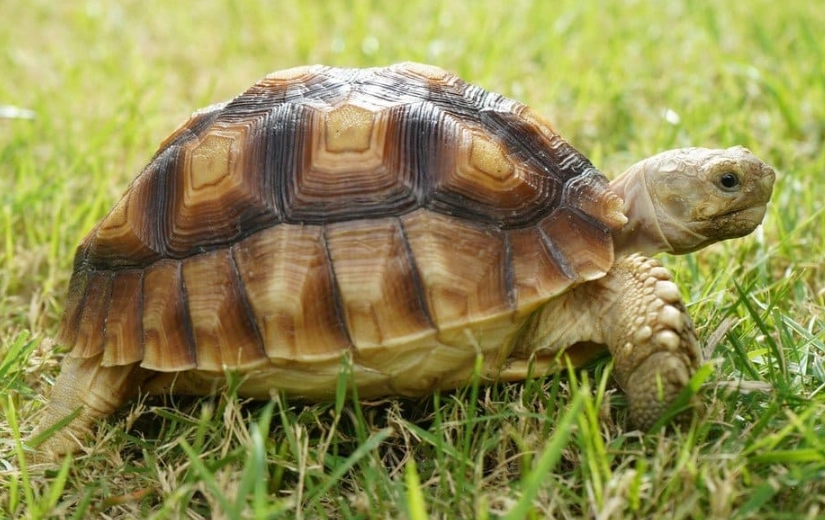
Security is Job One: Sulcatas are surprisingly adept climbers and phenomenal diggers. I've seen them use corners as leverage to push over fences. I've seen them dig tunnels four feet deep. Your barrier needs to address both.
- Above Ground: Walls should be solid (wood, concrete blocks) and at least 2 feet high—taller is better. They should be sunk into the ground. If using wire, it must be heavy-duty hardware cloth, as they can bend weak wire.
- Below Ground: Bury the bottom of the wall at least 12-18 inches deep, or pour a concrete footer. An alternative is to lay heavy pavers or hardware cloth along the interior perimeter of the fence, buried a few inches down, to deter digging.
Space Requirements: The bigger, the better. An absolute minimum for one adult is 10 feet by 10 feet, but that's just for survival. A space more like 20'x20' or larger allows for proper grazing and exercise. Remember, in the wild, they roam vast distances.
Shelter: They need a insulated, waterproof house (a "tortoise shed") to retreat into at night and during bad weather. This shelter must be heated in winter if you live in a climate that gets cold. A simple dog house won't cut it. You need a properly insulated structure with a radiant heat panel or ceramic heat emitter controlled by a thermostat. The American Veterinary Medical Association (AVMA) stresses the importance of providing appropriate shelter for all pets, a principle that absolutely applies to a giant tortoise.
Water & Soaking: A large, shallow pond area they can wade into is excellent. A heavy-duty plant saucer works too. They drink and soak through their skin. Always ensure fresh water is available.
What to Feed Your Sulcata Tortoise (Hint: It's Not Just Lettuce)
This is the most common mistake in Sulcata Tortoise care. They are not garbage disposals for your kitchen scraps. They are strict, high-fiber herbivores. A poor diet leads to pyramiding (lumpy, pyramid-shaped shell scutes), obesity, and organ failure.
The cornerstone of a proper Sulcata Tortoise diet is grass and hay. Timothy hay, orchard grass hay, Bermuda grass—these should make up about 80% of an adult's diet. They need the long-stem fiber to keep their digestive tract moving. Think of them as tiny, shelled cows.
Fresh greens are the supplement. But not just any greens. You must focus on calcium-rich, low-phosphorus, low-protein, and low-oxalate greens.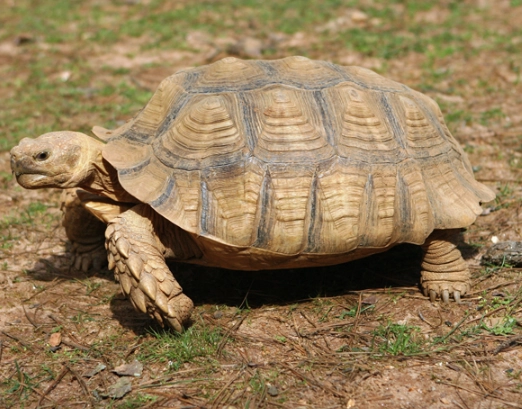
Here’s a quick list to live by:
| Feed Regularly (Staples) | Feed Occasionally (Moderation) | Avoid Completely |
|---|---|---|
| Endive, Escarole | Dandelion greens (from untreated areas) | Spinach, Kale (high oxalates) |
| Collard Greens | Hibiscus leaves & flowers | Iceberg Lettuce (no nutrition) |
| Turnip Greens | Mulberry leaves | Broccoli, Cabbage (can cause gas) |
| Opuntia (Prickly Pear) Cactus Pads | Zucchini squash | Animal Protein (meat, dog food) |
| Grasses (Bermuda, Timothy) | Carrot tops | Fruit (too much sugar) |
See how fruit is in the "avoid" column? A tiny piece as a very rare treat is okay, but their systems aren't designed for sugar. It disrupts gut flora. The same goes for most vegetables you'd eat—they're too starchy or watery.
Supplements: Dust food with a plain calcium carbonate powder (no phosphorus added) a few times a week. For a growing Sulcata Tortoise, you can do this more frequently. A reptile multivitamin powder once a week is also recommended. Gut-loading their greens with nutrition is key, and resources from institutions like the University of California's Agriculture and Natural Resources division can offer great insight into optimal plant nutrition.
Health and Common Problems: What to Watch For
A healthy Sulcata Tortoise is active (for a tortoise), has clear, bright eyes, a firm shell, and a good appetite. Their nose should be dry. Here are the big red flags:
Metabolic Bone Disease (MBD): Caused by lack of UVB or calcium. Symptoms include soft shell or jaw, swollen limbs, difficulty walking, and pyramiding. It's preventable with proper lighting and diet.
Respiratory Infections: Often due to cool, damp conditions. Bubbles or mucus from the nose, wheezing, lethargy. Requires immediate veterinary care and warmer, drier housing.
Parasites: Internal parasites are common, especially in wild-caught or pet-store tortoises. A fecal exam by a vet is a good idea for any new Sulcata. Symptoms include diarrhea, lack of appetite, and poor growth.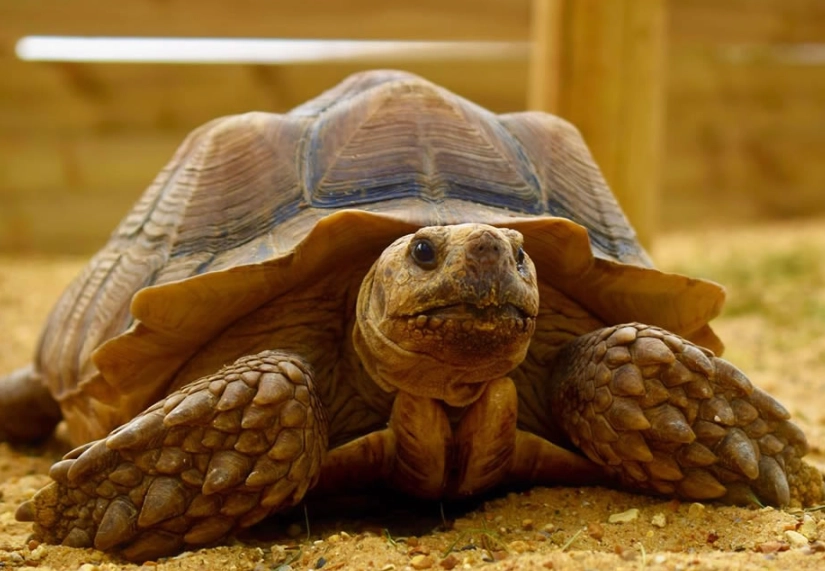
Pyramiding: While sometimes genetic, severe pyramiding is almost always diet-related. It's the result of too much protein and rapid growth. The shell develops lumpy, pyramid-like scutes. It's a sign you need to overhaul the diet toward more hay and fiber immediately.
Finding a vet before you have an emergency is critical. Not all vets see reptiles, and even fewer are experienced with giant tortoises. Search for an ARAV (Association of Reptilian and Amphibian Veterinarians) member near you. A check-up once a year is smart.
Behavior, Handling, and Enrichment
They're not social animals. They don't crave interaction like a dog. Some become tolerant of humans, others remain shy. Handling should be minimal, especially as they get large and heavy (you can injure them or yourself).
Enrichment is about their environment. Reptile enrichment—that's our industry hotspot tag—is huge now, and for good reason. A bored tortoise is a stressed tortoise.
- Digging Pits: Give them a deep area of loose soil/sand mix to excavate.
- Foraging: Scatter their food throughout the enclosure instead of using a bowl.
- Obstacles: Logs, flat rocks, gentle slopes. Things to climb over and explore.
- Misting: They often become more active after a light rain or misting, mimicking their natural environment.
They have personalities. One of mine would follow me around the yard, not for affection, but because I was a mobile salad dispenser. Another would deliberately push his ball into his water dish every single day. They're stubborn, curious, and surprisingly smart in their own way.
Breeding and Hibernation (Brumation)
If you have a male and female, you will get eggs. Males can be aggressive toward females, so they often need to be housed separately. Incubating eggs requires precise temperature and humidity control.
Now, hibernation. Sulcata Tortoises do NOT hibernate. They come from a climate that is warm year-round. Any exposure to temperatures below 50°F (10°C) is dangerous and can lead to respiratory infections or death. They must be brought into heated quarters during cold weather. This is a non-negotiable point of care.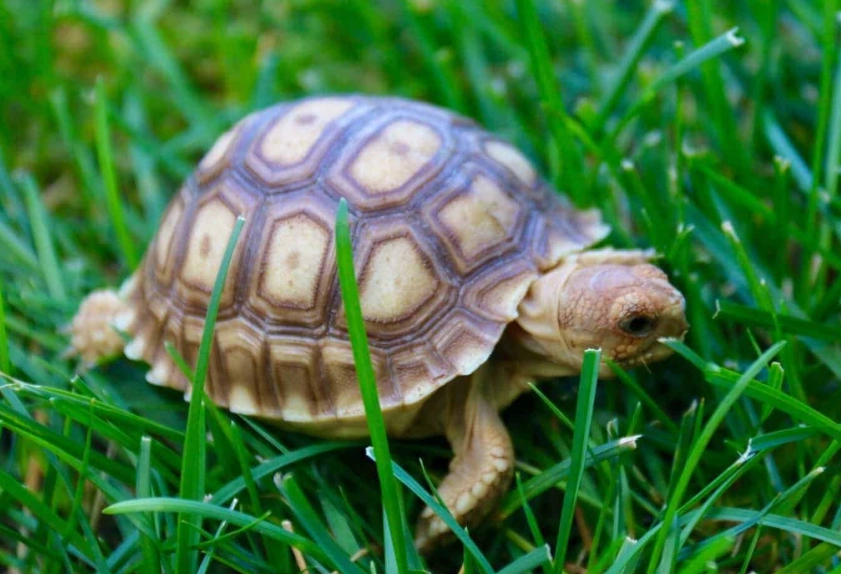
The Hard Questions (FAQ)
Let's tackle the stuff people are secretly searching for.
Q: Are Sulcata Tortoises good pets for children?
A: As a supervised family pet, where the adults are 100% responsible? Maybe. As a child's sole responsibility? Absolutely not. The care is complex, the commitment is multi-generational, and an adult Sulcata is too powerful for a child to handle safely.
Q: Can I keep one in my apartment?
A: No. Full stop. It is unethical to keep an adult Sulcata Tortoise in an apartment. They require too much space, sunlight, and outdoor access.
Q: How much does it cost to care for a Sulcata Tortoise?
A> The initial cost of the tortoise is the smallest part. Budget for:
- Hatchling setup: $300-$500.
- Building a permanent, secure outdoor enclosure: $1000 to several thousand, depending on materials and size.
- Ongoing: High-quality hay, fresh greens, electricity for heat lamps (year-round for the shelter), UVB bulb replacements every 6-12 months, substrate, vet bills.
It adds up quickly.
Q: My Sulcata isn't eating. What's wrong?
A> First, check temperatures. Is the basking spot hot enough? Cool temperatures are the #1 cause of appetite loss. If temps are good, consider stress (new environment), illness, or parasites. A vet visit is wise if fasting lasts more than a week or two for a young tortoise.
Q: Can they live with other tortoises?
A> Often, no. Males are territorial and will fight. Even females can bully each other. Housing multiple Sulcata Tortoises requires a massive amount of space and careful monitoring. It's usually best to keep them singly.
Final Thoughts: Is a Sulcata Tortoise Right For You?
Look, I love these prehistoric giants. There's something deeply peaceful about watching a well-cared-for Sulcata Tortoise methodically graze in the sun. But my love for them makes me brutally honest about their needs.
Ask yourself:
- Do I own my home with a secure, sizable yard for the next 30+ years?
- Am I prepared to build a fortress-like enclosure?
- Can I afford not just the initial costs, but decades of food, utilities, and potential vet care?
- Do I live in a warm climate, or am I prepared to build and pay to heat a serious winter shelter?
- Have I made plans for who will care for this animal if something happens to me?
If you hesitated on any of those, please reconsider. The world doesn't need more neglected Sulcatas in rescues.
But if you read all this, felt the scale of the commitment, and your answer is still "yes," then welcome. You're about to embark on a unique journey with one of nature's most resilient and fascinating creatures. Do your research, connect with experienced keepers and reputable rescues, and start building that enclosure now. Your future giant, shelled friend will thank you for decades to come.
And remember, adopting an adult from a rescue is a fantastic option. You skip the fragile baby stage, you give a deserving animal a home, and you know exactly how big it will get. Just a thought.
Reader Comments