Quick Navigation
Let's be honest, tree frogs are just cool. There's something magical about a tiny creature that can climb glass and sing up a storm on a humid summer night. And among the chorus, there's one that often gets confused, overlooked, or just plain mysterious: Cope's gray tree frog (Hyla chrysoscelis). If you've stumbled upon a mottled gray frog in your backyard or are thinking of keeping one, you've probably hit a wall of confusing information. Is it the same as the Eastern gray tree frog? How do you even tell? What does it eat? Can you keep it as a pet?
I've been fascinated by these guys for years, both in the wild and in captivity. I've also seen a ton of bad advice online—tanks that are too small, diets that are all wrong, people releasing pets they can't care for (please don't do that). It's frustrating. This guide is my attempt to cut through the noise. We'll cover everything from telling two nearly identical species apart to setting up a proper home for one, should you choose to go down that road. It's not always easy, and I'll point out the parts that are a real pain, too.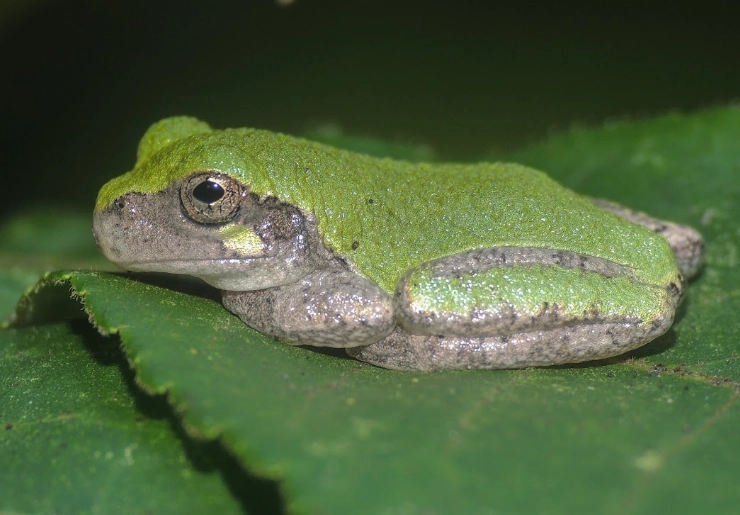
Quick Reality Check: The Cope's gray tree frog is a real, distinct species. For decades, it was considered just a "southern version" or a subspecies of the Eastern gray tree frog. It wasn't until scientists listened closely and looked at their chromosomes that the truth came out. They're what we call a "cryptic species complex"—look-alikes that are genetically different. Neat, huh?
The Great Look-Alike Debate: Cope's vs. Eastern Gray Tree Frog
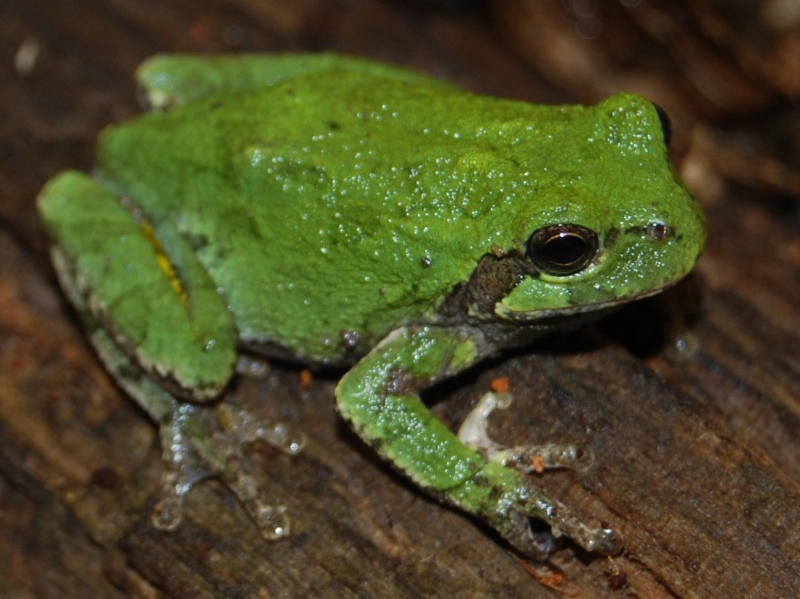
This is the single biggest point of confusion. You see a gray, bumpy frog with bright yellow-orange patches under its thighs. What is it? It could be either. Visually, they are essentially twins. I mean, even expert herpetologists can't reliably tell them apart just by looking at a photo. That's why so many online forums have threads filled with guesses.
So, if you can't see the difference, how do you know? You have to use other clues. Here’s the breakdown.
1. The Sound Test (The Most Reliable Field Method)
Their calls are different. In the breeding season (late spring to summer), males call to attract females. This is your best bet for identification without a lab.
- Cope's Gray Tree Frog Call: A faster, harsher, more grating trill. It's often described as a shorter, more melodic, but slightly raspier sound. To me, it sometimes sounds like a faster, more energetic version. The pulse rate is faster.
- Eastern Gray Tree Frog Call: A slower, smoother, more musical trill. The pulses are slower and more distinct.
The best way to learn is to listen. The University of Georgia's Savannah River Ecology Laboratory has excellent, verified recordings of both species. The Virginia Herpetological Society also provides detailed species accounts with audio. Listen to them side-by-side. It takes practice, but your ear will eventually pick up the difference.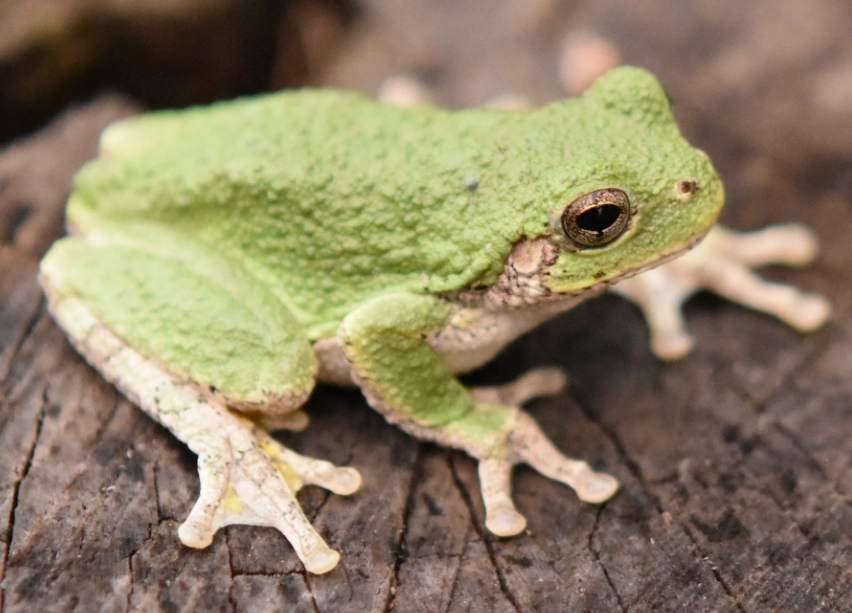
Honestly, in areas where they overlap, it's a symphony of slightly different trills.
2. The Geographic Clue (Not a Guarantee, But a Hint)
Their ranges overlap hugely in the eastern United States, but there are general patterns.
- Cope's Gray Tree Frog: Tends to be more common in the southeastern and central U.S. It's often found in drier, more open woodlands and adapts well to forest edges and even suburban areas.
- Eastern Gray Tree Frog: More associated with the northeastern U.S. and the upper Midwest, often in moister, denser forests.
But here's the kicker: In a huge swath from Texas all the way up to Maine, you can find both. So, location alone won't give you a definitive ID. In my own experience in the Mid-Atlantic, I've heard both calls in the same wetland on the same night.
3. The Science Bit: Chromosomes
This is the only 100% foolproof method, and it requires a lab. The Eastern gray tree frog (Hyla versicolor) is a tetraploid. That means it has four sets of chromosomes. The Cope's gray tree frog is a diploid, with two sets. It's a rare and fascinating example of speciation through genome duplication. You're not going to do a chromosome count in your backyard, but it's the core reason they're separate species.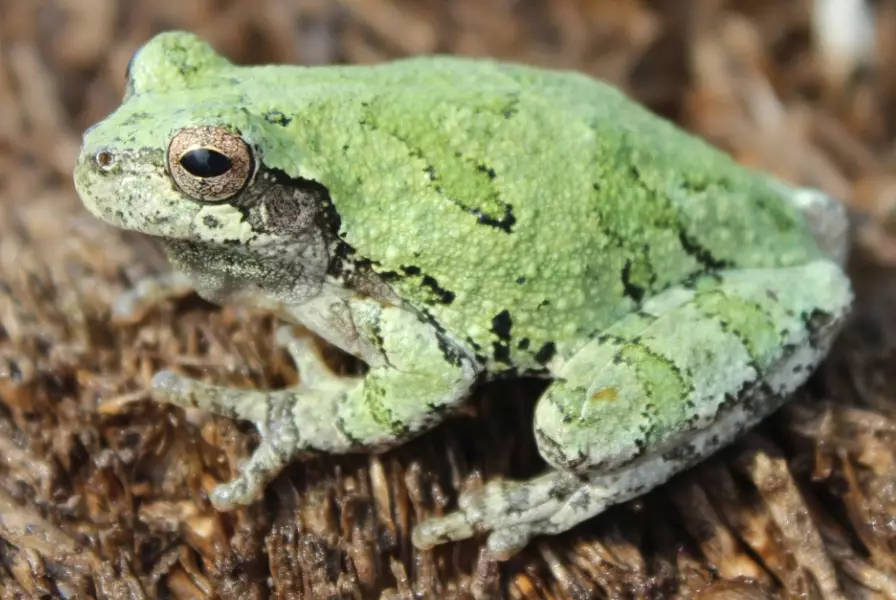
Comparison Table: Cope's vs. Eastern Gray Tree Frog
| Feature | Cope's Gray Tree Frog (Hyla chrysoscelis) | Eastern Gray Tree Frog (Hyla versicolor) |
|---|---|---|
| Primary Identification | Faster, harsher, more grating trill. Higher pulse rate. | Slower, smoother, more musical trill. Lower pulse rate. |
| Chromosomes | Diploid (2 sets) | Tetraploid (4 sets) |
| Typical Range (General) | More southeastern & central US. Often in drier habitats. | More northeastern & upper Midwest. Often in moister habitats. |
| Visual Appearance | Virtually identical. Color can change from gray to green based on temperature, humidity, and activity. Both have bright yellow-orange inner thigh patches. | |
| Size | Very similar, 1.25 to 2 inches (3-5 cm) snout-to-vent. | |
So, if you're trying to identify a wild frog and it's not calling, the honest answer is: you might not be able to. And that's okay. Many field guides and observations just list them as "Gray Tree Frog Complex."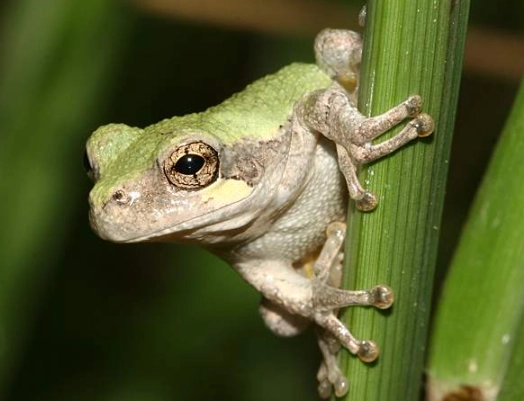
Life in the Wild: What Does a Cope's Gray Tree Frog Do All Day?
Forget the idea of a frog just sitting on a lily pad. The life of a Cope's gray tree frog is one of climbing, hiding, and waiting.
Home Sweet Habitat
These are true tree frogs. They have enlarged, sticky toe pads that let them climb vertical surfaces—bark, leaves, even your window screen. They aren't tied to water except during breeding season. You'll find them in:
- Deciduous and mixed forests (they love oaks and maples).
- Forest edges and clearings.
- Swamps and wooded wetlands (for breeding).
- Surprisingly, backyards with mature trees and shrubs. I've found them clinging to my downspout after a rain.
- They are nocturnal. During the day, they tuck themselves into tight spots, often pressing their bodies against tree bark. Their incredible camouflage makes them vanish.
The Menu (They're Not Picky Eaters)
Cope's gray tree frogs are opportunistic, sit-and-wait predators. They'll eat just about anything they can fit in their mouths. Their diet is a big reason they can thrive in suburban areas.
- Top Items: Moths, flies, beetles, spiders, ants, and caterpillars.
- Size Matters: They can take surprisingly large prey relative to their size.
- Hunting Strategy: They use their excellent vision to spot movement. A quick, sticky tongue does the rest. Watching one hunt under a porch light is a real treat.
From Egg to Frog: The Breeding Saga
This is when they become aquatic. After warm spring and summer rains, males gather at temporary or permanent ponds, ditches, or swamps and start calling. That iconic trill is a love song.
- Eggs: The female lays clusters of 20-40 eggs, attaching them to vegetation just below the water's surface. A single female can lay over 1,000 eggs in a season! The eggs hatch in about 4-5 days.
- Tadpoles: The tadpoles are olive-colored with high, striped tails. They are algae and detritus eaters, scraping stuff off underwater plants. The tadpole stage lasts 6-8 weeks, which is fairly quick. It's a race against the pond drying up.
- Metamorphosis: The tiny froglets that emerge are bright green, not gray! They stay near the water's edge for a few days before heading into the trees. Their color changes to gray as they mature.
It's a tough life. Most eggs and tadpoles become food for fish, insects, and other predators.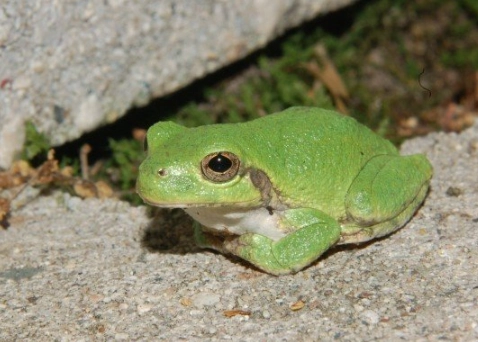
Thinking of Keeping a Cope's Gray Tree Frog as a Pet?
This is where I need to be blunt. They can make fascinating pets, but they are not "beginner" frogs like a White's tree frog might be. They are small, nocturnal, shy, and have specific needs. You won't be handling them much (their skin is sensitive to oils and salts on our hands). You're basically creating and maintaining a small slice of woodland for a creature that will mostly hide from you. If that still sounds good, read on.
First and Most Important Rule: Never take a Cope's gray tree frog from the wild for a pet. It's often illegal (check your local wildlife laws), it harms wild populations, and wild-caught animals are stressed, carry parasites, and rarely adapt well. Always seek a captive-bred frog from a reputable breeder. This ensures a healthier animal and takes pressure off wild ones.
The Enclosure: Building a Vertical World
A 10-gallon tank is the absolute bare minimum for one frog, but it's cramped. I'd recommend a tall 18x18x24 inch terrarium for 1-2 frogs. They need height, not floor space.
- Substrate: Something that holds moisture but doesn't stay soggy. I use a mix of coconut fiber and orchid bark. Avoid gravel or small particles they could accidentally eat.
- Climbing & Hiding: This is critical. Provide lots of branches, cork bark tubes, and sturdy live or artificial plants (like Pothos or Sansevieria). They need hiding spots at all levels. A background on three sides makes them feel more secure.
- Water: A shallow, clean water dish large enough for the frog to sit in. Change it daily. They absorb water through their skin; they don't typically drink.
Climate Control: It's All About Humidity and Temperature
This is the part people mess up. You can't just stick them in a room-temperature tank.
- Temperature: A gradient is best. Aim for 75-80°F (24-27°C) on the warm end during the day, with a slight drop at night. Don't let it go above 85°F (29°C) or below 65°F (18°C) for extended periods. An under-tank heater on one side or a low-wattage heat lamp controlled by a thermostat works.
- Humidity: Maintain 50-70% humidity. Mist the enclosure lightly once or twice a day with dechlorinated water. A hygrometer (humidity gauge) is a must-have. Too dry, and they can't breathe or hydrate properly. Too wet, and you get mold and bacterial blooms.
- Lighting: They don't require special UVB lighting if they are fed a proper diet (gut-loaded insects with supplements). However, a low-level UVB light can be beneficial and helps plants grow if you have live ones. Provide a regular day/night cycle (12 hours on, 12 hours off).
Feeding Your Captive Frog
This is a commitment. You're not just feeding the frog; you're feeding the insects first.
- Staple Food: Crickets are the go-to. Other good options are dubia roaches (if legal in your area), black soldier fly larvae, and occasional mealworms or waxworms (as treats, they're fatty).
- Gut-Loading: 24-48 hours before feeding them to your frog, feed the insects a nutritious diet (commercial gut-load food, veggies like carrots and squash). A well-fed insect is a nutritious meal.
- Dusting: This is non-negotiable. Dust the insects with a high-quality calcium supplement at every feeding. Dust with a calcium + D3 supplement 2-3 times a week. Dust with a multivitamin once a week. This prevents Metabolic Bone Disease (MBD), a common and fatal condition in captive amphibians.
- Schedule: Feed juveniles daily, adults every other day. Offer only as many insects as the frog will eat in 15-30 minutes. Remove uneaten crickets, as they can bother or even bite the frog.
I'll admit, maintaining a colony of feeder insects and remembering the dusting schedule is the most tedious part of keeping any frog. But skipping it is how you end up with a sick animal.
Common Health Issues to Watch For
- Metabolic Bone Disease (MBD): The big one. Symptoms include lethargy, swollen or rubbery jaw, difficulty climbing, and eventually paralysis. Caused by lack of calcium/D3. Prevention through proper dusting is key.
- Skin Infections (Red-Leg): Bacterial infection often caused by dirty conditions or stress. Look for redness on the belly and thighs. Requires immediate veterinary care.
- Parasites: Less common in captive-bred animals, but internal parasites can cause weight loss and poor appetite. A vet can do a fecal exam.
- Impaction: Eating substrate or large prey items can cause a blockage. Feed insects of appropriate size and use safe substrate.
Find an exotics vet before you get the frog, not during an emergency.
Answering Your Burning Questions (FAQ)
Wrapping It Up: Respect for a Tiny Neighbor
Whether you're a backyard naturalist thrilled to hear their trill on a summer night, or a dedicated hobbyist willing to meet their specific care needs, the Cope's gray tree frog deserves our attention and respect. It's a resilient, adaptable creature that shares our landscapes.
The biggest takeaways? Don't assume every gray tree frog is the same—listen to its song. If you choose to keep one, do it right: captive-bred only, a proper vertical setup, and a relentless focus on nutrition through gut-loading and dusting. It's not the easiest pet, but watching a well-cared-for frog thrive in a little ecosystem you built is incredibly rewarding.
And if you just enjoy them in the wild, maybe leave a brush pile in the corner of your yard or a shallow dish of water. You might just attract your own chorus. Just listen closely—you might be hearing the faster trill of a Cope's gray tree frog.
Reader Comments