Let's talk about crested gecko humidity. It's one of those things that seems simple on paper—just keep it between some numbers, right?—but in practice, it can feel like a constant balancing act. You spray the tank, the hygrometer spikes, then a few hours later it's dropped back down to nothing. Your gecko seems fine, but then you notice a stuck shed on its toes. Sound familiar?
I've been there. I've killed a few ferns by over-misting in my early days, and I've also woken up to a tank that felt drier than a desert. Getting your crested gecko's humidity right isn't just about hitting a number; it's about recreating a slice of their New Caledonian rainforest home inside a glass box. And when you nail it, everything else—feeding, shedding, activity—just falls into place.
This guide isn't going to just throw numbers at you. We're going to dig into the why behind those numbers, the tools that actually work (and the ones that don't), and the real-world tricks to stop chasing your hygrometer and start providing a stable, healthy environment.
Quick Guide to This Article
- Why Humidity is a Big Deal (It's Not Just About Shedding)
- The Golden Numbers: Ideal Crested Gecko Humidity Ranges
- How to Measure Humidity: Trust but Verify
- How to Raise and Maintain Humidity: The Art of Misting
- Fixing Common Crested Gecko Humidity Problems
- Advanced Topic: Bioactive and Crested Gecko Humidity
- Your Crested Gecko Humidity Questions, Answered
Why Humidity is a Big Deal (It's Not Just About Shedding)
Most care sheets will tell you that proper crested gecko humidity is crucial for shedding. And that's 100% true. Inadequate humidity is the number one cause of bad sheds, which can lead to lost toes and tail tips if skin gets stuck and cuts off circulation. It's a serious welfare issue.
But there's more to it.
Humidity plays a fundamental role in their respiratory health. Crested geckos, like all reptiles, don't have diaphragms. They rely on the right environmental conditions to facilitate breathing. Air that's consistently too dry can irritate their respiratory tracts. On the flip side, air that's perpetually soggy creates a playground for mold and bacteria, leading to nasty respiratory infections.
Think of it this way: Humidity is part of their hydration strategy. While they will drink water droplets from leaves and glass (which is why misting is so important), they also absorb some moisture through their skin. A good humidity cycle supports their entire fluid balance.
Then there's behavior. In the wild, crested geckos are active during the humid evenings and nights. A tank that mimics this natural rise in humidity often triggers more natural exploratory and feeding behaviors. A bone-dry tank might leave them feeling stressed and reluctant to move around.
The Golden Numbers: Ideal Crested Gecko Humidity Ranges
Here's the core of it all. You'll see slight variations in recommended figures, but the consensus among experienced keepers is clear: it's all about the cycle, not a single, constant number.
- Daytime (Ambient) Humidity: Aim for 50-60%. This is the baseline. The tank should feel fresh but not wet. This drop allows the substrate and surfaces to dry out a bit, preventing mold.
- Nighttime Humidity: This is the crucial spike. You want it to rise to 70-80% (some even go to 85% for brief periods). This replicates the natural evening fog and dew in their habitat and triggers their active period.
- The Cycle is Key: The most important concept is the daily fluctuation. Humidity should rise significantly at dusk (when you mist) and then gradually fall throughout the day. A flat line on your hygrometer is a red flag.
What does this look like for different life stages? Honestly, the fundamentals are the same. A hatchling is just as dependent on proper humidity as an adult. The main difference is that babies can dehydrate faster, so consistency might be even more critical for them.
| Life Stage | Daytime Humidity | Nighttime Humidity | Special Notes |
|---|---|---|---|
| Hatchling/Juvenile | 50-60% | 70-80% | Monitor closely; smaller bodies dehydrate faster. Ensure water droplets are accessible. |
| Adult | 50-60% | 70-80% | Standard range. Focus on providing a consistent daily cycle. |
| Breeding Female / Gravid | 50-60% | 70-80% | No major change needed. Proper hydration supports egg development. |
How to Measure Humidity: Trust but Verify
You can't manage what you don't measure. Relying on guesswork for your crested gecko's humidity is a recipe for trouble. You need a hygrometer. But not all hygrometers are created equal.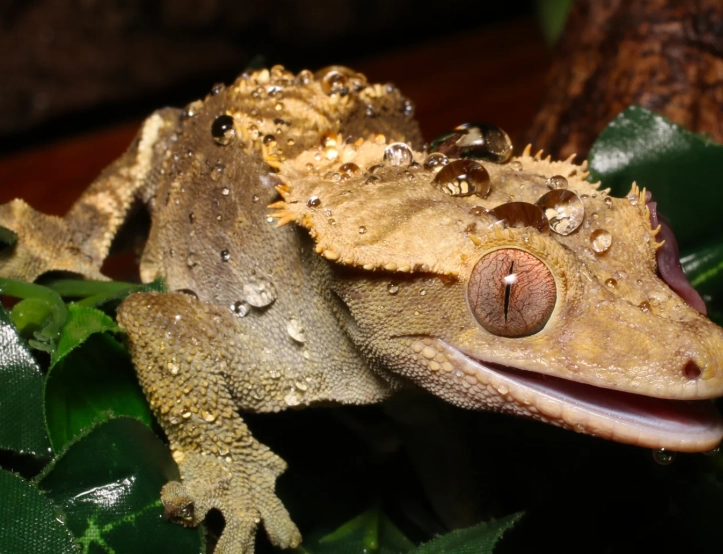
The Tool Showdown: Analog vs. Digital
Those little round dial hygrometers that come with tank kits? I'm not a fan. They're often inaccurate, slow to respond, and can be affected by direct misting. I've had one stuck on 70% for weeks in a clearly dry tank.
Digital hygrometers are the way to go. The ones with a probe are particularly good because you can place the main unit outside the tank (safe from moisture) and put the probe right where you need it—near your gecko's favorite hide, for example. Brands like Zoo Med and Exo Terra make reliable ones. Look for models that display both temperature and humidity.
Pro Placement Tip: Don't stick your hygrometer right next to the water bowl or directly under where you mist. Place it in the middle of the tank, at the level where your gecko spends most of its time. And get two! Place one on the warm side and one on the cool side. You might be surprised by the gradient.
How to Raise and Maintain Humidity: The Art of Misting
This is where the rubber meets the road. For most keepers, manual or automated misting is the primary tool for managing crested gecko humidity.
Manual Misting: A simple spray bottle with fine mist. Use dechlorinated water or reverse osmosis (RO) water to prevent white mineral spots on the glass. Mist heavily at lights out in the evening until you see the hygrometer hit that 80% mark. You want the leaves and glass to be beaded with water. A light spritz in the morning can help if your daytime humidity is crashing too fast, but the goal is to let it dry out.
Automated Misting Systems: These are a game-changer for consistency, especially if you have a busy schedule. Systems like MistKing or Exo Terra's Monsoon can be programmed to go off for 30-45 seconds at dusk and maybe 15 seconds at dawn. They're an investment, but they eliminate the "did I mist tonight?" anxiety. Just remember to clean the nozzles and check the reservoir regularly.
Beyond Misting: Other Factors That Help
- Substrate: Moisture-retentive substrates like coconut fiber (coir), cypress mulch, or a bioactive soil mix help buffer humidity by slowly releasing moisture back into the air as the tank dries. A deep layer is better than a shallow one.
- Live Plants: Pothos, snake plants, and bromeliads are not just for decoration. They transpire, releasing water vapor. They also help use up excess water in the soil, reducing the risk of sogginess.
- Water Bowl: A large, shallow water bowl will add a negligible amount to overall humidity, but it's still essential for drinking and microclimate.
- Tank Size & Ventilation: A common mistake is too much ventilation. Screen tops are great for airflow, but they let humidity escape rapidly. Partially covering the screen top with glass or acrylic (like 50-70%) can help retain humidity while still allowing for gas exchange. Just don't seal it completely!
Fixing Common Crested Gecko Humidity Problems
Problem: Humidity is Always Too Low
Your hygrometer struggles to hit 70% even after misting, and it's back to 40% by noon.
- Check Ventilation: Is your tank a screen box? Cover part of the lid.
- Mist More/Longer: You might just need a heavier evening misting session.
- Add a Humid Hide: While you fix the ambient issue, provide a humid hide—a small container filled with damp sphagnum moss—so your gecko has a humid retreat.
- Substrate: Ensure you're using a substrate that holds moisture. A thin layer of paper towel will do nothing for humidity.
Problem: Humidity is Always Too High
The tank feels damp and clammy, and you might see mold starting on wood or leaves.
This is a danger zone. Consistently high crested gecko humidity invites respiratory infections and scale rot.
- Increase Ventilation: Remove any lid covers. Use a small computer fan near the top of the tank (on a timer) to promote air circulation without creating a draft directly on the gecko.
- Reduce Misting: Mist less often or for shorter periods.
- Substrate: If the substrate is constantly wet, replace the top layer or mix in drier substrate. Ensure your drainage layer in bioactive setups isn't flooded.
- Use a Dehumidifier: If your room humidity is naturally very high, a small room dehumidifier might be necessary.
Problem: Humidity Crashes Too Quickly After Misting
It spikes to 80% but plummets to 50% in just a couple of hours.
- Substrate Depth: You likely need a deeper layer of moisture-holding substrate to act as a reservoir.
- More Plants: Add more live plants to help slow the evaporation rate.
- Partial Lid Cover: As mentioned, covering part of a screen lid is the most effective fix for this common issue.
- Tank Size: Is the tank too large for the amount of water you're adding? You might need to mist more.
Advanced Topic: Bioactive and Crested Gecko Humidity
Bioactive setups aim to create a self-sustaining ecosystem. For humidity, this means the live plants and a drainage layer help create a more stable moisture cycle. The soil holds water and releases it slowly, and the plants use excess water. In theory, it requires less frequent misting once established.
But here's my take: setting up a bioactive tank for the sole purpose of stabilizing crested gecko humidity is putting the cart before the horse. A bioactive setup is a commitment and has its own learning curve. If your primary goal is to nail your humidity parameters, focus on the fundamentals first—ventilation management, proper misting, and good substrate. Once you have that down, then consider going bioactive for its other benefits. I tried to go bioactive too early and ended up with a moldy, soggy mess because I was over-misting to chase a humidity number.
Resources like the Reptiles Magazine website often have great articles on bioactive basics, and forums on sites like MorphMarket can connect you with vendors specializing in clean-up crews and bioactive substrates.
Your Crested Gecko Humidity Questions, Answered
Getting your crested gecko humidity dialed in feels like a win. You stop worrying about the gauge and start enjoying your pet. You'll see them drinking from droplets, exploring more at night, and shedding in one perfect piece. It's worth the effort to learn your specific tank's personality—how it holds moisture, how it dries out. Pay attention, make small adjustments, and trust that a good daily rhythm is the ultimate goal. Your gecko will thank you for it.
Reader Comments