Explore This Guide
- What Exactly Is a Chameleon Gecko?
- Setting Up the Perfect Home: It's All About the Microclimate
- The Chameleon Gecko Diet: Small, Sticky, and Supplemented
- Handling and Temperament: Managing Expectations
- Common Health Issues to Watch For
- Are You Ready for a Chameleon Gecko? A Brutally Honest Checklist
- Final Thoughts: Is the Chameleon Gecko the Right Pet for You?
I remember the first time I saw a chameleon gecko. It wasn't in a pet store, but in a friend's carefully curated bioactive tank. This tiny, almost prehistoric-looking creature was slowly making its way across a branch, its little nubby toes gripping perfectly. My first thought wasn't "I need one," but "How on earth do you keep something that delicate alive and happy?" That question started a deep dive.
Chameleon geckos, scientifically known as Eurydactylodes, are a far cry from your standard leopard gecko. They're smaller, more arboreal, and have specific needs that can trip up even experienced reptile keepers if they're not prepared. Calling them "low maintenance" is a recipe for disaster, in my opinion. They're more "specific maintenance." Get their world right, and they thrive. Get it wrong, and... well, let's not go there.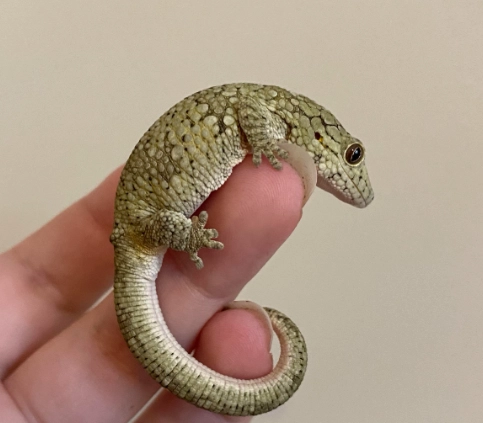
This guide isn't just a rehash of care sheets. It's based on conversations with breeders, my own observations, and a lot of cross-referencing reliable sources. We're going to get into the weeds of humidity, the debate about handling, and whether a chameleon gecko is truly a "good pet" for you. Spoiler: it's not for everyone, and that's okay.
What Exactly Is a Chameleon Gecko?
Before we talk about care, let's clear up the biggest misconception right away. The term "chameleon gecko" can be a bit confusing. We're not talking about a cross between a chameleon and a gecko. That doesn't exist. We're talking about a small genus of geckos from New Caledonia that have independently evolved some chameleon-like traits.
Think about it. They have prehensile tails that can grip branches, independently moving eyes (they can look in two directions at once, which is always unnerving and cool), and a slow, deliberate, chameleon-like gait. They come in a few species, with Eurydactylodes agricolae (the Chahoua gecko... wait, not that one, that's a different New Caledonian!) being one of the more common in captivity. Actually, the most commonly kept are Eurydactylodes vieillardi and Eurydactylodes occidentalis. See? It's easy to get the names mixed up. They're all small, usually maxing out around 4-5 inches from snout to tail tip.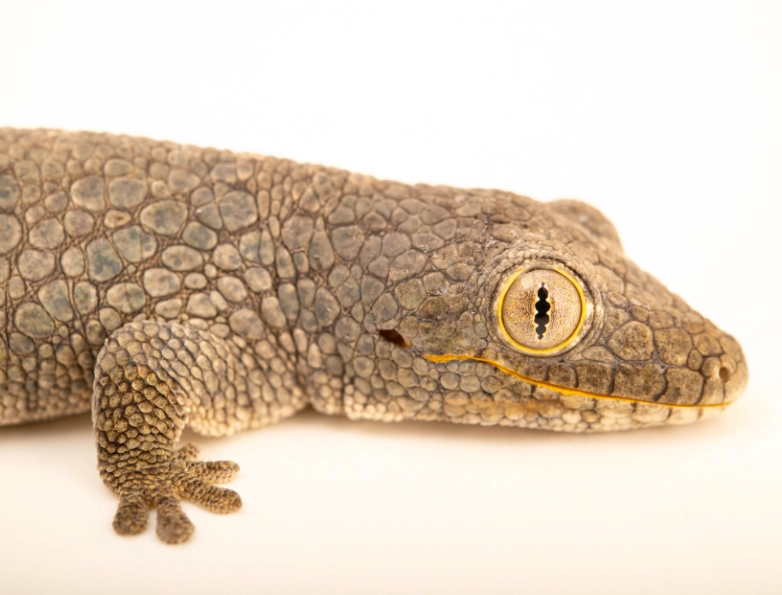
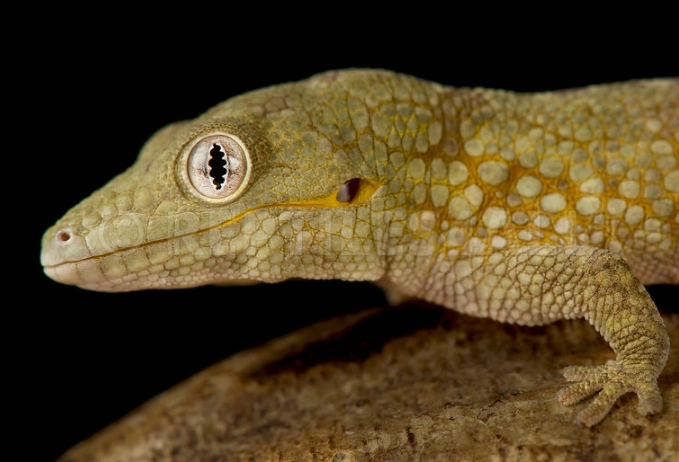
Their color is usually a mottled mix of greens, browns, and greys, perfect for blending into moss and bark. They're masters of camouflage. You'll often be staring at a branch for five minutes before you realize a chameleon gecko has been staring back at you the whole time.
Key Takeaway: Don't expect a colorful, active showpiece. A chameleon gecko is a subtle, observational pet. The joy is in creating a perfect slice of their world and watching them exist naturally in it. If you want something to hold and play with constantly, look at a bearded dragon. This is different.
Setting Up the Perfect Home: It's All About the Microclimate
This is where most mistakes happen. People think a small gecko equals a small, simple tank. Wrong. A chameleon gecko needs vertical space and a carefully controlled environment more than it needs horizontal room.
The Enclosure: Think Tall, Not Wide
A single adult chameleon gecko should start in a minimum 12"x12"x18" tall terrarium. I personally think going bigger, like an 18"x18"x24", is better. It gives you more room to create a stable temperature and humidity gradient and allows for a more impressive bioactive setup. Glass terrariums with front-opening doors and screen tops for ventilation are the gold standard. The screen top is crucial for airflow to prevent stagnant, moldy air—a big killer in humid setups.
Screen tops also let your lighting do its job. Which brings us to a hot topic...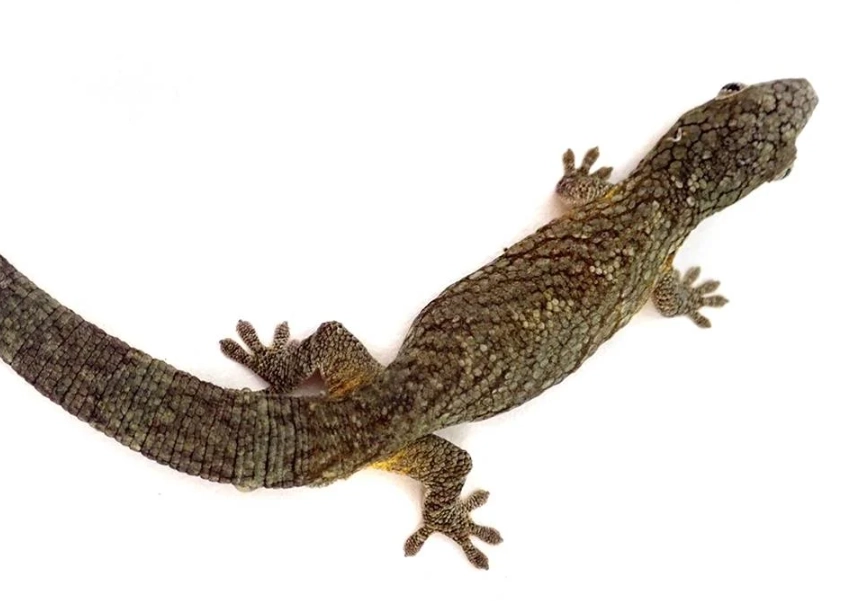
Heat & Lighting: Gentle Does It
Chameleon geckos are not baskers. They are cryptic, shade-dwelling creatures. Blasting them with a high-wattage heat lamp is a one-way ticket to stress and dehydration.
- Temperature: Aim for a daytime ambient temperature between 72-78°F (22-26°C). A very gentle, localized warm spot can reach 80-82°F (27-28°C) at the very top of the enclosure, but it must not be intense. At night, a drop to 65-72°F (18-22°C) is perfect and natural. I use a low-wattage (25-40W) ceramic heat emitter or a deep heat projector on a thermostat for the gentle warm area. Never use heat mats on the side or bottom of an arboreal setup—they don't heat the air effectively and can cause burns if the gecko sits against the glass.
- Lighting: UVB is a debated topic. These are nocturnal/crepuscular geckos, but they do benefit from low-level UVB exposure. It aids in calcium metabolism and overall well-being. A compact or linear T5 HO 5.0 or 6% UVB bulb, covering only part of the tank and providing a UV index of around 1-2 at most, is a safe bet. Provide plenty of shaded areas to escape it. A simple LED plant light is also great if you have live plants, which you really should.
Watch Out: The biggest mistake I see is overheating. If your chameleon gecko is always hiding in the coolest, darkest corner and refusing to eat, check your temperatures. They are probably too high.
Humidity & Hydration: The Non-Negotiable
This is the heart of chameleon gecko care. New Caledonia is humid. Their skin is designed for it. In captivity, low humidity leads to fatal shedding problems (dysecdysis) and kidney issues.
- Target Range: 60-80% humidity. It should not be constant. It needs to fluctuate. Spike it to 80-90% with heavy misting in the evening, then let it gradually fall to 60% during the day before spiking again. This mimics natural dew cycles and triggers drinking and activity.
- How to Achieve It: A hand sprayer works, but it's inconsistent if you're not home. An automatic misting system (like MistKing or Exo Terra Monsoon) is a game-changer. Mist for 30-60 seconds at dusk and maybe once very lightly at dawn. Use a digital hygrometer—those analog dial ones are notoriously inaccurate.
- Water: They rarely drink from a dish. They lick water droplets from leaves, glass, and their own snouts after misting. The misting is their water bowl. That said, a small, shallow water dish is still a good backup and helps with ambient humidity.
I learned the humidity lesson the hard way with a different gecko years ago. Bad sheds, stuck toe pads… it was a mess. With a chameleon gecko, getting humidity wrong isn't an option.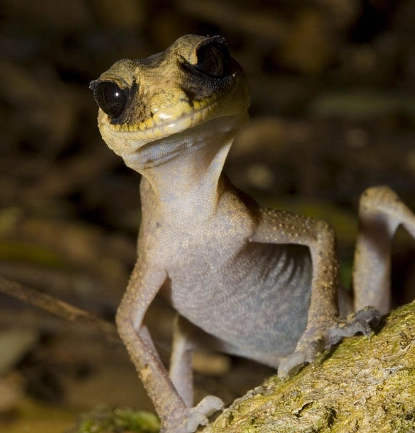
The Chameleon Gecko Diet: Small, Sticky, and Supplemented
Their food is as specialized as their housing. In the wild, they eat a mix of small invertebrates and probably lap up nectar and fruit juices. In captivity, we replicate this with commercially available diets.
Here’s the breakdown of what to feed your chameleon gecko:
| Food Item | Frequency | Preparation & Notes |
|---|---|---|
| Commercial Crested Gecko Diet (CGD) (e.g., Pangea, Repashy) | Available 24/7 in a small cup | This is the staple. Mix with water to a ketchup-like consistency. Offer flavors with insects (like "Fig & Insects") for protein. My chameleon geckos seem to prefer the Pangea flavors with apricot or fig. |
| Live Insects | 1-2 times per week | Small, soft-bodied insects only. Pinhead crickets, 1/4" dubia roach nymphs, or flightless fruit flies. Always gut-load the insects with healthy veggies 24 hours before feeding. |
| Supplementation | With every insect feeding | Dust insects lightly with a calcium supplement without D3 if using UVB. If no UVB, use calcium with D3. Once a month, use a multivitamin powder instead of calcium. |
The CGD is a complete diet. The insects are more for enrichment and natural hunting behavior.
Watch how they eat. It's not a chase. They'll slowly stalk a fruit fly and then—*snap*—a lightning-fast tongue flick. For the CGD, they'll lick it up over time. Don't be alarmed if they don't eat large volumes; their metabolism is slow.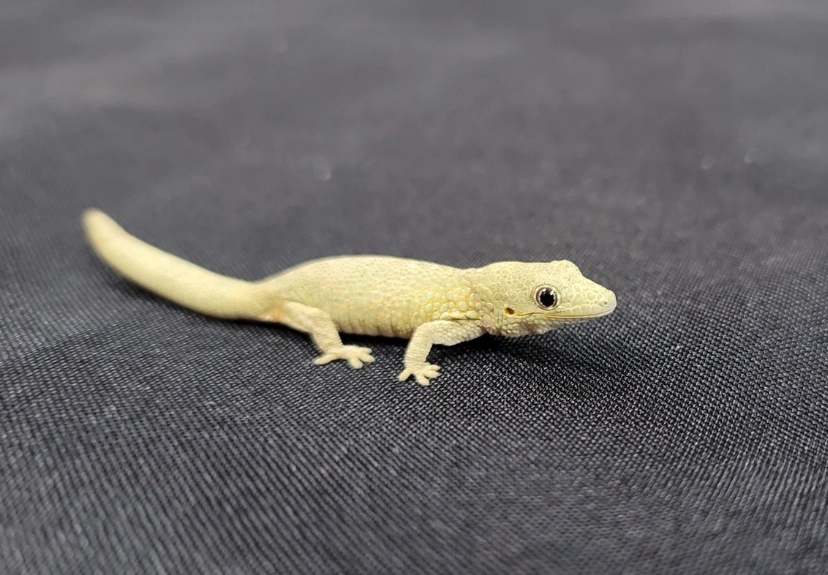
Handling and Temperament: Managing Expectations
Let's be real. A chameleon gecko is not a cuddly pet. It's a look-don't-touch jewel for most of the time. They are easily stressed by excessive handling. Their primary defense is to freeze and rely on camouflage. If picked up, they may move calmly for a bit, but they are fragile. Their tails can be dropped (autotomy), and unlike some geckos, they don't always regrow them fully.
That said, with immense patience, some individuals can become accustomed to brief, gentle handling sessions. The key is to let them walk onto your hand voluntarily, never grab them. Keep sessions under 5-10 minutes, and always do it close to the ground or over a soft surface in case they jump.
"The goal with a chameleon gecko is to be a ghost in their environment—an unseen provider. The less they notice you disrupting their world, the better they will do."
— A sentiment echoed by many experienced breeders.
I have one that will tentatively walk onto my hand if I place it in the tank. The other bolts for cover if I so much as look at it wrong. Personality varies. You have to respect their nature.
Common Health Issues to Watch For
Being proactive is everything. Here are the big three problems:
- Stuck Shed (Dysecdysis): The #1 sign of low humidity. You'll see dry, white patches of skin, especially on the toes, tail tip, and around the eyes. If not addressed, toe tips can constrict and fall off. Solution: Immediately boost humidity. Create a "sauna" by placing the gecko in a small, ventilated container with a warm, damp paper towel for 15-20 minutes. Gently roll the stuck shed off with a damp Q-tip. Never pull.
- Metabolic Bone Disease (MBD): Soft, rubbery jaw, bowed limbs, difficulty climbing. Caused by lack of calcium/D3/UVB. Solution: Proper supplementation and lighting from day one. Advanced MBD requires a reptile vet immediately.
- Parasites & Infections: Weight loss, runny or smelly stools, lethargy. Often introduced via feeder insects or from an infected new animal. Solution: A fecal exam by a reptile vet is the only sure diagnosis. Quarantine any new animal for at least 60-90 days.
Finding a good exotics vet before you have an emergency is part of responsible chameleon gecko ownership. The Association of Reptilian and Amphibian Veterinarians (ARAV) has a find-a-vet tool that's invaluable.
Are You Ready for a Chameleon Gecko? A Brutally Honest Checklist
Let's not sugarcoat this. Based on everything above, ask yourself:
- Can I commit to daily misting/checking of humidity for 10+ years?
- Am I okay spending several hundred dollars upfront on a proper tall terrarium, lighting, thermostat, and misting system?
- Do I want a pet I can watch more than I can hold?
- Am I patient enough to let a shy animal acclimate, which can take weeks or months?
- Do I have a reptile vet nearby and funds for potential care?
If you answered yes, then a chameleon gecko could be an incredibly rewarding pet. If you hesitated on any of those, it might be worth considering a hardier species first.
Your Chameleon Gecko Questions, Answered
Final Thoughts: Is the Chameleon Gecko the Right Pet for You?
Keeping a chameleon gecko successfully is a lesson in attention to detail. It's about creating a stable, tiny ecosystem and then having the discipline to mostly leave it alone. The reward is observing a perfectly adapted, beautiful little animal behaving exactly as it would in the wild, right in your home.
It's a niche hobby. It's not the flashiest reptile, nor the friendliest. But for the right person—someone who finds joy in the science of husbandry, the art of a planted terrarium, and the quiet observation of nature—a chameleon gecko is a perfect choice.
Do your homework. Set up the tank completely and let it run for at least a week to stabilize temperatures and humidity before you bring the gecko home. Source your animal from a responsible breeder. Be patient.
If you can do all that, you'll be rewarded with one of the most fascinating small geckos in the hobby. Just don't expect it to sit on your shoulder while you watch TV. That's not what a chameleon gecko is about. And honestly, that's part of what makes them so special.
Further reading on New Caledonian ecosystems and conservation can be found through resources like the IUCN Red List and National Geographic, which highlight the fragile environments these unique creatures come from.
Reader Comments