Quick Guide
- What Exactly Is an Australian White Tree Frog?
- Setting Up the Perfect Home: It's More Than Just a Tank
- Feeding Your Dumpy Tree Frog: A Balanced Diet
- Behavior, Handling, and Health: Knowing What's Normal
- Common Questions (The Stuff You're Actually Searching For)
- The Final Decision: Is This the Right Pet for You?
Let's be honest, the first time you see an Australian White Tree Frog, you might let out a little laugh. They've got this permanent, slightly smug grin and these adorable chubby folds that make them look like they've just enjoyed a big meal. It's no wonder they've earned nicknames like "Dumpy Tree Frog" or "Smiling Frog." But beyond that cute exterior lies a surprisingly hardy and fascinating pet amphibian. I've kept a few of these guys over the years, and they've got personalities that can really surprise you.
If you're here, you're probably wondering if this is the right pet for you. Maybe you saw one at a friend's house, sitting calmly on a branch, and thought, "I could handle that." Or perhaps you're a seasoned reptile enthusiast looking for something a bit different. Whatever brought you here, this guide aims to be the most thorough, no-nonsense resource you'll find online. We're going to move past the basic care sheets and dive into the nitty-gritty of what it's really like to live with a White's Tree Frog.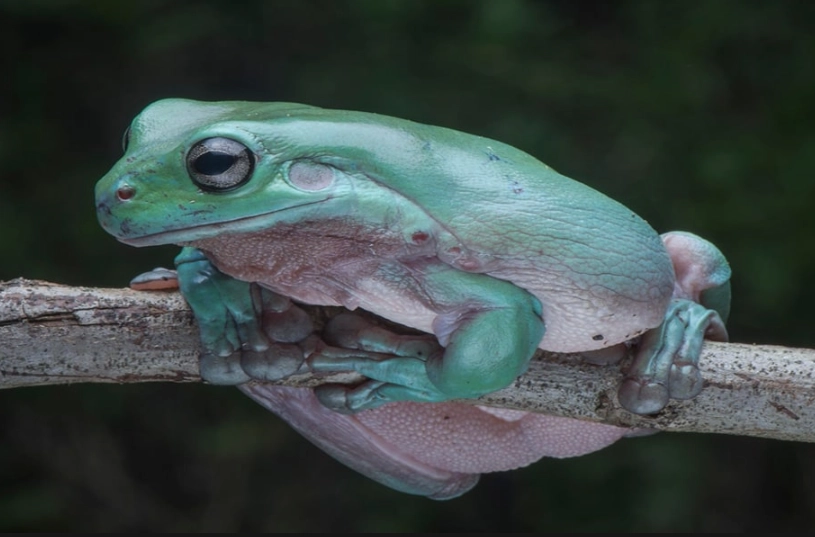
Quick Fact Check: Before we dive in, let's clear up the names. "Australian White Tree Frog," "White's Tree Frog," and "Dumpy Tree Frog" all refer to the same species: Litoria caerulea. The "White's" comes from the naturalist who first described it, John White. So, don't get confused—they're all the same charming frog.
What Exactly Is an Australian White Tree Frog?
Native to Australia and New Guinea, these frogs are masters of adaptation. In the wild, you'll find them in forests, but also hanging around human dwellings, often near water tanks or in bathrooms—they love the humidity. They're part of the Hylidae family, the classic tree frogs, which means they have those iconic sticky toe pads for climbing.
Their most striking feature is their color. It's not a pure white, despite the name. It's more of a beautiful jade green to a blueish-green, with a creamy white underbelly. Sometimes they can even shift to a more brownish hue, especially if they're a bit cold or trying to camouflage. Their skin has a waxy coating that helps them retain moisture, which is one reason they're more tolerant of lower humidity than some other tropical frogs. It feels cool and leathery to the touch.
Size-wise, they're on the larger end for pet frogs. Females can get quite plump, reaching up to 4.5 inches (11-12 cm) in length. Males are typically a bit smaller and slimmer. And that lifespan? With proper care, an Australian White Tree Frog can be your companion for 15 to 20 years. That's a longer commitment than many dogs, so it's something to think about seriously.
Setting Up the Perfect Home: It's More Than Just a Tank
This is where most first-time owners make mistakes. You can't just plop a frog in a fish tank with a bowl of water. These are arboreal creatures—they live in trees. Their enclosure needs to reflect that.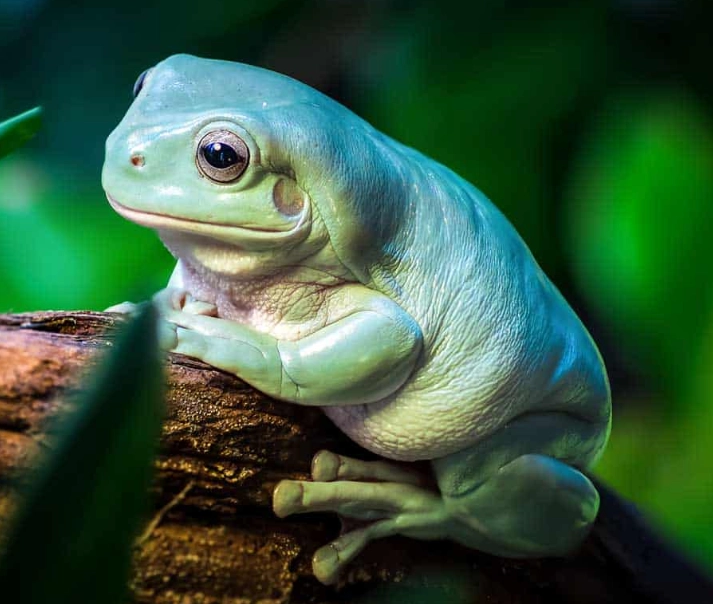
The Tank (Vivarium)
For a single adult Australian White Tree Frog, a 20-gallon tall tank is the absolute minimum. But you know what? Go bigger if you can. A 30-gallon tall gives them so much more room to explore and climb. For a pair, start at 30 gallons and scale up. Height is far more important than floor space. The tank must have a secure, ventilated lid. These frogs are strong and can surprise you with their ability to push on glass; a locked screen top is non-negotiable.
Heating and Lighting
They don't need blazing desert heat. A gentle gradient is key. One side of the tank should have a basking spot that reaches about 82-85°F (28-29°C) during the day. The cooler side can drop to 75-78°F (24-26°C). At night, a slight drop to 70-75°F (21-24°C) is fine. An under-tank heater or a low-wattage ceramic heat emitter on a thermostat works best to avoid drying out the air too much.
Lighting is crucial but often misunderstood. They don't need special UVB lighting for vitamin D synthesis like reptiles do—they get their D3 from their diet. However, a regular low-output UVB light can still be beneficial for their overall well-being and helps plants if you have a live setup. The main purpose of a light on a timer is to provide a consistent day/night cycle (12 hours on, 12 hours off). This regulates their behavior and feeding response.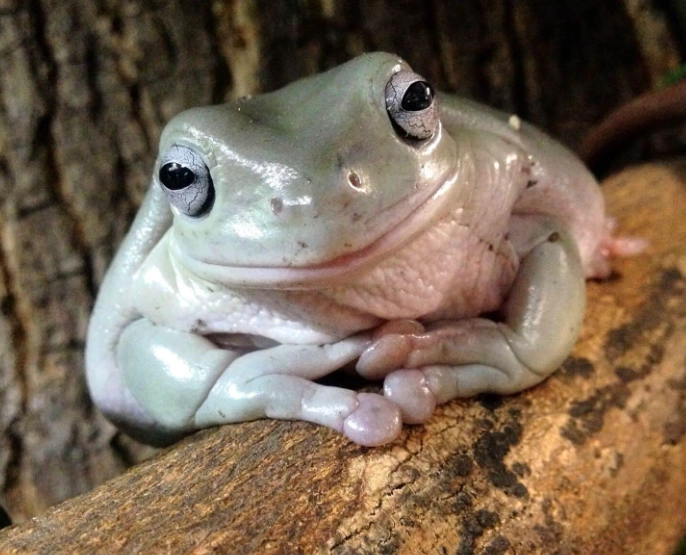
A Common Mistake I've Seen: People using hot rocks or unregulated heat lamps. These can cause severe thermal burns on a frog's delicate belly. Always use a thermostat! It's the most important piece of equipment you'll buy.
Substrate, Humidity, and Decor
For substrate, you want something that holds moisture but isn't soggy. Coconut fiber (coir) or a mix of coir and orchid bark is excellent. Avoid small gravel or anything they could accidentally swallow during feeding. Humidity should be maintained between 50-70%. Mist the tank heavily once or twice a day with dechlorinated water. A digital hygrometer is a cheap and essential tool to keep tabs on this.
Now for the fun part: decor. This is where you create their playground.
- Branches & Vines: Provide multiple climbing paths at different levels and angles. Spiderwood, ghost wood, and sanitized manzanita branches are great.
- Hides: They need secure places to sleep during the day. Cork bark tubes, half-logs, or commercial reptile hides placed at various heights are perfect.
- Live or Artificial Plants: Live plants like pothos, philodendron, or bromeliads help with humidity and look stunning, but they require plant lights. Sturdy artificial plants work just as well for providing cover and a sense of security.
- Water Dish: A large, shallow, sturdy water dish for soaking is mandatory. Change this water daily without fail.
Honestly, setting up the tank right from the start saves you so much trouble later. A stressed frog is a sick frog, and a proper environment prevents stress.
Feeding Your Dumpy Tree Frog: A Balanced Diet
In the wild, an Australian White Tree Frog is an opportunistic feeder. They'll eat insects, spiders, even small mammals or other frogs. In captivity, we need to replicate that variety and nutrition.
Their primary diet should be gut-loaded insects. "Gut-loading" means feeding the insects highly nutritious foods (like sweet potato, commercial gut-load formulas, leafy greens) 24-48 hours before you feed them to your frog. This passes the nutrients on.
Here’s a breakdown of common feeder insects and their value:
| Feeder Insect | Nutritional Value | Best For | Notes & Cautions |
|---|---|---|---|
| Crickets | Good protein, standard staple. | Regular feeding. | Can be noisy, may bite frog if left uneaten. Dust with calcium. |
| Dubia Roaches | Excellent protein-to-fat ratio, soft-bodied. | Excellent staple food. | Can't climb smooth glass, very nutritious. My personal favorite. |
| Black Soldier Fly Larvae (Calciworms) | High in natural calcium, low in phosphorous. | Great for calcium, especially for juveniles. | Don't need dusting. Wriggle a lot, triggering feeding response. |
| Mealworms & Superworms | High in fat and chitin (hard shell). | Occasional treat only. | Can cause impaction if fed too often. Use sparingly. |
| Waxworms | Very high in fat. | Rare treat for underweight frogs. | Like frog candy. Highly addictive, can lead to obesity. |
Juvenile frogs should be fed daily, as much as they will eat in 15 minutes. Adults do well being fed 2-3 times a week. A good rule of thumb is to offer 3-6 appropriately sized insects per feeding (the insect should be no wider than the space between the frog's eyes).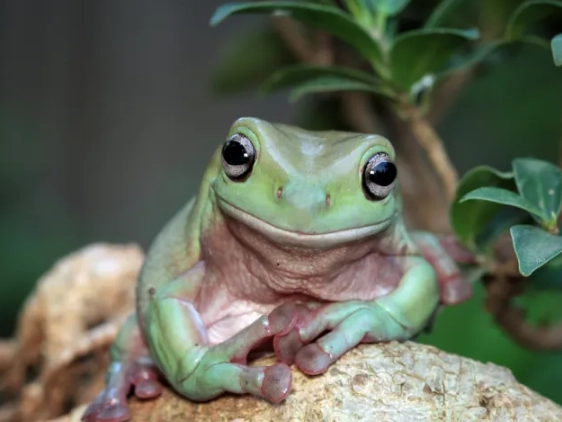
The Critical Role of Supplementation
This is non-negotiable. Captive insects alone don't provide complete nutrition. You must dust the insects with vitamin and mineral powders.
- Calcium with Vitamin D3: Dust insects at almost every feeding for juveniles, and 2 out of 3 feedings for adults.
- Multivitamin: Dust insects once a week.
Just put a pinch of powder in a bag or container with the insects, shake gently to coat them, and then feed immediately. Without this, your frog will almost certainly develop Metabolic Bone Disease (MBD), a painful and crippling condition.
Pro Tip from Experience: Feeding time is bonding time. I always feed my frogs with long, soft-tipped feeding tweezers. It lets me control the food, ensures they eat their dusted insects, and prevents feeder insects from hiding in the tank. Plus, you get to see their hilarious and lightning-fast feeding strike up close!
Behavior, Handling, and Health: Knowing What's Normal
Australian White Tree Frogs are generally docile and can become quite tolerant of presence. But remember, they are look-don't-touch pets. Their skin is semi-permeable and absorbs oils, salts, and chemicals from your hands. Handling should be reserved for essential tank maintenance. When you must handle them, make sure your hands are thoroughly washed with warm water (no soap!) and are slightly damp.
Their behavior can tell you a lot:
- Daytime: They are nocturnal. During the day, they'll usually find a snug hide or press themselves against a piece of bark or glass to sleep. This is normal, not a sign of stress.
- Nighttime: This is when they become active. You might hear males call—a deep, repetitive barking or grunting sound, especially after a misting (simulating rain).
- Soaking: They often soak in their water dish to hydrate and help with shedding.
- Shedding: Like all amphibians, they shed their skin. They'll often eat it (it's rich in nutrients). You might see them looking cloudy-eyed and lethargic before a shed.
Spotting Health Problems Early
The key to a long life is catching issues fast. Here are the big red flags:
Weight Loss/Loss of Appetite: The biggest warning sign. A healthy White's Tree Frog should have a plump, rounded body. Visible hip bones or a saggy backside mean they're underweight.
Abnormal Posture or Movement: Limping, dragging limbs, or an inability to climb can indicate injury or Metabolic Bone Disease (MBD). MBD causes soft, rubbery jaws and bent limbs.
Skin Issues: Red patches, ulcers, or a slimy film could be a bacterial or fungal infection (often called "red-leg" syndrome). Dry, flaky, or retained shed points to humidity problems.
Bloating: A sudden, hard bloating could be impaction (from swallowing substrate or oversized food) or a more serious internal issue.
If you see any of these, the best course of action is to consult a veterinarian who specializes in exotic pets or herpetology. Don't rely solely on internet forums for diagnosis. For authoritative information on amphibian diseases, resources like AmphibiaWeb can provide scientific background, but a vet visit is irreplaceable.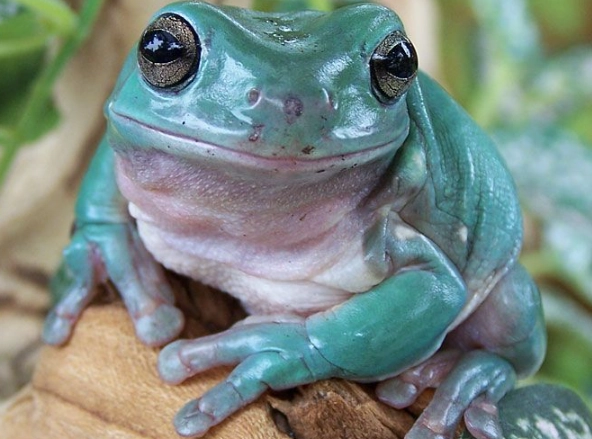
Common Questions (The Stuff You're Actually Searching For)
Let's tackle some of the specific, sometimes quirky questions people have about the Australian White Tree Frog.
No. Unlike some brightly colored tropical frogs (like poison dart frogs), White's Tree Frogs are not poisonous. They do have skin secretions that can be mildly irritating if they get into your eyes or mouth, so always wash your hands after any contact. This secretion is more for antibacterial purposes than defense.
Yes, but with major caveats. They can be kept in pairs or small groups if the enclosure is very large (think 40+ gallons for a trio) and if all frogs are roughly the same size. Never house a large frog with a much smaller one—it may become food. Also, be prepared for occasional nighttime bickering over prime sleeping spots.
Usually, it's temperature or camouflage. A cooler frog often darkens to absorb more heat. They also change color based on their background and mood. A green frog on a brown piece of bark might slowly shift to brown. It's a normal and fascinating ability.
The males call, especially during breeding season or after rain simulation. The call is a slow, deep, resonating "crawk-crawk-crawk" that can go on for hours. It's not overly loud like some tree frogs, but it's definitely noticeable. If you're a light sleeper, don't keep the tank in your bedroom.
Avoid large chain pet stores if possible. Seek out reputable reptile breeders at expos, specialized reptile shops, or online from established breeders with good reviews. Look for a frog with clear, bright eyes, clean skin, a rounded body, and that is alert and reactive. A healthy frog will usually try to hop away when approached. For scientific classification and natural history data, you can reference the species page on the Australian Museum website, which provides excellent, verified background information.
The Final Decision: Is This the Right Pet for You?
Let's sum it up. The Australian White Tree Frog is a fantastic pet for the right person.
You might love one if: You want a visually striking, low-maintenance (once set up) pet that doesn't need daily walks. You enjoy creating and maintaining a beautiful miniature ecosystem. You're content with observation over interaction.
You should reconsider if: You want a pet to cuddle or handle frequently. You're on a tight budget (the initial setup with tank, heating, thermostat, decor, etc., can cost several hundred dollars). You're not committed to a 15+ year responsibility, including finding care for them during vacations. The idea of feeding live insects grosses you out.
I'll leave you with this. My first White's Tree Frog, a female I named Gummy (for her smile), lived for 18 years. She saw me through college, moves across country, and major life changes. She was a constant, quiet, and fascinating presence. That's the real commitment and the real reward. They're not just decorations; they're living creatures that rely on you for everything.
Do your research—which you're doing right now—set up their home perfectly before you bring one home, and you'll be rewarded with one of the hardiest, most charismatic amphibians in the hobby. Just be prepared for that smug little grin to win you over completely.
Reader Comments