You've got a stunning Gold Dust Day Gecko (Phelsuma laticauda), and you're curious. Is it a he or a she? Getting this right matters more than you might think, especially if you're planning a breeding project or just want to avoid unexpected territorial battles in a shared enclosure. The good news? Telling male and female gold dust day geckos apart isn't rocket science, but it does require knowing exactly what to look for. After years of keeping and breeding these emerald jewels, I've seen every common mistake. This guide cuts through the noise and gives you the clear, visual clues you need.
What You'll Learn in This Guide
The 4 Key Differences at a Glance
Before we dive deep, here's the cheat sheet. These are the primary characteristics that separate boys from girls. Relying on just one can be misleading, so always look for a combination.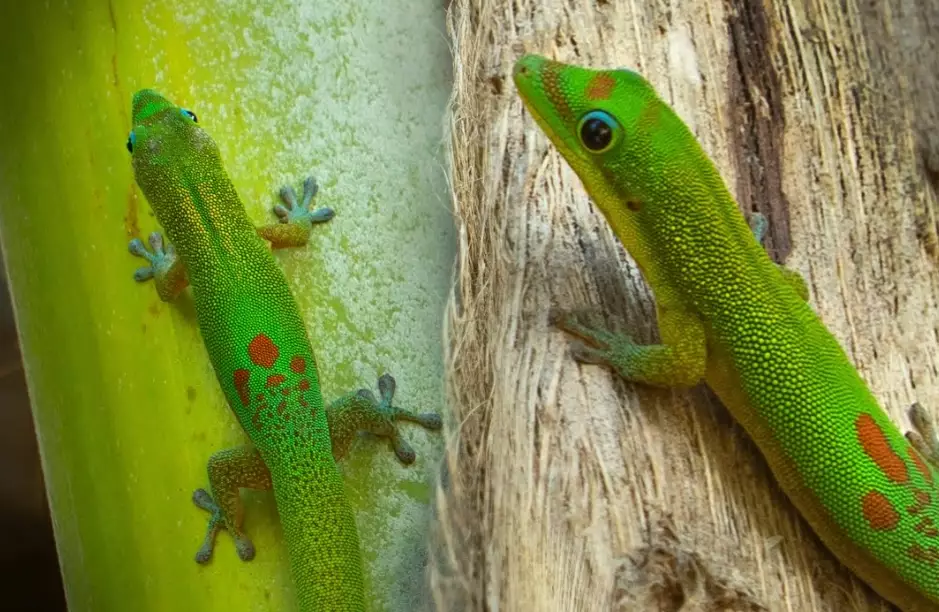
| Feature | Male Gold Dust Day Gecko | Female Gold Dust Day Gecko |
|---|---|---|
| Pre-anal & Femoral Pores | Prominent. A distinct V-shaped row of enlarged, waxy pores above the vent. | Absent or very faint. The area above the vent is smooth, with tiny, barely visible pores. |
| Overall Size & Build | Larger and bulkier. Typically reaches 5.5 to 6 inches. Head is broader, base of the tail is thicker. | Slightly smaller and more slender. Usually maxes out around 5 inches. Build is more streamlined. |
| Coloration (Mature Adults) | Colors can be more intense. The red markings on the back and head are often a deeper, richer shade. | Colors are usually, but not always, slightly less vivid. The "gold dust" speckling is equally present. |
| Behavior (Especially when Mature) | More territorial and vocal. Will head-bob and chirp to defend space or court females. | Generally less aggressive. Vocalizations are rarer and usually only when stressed. |
See that first row? The pores are your single most reliable indicator for a mature gecko. Everything else supports that finding.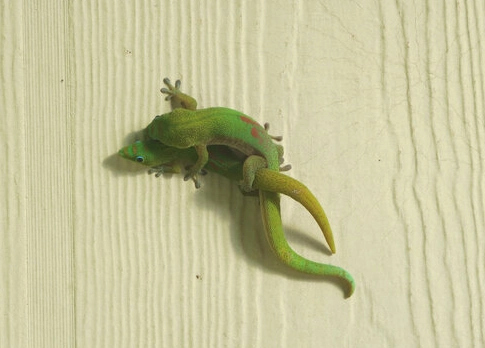
Does Size Matter? Body Length Comparison
Yes, but don't bet your house on it. In the reptile world, males are often larger, and Phelsuma laticauda is no exception. An adult male gold dust day gecko will generally have a sturdier frame.
His head is wider at the temples, giving him a more robust look. The base of his tail, where the hemipenes are housed, is noticeably thicker and more muscular compared to a female's. A full-grown male can confidently reach 5.5 to 6 inches (14-15 cm) from snout to tail tip.
Females are more petite. They tend to top out around 5 inches (12-13 cm). Their silhouette is smoother, less bulky. But here's the catch: a well-fed, dominant female can sometimes rival a smaller male in size. I've had a few powerhouse females that made new keepers second-guess themselves. That's why size is a supporting actor, not the star of the show.
Pro Tip: If you have a group of geckos raised together, the size difference becomes more apparent. The largest one in the cohort is often a male, but you still need to check for pores to be sure.
Color and Pattern: Subtle but Telltale Clues
This is where many beginners get tripped up. The internet is full of oversimplifications like "males are brighter." It's not that straightforward.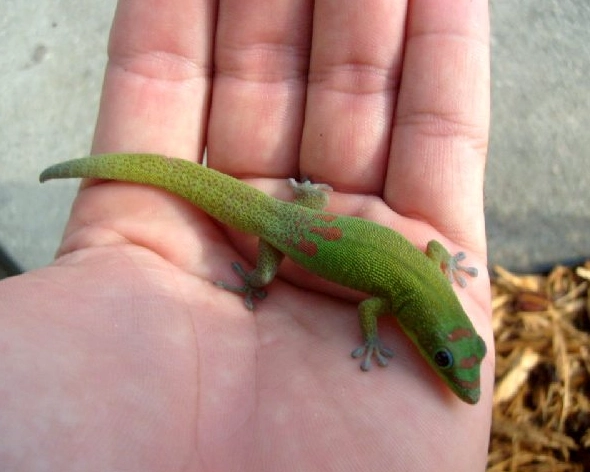
Both sexes are brilliantly green with red markings and those iconic gold speckles. However, in many (not all) mature males, the red dorsal blushing and the stripe from the eye to the nostril can be a more saturated, almost brick-red color. The contrast seems punchier. Females are plenty bright, but their reds can sometimes lean toward a more orange or coral hue.
The problem? Health, mood, and temperature dramatically affect color. A stressed male can look dull, a basking female can look radiant. A study on reptile coloration in the journal Herpetologica notes that within-species color variation is often tied to hormones and environmental factors, making it an unreliable sole sexing criterion.
So, use color as a hint, not proof. If your gecko is flashing exceptionally deep reds, lean toward male. If the colors are softer, it could be female—or just a relaxed male.
The Definitive Sign: Pre-anal and Femoral Pores
This is the gold standard. It's the closest thing to a guaranteed answer for geckos over 9-12 months old.
What You're Looking For
On the underside of the gecko, right before the vent (the cloacal opening), there is a series of pores. These are femoral and pre-anal pores. They secrete waxy substances used for scent marking.
In males: These pores are greatly enlarged, often with a dark, waxy plug in each one. They form a very clear, V-shaped or chevron-like row. Even without magnification, they look like a line of tiny dots or dimples. Under a magnifying glass or macro camera lens, they're unmistakable.
In females: The pores are tiny and inconspicuous. The skin in that area is smooth. You might see the faintest suggestion of where pores would be, but they are never enlarged or exuding wax.
I can't stress this enough: a lack of obvious pores in a gecko over 4 inches long strongly suggests a female. The presence of obvious, enlarged pores confirms a male.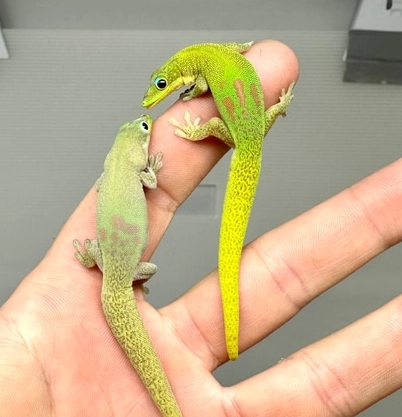
Behavioral Tells: How They Act Differently
Once they hit sexual maturity, their personalities diverge. Observing behavior in a well-established enclosure can give you strong clues.
Males are the performers. They are territorial. You'll see them head-bobbing—a rapid up-and-down motion of the head. This is a "this is my branch" signal to other males and a "hey, look at me" signal to females. They are also far more vocal, emitting sharp chirps or clicks during disputes or courtship.
I remember setting up a new vivarium and introducing a young male. It took him about two days to find the highest leaf and declare himself king. The head-bobbing started every morning like clockwork.
Females are typically more reserved. They explore, feed, and bask with less fanfare. They can be territorial with other females, but it's usually less dramatic. Vocalizations from a female usually mean she's feeling threatened or was startled during handling.
Behavior alone shouldn't be your final verdict. A subdominant male might not bob his head if he's alone. But combined with physical traits, it completes the picture.
Step-by-Step: How to Safely Sex Your Gecko
Okay, theory is done. Let's get practical. How do you actually check without stressing your gecko?
1. The Right Time: Wait until your gecko is at least 4-5 inches long. Sexing a 2-inch juvenile is guesswork, even for experts. Their pores haven't developed.
2. The Calm Approach: Move slowly. Use a clear deli cup or your hands to gently contain the gecko. Never grab it by the tail!
3. The Visual Inspection: Gently lift the gecko and look at its underside. You want a clear view of the area between the back legs and the base of the tail. The best method is to let the gecko cling to the side of a clear plastic container—this naturally exposes its belly. Use your phone's flashlight or a small torch for better lighting.
4. The Photo Method (Highly Recommended): If handling is difficult, take a clear, high-resolution photo of the belly and vent area while the gecko is on the glass. Zoom in on the photo. This is less invasive and lets you examine the pores in detail.
5. What NOT to Do: Do not press or squeeze the vent area to try to evert hemipenes (the male sex organs). This "popping" technique is used for some neonatal reptiles but is stressful, potentially harmful, and completely unnecessary for identifying adult day geckos where pore observation is foolproof.
Your Questions, Answered (FAQ)
Figuring out the male vs female gold dust day gecko puzzle is a rewarding part of the hobby. It connects you more deeply to your pet's biology and needs. Start with the pores, back it up with size and behavior, and you'll rarely be wrong. Happy herping!
Reader Comments