Let's be honest. When most people think of tarantulas, they picture a big, fuzzy, brown thing. But the world of pet tarantulas is so much more. It's a world of electric blue, shimmering green, and patterns that look like they were painted by a master. It's also a world of scarcity, challenge, and sometimes, jaw-dropping price tags. I've been keeping them for over a decade, and I still get a thrill when I see a truly rare species.
But "rare" doesn't just mean expensive or pretty. It's a mix of biology, legality, and pure luck. This guide isn't just a list. It's a look at why these spiders are so hard to find, what it really takes to keep them alive, and whether you should even try.
Quick Guide: What's Inside
What Makes a Tarantula "Rare" in the Pet Trade?
You see a stunning photo online. "I must have it!" you think. Then you search, and... nothing. No sellers. No price. That's rarity. It usually comes down to a few key things.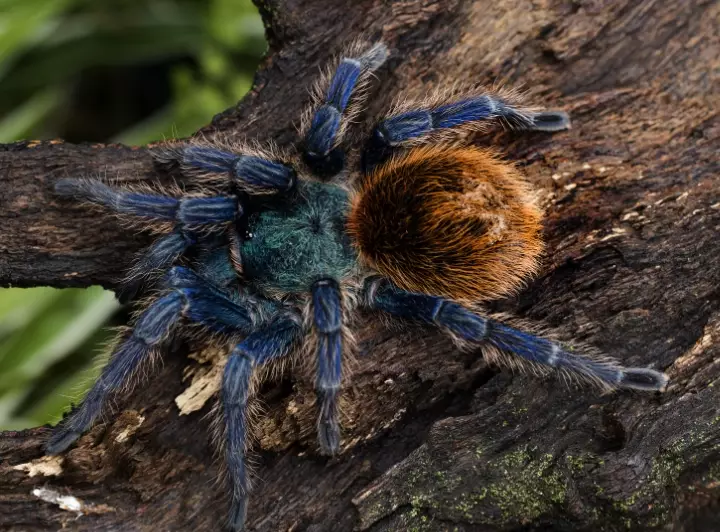
First, collection and export bans. Many countries now protect their wildlife. India's beautiful ornamental tarantulas (Poecilotheria) are protected by CITES (Convention on International Trade in Endangered Species). This means legal exports are nearly zero. The ones in captivity are from pre-ban collections or captive-bred lines.
Second, captive breeding difficulty. Some spiders are just stubborn. They won't mate. The females eat the males. The eggsacs fail. Or they take an incredibly long time to mature. If a species can't be reliably bred, its population in captivity stays tiny. I remember waiting three years for a specific pairing to finally produce a viable eggsac. Three years of hoping.
Third, geography and habitat. A tarantula living on a single, remote mountain in Brazil is inherently rarer than one found across a continent. Getting to them is hard. Getting them out legally is harder.
There's a subtle mistake I see new enthusiasts make. They confuse "uncommon" with "rare." An uncommon tarantula might be available from a handful of specialized breeders for a few hundred dollars. A rare one might not be available at any price, to anyone, outside of a few dedicated breeding projects or zoos.
Rare Tarantula Species Showcase
Here are a few of the most sought-after and genuinely uncommon tarantulas in the hobby. This table gives you the snapshot, but the real story is in the details below.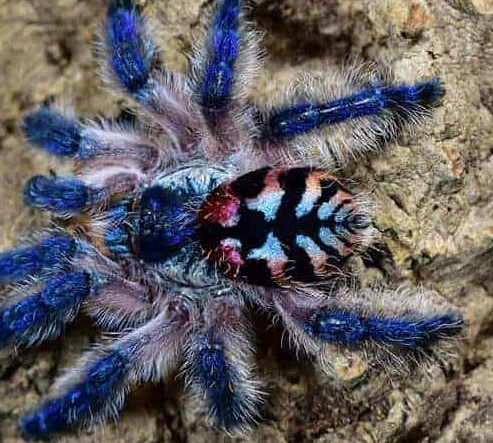
| Species (Common Name) | Origin | Why It's Rare/Uncommon | Approx. Price (Slings) |
|---|---|---|---|
| Poecilotheria metallica (Gooty Sapphire) | Gooty, India | CITES protected; captive breeding success is moderate but demand is sky-high. | $200 - $400 |
| Typhochlaena seladonia (Brazilian Jewel) | Brazil | Trapdoor arboreal lifestyle makes breeding very difficult; stunning appearance. | $300 - $600+ |
| Monocentropus balfouri (Socotra Blue Baboon) | Socotra Island | Island endemic; one of the few truly communal tarantulas. | $80 - $150 |
| Cyriopagopus sp. "Hati Hati" | Extremely limited legal exports; stunning green/blue coloration. | Extremely Rare ($1000+ if found) |
Poecilotheria metallica: The Blue Diamond
This is the poster child for rare tarantulas. That electric blue color is unreal. They're from a tiny area in India and are CITES protected, meaning no new wild ones are coming into the trade. The entire captive population stems from a few exports years ago.
Care Specifics: Arboreal. Needs vertical space with cork bark to hide. Humidity around 70-80%. They can be lightning fast and have potent venom, so they're not for handling. A common mistake? Keeping them too dry or in an enclosure that's too short. They're climbers, not walkers.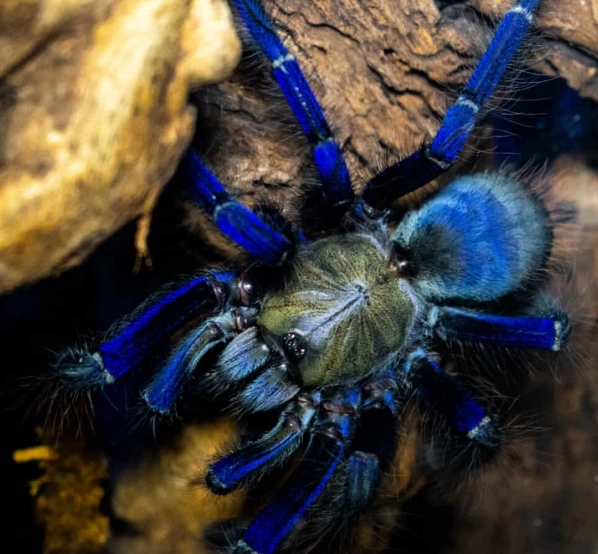
Typhochlaena seladonia: The Living Jewel
This Brazilian species looks like it's made of stained glass and velvet. It's an arboreal trapdoor spider. It doesn't make a typical web, but a silken "trapdoor" hide on the side of a tree or cork tube. This behavior makes breeding a nightmare in captivity, as you need to replicate very specific conditions.
Care Specifics: High humidity (80%+), excellent ventilation (a tough balance), and small, vertical enclosures. They're tiny but pricey. Feeding them can be tricky because they're ambush predators. You often need to drop live prey right at their trapdoor.
Monocentropus balfouri: The Communal Spider
Rarity isn't always about looks. M. balfouri is rare because it's one of the very few tarantula species that can be kept communally. Watching a group of them interact, share food, and even cooperate in webbing is fascinating. They're from Socotra Island, a remote location, which adds to their allure.
Care Specifics: They need deep, dry substrate to burrow. They're not beginner spiders, despite the "communal" tag. Starting a communal requires planning, space, and buying spiderlings from the same eggsac to reduce cannibalism. It's a project, not a pet.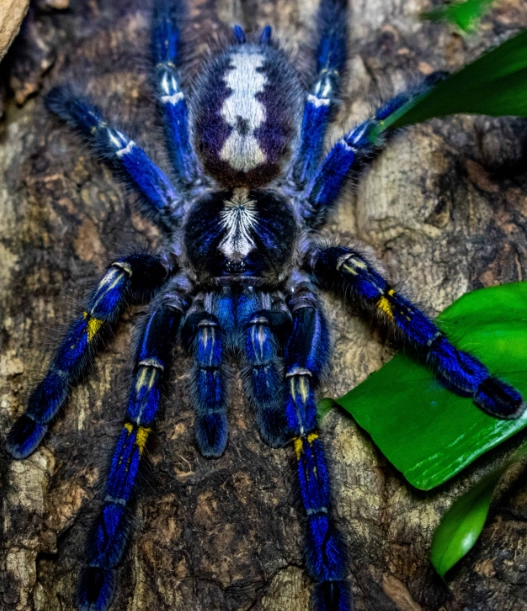
The Truly Elusive: Cyriopagopus sp. "Hati Hati"
This one is a ghost. Photos show a stunning green and blue terrestrial spider from Sumatra. You will almost never see it for sale. Export restrictions are tight, and captive breeding successes are rarely made public. This is a "holy grail" for serious collectors, often discussed in hushed tones on forums.
Finding and Keeping Rare Tarantulas: The Realities
So you've fallen for a rare species. What now?
Finding Them: Forget pet shops. Your best bets are:
- Specialized Invertebrate Expos: Breeders from across the country gather. You can talk to them, see the spiders, and sometimes find rarities.
- Online Forums & Communities: Places like Arachnoboards or The Tarantula Forum. Reputable breeders advertise there. Read the feedback threads.
- Direct from Breeders: Many top breeders sell via their own websites or Facebook pages. Building a relationship is key.
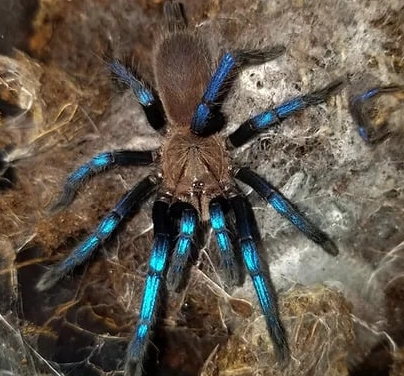
The Cost of Rarity: Be ready to spend. A lot. A female Gooty Sapphire can be $500. A Brazilian Jewel sling can be $400. And that's before the perfect enclosure, special heating, and the right food. This is a luxury hobby.
The Care Commitment: Rare often means delicate. Their environmental needs are precise. A 5% shift in humidity might be the difference between a thriving spider and a dead one. You need to be a researcher, not just an owner. I keep detailed logs for my rare species—every feeding, every molt, every adjustment to the tank.
Here's my biggest piece of advice, born from a sad experience early on: Do not buy a rare tarantula as your first spider. Start with a hardy, common species like a Grammostola pulchra (Brazilian Black) or a Tliltocatl albopilosus (Curly Hair). Learn how spiders behave, how they molt, how to spot illness. Then, and only then, consider stepping into the world of rarity.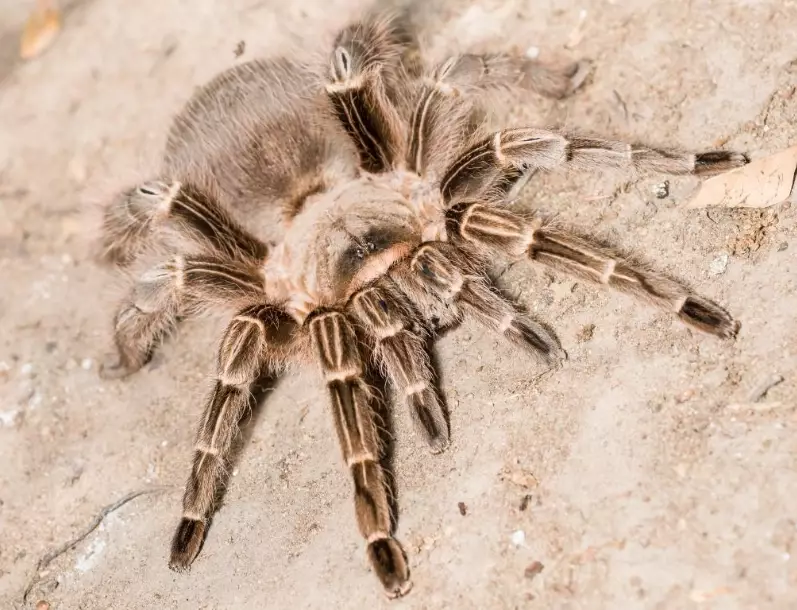
Your Questions Answered
How can I tell if a tarantula is truly rare versus just uncommon?
True rarity hinges on three factors: availability in the hobby, CITES protection status, and difficulty in captive breeding. A species like the Poecilotheria metallica is uncommon but available from breeders. A truly rare one, like the Cyriopagopus sp. Hati Hati, might be nearly impossible to find legally. Check with specialized forums and reputable breeders; if it's never listed for sale and has strict export bans, you're looking at a genuinely rare specimen.
Is it a bad idea for a beginner to start with a rare tarantula?
Almost always, yes. Rare tarantulas are often rare for a reason: they have demanding care needs, are fast, defensive, or breed poorly in captivity. Beginners lack the experience to read spider behavior or handle husbandry emergencies. A common species like a Curly Hair tarantula is forgiving and teaches the fundamentals. Starting rare risks the spider's life, your wallet, and your confidence. Master the basics first.
Why are some of these rare tarantulas so expensive?
The price reflects scarcity and production cost. A female Poecilotheria metallica can cost $300-$500 because they breed slowly, produce few offspring, and the stunning blue color is highly desired. For species that can't be bred reliably in captivity, prices skyrocket due to limited legal imports. You're paying for the breeder's expertise, time, and the risk involved in producing a healthy animal from a challenging lineage.
Where is the best place to find a reputable breeder for uncommon species?
Avoid general pet stores. Go straight to the source: dedicated invertebrate expos and online communities. The Tarantula Forum and Arachnoboards have breeder review sections. Look for breeders who specialize in a genus (e.g., Poecilotheria, Psalmopoeus) and can provide detailed lineage information and feeding records. A good breeder will ask you questions about your experience, not just take your money.
The world of rare tarantulas is captivating. It's a blend of natural art, biological challenge, and responsible stewardship. Whether you're just admiring the photos or saving up for your own Gooty Sapphire, remember that these are living creatures with very specific needs. The true reward isn't just owning something rare; it's the success of providing a perfect home for one of nature's most extraordinary creations.
Reader Comments