So you've fallen for the stunning, almost ghostly white appearance of the blizzard leopard gecko. It's a fantastic choice. I've kept various leopard gecko morphs for over a decade, and there's something special about the blizzard's clean, patternless look. But here's the thing many care sheets miss: caring for a blizzard leopard gecko isn't just about general leopard gecko rules. Their unique genetics, particularly their lack of dark pigment, can make them more sensitive in subtle ways that most beginners (and even some experienced keepers) completely overlook.
This guide will walk you through everything, from setting up the perfect tank to decoding their health signals. I'll also point out those specific blizzard quirks that can mean the difference between a thriving pet and a stressed one.
What You'll Learn
What Exactly Is a Blizzard Leopard Gecko?
First, let's clear something up. A blizzard isn't a separate species; it's a color and pattern morph of the common leopard gecko (Eublepharis macularius). The key genetic trait is the absence of all pattern and dark markings. True blizzards are solid in color, ranging from a pale, creamy yellow to a stark, clean white. Some have a slight purple or gray hue when they're young, which often fades with age.
Because they lack melanin (dark pigment), their eyes are typically solid black or a very dark red, which gives them a striking, almost doll-like appearance. This lack of pigment is where the special care considerations begin. I've seen many assume "white reptile = albino," but blizzards are not albinos. Albino leopard geckos have red eyes and are photosensitive. Blizzards have different genetics, but their light color can still make them appear more sensitive to bright light.
The Ideal Blizzard Leopard Gecko Habitat Setup
Getting the enclosure right is 80% of success. For a single adult blizzard gecko, you need a 20-gallon long tank as an absolute minimum. I personally recommend starting with a 36" long front-opening terrarium. The extra floor space reduces stress and allows for a proper temperature gradient.
Heating and Lighting: The Subtle Difference
Leopard geckos need belly heat to digest. Use an under-tank heating pad connected to a thermostat. Set the thermostat so the surface temperature on the warm hide floor is 88-92°F (31-33°C). The cool side should be 70-77°F (21-25°C). No heat at night unless your room drops below 65°F (18°C).
Here's the blizzard-specific advice most miss: They often seem to prefer slightly dimmer overall enclosures. Their solid dark eyes might make them more sensitive to glare. I avoid bright, color-enhancing LED bars directly overhead. Instead, I use a low-output, full-spectrum fluorescent bulb or simply rely on ambient room light for a day/night cycle. Never use colored bulbs at night.
Hides, Substrate, and Decor
You need at least three hides:
- A warm, moist hide: On the warm side, filled with damp sphagnum moss or paper towels. Essential for shedding.
- A dry warm hide: Right over the heating pad.
- A cool, dry hide: On the cool end.
For substrate, the safest and easiest option is paper towel or slate tile. Avoid loose sand, especially calcium sand, which can cause fatal impaction. A premium reptile carpet can work but harbors bacteria if not cleaned meticulously.
An interesting observation with my own blizzards: they seem to utilize background covers and clutter more. Adding fake plants, cork bark flats, and a background on three sides makes them feel more secure. Their solid color might make them feel more exposed.
| Equipment | Recommendation | Blizzard-Specific Note |
|---|---|---|
| Enclosure | 20-gallon long minimum (30" x 12" x 12") | Larger is always better for reducing stress. |
| Heating | Under-tank heater + thermostat | Critical. Unregulated heat mats can cause burns. |
| Lighting | Ambient room light or low-output UVB (optional) | Avoid intense, direct bright lights overhead. |
| Substrate | Paper towel, slate tile, reptile carpet | Easy to clean, prevents impaction risk. |
| Humidity | 30-40% ambient, 70-80% in moist hide | Use a digital hygrometer to monitor. |
Feeding Your Blizzard Gecko: Diet and Schedule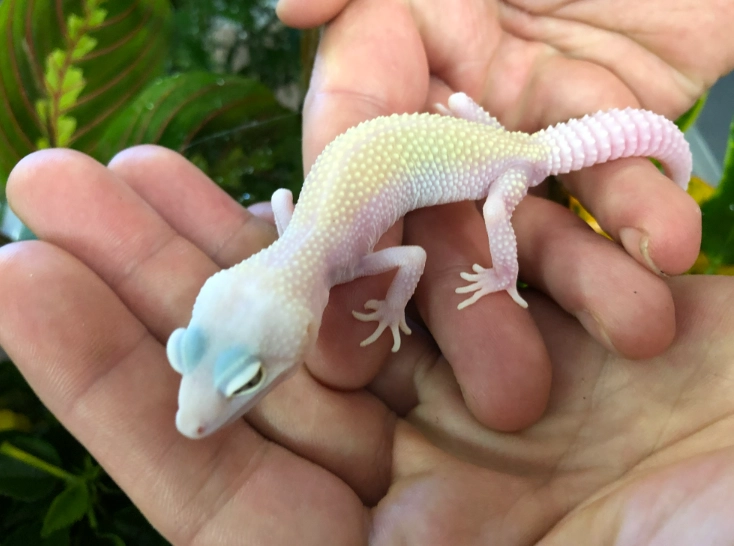
Blizzard leopard geckos are insectivores. Their diet in captivity is straightforward but requires consistency.
Staple Feeders: Crickets and dubia roaches are excellent primary foods. Mealworms and black soldier fly larvae are good occasional staples or supplements.
Feeding Schedule:
- Juveniles (0-6 months): Daily, as many appropriately-sized insects as they'll eat in 10 minutes.
- Sub-Adults (6-12 months): Every other day.
- Adults (12+ months): 2-3 times per week. A good meal might be 6-8 large crickets or 4-5 dubias.
Gut-loading and Supplementation are non-negotiable. Feed your insects nutritious greens and commercial gut-load food 24 hours before feeding them to your gecko. Then, dust the insects with supplements:
- Calcium (without D3): Light dusting at almost every feeding. Keep a small dish of pure calcium powder in the enclosure.
- Calcium with D3 & Multivitamin: Dust insects with this combo once a week. I use Repashy Calcium Plus or a similar all-in-one weekly.
Handling and Understanding Their Behavior
Blizzard leopard geckos are generally docile, but they are not naturally cuddly pets. They tolerate handling. The key is to be slow, confident, and support their entire body. Never grab them by the tail—it can detach.
Let a new gecko settle in for at least a full week with no handling. Start with short 5-minute sessions a few times a week. Watch their body language. If they are frantic, huffing, or trying to jump, put them back.
One behavior I've noted more frequently in my blizzards compared to my normals: they can be slightly more "startlish" to sudden movements outside the tank. Their solid color might correlate with a slightly more reactive temperament in some lines—though this is anecdotal from my breeding projects. It just means extra patience during taming.
Signs of a happy, healthy blizzard gecko: active at dawn/dusk, curious when you approach, has a fat tail (their main energy storage), eats regularly, and sheds in one complete piece.
Health and Common Issues to Watch For
Prevention is everything. Here are the top issues and how to spot them early, with a focus on what might look different on a white gecko.
- Stuck Shed: This is a big one. Due to their sometimes drier skin tendency, check toes and the tip of the tail after every shed. Retained shed cuts off circulation. Ensure your moist hide is truly moist. A shallow warm bath can help loosen stuck skin.
- Metabolic Bone Disease (MBD): Caused by lack of calcium/D3. Signs include rubbery jaw, bowed legs, tremors, and difficulty walking. It's irreversible in advanced stages but entirely preventable with proper supplementation.
- Impaction: A blockage in the gut from eating substrate or oversized food. Signs include lethargy, loss of appetite, and a swollen abdomen. Prevent it by using safe substrate and proper feeder size.
- Parasites: Weight loss despite good appetite, runny or smelly stools. Requires a vet for diagnosis and treatment.
The challenge with blizzards: spotting early signs of illness like skin discoloration or redness is harder on a white animal. You must rely more on behavioral cues—lethargy, hiding constantly, refusing food for more than 10 days (adults).
Find a reptile veterinarian before you have an emergency. The Association of Reptilian and Amphibian Veterinarians (ARAV) website has a find-a-vet tool.
Your Blizzard Gecko Questions Answered
 Caring for a blizzard leopard gecko is a deeply rewarding experience. Their elegant appearance and personable nature make them fantastic pets. By focusing on the precise details of their habitat, diet, and behavior—and paying attention to those subtle morph-specific needs—you're setting yourself up for success. Remember, the goal isn't just to keep them alive, but to help them thrive for their full 15-20 year lifespan. Pay attention, be consistent, and enjoy the journey with your unique white-scale friend.
Reader Comments