Let's cut to the chase. The single biggest mistake I see new reptile keepers make is treating the enclosure like a simple container. It's not. For a chameleon or a gecko, that glass or screen box is their entire world—their weather, their landscape, their hunting ground, and their sanctuary. Get the size wrong, and you're not just cramping their style; you're setting them up for stress, illness, and a shortened lifespan. I've seen too many lethargic, color-dulled chameleons in cramped tanks and geckos that refuse to eat simply because their home felt unsafe and barren.
This guide isn't about regurgitating the minimum dimensions you can find anywhere. It's about understanding the why behind those numbers and how to build an environment where your pet can truly exhibit natural behaviors. We'll dive deep into the specific needs of popular chameleon and gecko species, unpack common but devastating setup errors, and walk through creating a habitat that's not just big enough, but enriching enough.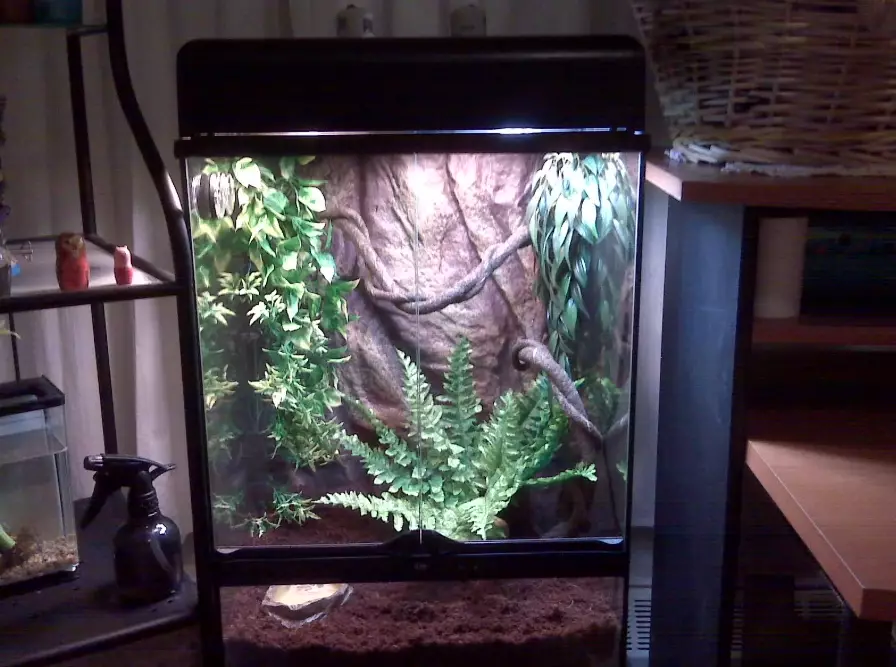
What's Inside?
- Why Tank Size is a Health Issue, Not Just Real Estate
- The 3 Most Common (and Harmful) Enclosure Mistakes
- Chameleon Enclosure Requirements: Height is Everything
- Gecko Tank Dimensions: It's All About the Footprint
- How to Choose the Perfect Enclosure: Glass, Screen, or Hybrid?
- Setting Up for Success: A Step-by-Step Habitat Guide
- Beyond the Basics: Ventilation, Bioactivity, and Long-Term Planning
- Your Questions, Answered (By a Keeper Who's Messed Up)
Why Tank Size is a Health Issue, Not Just Real Estate
Think of a small tank as a room with no windows, poor air circulation, and one temperature everywhere. For reptiles that rely on external heat to regulate their body, this is a death sentence. A proper-sized enclosure allows you to create a thermal gradient—a warm basking zone at one end and a cooler retreat at the other. Your pet moves between them to digest food, boost immunity, and simply feel comfortable.
It also enables a humidity gradient, crucial for species like chameleons that need moisture for hydration and shedding. In a tiny tank, misting creates a uniformly soggy environment, which breeds bacteria and respiratory infections. In a large one, moisture dissipates naturally, creating microclimates.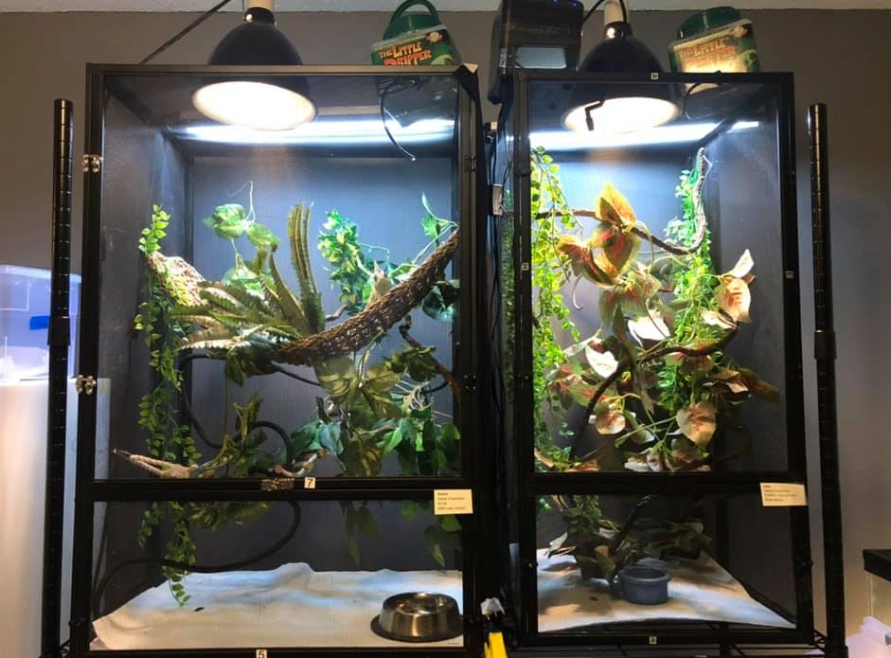
The 3 Most Common (and Harmful) Enclosure Mistakes
Before we talk numbers, let's clear the debris. Avoiding these errors is more important than hitting an exact gallon target.
1. Prioritizing Length Over Height (For Chameleons)
This is the classic blunder. Chameleons are arboreal. They live in trees. A long, low reptile tank is a prison for them. They need to climb, perch at different heights to regulate temperature, and feel secure up high. A tall, screen enclosure isn't a suggestion; it's the requirement.
2. Ignoring the "Useable Space" Factor
A 20-gallon tank stuffed with three huge plastic plants and a bulky hide offers very little actual roaming area. The interior design matters just as much as the outer dimensions. Clutter can be as bad as emptiness. The goal is a balance of open pathways, climbing structures, and visual barriers.
3. Planning for the Baby, Not the Adult
It's tempting to start a juvenile in a small tank. Don't. You'll stress it by upgrading later, and more importantly, you can't establish the proper environmental gradients in a tiny box. Start with the adult-sized enclosure and simply add more clutter and smaller feeding stations for the baby. It's cheaper and less disruptive in the long run.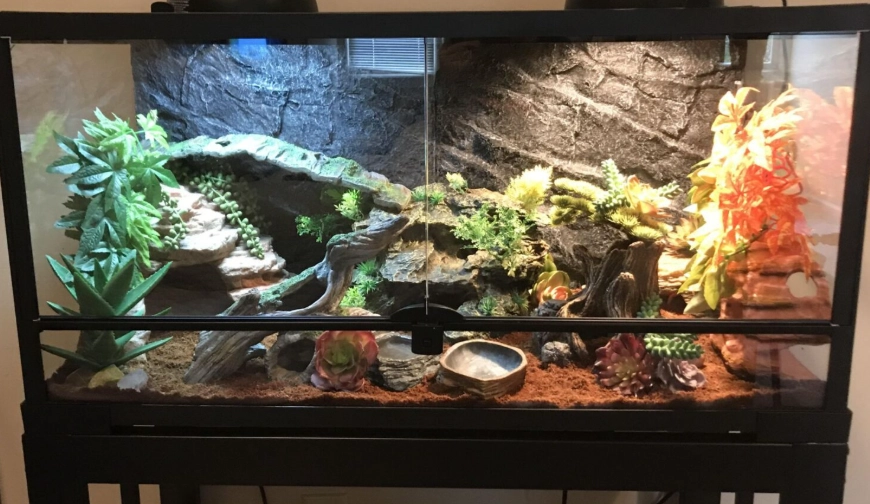
Chameleon Enclosure Requirements: Height is Everything
For most common pet chameleons (Veiled, Panther, Jackson's), the mantra is go tall or go home. Screen cages are vastly superior to glass for them because they provide exceptional airflow, preventing stagnant, humid air that causes respiratory infections.
| Chameleon Species | Minimum Adult Enclosure Size | Ideal Enclosure Type & Key Features |
|---|---|---|
| Veiled Chameleon | 24"L x 24"W x 48"H (approx. 120 gallons volume) |
All-screen cage. Must be tall for climbing. Needs robust live plants (e.g., Schefflera, Ficus) for hydration and hiding. |
| Panther Chameleon | 24"L x 24"W x 48"H (approx. 120 gallons volume) |
All-screen or hybrid (screen sides, solid back). Slightly higher humidity needs than Veiled. Critical to have dense foliage in upper third. |
| Jackson's Chameleon | 18"L x 18"W x 36"H (approx. 50 gallons volume) |
All-screen or hybrid. Cooler temperature requirements. They are less massive than Veileds, so slightly smaller can work, but taller is still better. |
Notice how the volume is expressed, but the height is the star. A study often cited in herpetoculture circles, like those discussed in forums referencing the Journal of Herpetology, emphasizes that vertical space correlates directly with reduced stress markers in arboreal lizards. In my own experience, moving a stressed Veiled from a 36" tall to a 48" tall enclosure was like flipping a switch—its colors brightened, and it started hunting with purpose within days.
Gecko Tank Dimensions: It's All About the Footprint
Geckos are more diverse in their needs. Some are terrestrial, some arboreal. The key metric here is floor space.
| Gecko Species | Minimum Adult Enclosure Size | Ideal Enclosure Type & Key Features |
|---|---|---|
| Leopard Gecko (Terrestrial) | 36"L x 18"W x 12"H (approx. 40 gallon breeder) |
Front-opening glass terrarium. Length is critical for thermal gradient. Low height is fine. Must have a warm hide, cool hide, and humid hide. |
| Crested Gecko / Gargoyle Gecko (Arboreal) | 18"L x 18"W x 24"H (approx. 33 gallon tall) |
Front-opening glass terrarium. Height is important for climbing. Needs plenty of vertical clutter (vines, cork tubes, plants). Excellent candidate for bioactive setup. |
| African Fat-Tailed Gecko (Terrestrial) | 36"L x 18"W x 12"H (approx. 40 gallon breeder) |
Similar to Leopard Gecko but often prefers slightly higher humidity. A longer tank is non-negotiable for establishing proper ground-level temperature zones. |
The 10 or 20-gallon tank is an outdated standard for adult Leopard Geckos. A 40-gallon breeder (36x18 footprint) is the new responsible minimum. Why? It allows you to fit the three essential hides (warm, cool, moist) with enough space in between so the gecko doesn't have to choose between thermoregulation and security. I made the 20-gallon mistake early on; my gecko spent all its time in the warm hide, never exploring, because the cool end felt too exposed and close. In the 40-gallon, it uses the entire space.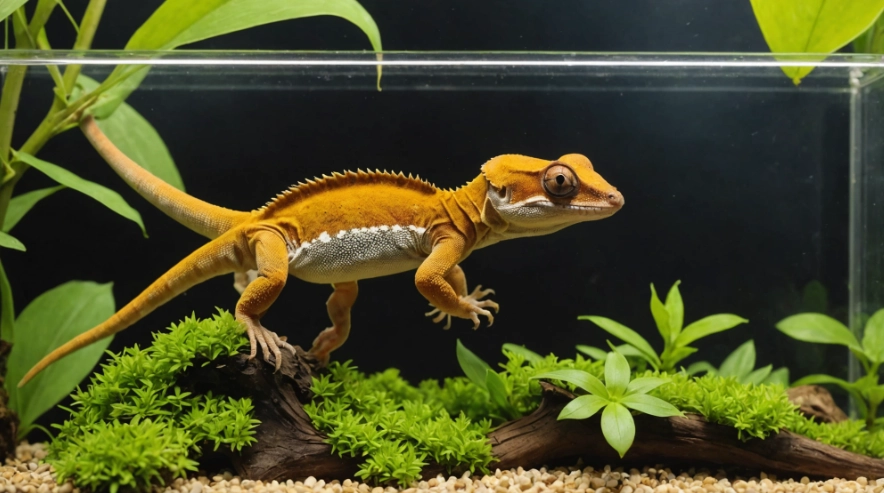
How to Choose the Perfect Enclosure: Glass, Screen, or Hybrid?
Material matters as much as size.
All-Screen Cages: Best for chameleons and other reptiles requiring maximum airflow and lower humidity. Lightweight, great for heat lamp placement. The downside? They suck at retaining heat and humidity. In a cold or dry room, you'll fight to maintain parameters.
Glass Terrariums (Front-Opening): Ideal for most geckos, tropical snakes, and amphibians. They retain heat and humidity well, provide great visibility, and the front doors minimize stress during maintenance. The cons? They can overheat if not ventilated properly and are heavy.
Hybrid/PVC Cages: These have solid sides (often PVC or acrylic) and screened ventilation panels. They are the gold standard for many advanced keepers. They insulate heat perfectly, retain humidity well, look clean, and are lightweight. They're more expensive upfront but save money on heating in the long run. Perfect for creating stable environments for sensitive species.
Setting Up for Success: A Step-by-Step Habitat Guide
Let's walk through setting up a 40-gallon breeder for a Leopard Gecko, a common scenario.
Step 1: Substrate. Ditch the reptile carpet. It harbors bacteria and can snag toes. For beginners, use a simple, solid substrate like paper towel, slate tile, or a non-adhesive shelf liner. Once you're confident, a deep layer of a soil/sand mix (70/30) for a bioactive setup is fantastic, but it's an advanced topic.
Step 2: Heating & Gradient. Place an under-tank heater (UTH) on one side, controlled by a thermostat—this is non-negotiable for safety. The UTH should cover about 1/3 of the tank's floor. This creates the "warm end." The other end, with no heater underneath, is the "cool end." You want an 88-92°F (31-33°C) surface temperature on the warm end and around 75°F (24°C) on the cool end. An overhead low-wattage halogen or deep heat projector can supplement ambient heat if needed.
Step 3: The Three Hides.
• Warm Hide: Place this directly over the UTH area.
• Cool Hide: Place this at the opposite end of the tank.
• Humid Hide: Place this in the middle or on the cool side. Fill it with damp sphagnum moss to aid shedding.
These three points should be distinct, forcing the gecko to move across the temperature gradient.
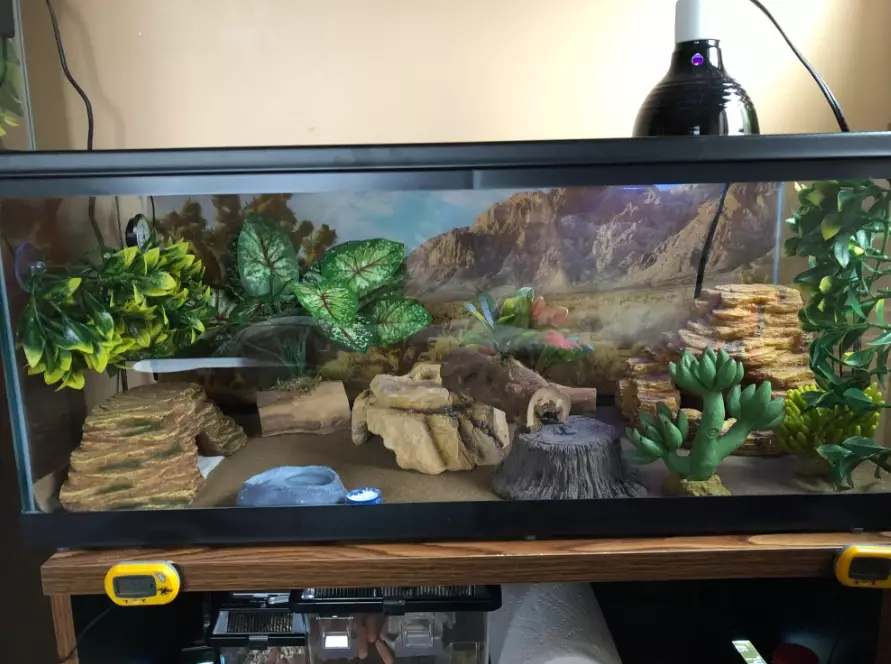
Step 4: Clutter & Enrichment. Add fake or safe live plants, cork flats, and tunnels. This breaks up sightlines, makes the gecko feel secure while moving, and encourages natural exploration. An empty tank is a stressed gecko.
Beyond the Basics: Ventilation, Bioactivity, and Long-Term Planning
Ventilation is the silent killer in poorly designed setups. For glass tanks, it's about cross-ventilation—having vents low on the cool side and high on the warm side to create a passive airflow that cycles out stale air and brings in fresh. For screen cages, it's about managing the excessive airflow with partial covers or room humidifiers.
Bioactive setups are a game-changer. You introduce a clean-up crew (isopods, springtails) and live plants into a deep, natural substrate. This creates a self-cleaning, living ecosystem that drastically reduces maintenance and provides immense mental stimulation for your pet. It's the ultimate expression of providing adequate space—you're building a functional slice of nature. Resources from the Bioactive Herpetoculture community are invaluable here.
Plan for the long term. That cute baby will be an adult for most of its life. Invest in the adult-sized enclosure from day one. Your pet's health and your own enjoyment will thank you.
Your Questions, Answered (By a Keeper Who's Messed Up)
 How often should I fully clean a large reptile enclosure? It seems like a huge chore.
Reader Comments