That flash of crimson against a backdrop of green—it’s an image that captivates reptile enthusiasts. The "red" leaf-tailed gecko isn't a single scientific species, but rather a stunning color morph or locality variation primarily associated with the giant leaf-tailed gecko (Uroplatus fimbriatus) and sometimes the Satanic leaf-tailed gecko (Uroplatus phantasticus). These aren't your average pet store geckos. Hailing from the rainforests of Madagascar, they are masters of disguise, nocturnal hunters, and require a keeper who respects their specific, often misunderstood, needs. I've kept Uroplatus for over a decade, and I can tell you that getting a "red" one is just the beginning. The real challenge, and reward, lies in replicating a slice of Malagasy jungle in your home.
What’s Inside This Guide
What Exactly is a Red Leaf-Tailed Gecko?
Let's clear this up first. When breeders or enthusiasts talk about a "red leaf-tailed gecko," they're usually referring to individual Uroplatus fimbriatus that exhibit intense reddish, maroon, or chestnut coloration. This can be a natural variation found in certain populations or selectively bred for in captivity. With Uroplatus phantasticus, reds and oranges are part of their incredible polymorphic range, often mixed with browns and blacks to mimic dead leaves.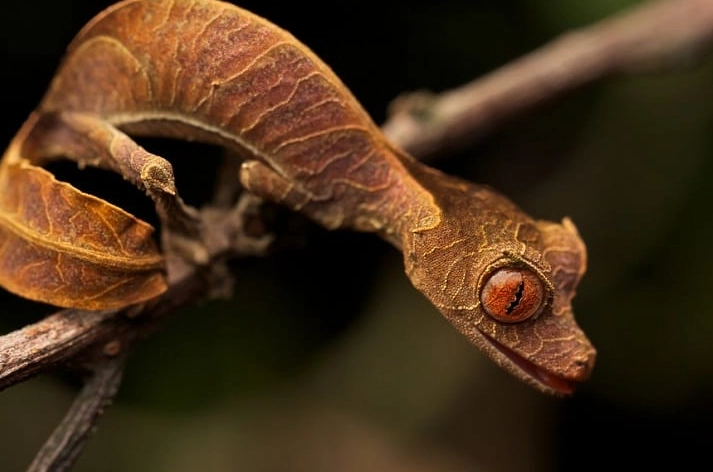
But here’s the thing: that stunning red isn't always a guarantee. Their color can change based on mood, temperature, time of day, and stress levels. A gecko that looks fiery red at night under a dim light might appear a dull brown the next morning. Chasing a specific color is a common rookie mistake. Focus on the animal's health and the correctness of your setup first; the color is a bonus.
Key Takeaway: "Red" describes a color morph, not a separate species. The care requirements are identical to those of standard Uroplatus fimbriatus or phantasticus. Prioritize a healthy animal from a reputable breeder over the most intense color.
Natural Habitat and Wild Behavior: The Key to Care
You can't care for them properly if you don't know where they come from. These geckos are endemic to Madagascar, meaning they live nowhere else on Earth. They inhabit the humid, dense eastern rainforests. Think constant moisture, moderate temperatures, and a vertical world of tree trunks and broad leaves.
They are strictly nocturnal and arboreal. During the day, they press their flattened bodies against tree bark or dangle amongst leaves, becoming virtually invisible. This isn't just cool—it's a survival strategy that lowers stress. At night, they become active hunters, using their large eyes to spot moving insects.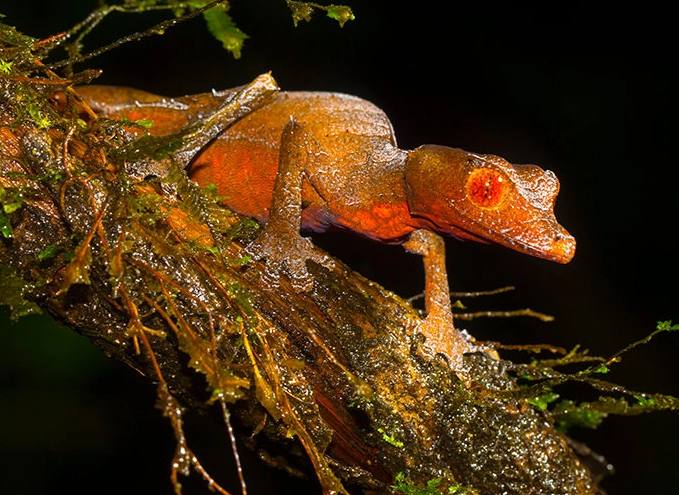
This wild blueprint dictates every aspect of captive care: vertical space over horizontal, high humidity, plenty of hiding spots, and a distinct day/night cycle. Ignoring this is the fastest way to a stressed, sick gecko.
How to Set Up the Perfect Red Leaf-Tailed Gecko Habitat
This is where most people fail. A 10-gallon tank with a heat lamp and a water bowl won't cut it. You're building a bioactive terrarium, not just a cage.
The Enclosure: Think Vertical
For a single adult U. fimbriatus (the larger species), you need a minimum of an 18x18x24 inch tall terrarium. For U. phantasticus, a 12x12x18 can work, but bigger is always better. Screen tops are fine, but you'll need to work harder to maintain humidity. Front-opening glass terrariums with ventilation panels are ideal.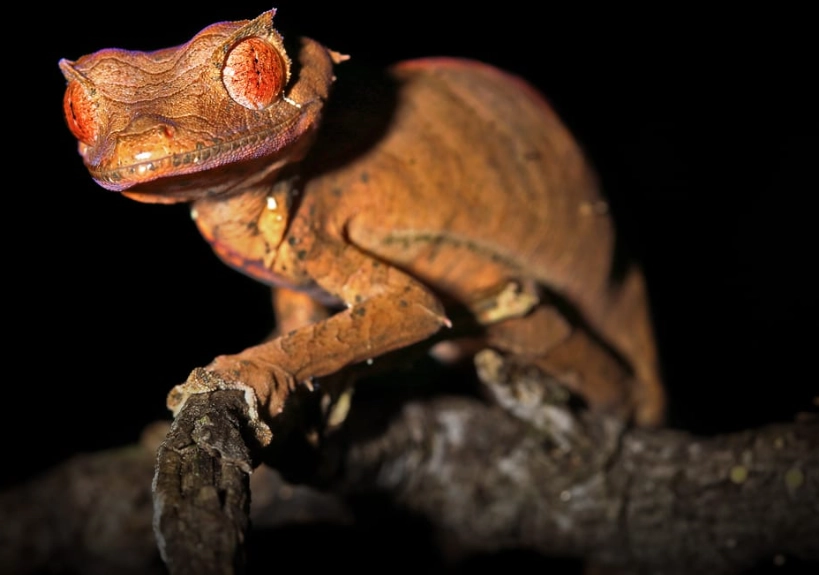
Heating and Lighting: Subtle is Best
They do not bask like bearded dragons. Daytime ambient temperatures should be 72-78°F (22-25.5°C) with a very slight, gentle gradient. A drop to 65-70°F (18-21°C) at night is beneficial. Use a low-wattage ceramic heat emitter or a heat mat on a thermostat on one side of the enclosure. Never use bright white basking bulbs—they are nocturnal and hate bright light.
Lighting is for you and the plants. Use a low-output UVB light (like a shadedweller or 5.0 tube) if you wish, though its necessity for Uroplatus is debated. A simple LED plant light on a 12-hour timer works perfectly to establish a day/night cycle.
Humidity and Hydration: The Non-Negotiables
This is critical. Humidity must be maintained at 70-80% and spike to near 100% during nightly misting. Use a digital hygrometer. You'll need to mist heavily once or twice a day with a pressure sprayer. They rarely drink from a bowl; they lick water droplets from leaves and glass. A small, shallow water dish is still good to have. Live plants like Pothos, Philodendron, and Ficus help maintain humidity.
Substrate and Decor: Building a Rainforest
The substrate should hold moisture. A bioactive mix is best: coconut fiber, orchid bark, sphagnum moss, and charcoal. Then, go vertical. You need cork bark flats (not rounds) secured to the back and sides. These are their primary daytime hiding spots. Add sturdy branches, vines, and plenty of broad-leafed plants (live or safe silk). The goal is zero open space—they should be able to move around completely hidden.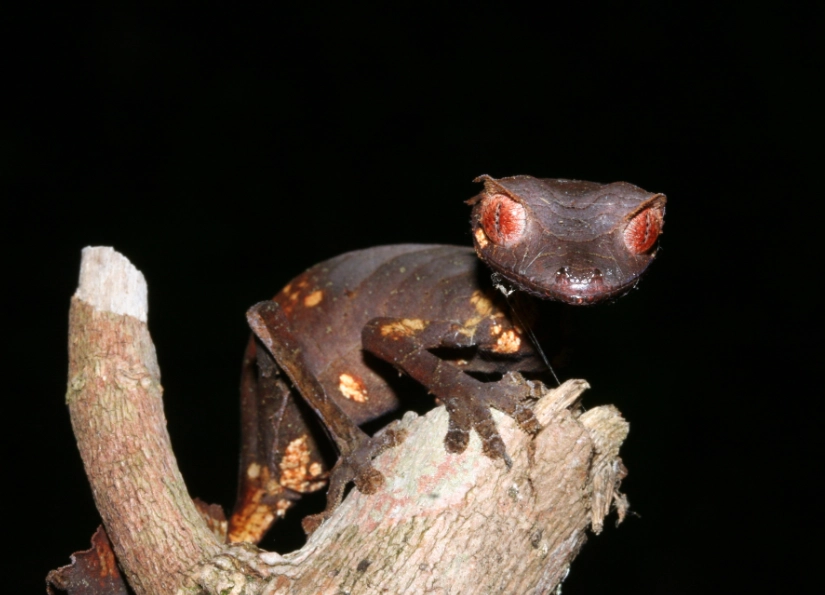
| Enclosure Component | Specific Recommendation | Why It Matters |
|---|---|---|
| Primary Hiding Surface | Large, flat cork bark panels | Mimics tree trunks; provides essential security for daytime rest. |
| Substrate Base | Bioactive mix (coco fiber, orchid bark, sphagnum) | Retains humidity, supports live plants and clean-up crew (isopods/springtails). |
| Heating Source | Ceramic Heat Emitter (CHE) on a thermostat | Provides gentle, non-light-emitting warmth without drying out the enclosure excessively. |
| Hydration Method | Heavy manual misting 1-2x daily | Creates drinking droplets and necessary humidity spikes; automated misters can be added. |
| Key Decor | Sturdy branches, live plants (Pothos, Philodendron) | Creates a 3D climbing landscape and increases humidity through transpiration. |
Feeding and Nutrition: More Than Just Crickets
In the wild, they eat a varied buffet of insects. In captivity, variety is your best tool for health. A staple of gut-loaded crickets is okay, but you must rotate in other feeders: dubia roaches (appropriately sized), black soldier fly larvae, silkworms, and the occasional waxworm or hornworm as a treat.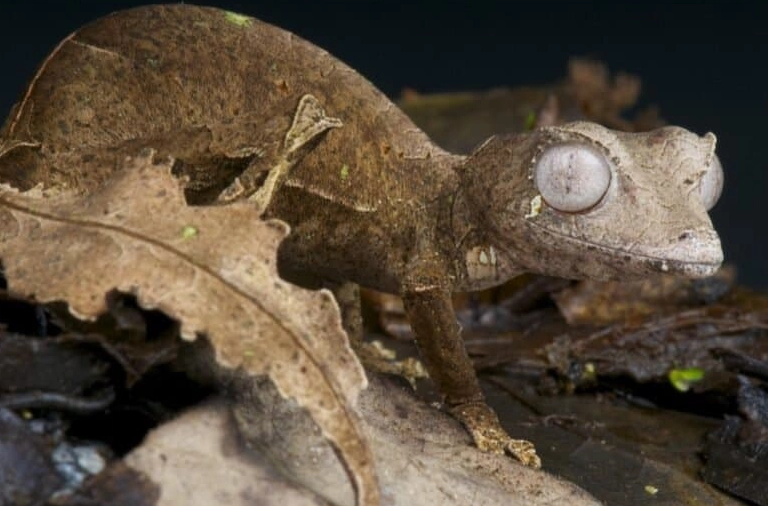
Dust insects with a high-quality calcium supplement (with D3 if no UVB is provided) at almost every feeding for growing geckos, and 2-3 times a week for adults. A multivitamin should be used once a week.
Feed at dusk or after lights out. Place insects on branches or release them into the well-planted enclosure to stimulate natural hunting behavior. Remove uneaten crickets by morning, as they can stress or even bite your gecko.
Common Mistake: Over-reliance on crickets leads to nutritional gaps. I've seen geckos develop subtle health issues that were resolved simply by switching to dubia roaches as a primary feeder for a few months. Their chitin is easier to digest, and they are more nutritious.
Health and Common Issues: Reading the Subtle Signs
Uroplatus don't get "sick" in obvious ways. They decline slowly. You must become a detective.
- Weight Loss: The hip bones (pelvic girdle) becoming prominent is a major red flag. Weigh them monthly with a gram scale.
- Dehydration: Sunken eyes, wrinkled skin, and retained shed (especially on toes and tail tip). Chronic low humidity is the usual culprit.
- Stress: Refusing to eat, constantly hiding in the substrate (instead of on their cork), and a persistent dark, dull coloration. Re-evaluate your enclosure for openness, excessive light, or incorrect temperatures.
- Metabolic Bone Disease (MBD): Soft jaw, kinks in the tail or spine, tremors, difficulty climbing. This is 100% preventable with proper calcium supplementation and sensible UVB/lighting.
Find a veterinarian who has experience with exotic reptiles before you have an emergency. The Association of Reptilian and Amphibian Veterinarians (ARAV) website is a good place to search.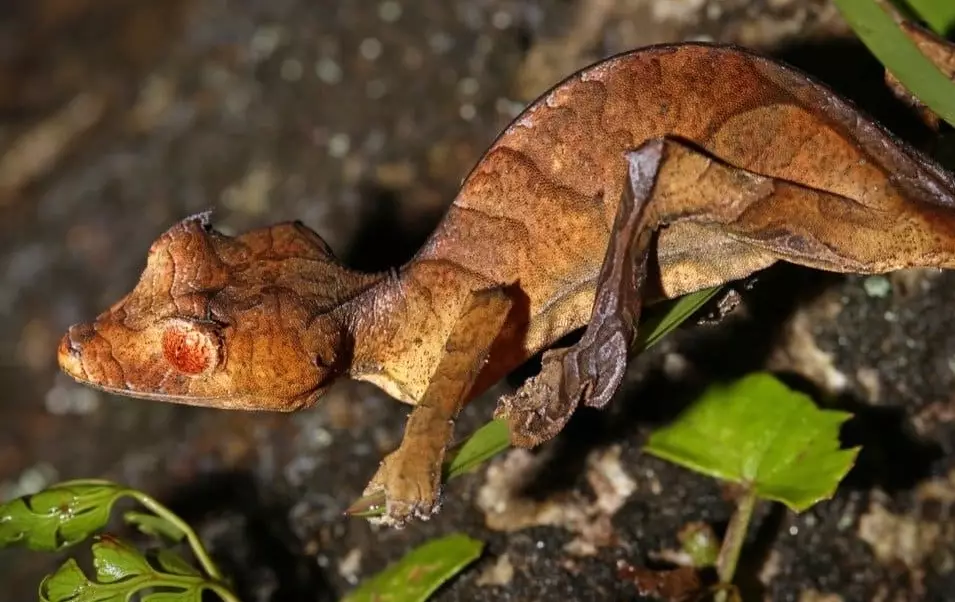
Your Questions, Answered (By an Experienced Keeper)
Is a red leaf-tailed gecko a good pet for beginners?
Generally, no. They are intermediate to advanced reptiles. Their strict humidity, temperature, and stress-management requirements make them fragile for a first-time keeper. If you're new to reptiles, master caring for a crested gecko or leopard gecko first. The skills you learn will be invaluable before stepping up to a Uroplatus.
My red leaf-tailed gecko is brown most of the day. Did I get cheated?
Almost certainly not. Dramatic color change is normal. A "red" morph often shows its best color at night when relaxed and active, or under specific, gentle lighting. Daytime brown/gray coloration is their camouflage mode. Judge its color in the evening, about an hour after lights go out.
How do I handle my leaf-tailed gecko?
Minimally, and with great care. They are display animals, not handleable pets. For necessary vet visits or enclosure cleaning, encourage them to walk onto a flat piece of cork or your hand. Never grab or pull. Their skin is delicate, and their tails, while not as fragile as some geckos, can still be dropped under extreme stress. A dropped tail will not regrow with the same leaf-like appearance.
Why won't my gecko eat?
Start with stress. Is the enclosure too open? Are there loud vibrations? Is the temperature wrong? Next, look at the food. Have you offered the same insect for weeks? Try a different feeder. Finally, consider health. Are there other symptoms like weight loss? If a healthy gecko refuses food for over two weeks in a proper setup, a vet check is needed to rule out parasites.
Where can I ethically buy a red leaf-tailed gecko?
Avoid pet chains. Seek out specialized reptile breeders at large reptile expos or with established online reputations. Ask questions: How long have they had the animal? What are its parents' genetics? Can they provide a feeding history? A good breeder will ask you just as many questions about your setup. Captive-bred (CB) is mandatory—never support the wild-caught trade, which is detrimental to wild populations in Madagascar (all Uroplatus are listed on CITES Appendix II).
Keeping a red leaf-tailed gecko is a commitment to creating a living art piece—a fragment of Malagasy rainforest in your home. The payoff is observing one of nature's most perfect illusions thrive under your care. It's not easy, but for those willing to learn its language of subtle cues and provide a truly specialized environment, it is an incredibly rewarding experience. Forget the color for a moment. Focus on the animal. Get the fundamentals of humidity, security, and diet locked in. Do that, and you might just be lucky enough to see that legendary flash of red in the dark.
Reader Comments