Explore the Sections
You're out in the garden, admiring a perfect white daisy. Something feels off. One of the petals looks... different. Maybe a bit thicker, or positioned at a strange angle. You lean in closer, and suddenly it moves. That's not a petal at all. It's a spider, sitting perfectly still, waiting. You've just met a crab spider.
I remember the first time I saw one. I was convinced my eyes were playing tricks on me. It was so perfectly matched to the yellow coreopsis flower it was sitting on that it was practically invisible. That moment of discovery, that little jolt of surprise, is what makes these spiders so endlessly fascinating to me. They're not building elaborate webs you walk into; they're performing a magic trick right in front of you, every single day.
Crab spiders, belonging to the family Thomisidae, are some of the most common yet overlooked predators in our gardens, meadows, and wild spaces. They've earned their name not from a taste for seafood, but from their distinctive posture and movement. Their front two pairs of legs are often much longer and held out to the sides, giving them a wide, crablike stance. And just like a crab, they can scuttle sideways and backwards with surprising speed. But the walking is just a small part of their story. The real magic is in their waiting.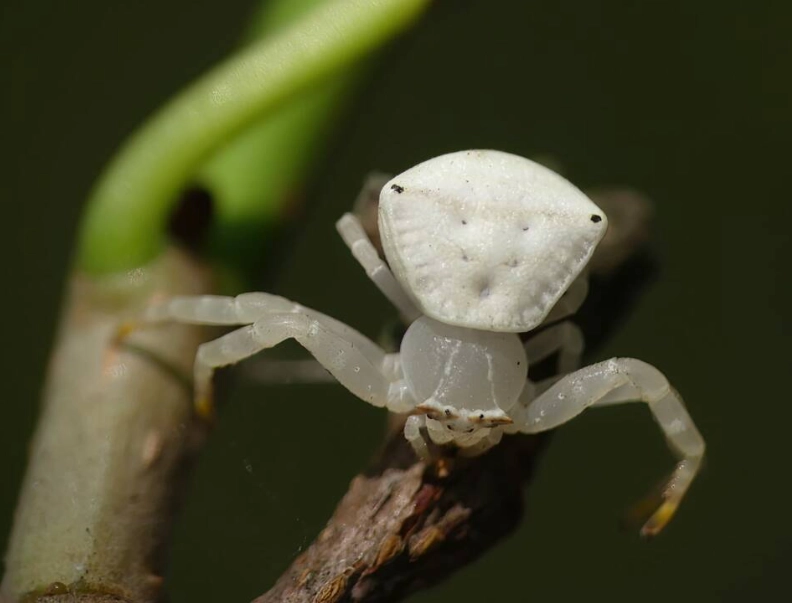
So, what exactly is a crab spider? At their core, they are ambush predators. Forget orb webs and silk traps. Their strategy is pure stealth and patience. They pick a prime location—usually a flower, but sometimes leaf litter or tree bark—and then they simply sit. And wait. For hours, sometimes days. They become part of the scenery.
Not Just One Look: The Many Faces of Crab Spiders
When people say "crab spider," they're often picturing one specific type: the flower crab spider. But the family is huge and diverse. It's like saying "bird"—you could be talking about a hummingbird or an eagle. Here's a quick look at some of the characters you might encounter.
| Common Name / Genus | Typical Habitat | Key Identifying Feature | Camouflage Style |
|---|---|---|---|
| Flower Crab Spider (Misumena, Thomisus) | Flowers of all colors (daisies, goldenrod, milkweed) | Often can change color (white/yellow). Females are larger, more colorful. | Floral mimicry. Blends into the flower itself. |
| Bark Crab Spider (Bassaniana, Xysticus) | Tree bark, leaf litter, ground layer | Darker, mottled browns, greys, and blacks. Rugged, textured appearance. | Resembles lichen, moss, or tree bark. Disruptive coloration. |
| Leaf Crab Spider (Misumenops) | On leaves and stems of plants | Often a bright, leaf-green color. Slender body. | Mimics a fresh or dying leaf. Can look like part of the foliage. |
See what I mean? The flower dwellers get most of the attention because they're showy, but the bark and leaf specialists are just as masterful in their own environments. A Xysticus species on an oak tree is every bit as hidden as a Misumena on a rose. They just don't have the glamorous job.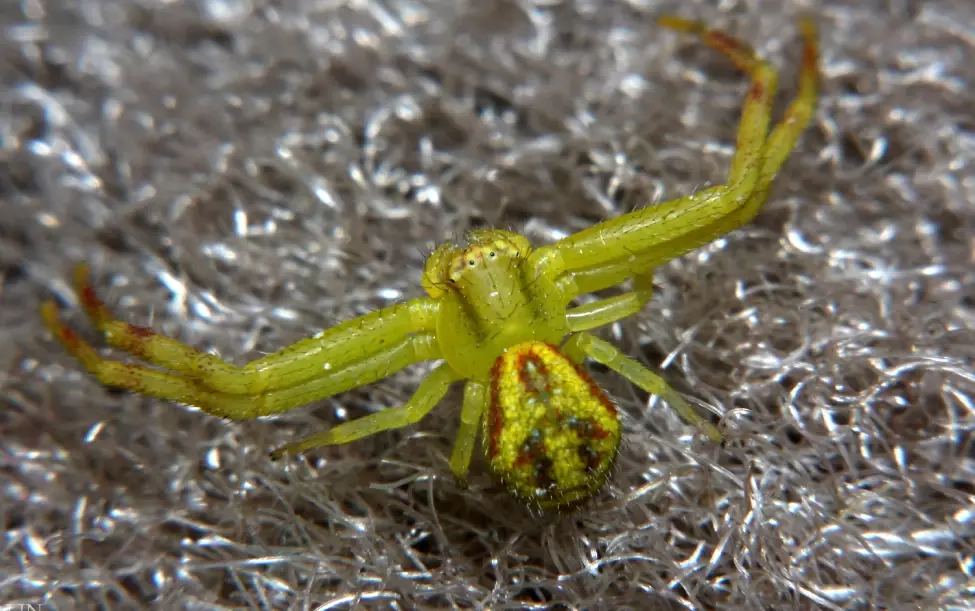
The Famous (and Slightly Overhyped) Color Change
Alright, let's talk about the party trick. The white and yellow crab spiders, particularly in the genus Misumena, are famous for their ability to change color. It's the fact everyone leads with. But I think the process is often misunderstood.
It's not a quick chameleon-like shift. We're talking days, not seconds. A spider might take several days to go from white to yellow, or vice versa. They do it by secreting a liquid yellow pigment into the outer cell layer of their body. To go back to white, they excrete the pigment. It's a slow, metabolic process tied to their surroundings and, likely, the types of prey they're encountering.
I once tried to track a single yellow crab spider on a white daisy. I checked every day. By day four, she was noticeably paler. By day ten, she was almost completely white. It was a slow-motion magic trick. It also made me realize they don't change for every single flower. If the hunting is good, they might just stay put, a slightly contrasting bump on a petal.
And here's the critical limit: they generally only switch between white and yellow. You won't find a pink crab spider on a pink flower (though some tropical species come close with other methods). The famous photos of a pink spider on a pink flower? That's usually a different genus, like Thomisus, which are born with a range of colors (pinks, greens, whites) but don't change during their lifetime. They just pick a flower that matches their outfit.
So, is the color-changing amazing? Absolutely. Is it the instant, perfect camouflage we sometimes imagine? Not quite. It's more of a long-term adaptation strategy.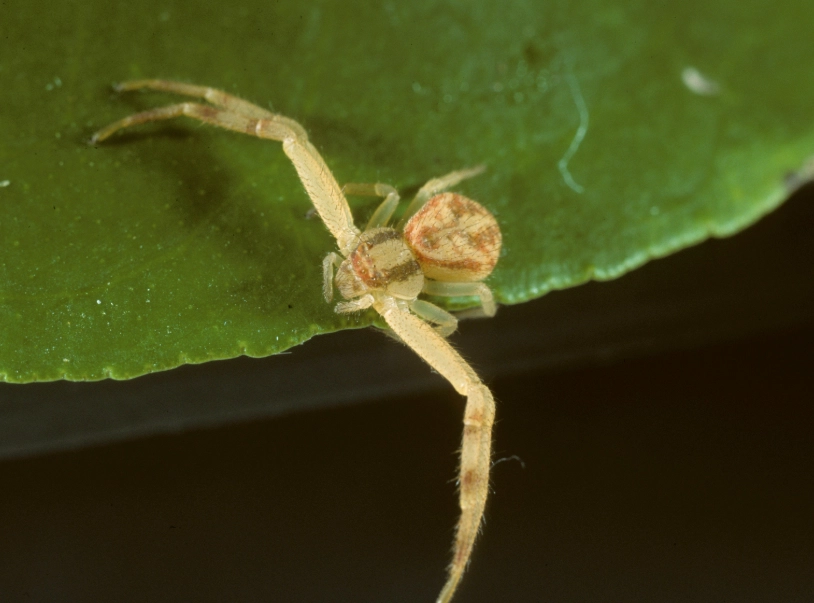
Life as an Ambush Predator: The Sit-and-Wait Strategy
Their entire existence is built around one principle: don't move until you have to. This isn't laziness; it's hyper-specialized energy conservation.
They position themselves in a high-traffic area. For flower crab spiders, this is the equivalent of setting up a restaurant at a busy airport. Bees, butterflies, flies, and moths are constantly coming in to feed on nectar and pollen. The spider sits with its front legs spread wide, often slightly raised, ready to snap shut.
When a bee lands, the strike is blindingly fast. Those long, powerful front legs grab the prey and pull it in towards the spider's chelicerae (jaws). Then, they deliver a potent venom. This is where they differ from many spiders. Their venom is fast-acting on insects, often causing near-instant paralysis. This is crucial. A struggling bee or wasp could sting them or knock them off the flower.
Now, here's a gruesome but fascinating detail. They often don't even bother wrapping their prey in silk. Why waste the energy? They simply hold on and start feeding. They're sucking out the liquefied insides right there on the flower, in broad daylight. It's a raw, efficient, and somewhat brutal process. After they're done, they might drop the empty husk of the insect or toss it off the flower to keep their hunting ground clean.
What do they eat? Almost anything that lands. I've seen records and photos of them taking bumblebees twice their size, hoverflies, butterflies, even the occasional damselfly. They are equal-opportunity ambushers. Their success rate isn't 100%, of course. Many insects visit and leave unharmed. But it only takes one successful catch every few days to sustain them.
But Are They Dangerous to Me or My Garden?
This is the million-dollar question for most people, and the answer is a resounding no.
Let's be perfectly clear: Crab spiders are not a threat to humans. Their venom is specialized for insects. Their fangs are typically too small and weak to penetrate human skin in any meaningful way. Even if one managed to bite you in self-defense (which would require you to seriously harass it, like squeezing it in your hand), the sensation would likely be less than a mosquito bite or a mild pinprick, with no lasting effects.
So you can relax. That spider on your marigold is not plotting your downfall.
Now, for your garden—are they pests or helpers? This is where I think they get a bad rap. People see a beautiful crab spider clutching a dead honeybee and think, "Oh no, it's killing my pollinators!" It's a natural, emotional reaction. We're taught to protect bees.
But step back and look at the bigger picture. Crab spiders have been hunting pollinators for millions of years. Ecosystems are built with this kind of predation in mind. A single crab spider will take a handful of insects over its lifetime. It is not going to decimate your local bee population. In fact, by preying on a variety of insects, they can help keep potential pest populations in check. They are part of the natural balance.
Think of them as a sign of a healthy garden. If you have enough flowers to attract pollinators, you'll have enough to attract the predators that feed on them. It's a complete food web right outside your window. Removing a crab spider is like plucking one instrument out of an orchestra—the music goes on, but it's less complex, less resilient.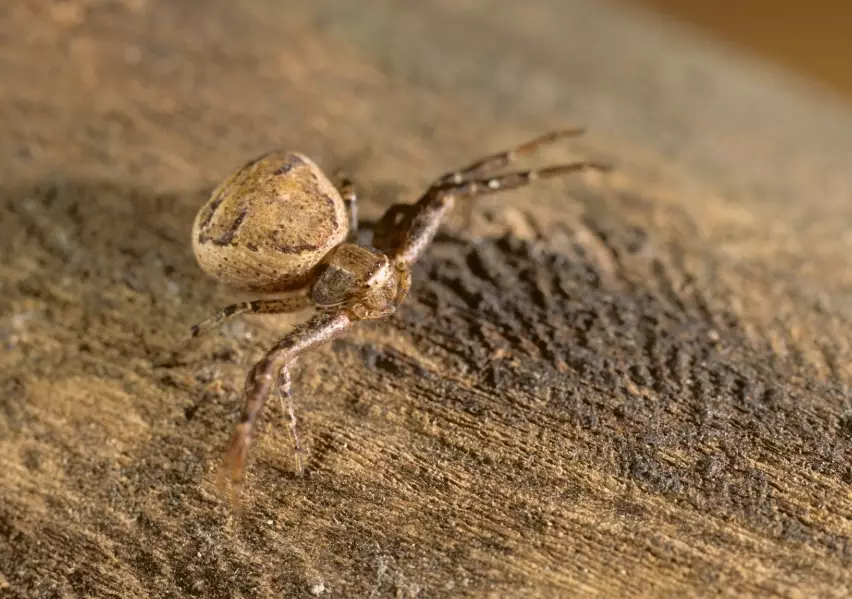
Finding and Observing Crab Spiders: A Beginner's Guide
Want to see one for yourself? You don't need to go to a jungle. Your local park or your own flower beds are the best places to start. Here’s how I go about it.
First, slow down. You can't speed-walk past a flower bed and expect to see them. Their whole thing is not being seen. Find a sunny patch with lots of blooming flowers—daisies, coneflowers, goldenrod, and milkweed are all classic crab spider hangouts.
Second, look for the unnatural. This sounds contradictory, but it works. Scan a flower. Does everything look smooth and symmetrical? Is there a lump? A "petal" that seems too thick, or oddly placed? Look for legs tucked tightly against a body. Sometimes, the only giveaway is the spider's own eyes, which can look like tiny black dots. On white flowers, look for faint yellow smudges. On yellow flowers, look for creamy-white patches.
Once you think you've found one, don't poke it! Just observe. Watch how it sits. Is it facing the center of the flower, waiting for visitors? You might get lucky and see it make a catch. If you have a camera or even your phone, try taking a macro photo. Getting a close-up can reveal incredible details you'd miss with the naked eye.
My biggest tip? Check the same patch of flowers over multiple days. A crab spider you see on Tuesday might be in the exact same spot on Thursday. It's like visiting a neighbor. This also lets you witness color changes or feeding events. Patience is the number one tool for observing these spiders.
If you're struggling with flower spiders, try an easier target. In early spring or late fall, look on tree trunks, fences, or the sides of buildings for the bark crab spiders. Their mottled camouflage is different, but once you recognize the classic crab-spider posture—legs out to the side, low, flat body—you'll start seeing them everywhere.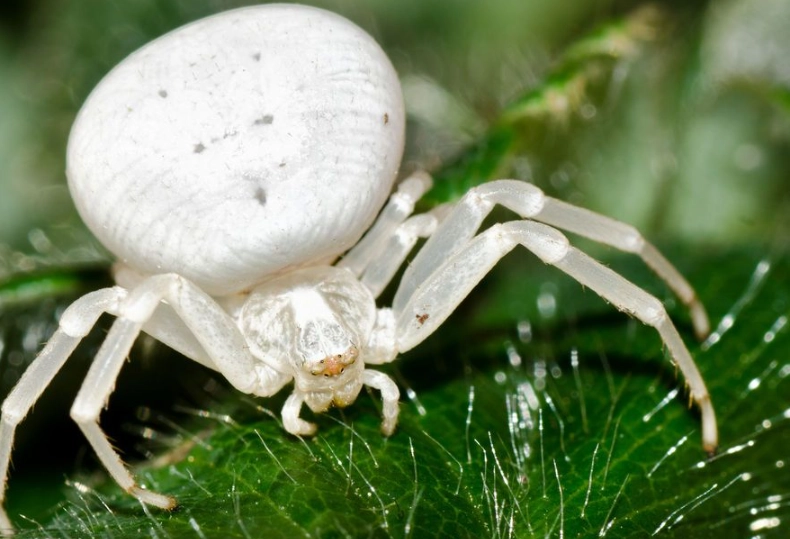
Your Crab Spider Questions, Answered
The Bigger Picture: Why These Little Spiders Matter
It's easy to dismiss a small, silent predator on a flower. But crab spiders are a vital piece of the ecological puzzle. They are a classic example of a mid-level predator. They help control populations of flying insects, and they themselves are food for birds, wasps, and larger spiders. Their presence indicates a functioning, biodiverse environment.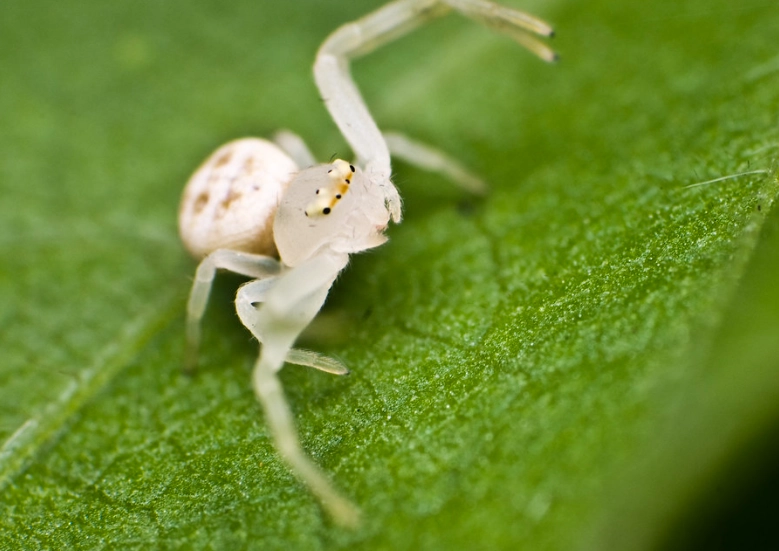
From a scientific perspective, they are a model organism for studying camouflage, predator-prey interactions, and venom evolution. Research published in journals like those from the Entomological Society of America often references crab spiders when discussing insect behavior and predation pressure. Their simple, observable lifestyle makes them perfect for ecological studies.
For the rest of us, they offer a daily lesson in patience, adaptation, and the hidden drama of the natural world. You don't need to go on a safari to see a master of disguise. You just need to look a little closer at the flowers you pass every day.
So next time you're in the garden, take a moment.
Scan the blossoms. Look for the shape that doesn't quite fit. You might just lock eyes with a tiny, eight-legged hunter who has perfected the art of doing nothing—until everything depends on a single, lightning-fast movement. That's the world of the crab spider. It's quiet, patient, and utterly mesmerizing.
Reader Comments