Let's cut straight to it. If you're looking at pictures of a Midnight Blizzard leopard gecko, you're probably already hooked. That deep, almost black coloration with speckles of white or silver isn't something you see every day. It looks like a piece of a starry night sky decided to become a lizard. But before you rush to find a breeder, there's a lot more to this morph than just its looks. I've been keeping and breeding leopard geckos for over a decade, and I've seen the hype cycles come and go. The Midnight Blizzard is special, but it also comes with specific needs and some misconceptions that most care sheets gloss over.
This isn't just another list of basic leopard gecko facts with the morph name slapped on top. We're going to dig into what makes a Midnight Blizzard genetically, the real costs (spoiler: it's more than just the gecko's price tag), and the nuanced care practices that can make the difference between a pet that survives and one that truly thrives, showing off that magnificent dark color to its full potential.
What's Inside This Guide
What Exactly Is a Midnight Blizzard Leopard Gecko?
First, a quick genetics lesson. A "morph" is a specific genetic variant that affects the animal's appearance. The Midnight Blizzard is what we call a line-bred trait. Unlike some morphs caused by a single gene (like an Albino), the Midnight Blizzard's intense black pigmentation is the result of selectively breeding the darkest geckos together over many generations. Breeders like Ron Tremper were instrumental in developing these stunning dark phases. You might also hear terms like "Black Pearl" or "Midnight," which are often used interchangeably or denote subtle lineage differences between breeders.
The key visual trait is a base color that ranges from charcoal gray to jet black, overlaid with a variable pattern of white, silver, or light gray spots or blotches—the "blizzard" part of the name. The contrast is what makes them pop.
Here's a crucial point most beginners miss: Their color can change. A baby Midnight Blizzard might look dark gray, but it can darken significantly as it matures (a process called "firing up"). Conversely, stress, impending shedding, or incorrect temperatures can cause them to lighten or look washed out ("firing down"). Maintaining their ideal environment is directly linked to maintaining that gorgeous color.
Quick Morph Profile: They are a color and pattern morph, not a separate species. Their care requirements are fundamentally those of any leopard gecko (Eublepharis macularius): nocturnal, insectivorous, terrestrial, and requiring a dry environment with a warm spot. Their unique genetics don't make them fragile, but they do make proper setup non-negotiable.
The Real Cost of Owning a Midnight Blizzard
Let's talk numbers, because the initial price tag is just the start. I've seen too many people spend $300 on the animal and then try to house it in a $30 tub with a $10 heat mat. That's a recipe for problems.
The Gecko Itself: Prices vary wildly based on lineage, contrast, and the breeder's reputation. In 2023-2024, you can expect to pay:
- Pet-Quality: $150 - $250. Good color, but maybe the pattern isn't as crisp or the black isn't jet deep.
- High-Contrast/Show-Quality: $300 - $500+. This is where you get that stunning, high-definition look.
- Breeding-Quality Adults from Top Lines: $600+. You're paying for proven genetics.
Always buy from a specialized reptile breeder, not a pet store. Stores rarely know the morph's true lineage, and the animals are often stressed and prone to health issues.
The Startup Costs (The Real Investment): This is where your budget should focus. A proper setup is a one-time cost that ensures a healthy, long-lived pet (they can live 15-20 years!).
| Item | Why It's Critical | Estimated Cost |
|---|---|---|
| 20-Gallon Long Tank (Minimum) | Floor space is more important than height. This is the absolute minimum for an adult. | $50 - $120 (sales are your friend) |
| Overhead Heating & Thermostat | The most common mistake is using an unregulated heat mat. A deep heat projector or halogen bulb on a thermostat mimics the sun, providing better digestion and wellbeing. This is non-negotiable for color expression. | $80 - $150 (for lamp, fixture, thermostat) |
| Digital Thermometers/Hygrometers | Those analog dials are notoriously inaccurate. You need precise readings. | $20 - $30 |
| Substrate & Decor | Safe substrate (tile, paper towel, proper loose sub), at least 3 hides (warm, cool, humid), clutter. | $40 - $80 |
| Supplements & Feeding Dishes | Calcium (with and without D3), a multivitamin. Gut-loading food for your gecko's food. | $30 - $50 (initial supply) |
Realistically, a proper setup will cost between $250 and $400 before you even buy the gecko. Skimp here, and you'll likely pay more in vet bills later.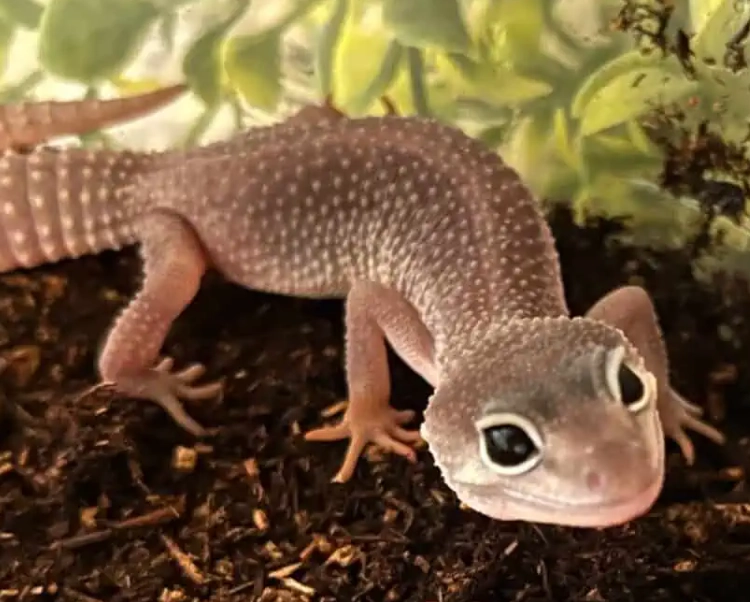
How to Set Up the Perfect Enclosure
Think of the tank as your gecko's entire world. For a Midnight Blizzard, we're optimizing for thermal regulation, security, and humidity control to keep that skin healthy.
The Non-Negotiable: Heat and Thermoregulation
Forget the old advice about heat mats under the tank being sufficient. Leopard geckos are crepuscular (active at dawn/dusk), and they benefit from overhead heat that penetrates their tissue more effectively, like the sun would. I switched all my geckos to overhead heating years ago and saw immediate improvements in activity and feeding response.
Use a Deep Heat Projector or a low-wattage Halogen bulb connected to a dimming thermostat. Place it at one end of the tank to create a gradient:
- Warm Side/Basking Zone: 88-92°F (31-33°C) surface temperature. Use an infrared temp gun to check the floor right under the hide.
- Cool Side: 70-75°F (21-24°C).
- Nighttime Drop: Can go down to 65-70°F (18-21°C). If your room gets colder, use a ceramic heat emitter (no light) on a thermostat.

Substrate: The Great Debate
For a juvenile or a new keeper, paper towel is safest and simplest. For adults, you have options. The fear of loose substrate causing impaction is overblown if the animal is healthy and the husbandry is correct. Many experienced keepers use a mix of topsoil and playsand (70/30 ratio) because it allows for natural digging behavior. Avoid calci-sand or pure sand. Alternatively, slate tile looks great, retains heat well, and is super easy to clean.
Hides and Clutter
Three hides minimum. A warm hide over the heat source, a cool hide on the opposite end, and a humid hide in the middle. The humid hide (a small container with a hole, filled with damp sphagnum moss or paper towels) is essential for smooth sheds. A dehydrated gecko will have bad sheds, which can lead to lost toes—a serious risk for any morph. Add fake plants, cork flats, or rocks to break up sightlines and reduce stress. A stressed Midnight Blizzard won't show its best color.
Feeding, Health, and Morph-Specific Nuances
They eat like other leopard geckos: insects. But there's an art to it.
Staple Feeders: Gut-loaded dubia roaches, crickets, and black soldier fly larvae are excellent. Mealworms and superworms are okay as part of a varied diet but can be fatty.
Supplementation is Key: Dust insects at every feeding with a calcium supplement without D3. Twice a month, swap that for a calcium with D3 dusting. And twice a month, use a high-quality reptile multivitamin that contains vitamin A (retinol, not just beta-carotene). This is critical for eye and skin health. Resources like Reptifiles have detailed supplementation schedules that are worth following.
Health Watch: Midnight Blizzards are not inherently unhealthy. However, their dark color can sometimes make it harder to see early signs of issues like tail thinning (a fat storage indicator) or skin discoloration. You need to be diligent. Weigh them monthly with a small gram scale. Know what a healthy, plump tail looks like. Watch for retained shed on their toes.
One specific nuance: Because they are bred for high melanin (black pigment), some keepers anecdotally suggest they may be slightly more sensitive to very high temperatures. There's no hard science, but it makes sense from a biological perspective—dark colors absorb more heat. It reinforces why a perfect thermal gradient and the ability to escape the heat is so vital.
Finding and Choosing a Healthy Gecko
Do not buy on looks alone. Here’s your checklist when contacting a breeder:
- Ask for specific, recent photos and a video. A good breeder will provide them. Look for clear, bright eyes, a fat tail, and no kinks in the spine.
- Ask about the parents' lineage. A reputable breeder knows this and can tell you if it's a Tremper line or from another project.
- Ask about their feeding and supplementation routine. This tells you how the animal was started.
- Plan for shipping. Reputable breeders ship via specialized reptile couriers (like Ship Your Reptiles) with heat or cold packs as needed. This costs $50-$80 but is the safest method.
Be prepared to wait. The best breeders often have waitlists. It's worth it to get a healthy, well-started animal.
Your Questions, Answered (By an Experienced Keeper)
Will a Midnight Blizzard leopard gecko's color stay that dark forever?
Most will maintain a very dark base color into adulthood, especially if their care is spot-on. However, don't panic if yours looks lighter sometimes. They "fire down" when resting, cool, or stressed. A warm, comfortable gecko will typically display its darkest, most vibrant coloration. The final adult color is usually set by 12-18 months of age.
What's the single biggest mistake new owners make with this morph?
Focusing only on the color and neglecting the fundamentals. Investing in a proper thermostat-controlled overhead heating system is the number one thing you can do for any leopard gecko's health, but it's especially visible in a morph where color is tied to wellbeing. A cold, stressed Midnight Blizzard looks washed out and gray.
I live in a very humid climate. How can I keep the enclosure dry enough?
This is a great practical question. First, ensure your screen top is mostly uncovered to allow ventilation. Use a dehumidifier in the room where the tank is located. Inside the tank, choose a substrate that doesn't hold moisture (tile, paper towel). You can also use a small computer fan attached to the top of the screen, blowing across the top, to increase air exchange. Just make sure it doesn't blow directly into the tank and create a draft.
Are Midnight Blizzards more aggressive or skittish than normal leopard geckos?
Temperament is not linked to color morphs. It's almost entirely down to individual personality and, more importantly, how much they were handled as juveniles. A breeder who does regular, gentle handling will produce a calmer gecko. Ask the breeder about the specific animal's temperament.
Can I breed my Midnight Blizzard to get more like it?
Technically yes, but it's not a simple recessive gene. The trait is polygenic, meaning it involves many genes. Breeding two dark Midnight Blizzards will give you a higher percentage of dark babies, but you'll also get a range of colors, including some that look like normal or other dark morphs. Successful morph breeding requires understanding genetics, having space for multiple tanks, and a plan for housing and selling the offspring. It's not a side hobby; it's a commitment.
The Midnight Blizzard leopard gecko is a breathtaking example of what selective breeding can achieve. It's a living piece of art. But remember, that art is a living, breathing animal that depends entirely on you for its environment. If you're willing to invest in the right setup from day one—prioritizing heat, humidity, and security over fancy decor—you'll be rewarded with a captivating, long-lived pet that truly lives up to its celestial name.
Reader Comments