Getting a fat tailed gecko tank setup right isn't just about sticking a lizard in a box. It's about recreating a slice of West African savanna and forest edge in your living room. Do it well, and you'll have a calm, curious, and long-lived pet. Get it wrong, and you'll face a stressed gecko, feeding problems, and potential health issues. I've seen both outcomes over the years.
The biggest gap I see in most guides? They treat fat tails like their leopard gecko cousins. Close, but not quite. Fat tails need more humidity, slightly lower heat, and often appreciate a setup that's a bit more "lush" than the typical arid leopard gecko tank.
Your Quick Guide to a Happy Fat Tail
Tank Fundamentals: Size, Type, and Ventilation
Let's start with the box itself. This is the single most expensive part, so choosing wisely saves money and hassle later.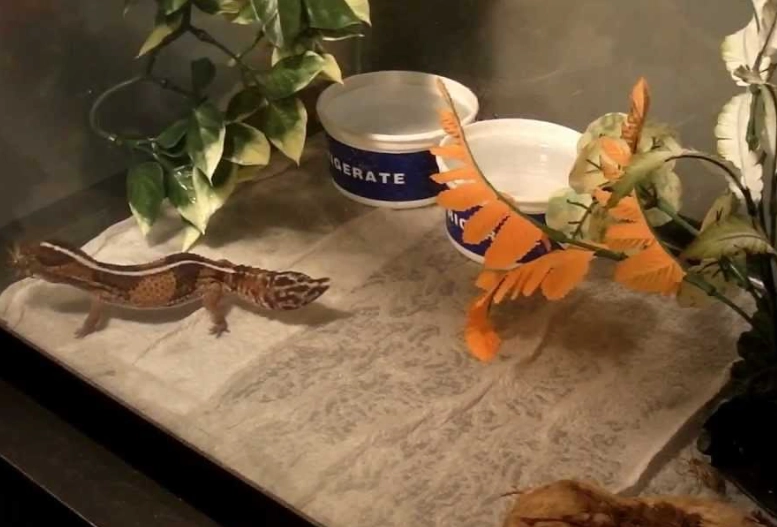
Tank Size is Non-Negotiable. The old "10-gallon minimum" is outdated. For a single adult fat tailed gecko, a 20-gallon long tank (30" L x 12" W x 12" H) is the starting point I recommend. Why? Floor space. Fat tails are terrestrial; they walk, they forage, they explore. A 10-gallon gives them just enough room for a hot hide and a cool hide, with nothing in between. A 20-gallon long lets you create a true thermal gradient and add enrichment. For a pair, a 30-gallon breeder or 40-gallon breeder is far more appropriate.
Front-Opening vs. Top-Opening. This is a quality of life choice—for you. A front-opening terrarium (like those from Exo Terra or Zoo Med) causes less stress for the gecko. Your hand comes in from the side, not descending from above like a predator. It also makes spot-cleaning and decorating infinitely easier. Top-opening tanks work fine, but you'll need to move slowly when accessing them.
The Lid Debate: Screen vs. Solid. Here's my non-consensus take. Most reptile tanks come with screen lids. For fat tails, that's often a problem. Screen lids are fantastic for ventilation but terrible for retaining humidity. Your 60% humidity goal will vanish in hours. The solution? Use a solid glass or acrylic lid that covers 70-80% of the top. Cut a hole for your heat lamp and maybe a small section for a low-speed computer fan if you're worried about stagnant air. This traps humidity at the substrate level where your gecko lives.
Substrate: The Foundation of Humidity and Health
What you put on the floor is a hot topic. Paper towel is the safe, boring choice for quarantine. But for a permanent home, your gecko deserves better.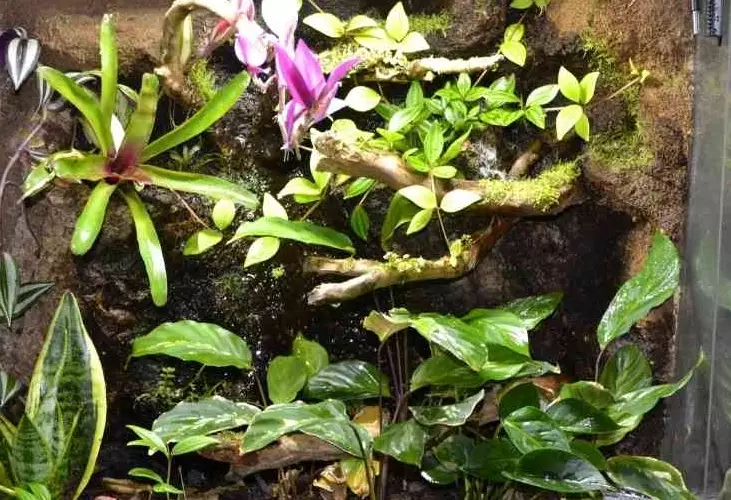
The Impaction Fear is Overblown. Provided your temperatures are correct (more on that soon), a healthy fat tailed gecko can pass small amounts of loose substrate. In fact, they enjoy digging in it. The real risk comes from cold tanks and poor nutrition, not the substrate itself.
Here’s a breakdown of your main options:
| Substrate Type | Best For | Key Consideration |
|---|---|---|
| Coconut Coir (Eco Earth) | Excellent humidity retention, holds burrows well, natural look. | Can be dusty when dry. Pack it down slightly when damp. |
| Topsoil/Sand Mix (70/30) | Natural, firm for burrowing, great for bioactive setups. | Must be organic, fertilizer-free soil. Play sand, not construction sand. |
| Paper Towel/Newspaper | Quarantine, sick geckos, or simplified cleaning. | Zero humidity help, looks terrible, offers no enrichment. |
| Reptile Carpet | Beginners who are scared of loose substrate. | Harbors bacteria if not washed frequently. Toenails can snag. |
My personal favorite is the topsoil/sand mix. It looks natural, holds moisture gradients (damp underneath, drier on top), and is the perfect base if you ever want to go bioactive.
Heating and Lighting: Creating the Perfect Gradient
Heat isn't just about warmth; it's about digestion, activity, and metabolism. You need to create a gradient.
Overhead Heat is Essential. A common mistake is using only an under-tank heat mat. Mats are good for providing a warm spot, but they don't effectively heat the air in the tank. An overhead source—a low-wattage halogen bulb or a Deep Heat Projector—creates a more natural, sun-like heat that penetrates the air and warms objects.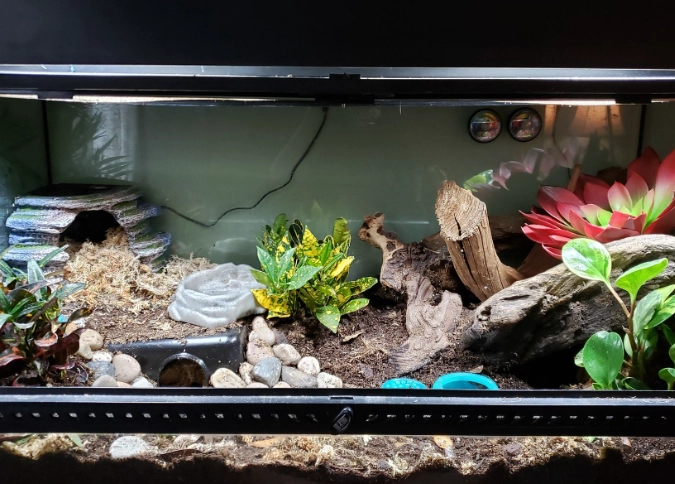
Your target temperatures:
- Basking Surface Temp: 88-90°F (31-32°C). Use a temperature gun to check the spot directly under the lamp.
- Warm Side Ambient: 82-85°F (28-29°C).
- Cool Side Ambient: 72-75°F (22-24°C).
- Nighttime Drop: Can go down to 68-70°F (20-21°C). If your room gets colder, use a ceramic heat emitter (no light) on a thermostat.
Lighting: They Don't Need UVB, But It Might Help. Fat tailed geckos are considered crepuscular and can survive without UVB lighting if they get proper dietary D3. However, emerging research, much of it discussed on forums like Reptile Forums UK and in care sheets from advanced breeders, suggests low-level UVB (like a shadedweller or 5.0 T5 bulb) can benefit calcium metabolism, activity levels, and overall well-being. It's not a strict requirement, but it's a worthwhile upgrade.
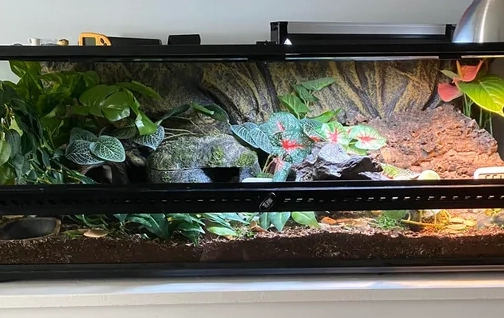
Humidity, Hydration, and the Water Bowl
This is where fat tails diverge from leopard geckos. Their native range is more humid.
Aim for 50-60% ambient humidity. How do you achieve this with a mostly solid lid and loose substrate?
- Moist Substrate Layer. When setting up, pour water into the corners of the substrate. The bottom layer stays damp, the top stays dry. This creates a natural humidity microclimate.
- Strategic Misting. Lightly mist the cool side and decor in the evening to simulate dew. Avoid soaking the entire tank.
- A Humid Hide. This is critical. Provide a hide (like a plastic container with a hole) filled with damp sphagnum moss or paper towels. This gives them a 80%+ humidity retreat for shedding.
The water bowl is simple: a shallow, tip-proof dish on the cool side. Change the water daily. Some geckos will soak in it, especially before a shed.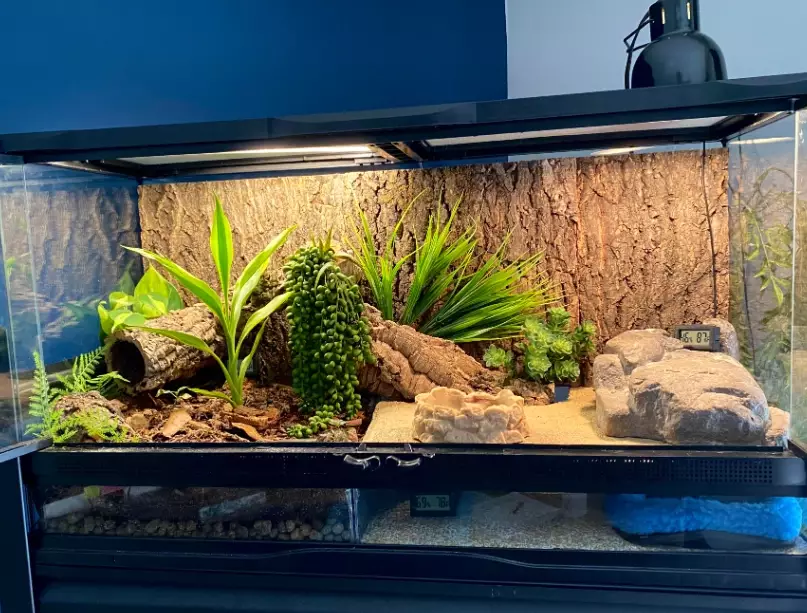
Furniture and Enrichment: Hides, Clutter, and Bioactivity
A tank with two hides and a bowl is a prison. Add clutter to make it a home.
The Three-Hide Minimum:
- Warm Hide: On the hot side, under the lamp.
- Cool Hide: On the cool side.
- Humid Hide: In the middle or on the cool side. Check and re-moisten the moss weekly.
Add branches, cork rounds, fake or live plants, and flat rocks. This provides climbing opportunities, visual barriers, and exploration routes. A flat rock under the basking lamp gives a great heat sink.
Considering Bioactive? A bioactive setup uses live plants, a drainage layer, and clean-up crews (isopods and springtails) to create a self-cleaning ecosystem. For fat tails, it's a fantastic option. The isopods aerate the soil and break down waste, the plants help with humidity, and it looks stunning. It's more work upfront but less daily maintenance long-term. Use hardy plants like pothos, snake plants, or bromeliads.
The Maintenance Routine: Keeping It Clean
Your setup isn't done once it's built. A routine keeps your gecko healthy.
Daily: Spot clean feces and urates. Refresh water.
Weekly: Check humid hide moisture. Wipe down glass. Check thermometer readings.
Monthly (Non-Bioactive): Remove and replace all substrate. Deep-clean all decor with a reptile-safe disinfectant like F10SC or a diluted vinegar solution, followed by thorough rinsing.
Bioactive: Spot clean as usual. The clean-up crew handles the rest. You'll only need to refresh plants and maybe add more isopods occasionally.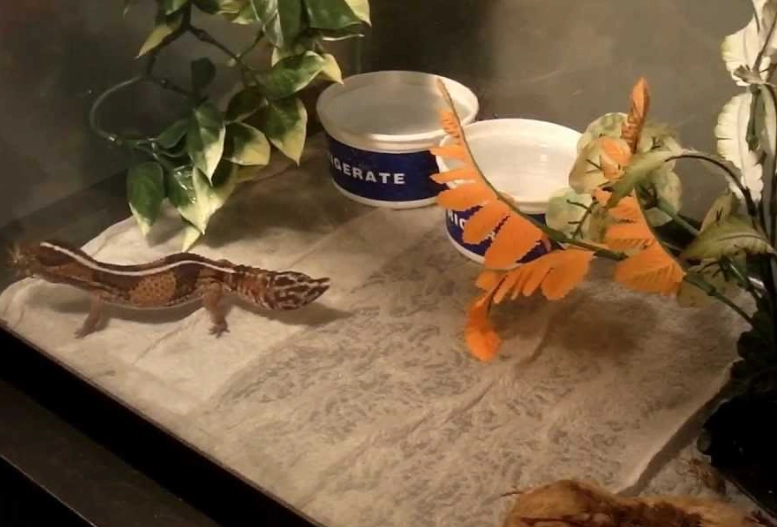
Answers to Your Burning Questions
What is the minimum tank size for a single fat tailed gecko?
Can I use loose substrate like coconut fiber for my fat tailed gecko?
Do fat tailed geckos need a screen lid or a solid lid?
What's the single biggest mistake beginners make with heating?
Setting up a fat tailed gecko tank is a project. Take your time, get the fundamentals of size, heat, and humidity right from the start, and then have fun with the decor. Watching your gecko explore and utilize a well-planned habitat is one of the most rewarding parts of keeping these wonderful creatures. Don't be afraid to tweak things as you go—every gecko has its own personality and preferences.
Reader Comments