Let's be honest. The idea of a pet lizard biting you is a little scary. It's probably one of the first things that crosses your mind when you consider bringing one home. I've kept leopard geckos for over a decade, and yes, they can bite. But here's the crucial part you won't hear often enough: a bite from a leopard gecko is almost always a communication error, not an act of aggression.
It's a sign that you missed a cue, or they misunderstood you. Thinking of it as "aggression" sets up a bad dynamic. It makes you wary of your pet, and that nervous energy? They feel it.
What's Inside?
Why Would a Leopard Gecko Bite? (It's Not Personal)
Leopard geckos don't have complex emotions like spite or hatred. A bite is a primitive, instinctive tool. After years of observation and a few surprising nips, I've categorized the reasons into three main buckets.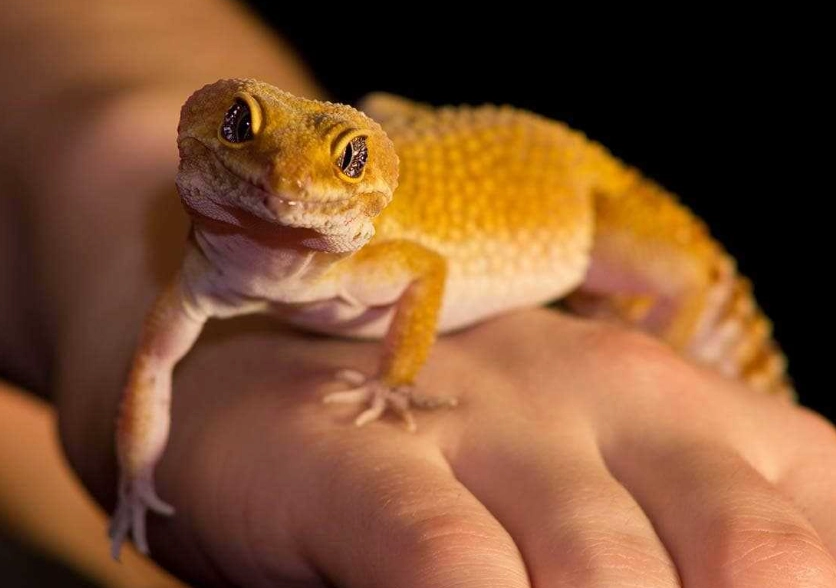
1. Fear and Defense (The "Back Off" Signal)
This is the most common reason, especially for new geckos or those with limited handling. Imagine a giant, five-fingered predator descending from the sky. Their options are limited: freeze, run, or defend.
Scenarios: Sudden grabbing, looming over them, trying to handle them before they're settled (a huge rookie mistake), or a perceived threat from another pet. A gecko that feels cornered with no escape route is more likely to resort to a defensive bite.
2. Mistaken Identity (The "You Look Tasty" Blunder)
Leopard geckos are triggered by movement and smell. If your wiggling finger smells like cricket guts or simply moves like prey near their face during feeding time, you might get a food-response bite.
This is more common with juveniles, who are perpetually hungry and less discerning. I've seen it happen when someone hand-feeds (which you should never do) or has residue from handling food on their hands.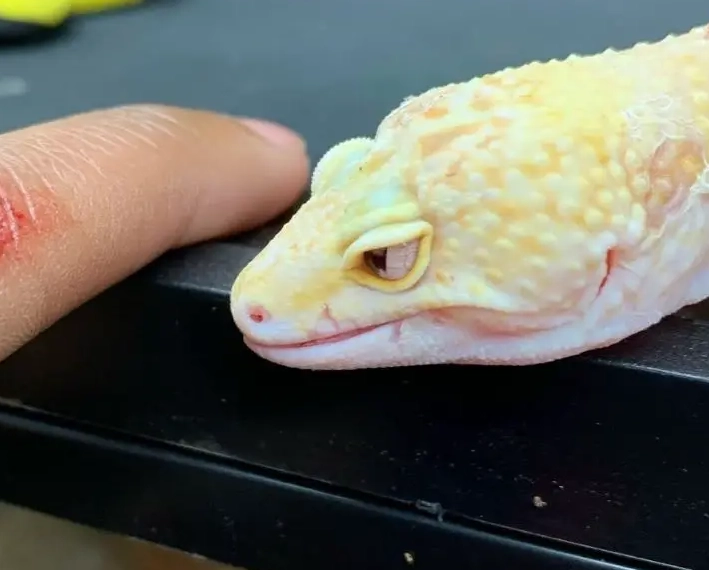
3. Stress or Discomfort (The "I've Had Enough" Warning)
This is the subtle one that many owners miss. Your gecko might tolerate handling for a few minutes, then suddenly nip. It's not random. They're saying, "I'm done. Put me back now."
Signs leading up to this: rapid tail twitching (different from the slow, curious wag), trying to climb off your hand constantly, puffing up their body. Ignoring these body language cues is asking for a warning bite.
How Bad Does a Leopard Gecko Bite Hurt? The Reality Check
Let's demystify this. A leopard gecko's bite is not like a dog bite, a cat scratch, or even a hamster bite. They have numerous small, pointed teeth designed for gripping insect exoskeletons, not tearing flesh.
Here’s a breakdown based on the gecko's age and size:
- Hatchling/Juvenile Bite: You might not even feel it. It feels like a tiny, quick pinch or a rough piece of Velcro brushing your skin. Often, you'll just notice the gecko attached to you. No marks, no pain.
- Adult Bite (Typical): This is a sharp, surprising pinch. It might startle you more than it hurts. It can break the skin, often leaving a small mark like a pinprick or a superficial scratch. A tiny drop of blood is possible. The pain fades in seconds.
- Adult Bite (Hard & Holding On): This is the rare one. A scared or really food-motivated adult might clamp down and hold. This hurts more—a sustained, pinching pressure. It can leave a clearer set of small tooth marks and might be sore for a few minutes. It will not sever a finger or cause serious injury.
The psychological shock is usually worse than the physical pain. Your heart might race. That's normal. Just stay calm.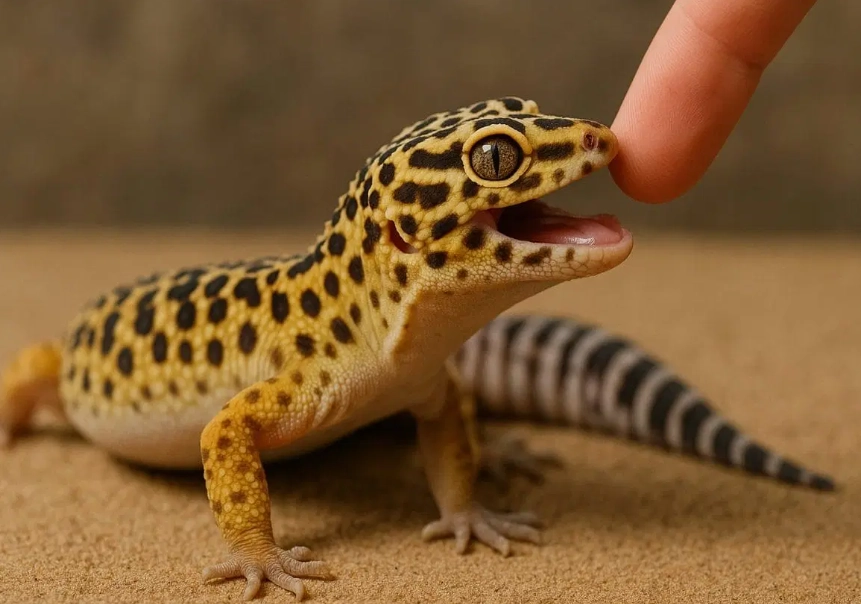
Your Action Plan for Preventing Bites
Prevention is 99% about understanding and respect. Here’s a practical, step-by-step approach.
Building Trust: The Foundation
Skip this, and you'll have problems. Trust-building is slow and non-linear.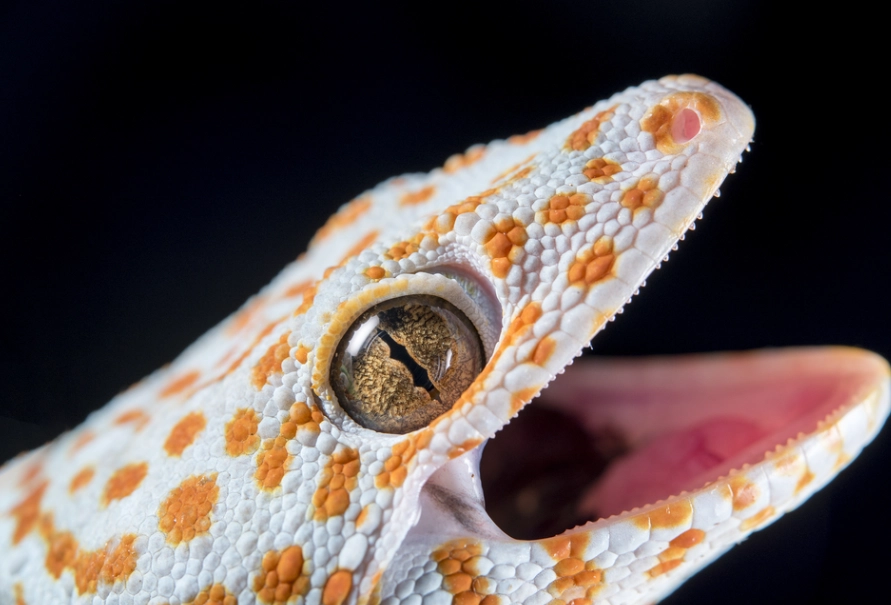
Start by just sitting by the tank. Read a book. Let them get used to your presence. After a few days, place your hand flat and motionless inside the tank for 5 minutes, not near them. Do this for a week. You're teaching them that the giant hand brings no harm.
When you start handling, scoop from below—don't grab from above like a predator. Keep initial sessions short (2-5 minutes) and end on a positive note, like offering a treat after you put them back, not from your fingers.
Mastering the Art of Handling
Always move slowly and predictably. Support their entire body and let them walk from hand to hand. Watch their tail. A slow, curious wave is good. A fast twitch or rattle means stress is building; it's time to wrap up.
If they seem skittish, try handling them in the evening when they're naturally more active, not when you've just turned the lights on and startled them awake.
Feeding Time Safety Protocol
This eliminates most "mistaken identity" bites.
- Always use feeding tongs. Long, blunt-tipped ones are best. They create a safe distance.
- Never hand-feed. It's cute until it goes wrong and teaches bad associations.
- Develop a routine. Tap the tank twice before opening it for feeding. This signals "food time" versus "handling time."
- Wash your hands before and after handling your gecko, especially if you've touched food.
If a Bite Happens: Your Step-by-Step Response
Stay. Calm. Do not yell, shake your hand, or blow on the gecko. Here's what to do:
- Freeze. Take a breath. The gecko will likely let go immediately out of its own surprise.
- If it holds on, gently place your hand on a flat surface inside the tank or on a table. The lack of movement often encourages release.
- As a last resort, use your other hand to gently slide a fingernail or a soft card between its jaw and your skin to encourage release. Don't pry.
- Once free, calmly place the gecko back in its enclosure and leave it alone for the rest of the day. No scolding.
- Care for yourself: Wash the bite area thoroughly with soap and warm water for 30 seconds. Apply an over-the-counter antibiotic ointment and a small bandage if the skin is broken. Infection risk is very low, but it's good practice.
Analyze what happened later. Were you moving too fast? Was it feeding time? Was the gecko already showing stress signs? Learn from it.
Your Top Bite Questions Answered
So, do leopard geckos bite? They can. But it's a rare, minor event that's almost always preventable. It's a language you can learn. Pay attention to their subtle signals, move with respect, and build trust patiently. What you get in return is a fascinating, low-maintenance companion whose trust feels earned—not a pet that lives in fear of you, or vice versa.
The goal isn't a zero-bite guarantee. It's a relationship where a bite becomes so unlikely and inconsequential that it stops being a worry altogether. That's when you can truly relax and enjoy the unique experience of sharing your space with these remarkable little creatures.
Reader Comments