Quick Guide
- Is a Red-Tailed Boa the Right Pet Snake For You?
- Setting Up the Perfect Red-Tailed Boa Enclosure (It's Not Just a Tank)
- Feeding Your Red-Tailed Boa: The How, What, and When
- Understanding Red-Tailed Boa Behavior and Temperament
- Common Health Issues: What to Watch For
- Red-Tailed Boa Costs: The Real Price Tag (First Year & Ongoing)
- Frequently Asked Questions (The Stuff You Actually Search For)
- Final Thoughts: The Long Haul
Let's cut to the chase. You've seen the pictures. That stunning, powerful snake with the deep reddish-brown tail markings, looking like it just stepped out of a jungle documentary. The Red-tailed boa. It's one of the most iconic pet snakes in the world, and for good reason. But here's the thing nobody tells you right away: bringing one of these animals home is a decade-long commitment, sometimes stretching past twenty or even thirty years. It's not like getting a hamster.
I remember the first time I held a full-grown female. It wasn't the weight, though she was substantial. It was the quiet, deliberate power. You're not just keeping a pet; you're providing a home for a semi-arboreal, intelligent constrictor that, if cared for properly, will be a calm and fascinating companion for a huge chunk of your life. This guide isn't just a dry list of facts. It's about what it actually feels like to care for a Boa constrictor, the species most commonly sold as the "Red-tailed boa," and how to do it right so both you and the snake thrive.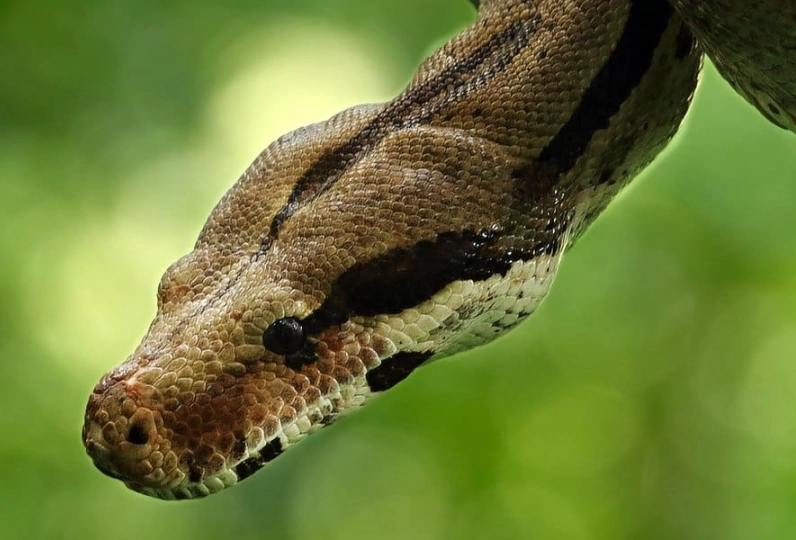
Is a Red-Tailed Boa the Right Pet Snake For You?
This is the most important section. Get this wrong, and it's bad for everyone, especially the snake. They're not for everyone. Actually, they're not for most people.
Think about your lifestyle. Are you prepared for a pet that might outlive your current car, your current job, maybe even your current marriage? Their longevity is their most stunning and daunting feature. I've known people who had to rehome their boa because they were moving across the country for a job and couldn't take a 6-foot enclosure with them. It's heartbreaking.
And then there's the food. You need to be comfortable handling frozen-thawed rodents. For an adult boa, that means large rats. It's not gross, really, once you get used to it, but it's a mental hurdle for some. Can you do that every other week, like clockwork, for 20 years?
But if you want a generally docile, slow-moving, inquisitive snake that showcases what a constrictor is all about, there are few better choices. A well-started baby from a good breeder can be an incredibly rewarding experience.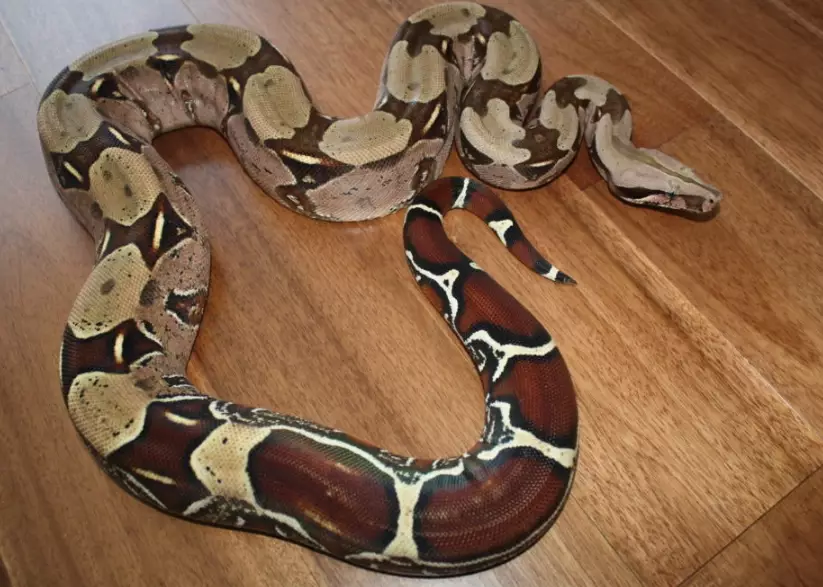
Setting Up the Perfect Red-Tailed Boa Enclosure (It's Not Just a Tank)
The biggest mistake new owners make is thinking too small, both now and for the future. That cute 20-gallon tank for your baby boa? It'll be useless in a year. You're better off planning for the adult size from day one, using dividers or extra hides to make a large space feel secure for a youngster.
The Enclosure Itself: Size and Type
For an adult Boa constrictor imperator, the minimum recommended size is an enclosure that's at least as long as the snake and half as deep and tall. For a typical 6-8 foot female, that means a 8ft L x 4ft D x 4ft H enclosure is the goal. Males, being smaller, can do well in a 6ft x 3ft x 3ft. PVC cages are the gold standard—they hold heat and humidity brilliantly, are lightweight, and are easy to clean. Glass aquariums are terrible for maintaining the high humidity a Red-tailed boa needs, unless you heavily modify them (and even then, it's a struggle).
My personal opinion? Go bigger if you can. These snakes use the space. I upgraded my male to a 6x3x4 and added more climbing branches, and his activity level and overall demeanor improved noticeably. He explores every night.
Heat, Light, and Humidity: The Holy Trinity
This is where husbandry lives or dies. Boas are ectotherms. They don't make their own heat. You have to provide a perfect gradient.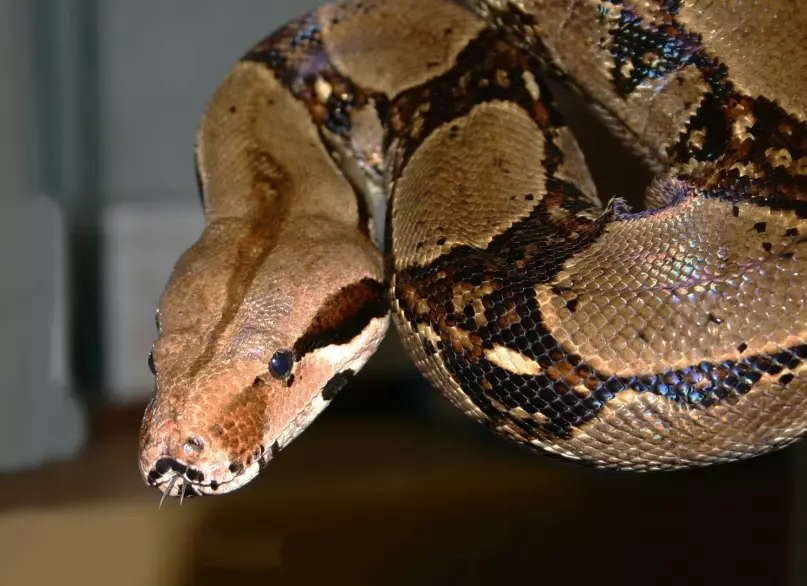
| Parameter | Optimal Range | How to Achieve It | Common Pitfall |
|---|---|---|---|
| Basking Spot Temperature | 88-92°F (31-33°C) | Use a radiant heat panel or ceramic heat emitter on a thermostat. NEVER an unregulated heat rock. | Overheating. Without a thermostat, heat sources can cause severe burns. |
| Cool Side Temperature | 78-82°F (25-28°C) | The ambient room temp or slight supplemental heat should maintain this. | Letting the cool side drop below 75°F, which can lead to respiratory infections. |
| Nighttime Temp Drop | Can drop to 75-80°F (24-27°C) | Allow it to happen naturally if room temp allows, or use a lower thermostat setting. | Keeping it tropical-hot 24/7. A slight drop is natural and healthy. |
| Humidity | 60-75% (Spike to 80%+ during shed) | Large water bowl, occasional misting, substrate like cypress mulch or coconut husk. Use a digital hygrometer. | Consistently low humidity causes chronic dehydration and horrific shed issues (stuck shed, especially over the eyes). |
| Lighting | 12-hour day/night cycle | Low-output LED or fluorescent for a day/night cycle. UVB is beneficial but not strictly required. | Using bright, colored (red/blue) bulbs at night. It disrupts their circadian rhythm. |
You absolutely must invest in a good thermostat. It's non-negotiable. A reputable source like the AVMA stresses the importance of proper environmental control for reptile health. I use a simple on/off thermostat for my heat panel, and it's been flawless for years.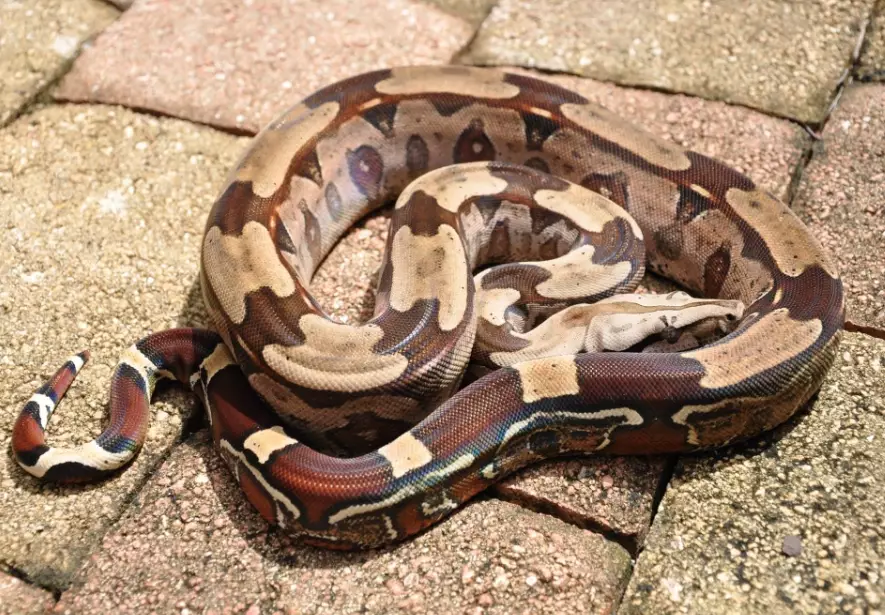
Furnishing for a Happy Boa
Bare enclosures are boring and stressful. Your Red-tailed boa needs:
- Two Identical Hides: One on the warm end, one on the cool end. They should be snug—the snake should touch the sides when curled up. A scared boa in a too-big hide is not a relaxed boa.
- Sturdy Climbing Branches: They are semi-arboreal, especially as juveniles. A thick, securely anchored branch is used more than you'd think.
- A Large Water Bowl: Big enough for the snake to soak its entire body if it chooses. It aids hydration and humidity. Change the water every other day without fail.
- Substrate: Avoid cedar or pine shavings (toxic). Aspen is okay for low-humidity snakes but molds easily for boas. I swear by a mix of cypress mulch and coconut fiber. It holds burrows and humidity perfectly.
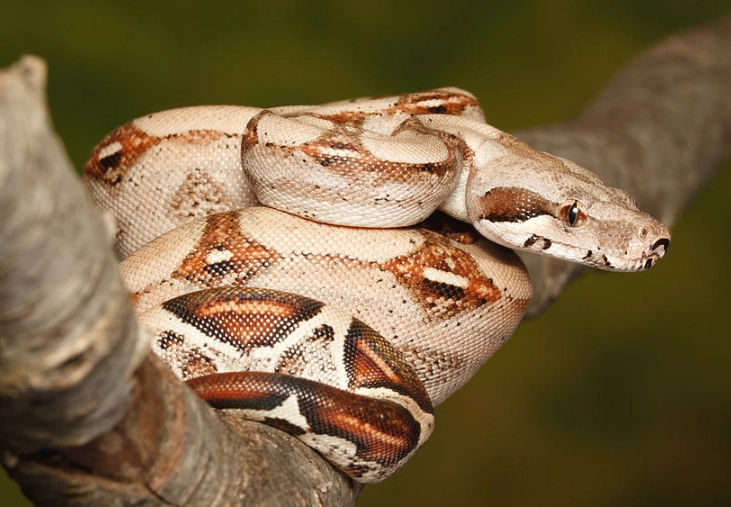
Feeding Your Red-Tailed Boa: The How, What, and When
Feeding is straightforward once you get the rhythm, but overfeeding is the single most common health problem I see in pet boas. People love to see their pet eat, and a hungry boa is very convincing. But a fat snake is an unhealthy, short-lived snake.
Ever wondered what to feed a red tailed boa? The answer is simple: appropriately sized frozen-thawed rodents. Live feeding is dangerous (rats can fight back and inflict terrible wounds) and unnecessary. The transition from live to frozen can be tricky with wild-caught adults, but captive-bred babies usually take frozen-thawed without issue.
The Prey Size Rule: The rodent should be no wider than the widest part of the snake's body. A slight bulge after feeding is normal; a bulge that lasts for three days is a sign you've fed too much.
Here's a rough feeding schedule based on age/size. This is a guideline—some individuals are more or less active and may need adjustment. When in doubt, feed less often.
- Hatchling to 1 year: 1 appropriately sized mouse or rat fuzzy every 7-10 days.
- 1 to 3 years: 1 small to medium rat every 10-14 days.
- Adult (3+ years): 1 large rat every 3-4 weeks. Yes, you read that right. Once a month for a healthy adult. Some keepers even space it out to 5-6 weeks for very large, sedentary females.
A common question is, "How do I know if my red tailed boa is hungry?" They become more active, cruising the front of the enclosure, especially in the evening. They may track your movement. But a boa that is constantly "hunting" is often just under-stimulated or kept too warm. Don't mistake activity for hunger and overfeed.
Always feed in the enclosure. The old myth of feeding in a separate tub to avoid "cage aggression" is just that—a myth. Moving a fed snake stresses it and risks regurgitation. Use long feeding tongs to present the thawed, warm rodent, and then leave the snake completely alone for at least 48 hours to digest.
Understanding Red-Tailed Boa Behavior and Temperament
This is my favorite part. Boas have personality. They're not as hyper-alert as a corn snake, nor as sedentary as a ball python. They're curious, methodical, and strong.
A well-socialized Red-tailed boa is typically very tractable. They don't strike defensively nearly as often as other species. Their first line of defense is to flee or hide. If cornered, they may hiss—a loud, forceful exhalation that's honestly more startling than threatening. A bite is usually a last resort and is almost always a feeding response mistake (hence the use of tongs!).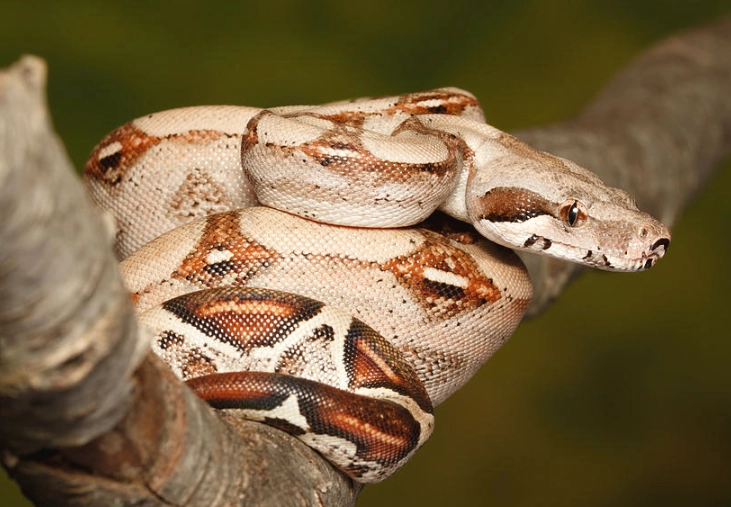
Support their body fully. Let them move through your hands. Don't restrain them or hold them tightly around the neck. A nervous baby boa might be head-shy, but with gentle, consistent handling (no more than a few times a week for 15-20 minutes), they almost always calm down beautifully. My boy will rest his head on my arm and just watch the room for minutes on end.
Watch for body language. A boa coiled tightly in an S-shape, watching you intently with its head pulled back, is in defensive mode. Give it space. A boa loosely draped over a branch, tongue-flicking slowly, is relaxed. That's a good time for interaction, if needed.
Common Health Issues: What to Watch For
Most health problems are preventable with proper husbandry. But things can still go wrong.
Respiratory Infections (RIs)
Signs: Wheezing, crackling sounds when breathing, mucus or bubbles in the mouth/nostrils, holding the head up at an odd angle to breathe. Usually caused by prolonged low temperatures or high humidity without good ventilation. Requires a veterinarian immediately. Don't try home remedies.
Inclusion Body Disease (IBD)
This is the big one, a fatal retroviral disease primarily affecting boas and pythons. It's contagious among snakes. Symptoms are vague at first: loss of appetite, regurgitation, "stargazing" (holding the head and neck twisted upward for long periods), loss of motor control. There is no cure. Prevention is everything: strict quarantine of any new snake for at least 6 months, buying only from reputable breeders, and avoiding exposure at expos. The Association of Reptile and Amphibian Veterinarians (ARAV) provides resources for finding a qualified vet who can discuss this serious disease.
Stuck Shed (Dysecdysis)
If your boa's shed comes off in many pieces, leaving patches (especially over the eyes), your humidity is too low. Don't pull it off. Provide a humid hide (a plastic box with a hole, filled with damp sphagnum moss) at all times, and bump overall enclosure humidity to 80%+ during shed cycles. A shallow warm soak can help, but fixing the humidity is the real solution.
Mites
Tiny black or red parasites that look like moving pepper grains, often seen in water bowls or around the snake's eyes/vent. They come from infested new animals or substrate. Isolate the snake, treat the enclosure aggressively (remove all substrate, clean with a diluted bleach solution or reptile-safe mite spray), and treat the snake as per product instructions (e.g., Provent-a-Mite used correctly). It's a hassle, but beatable.
Find a good reptile vet before you have an emergency. Not all vets see reptiles. The ARAV's Find-a-Vet tool is an excellent place to start.
Red-Tailed Boa Costs: The Real Price Tag (First Year & Ongoing)
Let's talk money, because surprises here lead to neglected animals.
Initial Setup (One-Time Costs):
- Baby/Juvenile Enclosure (with future upgrade planned): $200-$400
- Heating (Panel, Thermostat, Guards): $150-$250
- Hides, Branches, Bowl, Décor: $100-$150
- Substrate & Initial Supplies: $50
- Captive-Bred Hatchling Red-Tailed Boa (from a reputable breeder): $150-$400+ depending on morph.
- Total Startup (Realistic): $650 - $1250+
Recurring Annual Costs:
- Electricity for Heating/Lighting: $100-$200 (highly variable)
- Frozen Rodents: $150-$300 (buying in bulk saves money)
- Substrate/Bedding: $50-$100
- Vet Check-up/Fund for Emergencies: $100-$200 (put it aside)
- Total Annual (Estimated): $400 - $800
See? The snake itself is a fraction of the cost. Don't skimp on the enclosure or thermostat to afford a "fancy" morph. A healthy snake in a proper setup is the real luxury.
Frequently Asked Questions (The Stuff You Actually Search For)
Boa constrictor imperator males typically reach 5-7 feet, females 6-8 feet, with some exceeding 9 feet. True B. c. constrictor can get larger. Growth is slow and steady over 3-5 years.
No. They are constrictors. They kill prey by coiling around it and applying pressure, not with venom.
1-2 times a week for 15-30 minutes is plenty. Avoid handling for 48 hours after feeding, during shed, or if the snake appears stressed.
Females are generally larger and heavier-bodied. Males have longer, more pronounced spurs (vestigial claws near the vent) used in mating. Probing or popping by an experienced person is the only sure way to sex a baby.
For an adult in good body condition, no. They can fast for months, especially during winter (even without a deliberate cooling period). For a baby or a snake losing weight, check husbandry (temps/humidity) first, then consult a vet if the fast continues.
No. They are not social. Cohabitation causes stress, competition for resources, and can lead to injury, especially during feeding. The only exception is for breeding, and that should be temporary and supervised.
Final Thoughts: The Long Haul
Getting a Red-tailed boa was one of the best decisions I've made in the hobby, but it came with a steep learning curve and real responsibility. It's not a pet you acquire on a whim. It's a commitment to replicating a slice of Central American forest in your home for a very, very long time.
Do your research—beyond just this guide. Talk to breeders at reptile shows (but be wary of their sales pitch). Read forums, but double-check the advice. Look at the Reptile Database for solid taxonomic info. The more you know going in, the smoother the journey will be.
If you provide the right space, the right heat, the right food on the right schedule, and a little bit of thoughtful interaction, a Red-tailed boa will reward you with a display of quiet, powerful grace that never gets old. You're not just keeping a snake. You're stewarding a small, fascinating piece of the wild. Do it right.
Reader Comments