Quick Navigation
- What Exactly Is a Madagascar Land Gecko?
- Setting Up the Perfect Home: Habitat & Enclosure
- Feeding Your Madagascar Land Gecko: A Practical Guide
- Health, Behavior, and Common Issues
- The Breeding Question
- Frequently Asked Questions (The Real Stuff People Ask)
- Final Thoughts: Is This the Right Gecko for You?
Let's be honest, when most people think of pet geckos, they picture a leopard gecko clinging to a rock or a crested gecko in a planted vivarium. But there's a whole other world of geckos out there that spend their lives on the forest floor, and the Madagascar land gecko is one of the most captivating. I'm talking about Paroedura picta, also called the Pictus gecko or Madagascar ground gecko. This little guy doesn't get the same hype as some other reptiles, and that's a shame. After keeping a small group for a few years, I've come to appreciate their quirky personalities and surprisingly simple needs.
They're not flashy climbers, but what they lack in vertical ambition, they make up for in character. If you're tired of the usual suspects and want a pet reptile that's a bit different, a bit more "observational," then you're in the right place. This isn't just a dry care sheet. This is everything I wish I'd known before I got my first Madagascar land gecko, mixed with the hard-won lessons from actually living with them.
What Exactly Is a Madagascar Land Gecko?
Before we dive into tanks and temperatures, let's get to know the animal itself. Scientifically, we're dealing with Paroedura picta. The "picta" part refers to its painted, patterned appearance. They are endemic to Madagascar, meaning they're found nowhere else on Earth in the wild. This immediately tells us something about their conservation status and our responsibility as keepers.
In the wild, these geckos are masters of the leaf litter. They're fossorial, meaning they like to dig and burrow, and they're crepuscular to nocturnal—most active at dawn, dusk, and through the night. Their world is one of humidity, hiding spots, and hunting small insects. They don't have the sticky toe pads of their arboreal cousins; their feet are built for pushing through soil and sprinting across the ground. That's a key thing to remember when setting up their home.
Appearance-wise, they're stunning. The base color is usually a creamy white or light brown, overlaid with a complex pattern of dark brown, black, or reddish-brown bands and spots. No two are exactly alike. They have large, expressive eyes (perfect for low light) and a robust body. A full-grown Madagascar land gecko typically reaches about 4 to 6 inches (10-15 cm) from snout to tail tip. Males are generally slimmer with a broader head and a distinct row of pre-anal pores; females are often slightly stockier.
Here's the thing a lot of care sheets miss: their personality.
They're not cuddly, and they can be skittish, especially when young. But with regular, gentle interaction, they can become quite tame. They'll learn to associate you with food. I've had some that would willingly climb onto my hand, while others preferred to be admired from behind the glass. They're curious in their own way, often watching movement outside their tank. Don't expect a dog-like companion, but do expect a fascinating, living piece of natural history.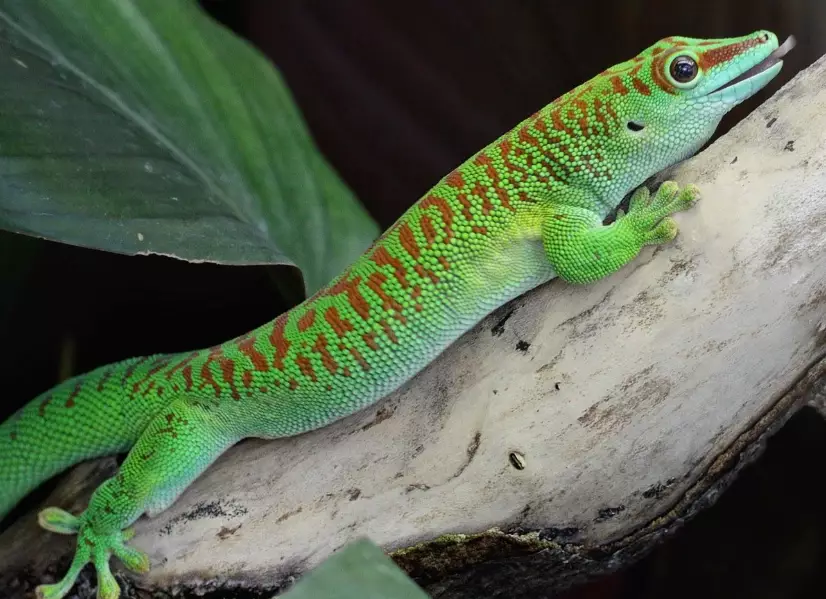
Setting Up the Perfect Home: Habitat & Enclosure
This is where most mistakes happen. People see "gecko" and think a simple desert setup will do. Wrong. Think "forest floor," not "desert rock." The habitat for a Madagascar land gecko needs to balance humidity with good ventilation and provide ample opportunity to dig and hide.
Tank Size and Type
For a single adult Madagascar ground gecko, a 10-gallon tank is the absolute bare minimum, and it feels cramped. I strongly recommend starting with a 20-gallon long (30" x 12" x 12") as it provides much more valuable floor space. If you're keeping a pair or a small group (more on that later), you'll need a 40-gallon breeder or larger. Remember, these are active little hunters on the ground. The footprint is more important than the height.
Front-opening enclosures are fantastic as they are less intrusive than reaching in from above, which can startle them. Screen tops are essential for ventilation but can make maintaining humidity tricky—covering part of the screen with a piece of plexiglass or plastic wrap can help.
Substrate: The Foundation of Their World
This is critical. You need a substrate that holds moisture for humidity, allows for digging, and is safe if accidentally ingested. Avoid sand, calcium sand, and wood shavings like cedar or pine (toxic).
My top recommendations:
- Organic Topsoil (No additives): Mixed with play sand (70/30 ratio). This is the gold standard. It's natural, holds burrows beautifully, and is safe.
- Coconut Coir (Eco Earth): Excellent moisture retention, great for digging. Can be a bit messy when dry. I often mix it with soil.
- Commercial Bioactive Substrates: Pre-mixed blends designed for tropical setups. More expensive but hassle-free.
The substrate should be at least 3-4 inches deep to allow for proper burrowing. A Madagascar land gecko will spend a good amount of time buried or under hides, so this depth is non-negotiable for their mental well-being.
Heating and Lighting
They don't need scorching heat. Aim for a thermal gradient:
- Warm side: 82-85°F (28-29°C) at the surface.
- Cool side: 72-75°F (22-24°C).
- Nighttime drop: Can go down to 68-70°F (20-21°C).
Use an under-tank heating pad (UTH) on one side of the tank, controlled by a thermostat. This is the safest and most natural way to heat them, as it warms the substrate and their bellies for digestion. Never use a heat rock. Overhead ceramic heat emitters or low-wattage basking bulbs can supplement if needed, but the UTH is the primary heat source.
Do they need UVB? This is a debated topic. In the wild, they'd get some filtered UV exposure. While they can survive without it, providing a low-output UVB light (like a 5.0 or 2% T5 tube) for 10-12 hours a day is considered best practice. It aids in calcium metabolism and overall health. The UV Guide UK is an invaluable resource for understanding reptile lighting, though it's a bit technical.
Humidity and Hides
Humidity should be kept between 50-70%. It will spike after misting and fall throughout the day. Use a digital hygrometer (those analog ones are notoriously inaccurate). Mist the enclosure lightly in the evening to simulate dew fall and aid shedding.
Hides are security. You need at least two: one on the warm end and one on the cool end. Use cork bark flats, half-logs, or commercial reptile hides. I also like to add a "humid hide"—a small container filled with damp sphagnum moss—which is a lifesaver during shedding periods.
Add leaf litter (oak or magnolia, baked to sterilize) on top of the substrate. It looks natural, holds moisture, and provides extra cover. A few sturdy, low-lying plants (live or sturdy artificial) can complete the scene.
Feeding Your Madagascar Land Gecko: A Practical Guide
These guys are insectivores. Pure and simple. They do not eat fruit or vegetables. Their diet in captivity should be a variety of gut-loaded insects.
| Insect | Frequency | Notes & Tips |
|---|---|---|
| Crickets | Staple | Size should be no wider than the space between the gecko's eyes. Dust with calcium/vitamin powder. |
| Dubia Roaches | Excellent Staple | More nutritious than crickets, less smelly, can't climb smooth surfaces. My personal favorite feeder. |
| Mealworms | Occasional Treat | High in chitin (hard to digest). Don't use as a primary feeder. Can be offered in a shallow dish. |
| Black Soldier Fly Larvae (Calciworms) | Great Supplement | Naturally high in calcium. A fantastic occasional feeder. |
| Waxworms / Butterworms | Rare Treat Only | Like reptile candy. Very high in fat. Use only as a rare bribe or for underweight geckos. |
Feeding Schedule: Juveniles should be fed daily, as many appropriately-sized insects as they will eat in 10-15 minutes. Adults can be fed every other day, or 3-4 times a week. A good rule is 4-6 insects per feeding for an adult.
Provide a shallow water dish with fresh water at all times. Change it daily. They may not drink from it often (preferring droplets from misting), but it's essential for humidity and as an option.
Health, Behavior, and Common Issues
A healthy Madagascar land gecko is alert, has clear, bright eyes, a plump tail (their fat store), and a well-fleshed body. They should shed their skin in one complete piece, especially around the toes and tail tip.
Common Health Problems to Watch For:
- Metabolic Bone Disease (MBD): Limpness, rubbery jaw, tremors, difficulty walking. Caused by lack of calcium/D3/UVB. Preventable with proper supplementation.
- Stuck Shed: Old skin, particularly on toes and tail tip, not coming off. Can constrict and cause loss of the digit or tail. Boost humidity and provide a humid hide.
- Parasites: Weight loss despite eating, runny or smelly feces. Requires a vet visit for a fecal exam and medication.
- Tail Loss: Like many geckos, they can drop their tails if severely stressed or grabbed. It will regrow, but it will be shorter, stubbier, and a different color. Never grab a gecko by the tail.
Finding a good exotics vet before you have an emergency is one of the smartest things you can do. The Association of Reptilian and Amphibian Veterinarians (ARAV) has a find-a-vet tool on their site.
Understanding Their Behavior
They communicate through posture and movement. A gecko standing tall with its body off the ground is alert and curious. One that's flattened against the substrate is trying to hide. Tail wagging slowly can be a sign of focus (like before striking prey) or mild irritation.
They are generally solitary. Cohabitation is a complex topic.
The Breeding Question
If you're considering breeding Madagascar land geckos, you need to be prepared for everything that entails: incubating eggs, housing hatchlings, and finding responsible homes. They are relatively prolific breeders in captivity.
A cooling period (brumation) of 6-8 weeks at 65-70°F can help stimulate breeding cycles. The female will lay a pair of hard-shelled eggs every 3-4 weeks for several clutches. These should be carefully removed and incubated in a separate container with slightly moist vermiculite or perlite at 82-84°F. Sex is determined by incubation temperature! Higher temps (84-86°F) tend to produce more males, mid-range (82-84°F) a mix, and lower temps (78-80°F) more females. Hatching occurs in 45-70 days.
Hatchlings are tiny and require pinhead crickets or fruit flies. They can be cannibalistic and must be housed separately.
Frequently Asked Questions (The Real Stuff People Ask)
Final Thoughts: Is This the Right Gecko for You?
Choosing any pet is about matching an animal's needs with your ability and willingness to meet them. The Madagascar land gecko is a fantastic pet for the right person.
You might love a Madagascar land gecko if: You enjoy creating naturalistic habitats, you're fascinated by insect-eating reptiles, you prefer observing interesting behaviors over constant handling, and you want a pet that's a bit off the beaten path.
You might want to reconsider if: You want a reptile you can handle for long periods every day, you are squeamish about feeding live insects, you're not prepared to maintain specific humidity levels, or you want a "display" animal that's always out and about.
For me, the joy of keeping Paroedura picta comes from replicating a small slice of Malagasy forest floor in my home and watching these perfectly adapted little predators go about their lives. It's a quiet hobby, but a deeply rewarding one. They're not the flashiest, but they have a subtle charm that really grows on you.
Do your homework, set up the tank perfectly before you bring one home, and you'll be rewarded with years of enjoyment from your own little piece of Madagascar. Just be warned—they have a way of making you want to set up a second tank. And a third...
Reader Comments