Quick Navigation: What You'll Learn
Let's cut to the chase: no, you shouldn't leave a standard heat lamp on all night for your leopard gecko. I've seen too many new owners panic about their gecko getting cold, only to end up with a stressed, dehydrated pet. In the wild, these creatures thrive in arid regions where temperatures plummet after sunset. Mimicking that drop isn't just nice—it's essential for their health. Here's why, and what to do instead.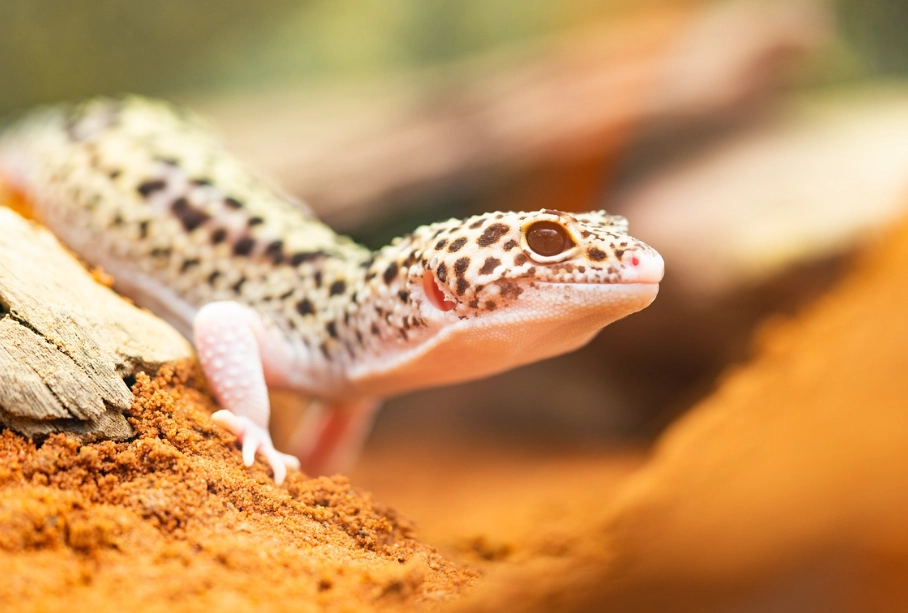
Why Temperature Drops Are Non-Negotiable for Leopard Geckos
Leopard geckos are ectotherms. They rely on external heat to regulate their body functions. But that doesn't mean constant warmth. In their native habitats across Afghanistan and Pakistan, nights can get chilly, dipping into the 60s°F (around 18-20°C). This cycle of warm days and cool nights triggers natural behaviors like digestion, immune response, and rest.
Think of it like this: if you kept your bedroom at 85°F all night, you'd sleep poorly, right? Same for your gecko. A study referenced by the Association of Reptilian and Amphibian Veterinarians (ARAV) notes that improper thermal gradients are a leading cause of reptile stress in captivity. Without a nighttime cooldown, leopard geckos can become lethargic, lose appetite, and even develop metabolic bone disease over time.
I remember my first leopard gecko, Leo. I left a red heat bulb on 24/7, thinking I was being extra careful. Within weeks, he stopped eating and hid all day. A vet visit revealed mild dehydration and stress. Once I switched to a ceramic heater on a timer, he perked up almost overnight. Lesson learned: more heat isn't better.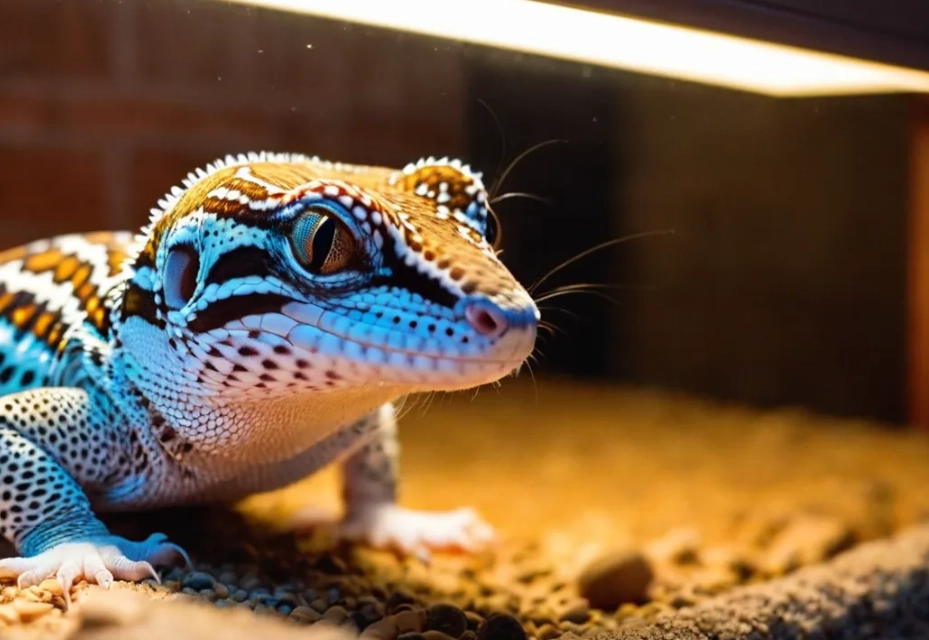
The Real Risks of All-Night Heat Lamps: What Can Go Wrong
Leaving a bright heat lamp on all night isn't just unnecessary—it's harmful. Here's a breakdown of the pitfalls:
- Sleep Disruption: Leopard geckos are crepuscular, meaning they're active at dawn and dusk. Constant light confuses their circadian rhythm, leading to stress and abnormal behavior. Even red or blue bulbs, often marketed as "night lights," can be seen by geckos and disrupt sleep.
- Dehydration: Heat lamps, especially incandescent ones, dry out the enclosure. Low humidity can cause shedding issues and respiratory problems. Leopard geckos need around 30-40% humidity, which is hard to maintain with a lamp blasting all night.
- Overheating and Burns: Without a thermostat, heat lamps can spike temperatures dangerously high. I've heard stories of geckos getting thermal burns from basking spots that never cool. It's a silent killer.
- Energy Waste and Fire Hazard: Let's be practical. Running a lamp 24/7 hikes up your electricity bill and increases fire risk if not properly installed. It's just not smart.
Compare this to a natural setup. In the wild, geckos burrow or hide in crevices to retain warmth as temperatures drop. In captivity, we need to replicate that with controlled heating, not constant assault.
Nighttime Heating Options Compared
Here's a quick table to help you choose. I've used all of these over the years, and some work better than others.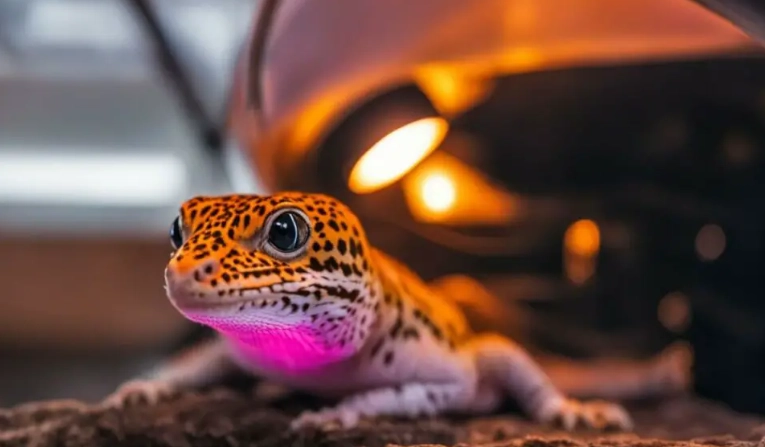
| Heating Method | Best For Night? | Key Considerations | My Rating (1-5) |
|---|---|---|---|
| Ceramic Heat Emitter (CHE) | Yes | Provides warmth without light; must use with a thermostat and guard to prevent burns. | 5 |
| Under-Tank Heater (UTH) | Yes | Offers belly heat; ideal for digestion but always pair with a thermostat to avoid hotspots. | 4 |
| Red/Blue Night Bulb | No | Can disrupt sleep; geckos see these spectrums. Better alternatives exist. | 2 |
| Standard Heat Lamp | No | Too bright and drying; avoid for nighttime use unless in very cold rooms with dimming. | 1 |
Notice how the top options focus on heat without light. That's the golden rule.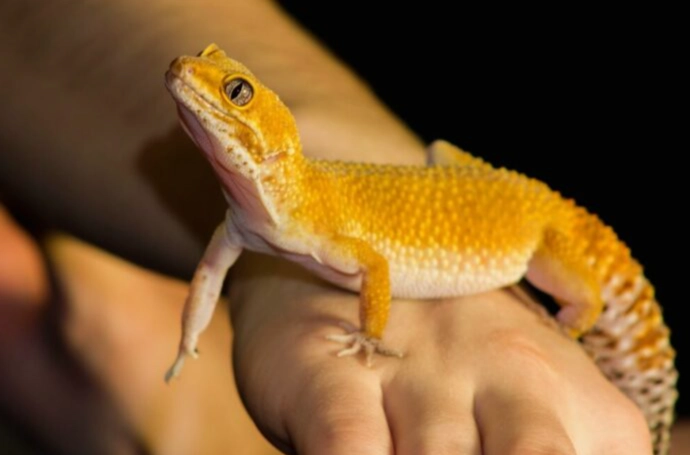
How to Set Up Safe Nighttime Heating: A Step-by-Step Guide
Getting this right isn't rocket science, but it requires attention to detail. Here's what I do for my three leopard geckos now, after years of trial and error.
Step 1: Know Your Room Temperature
First, check the ambient temperature of the room where the enclosure sits. Use a digital thermometer—the stick-on ones are garbage. If your room stays above 70°F at night, you might not need extra heat at all. My basement dips to 68°F, so I use a low-wattage CHE.
Step 2: Choose the Right Equipment
Go for a ceramic heat emitter or an under-tank heater. For CHEs, I prefer brands like Fluker's because they're reliable. Get a thermostat like the Inkbird ITC-308—it's affordable and prevents overheating. Set it to maintain the warm side at 70-75°F at night.
Step 3: Create a Thermal Gradient
Even at night, your enclosure should have a warm side and a cool side. Place the heat source on one end, so the other end stays cooler. This lets your gecko choose. Aim for 70-75°F on the warm side and 65-70°F on the cool side.
Step 4: Monitor and Adjust
Don't set and forget. Check temperatures nightly for the first week. I use a infrared temp gun to spot-check surfaces. If your gecko is always on the warm side, it might be too cold elsewhere. Tweak the thermostat accordingly.
One pro tip: insulate the enclosure with foam boards if your room is drafty. It helps maintain stable temperatures without overworking the heater.
Top Mistakes Leopard Gecko Owners Make with Night Heating
Even experienced keepers slip up. Here are the blunders I see most often, and how to avoid them.
Mistake 1: Using Heat Rocks
Heat rocks are notorious for causing burns. Leopard geckos have delicate skin, and these devices can malfunction, leading to hot spots. Just don't use them. Stick to overhead or under-tank options with thermostats.
Mistake 2: Ignoring Humidity
When you add heat, humidity drops. At night, this can make shedding painful. Place a moist hide on the cool side—a simple Tupperware with damp sphagnum moss works wonders. I do this for all my geckos, and shedding issues vanished.
Mistake 3: Overcomplicating Things
Some owners buy fancy programmable systems but forget basics. I once met someone who had a $200 thermostat but no thermometer inside the tank. Always have at least two digital thermometers: one for the warm side, one for the cool side.
Mistake 4: Assuming All Geckos Are the Same
Young geckos or sick ones might need slightly warmer nights. Observe your pet. If it's lethargic or not eating, consult a vet. But don't jump to cranking up the heat—sometimes the issue is stress from too much warmth.
Your Burning Questions Answered
 Wrapping up, the key takeaway is this: leopard geckos need a nighttime temperature drop. Ditch the all-night heat lamp. Invest in a ceramic heat emitter or under-tank heater with a thermostat. Watch your gecko's behavior—it'll tell you more than any guide. After a decade of keeping these amazing reptiles, I've learned that simplicity and observation beat fancy gadgets every time. Keep it natural, and your gecko will thank you with years of vibrant health.
Reader Comments