Getting a Scorpion-tailed gecko (any of the Uroplatus species) is exciting. They're like living bark with tails that look straight out of a fantasy novel. But that first thrill often turns to anxiety when you stare at an empty tank. Most care sheets give you a list, but they don't connect the dots. I've seen too many setups that look great to us but stress the gecko out. Let's fix that. A proper Scorpion-tailed gecko tank setup isn't about decorating a box; it's about engineering a slice of their Malagasy rainforest home. Get it wrong, and you'll have a hiding, stressed pet. Get it right, and you'll witness incredible natural behaviors.
What You'll Learn in This Guide
Choosing the Right Enclosure: Size & Security First
Forget the old "10-gallon is fine" advice for an adult. These are vertical specialists. A tall enclosure is non-negotiable. For most common species like U. henkeli or U. phantasticus, think minimum dimensions of 18"L x 18"W x 24"H. Bigger is always better—a 24" cube is fantastic. This height allows you to create a true temperature and humidity gradient and gives them climbing space.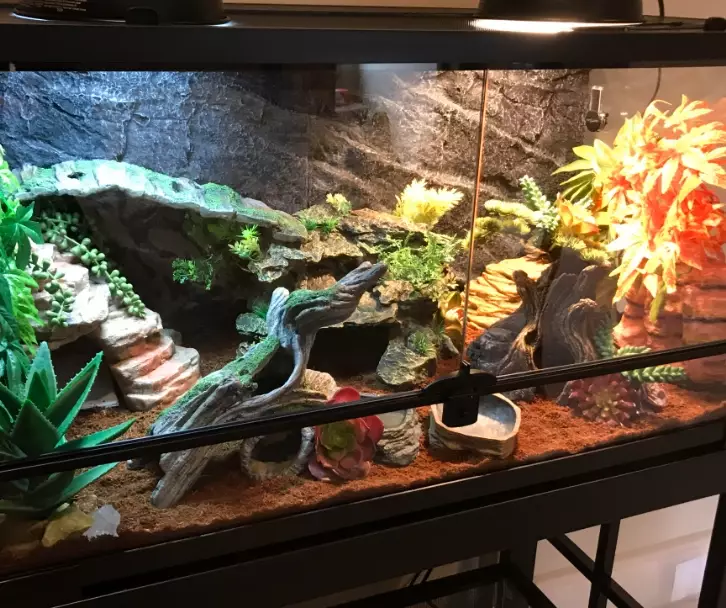
Now, the single most critical feature: security.
The Escape Artist Reality
Scorpion-tailed geckos are masters of escape. Their bodies are flexible, and they can flatten against surfaces. A standard aquarium lid with a clip is an invitation to disaster. I learned this the hard way years ago with a U. sikorae that vanished for two days (found behind the bookshelf, thankfully). You need one of two options:
1. Front-Opening Terrarium: This is the gold standard. Brands like Exo Terra or Zoo Med make tall versions with front doors and locking pins. The sealed glass and screened top provide excellent ventilation and security. This is what I use for all my display animals.
2. Custom Screen/Mesh Enclosure: Often used by breeders, these provide maximum airflow. The catch? The mesh must be ¼ inch hardware cloth or smaller. Standard window screen is useless—they'll go right through it. All edges must be perfectly sealed and the lid must have multiple, sturdy latches.
Material matters too. Glass or acrylic retains humidity better than all-screen cages, which is crucial for these humidity-loving geckos.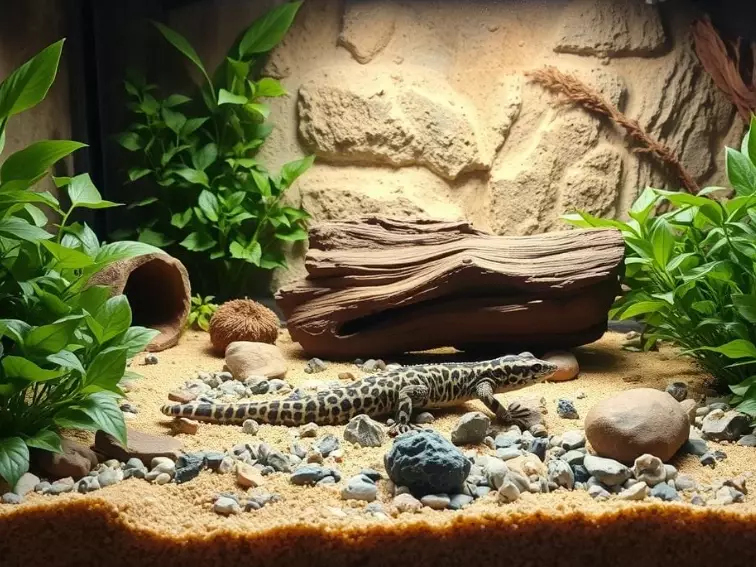
Mastering Heat & Light: Creating Gradients
They don't bask in sunbeams like a bearded dragon. In the forest, they experience dappled light and subtle warmth. Your goal is to create a gentle heat gradient, not a desert hotspot.
Heating: The Overhead Approach
Under-tank heaters (UTH) are worse than useless here—they don't affect the air temperature your gecko actually experiences and can overheat the moist substrate. You need overhead heat.
- Primary Heat Source: A low-wattage ceramic heat emitter (CHE) or a deep heat projector (DHP) in a dome fixture on the screen top. A 40-60w CHE is usually plenty. Connect it to a thermostat (like a Herpstat or Inkbird) with the probe placed at the gecko's level on the warm side. Set it to create a warm zone of 75-78°F (24-26°C).
- Cool Side: The opposite bottom of the tank should be around 68-72°F (20-22°C). This gradient lets them thermoregulate.
Nighttime drops into the high 60s are perfectly fine and natural.
Lighting: Beyond Just Seeing
Here's a non-consensus point: while they are considered "nocturnal," providing low-level UVB is now a best-practice in advanced herpetoculture. It aids in calcium metabolism and seems to promote more natural activity. A ShadeDweller Arboreal or Arcadia 6% UVB kit, running for 10-12 hours a day, is perfect. It should cover about half the enclosure's length, so they can choose to be under it or not.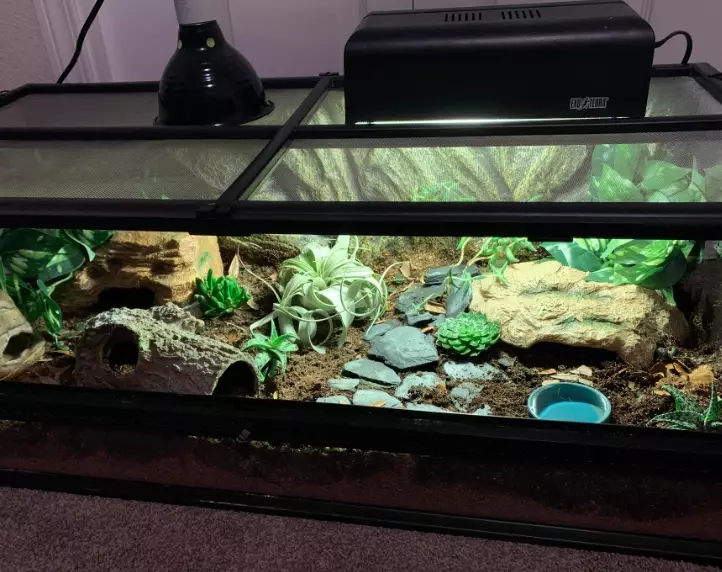
For plant growth (if you go bioactive) and a natural day/night cycle, add a simple LED plant light or low-output full-spectrum light on the same timer.
| Parameter | Target Range | Tool for Measurement |
|---|---|---|
| Daytime Warm Side | 75-78°F (24-26°C) | Digital thermometer probe + Thermostat |
| Daytime Cool Side | 68-72°F (20-22°C) | Digital thermometer |
| Nighttime Temp | 65-70°F (18-21°C) | – |
| UVB Lighting | Arcadia 6% or Zoo Med T5 5.0 | Replace bulb every 12 months |
The Humidity & Hydration Balancing Act
This is where most setups fail. They need high humidity, but also need it to drop. Stagnant, 90% constant humidity leads to respiratory infections. You need a daily cycle.
Evening/Night: Humidity should spike to 80-100%. This simulates dewfall and triggers drinking/activity. You achieve this with heavy misting just before lights go out. I use an automatic mister (like MistKing or Exo Terra Monsoon) set for 45-60 seconds. Hand misting works but must be thorough—drench the glass and plants.
Daytime: Humidity should gradually fall to 60-70% by late afternoon. Good ventilation in the enclosure allows this drop. The screen top on a front-opening tank is key here.
Hydration Tip: They rarely drink from a bowl. They lick water droplets from leaves and glass. After misting, you should see them actively drinking. No droplets? They aren't drinking enough. A small, shallow water bowl is still good for ambient humidity and as a backup, but don't rely on it for their primary water source.
Invest in a good digital hygrometer (not the cheap analog dials—they're notoriously inaccurate). Place it in the middle of the enclosure at gecko height.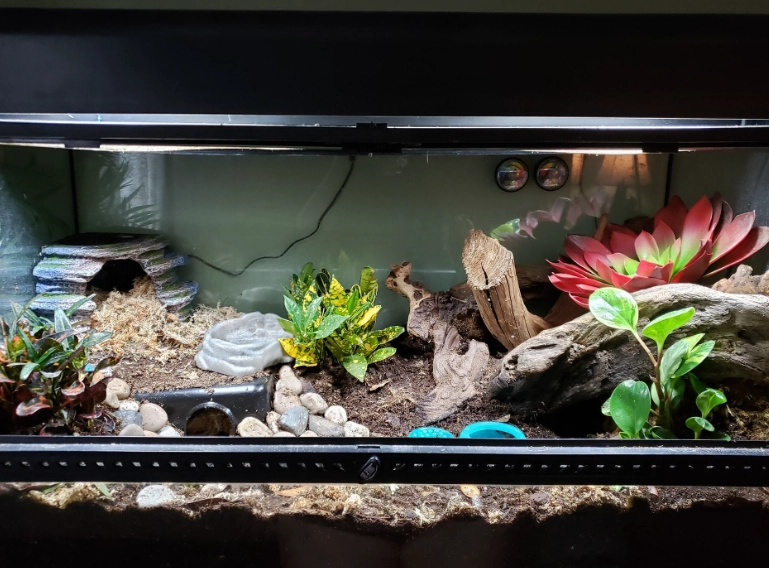
Substrate & Decor: Building a Functional Landscape
The floor and walls are their world. Every item should serve a purpose: hiding, climbing, or aiding humidity.
Substrate Choices
- Bioactive (My Top Recommendation): A layered mix of drainage layer (clay balls), substrate barrier (mesh), and a soil mix (like ABG mix or a blend of coco fiber, orchid bark, and charcoal). Add clean-up crew (springtails, isopods). This creates a self-cleaning, humid microclimate and allows live plants to root. It's more work upfront but less long-term.
- Simple & Functional: A mix of organic potting soil (no fertilizers/perlite) and coconut fiber (eco earth). It holds humidity well and is safe if ingested a bit during feeding. Avoid sand, gravel, or pure moss.
Essential Decor Checklist
Vertical Cork Rounds/Flats: The #1 item. Attach these vertically to the back and side glass with aquarium silicone. They provide highways for climbing and perfect hiding spots behind them.
Live or Realistic Artificial Plants: Pothos, snake plants, and philodendrons are hardy live choices. They increase hiding cover and humidity. If using artificial, ensure they are dense and provide cover.
Branch Network: Create a lattice of secure branches and vines at different angles and diameters. This encourages exploration and provides perches for feeding.
Multiple Hides: At least one snug hide on the warm side and one on the cool side. Can be cork bark tubes, commercial reptile hides, or even PVC pipe sections disguised with moss.
The tank should look densely packed from the front, giving them multiple pathways to move without being exposed.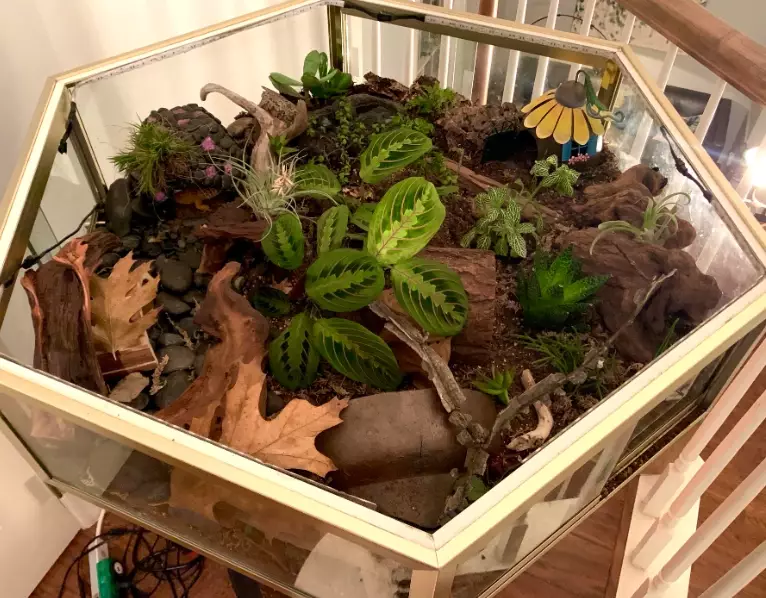
Feeding, Maintenance & Common Pitfalls
Your setup directly impacts feeding success. A stressed gecko in a bare tank won't eat well.
Diet: A staple of gut-loaded crickets and roaches (dubia, discoid). Dust with a quality calcium supplement (with D3 if no UVB, without D3 if using UVB) at most feedings, and a multivitamin once every 2 weeks. Offer food at dusk when they become active.
Maintenance Routine:
- Daily: Check temps/humidity, remove any uneaten insects, heavy evening misting.
- Weekly: Spot clean feces, refresh water bowl.
- Monthly (Non-Bioactive): Partial substrate change, wipe down glass, wash decor.
- Bioactive: Just spot clean and let the clean-up crew do their job. Top up substrate as needed.
Pitfalls to Avoid
Rough Surfaces: Avoid excessively rough bark or sandpaper-type vines. Their skin is delicate and can tear.
Insufficient Cover: An open, sparse tank is a stressed gecko. They need to feel hidden even when moving.
"Set and Forget" Humidity: Misting once a day and calling it done usually fails. You must create that peak-and-valley cycle.
Overhandling: They are display animals, not cuddlers. Limit handling to essential maintenance. Watch their incredible camouflage and behaviors instead—that's the real reward of a perfect setup.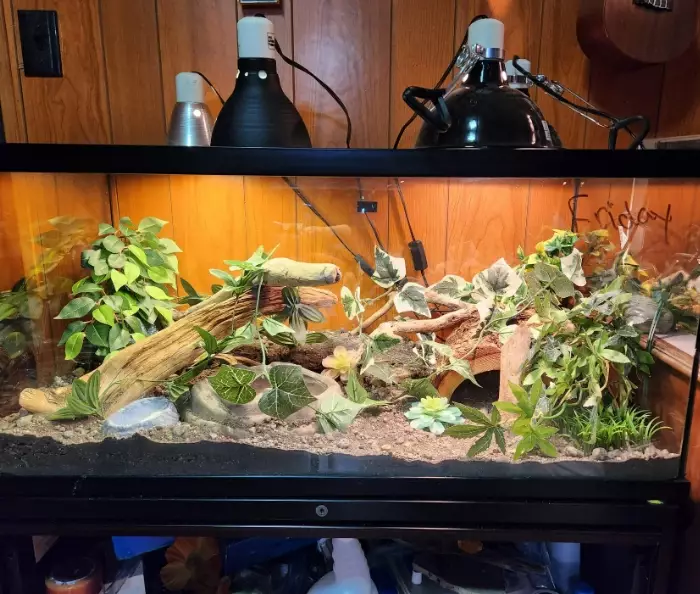
Reader Comments