You've seen the photos. A brilliant green lizard, speckled with gold dust, clinging to a leaf in a tropical paradise. The Gold Dust Day Gecko (Phelsuma laticauda) is a stunner, and it's no wonder they've captured the hearts of reptile enthusiasts. But before you bring one home, a crucial question pops up: are Gold Dust Day Geckos aggressive? The short, honest answer is no, not in the way a monitor lizard or a tokay gecko can be. They won't hunt you down. But calling them "docile" or "handleable" is a fast track to frustration—for you and the gecko. Their behavior is a complex mix of skittishness, territoriality, and pure survival instinct. Understanding this is the difference between a thriving display animal and a stressed pet that hides all day.
I've kept day geckos for over a decade, and the number one mistake I see is people treating them like a bearded dragon. That approach fails every time. Let's get into what "aggression" really means for a Phelsuma laticauda.
What You’ll Discover
The True Nature of Gold Dust Day Geckos: Flight, Not Fight
Labeling them "aggressive" anthropomorphizes their behavior. These are small, fragile prey animals. Their primary strategy is to avoid conflict entirely. Think of them as the ultimate escape artists. When threatened, their first, second, and third choice is to run and hide. The behaviors we interpret as aggression are almost always last-ditch defensive maneuvers or communication between geckos.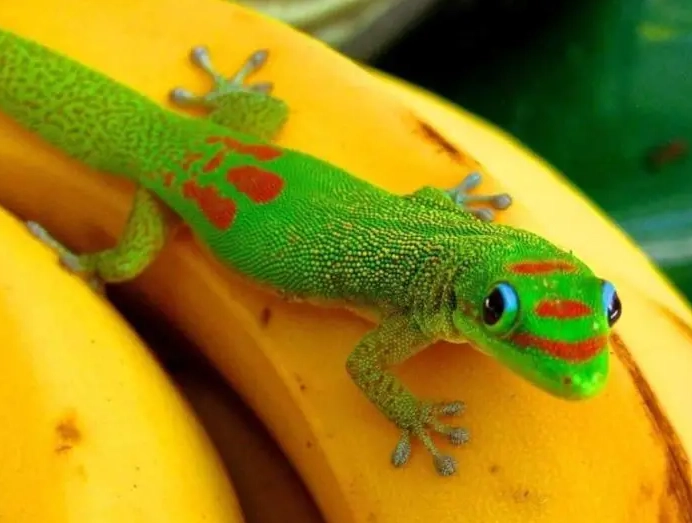
Their speed is breathtaking. One second they're basking, the next they're a green blur vanished behind a cork tube. This isn't anger; it's instinct. In the wild, hesitation means becoming a bird's lunch. This flightiness is the core of their temperament, not a mean streak.
What Does Gold Dust Day Gecko "Aggression" Actually Look Like?
When the flight option is blocked, or during specific social interactions, you might see these behaviors. It's vital to read them correctly.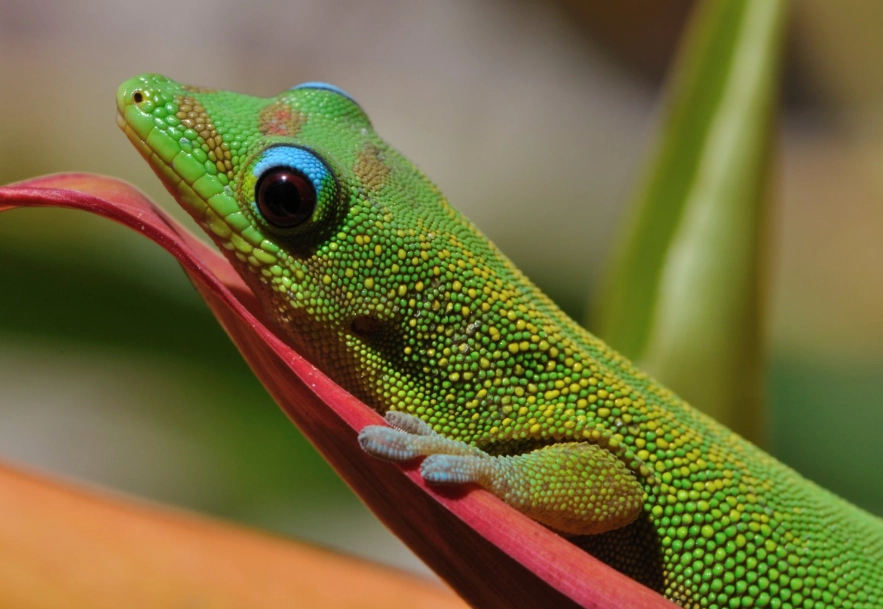
Defensive Displays (Towards Humans or Large Threats)
If you corner one or try to grab it, you might witness a defensive posture. They may open their mouth wide, revealing a pink interior, and emit a soft, high-pitched squeak or chirp. This is a warning: "Back off! I will bite if you come closer." The bite itself, from an adult, can be a sharp pinch and may cause minor bleeding, but it's not dangerous. It's a shock more than an injury. I've been bitten a handful of times over the years, always because I was moving too fast during necessary enclosure maintenance. It feels like a strong staple pinch—startling, but over quickly. The gecko always seems more traumatized by the event than I was.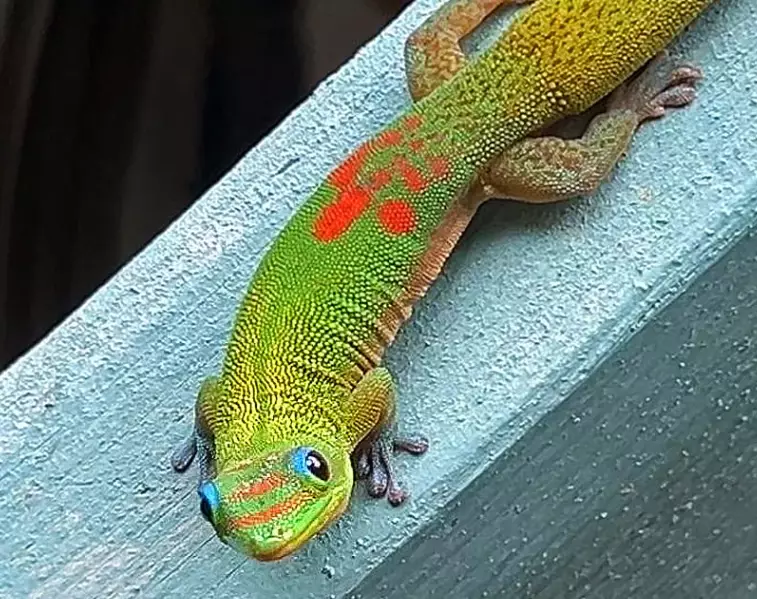
Intraspecific Aggression (Gecko vs. Gecko)
This is where the term "aggressive" has more weight, particularly with males. Gold Dust Day Geckos are territorial. Housing two males together is a recipe for stress, injury, and even death. The dominant male will relentlessly chase, bite, and harass the other, often targeting the tail and toes. Females can be territorial with each other too, especially in cramped quarters or if resources (basking spots, food) are scarce.
Signs of gecko-on-gecko aggression include:
Persistent chasing – not just a brief scuffle.
Biting that leads to visible wounds or missing scales.
One gecko dominating all prime basking areas, forcing the other into constant hiding.
Weight loss in the subordinate animal due to stress and lack of food access.
If you see these signs, you need to separate them immediately. The common advice of "they'll work it out" is wrong and cruel for this species.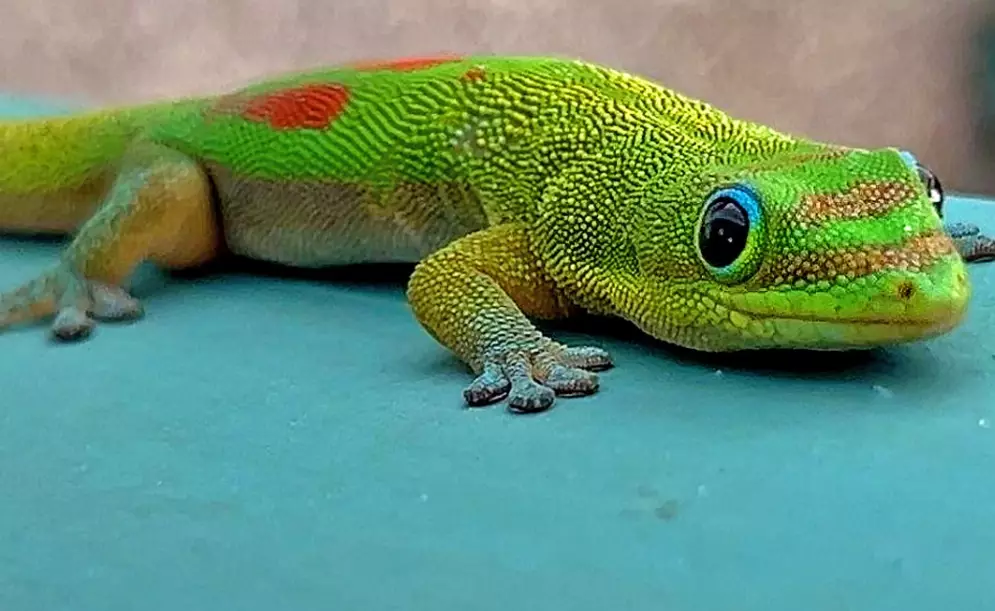
The Top Triggers for Defensive Behavior (And How to Avoid Them)
Prevention is everything. Here are the main things that will put your gecko on high alert and how to mitigate them.
| Trigger | Why It Causes Stress | Keeper's Solution |
|---|---|---|
| Sudden, Overhead Movements | Mimics a bird predator attack. Their deepest instinctual fear. | Move slowly and deliberately around the enclosure. Approach from the side when possible. |
| Insufficient Hiding Places | No escape route = heightened anxiety and defensive readiness. | Provide multiple, deep hiding spots using cork bark, bamboo, and dense foliage. |
| Attempting to Handle or Grab | They are not built for restraint. Your hand is a giant predator. | Accept them as look-don't-touch pets. Use target training with food for limited interaction. |
| Invasive Maintenance | Destroying their familiar landscape causes immense stress. | Spot clean gently. Do major redesigns rarely and in stages if possible. |
| Housing Multiple Geckos Improperly | Forces constant territorial defense or subjugation. | House singly, or in a proven female-only group in a very large, richly complex vivarium. |
| Incorrect Tank Size | Cramped space increases encounter frequency and stress. | Start with a minimum 18x18x24" terrarium for one gecko. Bigger is always better. |
A note on that last point: the old minimums you see online are often too small. I made that mistake early on. A gecko in a 12x12x18" tank was far more jumpy and reclusive than the same species in a 24-inch tall planted tank. The extra space allowed it to establish a comfortable territory and feel safe.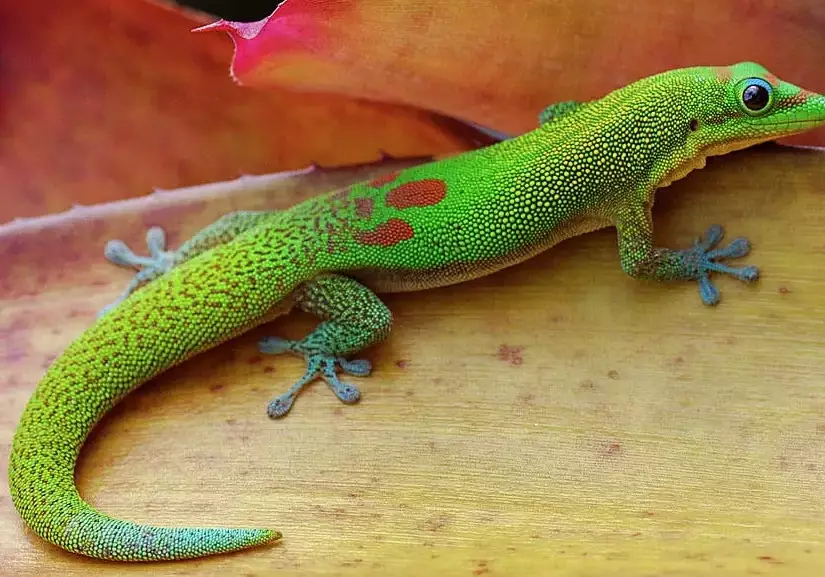
Housing Setup: Your Best Tool for a Calm Gecko
The enclosure isn't just a box; it's their entire world. A well-designed vivarium addresses their behavioral needs proactively. Think of it as building confidence through architecture.
Verticality is Non-Negotiable. They are arboreal. Height matters more than floor space. A tall terrarium allows for a temperature and humidity gradient and gives them room to climb and claim different levels.
Visual Barriers are Security. Don't just stick a few plants on the glass. Create a dense, layered jungle. Use trailing plants like Pothos or Creeping Fig, broad-leaf plants like Philodendron, and tall grasses. This breaks up sightlines, making the space feel larger and giving them hidden highways to move around. A gecko that can travel from one side of the tank to the other without being seen is a calm gecko.
Multiple Basking & Hiding Sites. Provide several cork bark slabs or branches near the heat/light source. This prevents resource guarding (even from themselves, if alone) and lets them choose their comfort zone. Have snug hides at both the warm and cool ends.
Front-Opening Doors. This is a game-changer. Reaching in from above is terrifying for them. Front-opening enclosures allow you to interact with their space on their level, which feels far less threatening. It makes feeding and maintenance much less disruptive.
When you get this right, you'll see a transformation. The gecko that used to bolt becomes one that watches you curiously from behind a leaf. It might even approach the front glass when you're nearby, associating you with food (the food dispenser, not a friend). That's the goal—a visible, active, and unstressed animal.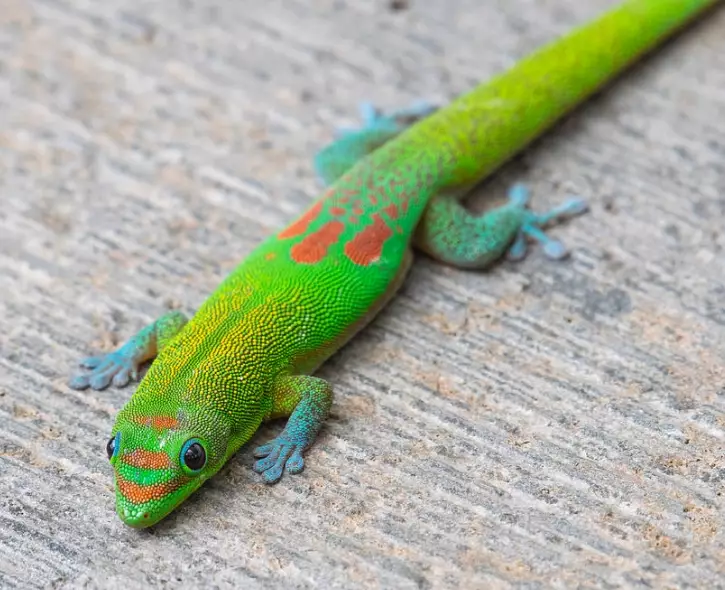
Your Gold Dust Day Gecko Behavior Questions, Answered
My Gold Dust Day Gecko charges at the glass when it sees its reflection. Is this aggression?
Can I ever handle my Gold Dust Day Gecko?
I need to clean the tank or move my gecko. What's the least stressful way?
Are females less aggressive than males?
My gecko seems fine but bites during feeding. Why?
So, are Gold Dust Day Geckos aggressive? Not in a malicious, pet-quality-diminishing way. They are nervous, territorial, and defensively minded lizards that require a specific kind of respect. Their care is about appreciating their beauty and fascinating behaviors on their terms, not ours. If you want a pet you can cuddle, look elsewhere. But if you want to create a slice of the Malagasy rainforest and observe one of its most dazzling inhabitants live a full, natural life, understanding and working with their so-called "aggression" is the first and most important step.
Reader Comments