In This Guide
- Unpacking the Iconic Look: Anatomy of a Living Rainbow
- Home Sweet Rainforest: Where to Find Red-Eyed Tree Frogs
- A Day (and Night) in the Life: Behavior & Diet
- The Circle of Life: Reproduction & Development
- Red-Eyed Tree Frog vs. Common Misconceptions (A Reality Check)
- Conservation Status: Are They Endangered?
- Caring for a Red-Eyed Tree Frog: A Serious Commitment
- Frequently Asked Questions (The Real Ones People Ask)
- Final Thoughts: Beyond the Poster
You've seen the picture. I know you have. It's everywhere – on posters, in documentaries, maybe even as an emoji. A brilliant green frog with bulging, fire-engine red eyes, perched on a leaf like a living jewel. That's the red-eyed tree frog, or Agalychnis callidryas if you want to get scientific. But here's the thing most articles don't tell you: that iconic look is just the cover of a much deeper, more fascinating story. This isn't just a photogenic amphibian; it's a master of survival in one of the planet's most competitive environments. I remember the first time I saw one not in a photo, but in a terrarium at a reputable zoo. The photo didn't do it justice. The green was almost neon, and those eyes... they didn't just look red, they looked like they were lit from within. It was less "cute frog" and more "alien observer." It completely changed how I thought about them.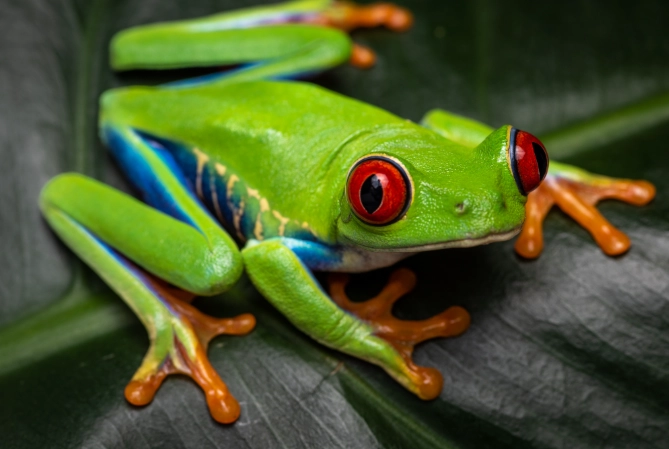
So, what's the real deal with this frog? Is it just a pretty face, or is there substance behind the stunning looks? Let's ditch the superficial facts and dive into what makes this creature truly tick, from its rainforest home to the challenges it faces just to survive another day.
Unpacking the Iconic Look: Anatomy of a Living Rainbow
Let's start with the obvious – why does it look like that? Every part of a red-eyed tree frog's appearance has a job. It's not random; it's evolutionary engineering at its finest.
Those Famous Red Eyes
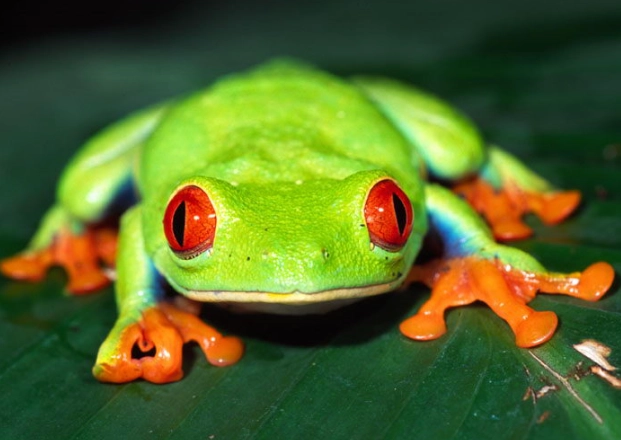
The star of the show. They're large, bulging, and a shocking shade of crimson. But they aren't just for startling photographers. As a nocturnal creature, big eyes are essential for gathering as much light as possible in the dark rainforest. The red color? That's a bit of a mystery, but the leading theory is it's all about the "startle effect." When a predator (like a snake or bird) disturbs a sleeping frog, it flashes those huge red eyes and reveals its brightly colored sides and feet. This sudden burst of color can startle the predator just long enough for the frog to make a getaway. It's a bluff, a brilliant defensive bluff. Think of it as a built-in alarm system.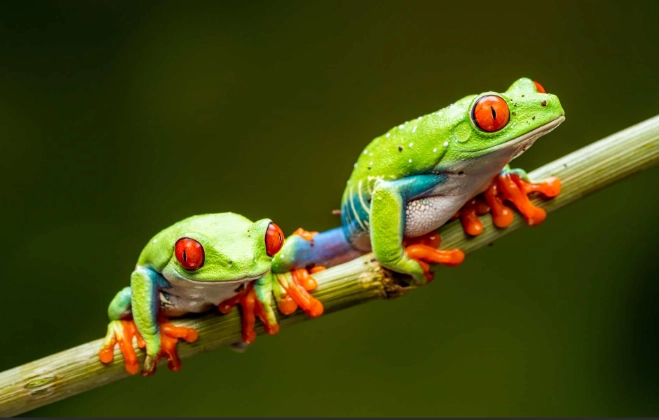
I've read some sources that claim they can see infrared or have special night vision. That's not quite right – it's more about light absorption. But the effectiveness of the bluff isn't up for debate. It works.
The Camouflage Coat: Green Skin & Color-Changing Ability
By day, when the red-eyed tree frog is sleeping tucked against a leaf, it's a master of disguise. Its vibrant green skin blends almost perfectly with the foliage. It pulls its brightly colored limbs and sides tight against its body, becoming a simple green lump. But here's a cool detail a lot of people miss: they can actually change their shade of green. It's not a chameleon-level transformation, but they can darken or lighten their skin tone slightly based on factors like temperature, humidity, and mood. This helps them fine-tune their camouflage. If you're keeping one as a pet (more on that later), a stressed frog might turn a darker, almost olive green.
Orange Toes & Blue-and-Yellow Flanks
The pops of color on its sides (usually a vertical blue band with yellow or cream speckling) and its vibrant orange toes are part of the same "flash coloration" defensive package as the eyes. They're hidden when the frog is at rest but become part of the startling display. The orange toes might also play a role in gripping leaves, but their primary function seems to be visual. It's a complete, coordinated warning system.
Home Sweet Rainforest: Where to Find Red-Eyed Tree Frogs
You won't find these guys in your backyard unless you live in a very specific part of the world. They are creatures of the Neotropical realm, with a range that stretches through the lowland rainforests.
Their primary habitat includes countries like:
- Southern Mexico (through the Yucatán Peninsula)
- Belize and Guatemala
- Honduras, Nicaragua, Costa Rica
- Into northern Colombia
They are almost exclusively arboreal, meaning they live in trees and shrubs. They prefer areas near permanent water sources—like ponds, slow-moving streams, or even large, water-filled leaves (phytotelmata)—because they need water for breeding. The climate is consistently warm and humid, with high rainfall. This isn't a frog that deals well with dry, cold, or even seasonally variable environments. Their skin is permeable, requiring constant moisture.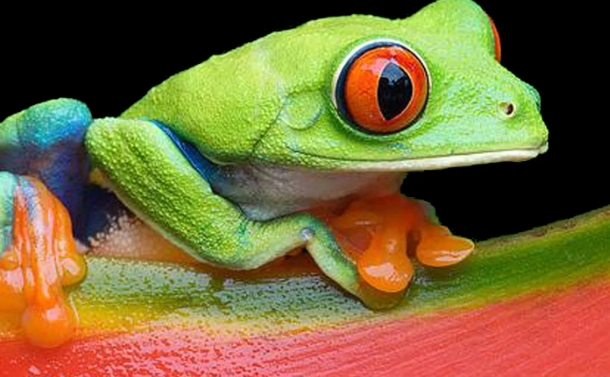
A Day (and Night) in the Life: Behavior & Diet
This is where the red-eyed tree frog gets really interesting. Their daily rhythm is the opposite of ours.
Nocturnal Lifestyle
They sleep during the day, often on the underside of large leaves where it's cool and shaded. They use their sticky toe pads to anchor themselves securely, even in heavy rain. As dusk falls, they become active. This is when they hunt, explore their territory, and, during the breeding season, look for mates. Their night vision, courtesy of those big eyes, gives them a major advantage over their insect prey.
What's on the Menu?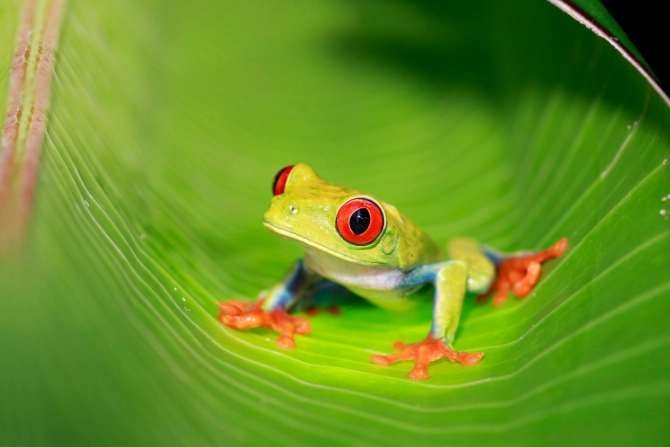
The red-eyed tree frog is an insectivore, a fancy word for an insect-eater. They are sit-and-wait predators. They'll find a good perch, stay perfectly still, and use their excellent eyesight to spot movement. Then—SNAP!—out goes their long, sticky tongue to grab the meal.
Their diet in the wild consists of:
- Crickets and other small orthopterans
- Moths and flies
- Small grasshoppers
- Occasionally other small arthropods
In captivity, their diet is primarily gut-loaded crickets (crickets fed nutritious food before being fed to the frog) and occasionally other feeder insects like dubia roaches or black soldier fly larvae. Dusting these insects with vitamin and calcium powder is non-negotiable for pet health. I learned this the hard way years ago with a different frog species—metabolic bone disease is a terrible, preventable thing.
The Circle of Life: Reproduction & Development
The breeding season is triggered by heavy rains, usually during the wet season. Males will gather around a suitable water body and start calling to attract females. Their call isn't a "ribbit"; it's more of a short, chuckling or vibrating sound. When a female approaches, the male will climb onto her back in a hold called amplexus.
Here's where it gets wild. The female doesn't lay her eggs directly in the water. Instead, she climbs down to a leaf or branch that overhangs the water. She deposits a gelatinous mass of eggs (a clutch) on the *underside* of that leaf. This is a critical adaptation to avoid aquatic predators like fish or dragonfly nymphs that would devour the eggs instantly.
The development is a race against time and the elements:
- Egg Stage (5-7 days): The eggs develop on the leaf. The jelly absorbs moisture and swells.
- Hatching: This is the coolest part. The eggs don't just hatch when they're ready; they can hatch prematurely if they sense a threat, like a snake or wasp approaching the clutch. The developing tadpoles inside can wiggle vigorously, breaking out of the egg mass early. They then drop down into the water below to continue their development. If no threat comes, they hatch normally after about a week and make the same drop.
- Tadpole Stage (Several Weeks to Months): In the water, they are typical, herbivorous tadpoles, feeding on algae and detritus. They are vulnerable to a whole new set of predators here.
- Metamorphosis: After several weeks, they undergo metamorphosis, growing legs, absorbing their tail, and developing lungs. They then emerge from the water as tiny, perfect froglets, ready to climb into the trees and start the cycle anew.
The entire strategy—from leaf-laying to threat-induced early hatching—is a complex, multi-layered survival tactic. It blows my mind how sophisticated it is.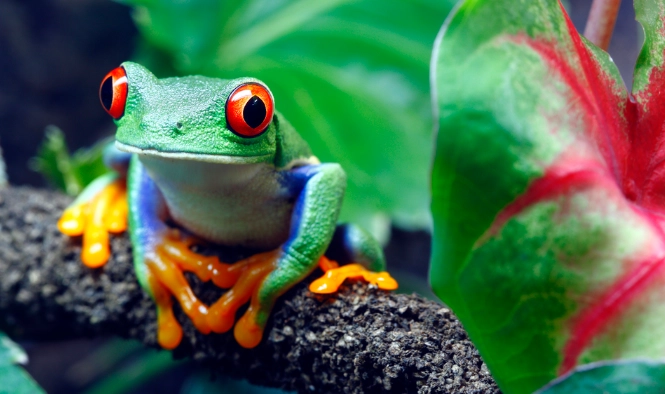
Red-Eyed Tree Frog vs. Common Misconceptions (A Reality Check)
Let's clear up some persistent myths with a quick table. I see these wrong ideas floating around all the time, especially in pet forums.
| Misconception | Reality | Why It Matters |
|---|---|---|
| They are deadly poisonous. | They are NOT poisonous. Their skin may secrete mild irritants as a defense, but they pose no serious danger to humans. You should still wash your hands after handling, but out of care for the frog, not fear for yourself. | This myth causes unnecessary fear and sometimes leads to people harming harmless animals. It also confuses them with truly toxic frogs like poison dart frogs. |
| They are easy, beginner pets. | They are intermediate-level pets. They require a specific, consistently warm/humid environment (a bioactive terrarium), a specialized diet, and careful handling. They are not a "set and forget" pet. | Impulse buying leads to sick frogs and frustrated owners. They are a significant, long-term commitment (they can live 5+ years in captivity). |
| Their color is permanent and always bright. | Their color can dim with stress, illness, or poor husbandry. A healthy, relaxed red-eyed tree frog is the brightest. | Color is a key health indicator. A dull frog is often a frog in trouble. |
| They can live in a small, simple tank. | They need a tall, well-planted terrarium (minimum 18"x18"x24" for a pair) that replicates a rainforest vertical space. Ventilation and humidity control are a tricky balancing act. | Inadequate housing is the number one cause of health problems and premature death in captive amphibians. |
Conservation Status: Are They Endangered?
As mentioned, the IUCN Red List currently classifies Agalychnis callidryas as Least Concern. But please, don't let that lull you into a false sense of security. "Least Concern" is a population-level assessment, not a guarantee of safety. It means the species is still widespread and numerous enough not to meet the thresholds for a threatened category at this moment.
The real story is in the details and the trend line. Their population is decreasing. The primary threats are:
- Habitat Loss & Fragmentation: This is the giant one. Deforestation for logging, agriculture (especially palm oil and cattle), and urban development destroys the specific canopy and wetland ecosystems they need.
- Climate Change: Alters rainfall patterns, which can disrupt their breeding cycles that are tied to rainy seasons. Increased droughts can dry up the small water bodies their tadpoles need.
- Pollution: Pesticides and herbicides from nearby farms can run off into water sources, harming both adults and tadpoles.
- The Pet Trade: While much of the pet trade now relies on captive-bred individuals (which is good), illegal collection from the wild still occurs and can impact local populations.
Conservation efforts are focused on protecting large tracts of intact rainforest through national parks and reserves. Organizations like the Smithsonian Institution conduct vital research on tropical ecosystems, helping us understand the interconnected roles species like the red-eyed tree frog play. Supporting sustainable tourism and responsible forestry in their native range also contributes to their preservation.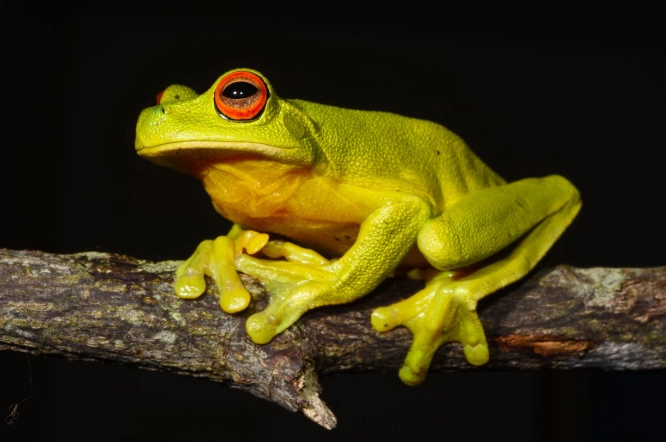
Caring for a Red-Eyed Tree Frog: A Serious Commitment
If you've read this far and are still considering a red-eyed tree frog as a pet, you need to go in with eyes wide open (and not just red ones). This isn't a section to convince you to get one; it's to make sure you know what you're signing up for.
The Non-Negotiable Setup
Enclosure: A tall, front-opening glass terrarium is best. A 18"x18"x24" is the absolute minimum for 1-2 frogs. Bigger is always better. It must be escape-proof.
Heating & Lighting: Daytime temps should be 75-85°F (24-29°C) with a slight drop at night. They do not require special UVB lighting like some reptiles, but a low-level UVB light can be beneficial and helps live plants thrive. A gentle heat source like a heat mat on the side (never under) or a low-wattage heat bulb connected to a thermostat is essential.
Humidity: This is crucial. Aim for 70-80% humidity at all times. This requires daily misting with dechlorinated water and likely an automated misting system or fogger. A hygrometer to measure humidity is mandatory.
Substrate & Decor: Go bioactive if you can. A drainage layer, substrate that holds moisture but doesn't mold, and plenty of live, non-toxic plants (like Pothos, Philodendron, Bromeliads) are ideal. Provide plenty of vertical climbing space with branches, vines, and broad leaves for sleeping.
Diet & Health
As discussed, a varied diet of gut-loaded insects, dusted with supplements. Feed every other day for adults. Provide a shallow water dish with fresh, dechlorinated water, changed daily.
Common health issues include:
- Metabolic Bone Disease (MBD): From lack of calcium. Prevent with proper dusting.
- Skin Infections (Red-Leg): Often bacterial, caused by poor water quality or unsanitary conditions.
- Parasites: Can come from feeder insects or an unclean environment.
A qualified exotics veterinarian is a must before you even get the frog. Find one first.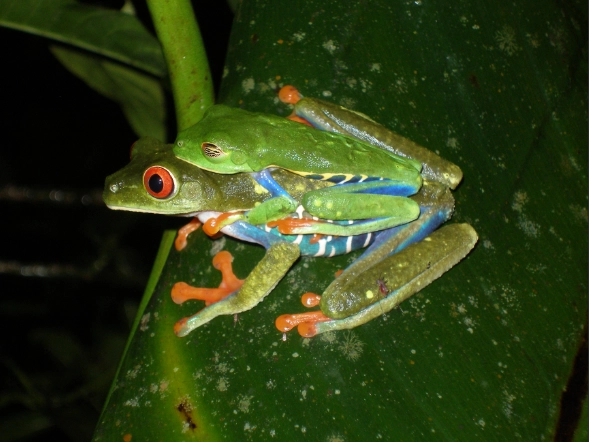
Honestly, the workload and precision required are why I often recommend people enjoy these animals through documentaries, zoos, or supporting conservation efforts instead. The commitment is real.
Frequently Asked Questions (The Real Ones People Ask)
 Hopefully, that covers the questions bouncing around in your head.
Final Thoughts: Beyond the Poster
The red-eyed tree frog is so much more than nature's supermodel. It's a lesson in adaptation—in using color as a weapon, in timing reproduction with the rains, in laying eggs in clever places, and in hatching on command to escape danger. Every aspect of its life is a finely tuned response to the challenges of the rainforest.
Its vibrant beauty is what draws us in, but its story of survival is what should keep our attention. That beauty is fragile, dependent on a specific and disappearing world. When we work to protect the red-eyed tree frog, we're not just saving a pretty face; we're fighting for the health of an entire ecosystem, for the complex web of life that includes countless other known and unknown species.
So next time you see that iconic image, remember the depth behind the dazzling eyes. Remember the rainforest canopy it calls home, and consider what we can do to ensure that home—and its incredible, red-eyed inhabitant—is still there for generations to come.
Reader Comments