If you've ever tried to spot a leaf-tailed gecko on a forest floor, you know it's nearly impossible. One moment you're looking at bark and leaves, the next, a piece of that bark blinks. That's the magic of the Uroplatus gecko, a master of survival whose adaptations go far beyond simple camouflage. These reptiles from Madagascar haven't just learned to hide; they've evolved to become part of the scenery itself. Let's break down exactly how they do it, and what that means for anyone fascinated by them, from casual nature lovers to aspiring keepers.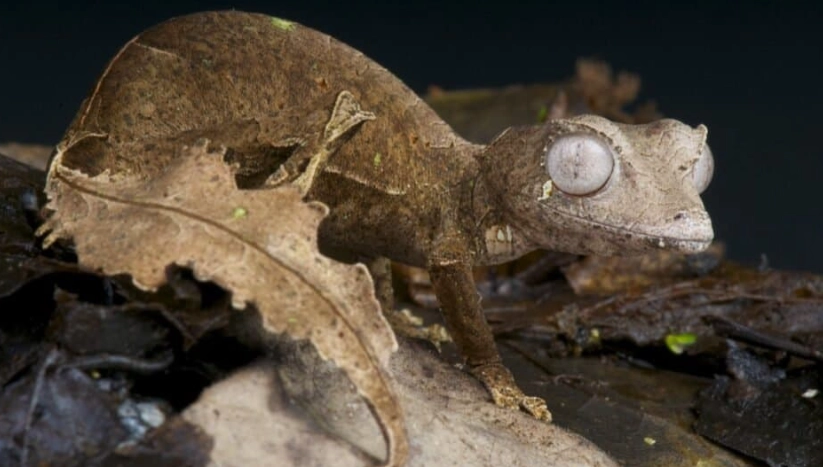
Quick Navigation
The Ultimate Disguise: Camouflage Beyond Belief
Most people think camouflage is just about color matching. For leaf-tailed geckos, it's a three-dimensional, multi-sensory art form. Their primary adaptation isn't a single trick but a suite of features working in concert.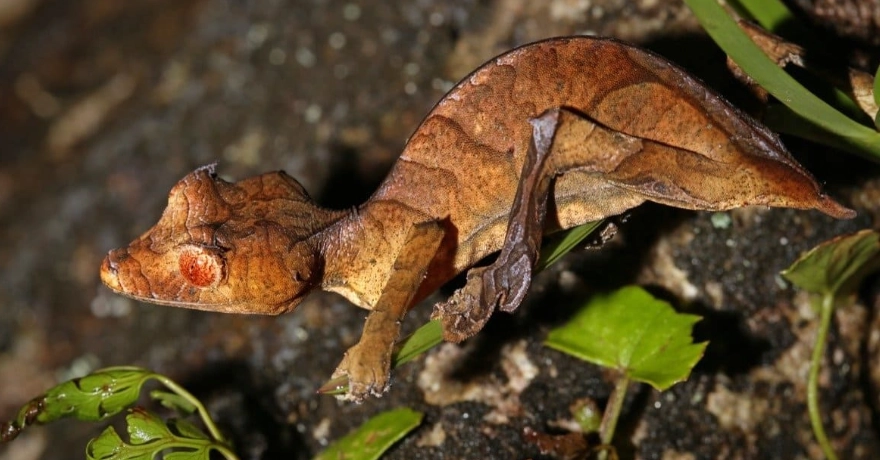
Visual Disruption: Skin Texture and Fringes
Look closely at a Uroplatus sikorae or Uroplatus phantasticus. Their skin isn't smooth. It's a complex landscape of ridges, bumps, and tubercles that perfectly mimics lichen-covered bark or the veined surface of a dead leaf. The famous fringing along their jaw, body, and limbs—the "leaf tail" is just the most obvious part—breaks up their outline. Against a rough tree trunk, these fringes blend seamlessly with moss and bark fragments, eliminating the clean silhouette that predators key in on.
I have to admit, the first time I saw one in situ, I thought it was a piece of bark until it moved its head. That's the goal.
Color Change and Background Matching
While not as rapid as a chameleon, leaf-tailed geckos can slowly adjust their skin tone to better match their immediate surroundings. This isn't mood-based; it's a physiological response to light, temperature, and the visual feedback from their environment. They can range from mottled grays and browns to near-black or pale greenish hues. The key is subtlety—they become a slightly darker or lighter version of what's behind them, enhancing the effect of their physical texture.
The Behavioral Masterstroke: Posture and Pressing
This is where many online descriptions fall short. A leaf-tailed gecko's behavior is its most critical camouflage tool. They don't just sit there. They actively press their bodies flat against the substrate. They tuck their limbs in close, lower their head, and often align their body with the lines of the tree branch or leaf stem. Some species, like the Satanic leaf-tailed gecko (Uroplatus phantasticus), will even sway gently in a breeze, mimicking a dangling leaf. This behavioral adaptation eliminates shadows and completes the illusion of being an inanimate object.
Expert Note: A common mistake when keeping them in captivity is providing a smooth, flat background. This completely negates their primary adaptation. They need deeply textured, three-dimensional surfaces like cork bark to properly execute their "pressing" behavior and feel secure. A smooth wall is like asking a master painter to work with a broken brush.
Survival Toolkit: Beyond Camouflage
Staying hidden is job one, but life in the Malagasy rainforests demands more. Their adaptations are a full survival package.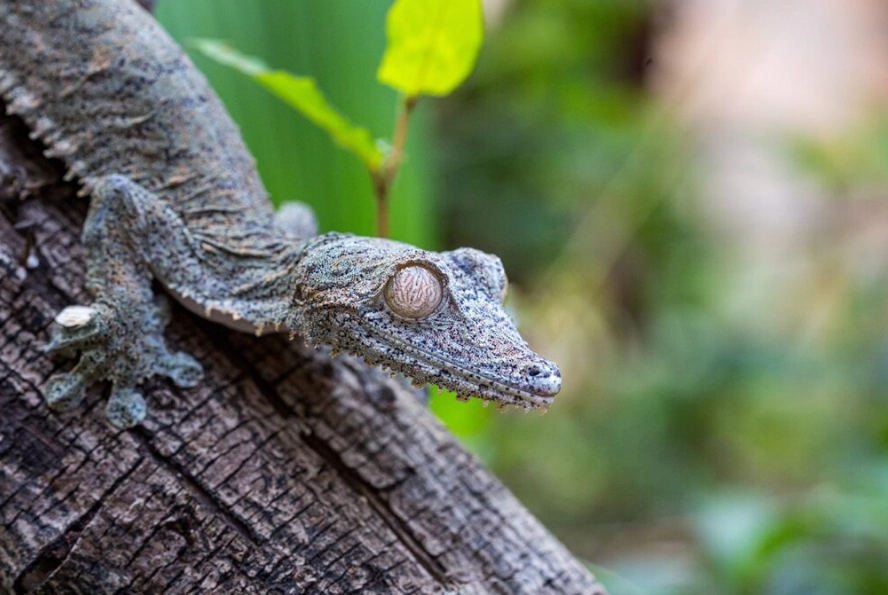
Feet Built for Vertical Life
Their toe pads are incredible. Millions of microscopic hairs (setae) create van der Waals forces, allowing them to grip virtually any surface—glass, smooth leaves, wet rock. This lets them access vertical and even upside-down hunting grounds other lizards can't reach. Watch one climb, and you'll see they don't "stick" and release like a cartoon; they roll their feet onto and off of surfaces with a fluid motion that conserves energy.
Nocturnal Hunting Adaptations
As nocturnal hunters, their large, lidless eyes are packed with rod cells for exceptional low-light vision. They can't move their eyes much, so they have incredible depth perception to accurately strike at insects in the dark. Their pupils contract into vertical slits during the day, blocking out intense light, but open wide at night to become almost perfectly round, gathering every photon available.
Defensive Scream and Autotomy
If camouflage fails, they have a shocking backup: a loud, distressing scream. It's meant to startle a predator just long enough for the gecko to drop into the undergrowth. As a last resort, like many geckos, they can shed their tail (autotomy). The wriggling tail distracts the predator while the tailless, now-less-conspicuous gecko escapes. The regrown tail is never as perfectly fringed or camouflaged as the original, a permanent badge of a close call.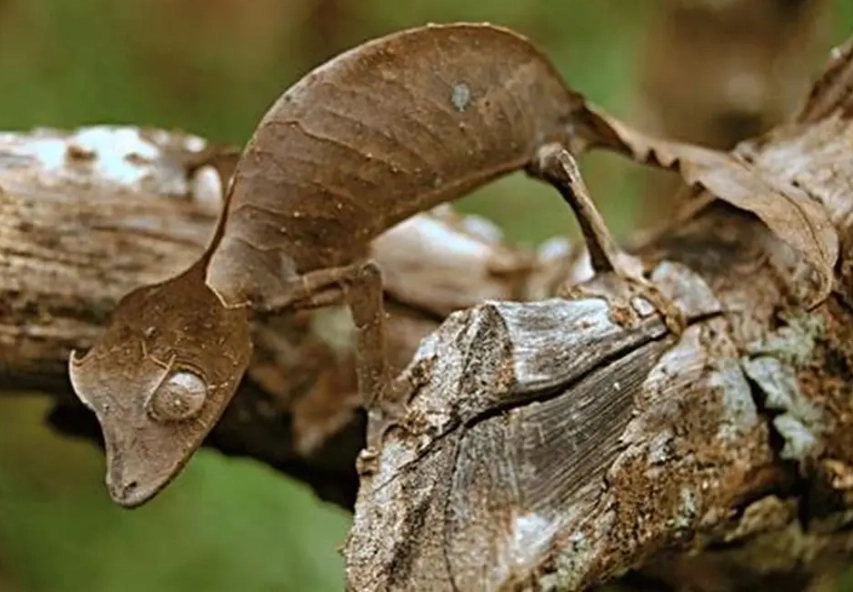
Life in the Wild: Habitat and Behavior
You can't separate these adaptations from where they live. They are products of Madagascar's unique and isolated ecosystems, primarily the eastern rainforests and some central highland forests.
They are arboreal, spending their entire lives off the ground. During the day, they are statues. At night, they become active hunters, slowly stalking along branches, using their stealth to get within striking distance of crickets, moths, and other arthropods. Their life cycle is slow—they are long-lived for geckos (potentially over 10 years in the wild) and have relatively small clutches of eggs, which they often glue to leaves or bark in hidden locations.
Their survival is tightly linked to intact forest canopy. Fragmentation doesn't just reduce habitat; it creates edges where their camouflage is less effective and exposes them to new predators.
Uroplatus as Pets: A Specialist's Challenge
This is the big one for many readers. Can you keep a leaf-tailed gecko? Technically, yes. Should you? Only if you're prepared to meet very specific, non-negotiable needs that directly support their natural adaptations.
First, forget a simple setup. They need a tall, well-ventilated terrarium (screen or partial mesh is great) that replicates a vertical slice of forest. Live plants like Pothos or Schefflera are not just decoration; they provide cover, humidity, and landing pads. A network of vertically and diagonally oriented cork bark tubes and flats is essential—this is their canvas for camouflage.
Second, climate control is critical. Daytime temperatures should be cool, around 72-78°F (22-26°C), with a slight drop at night. High humidity (70-90%) is a must, achieved through misting systems or manual spraying, but with enough airflow to prevent stagnant, moldy conditions. Stagnant air is a killer.
Diet is another area. They need a variety of gut-loaded insects. I've seen too many keepers rely solely on crickets. Diversify with dubia roaches, silkworms, and moths. Dusting with calcium and vitamins is non-negotiable for bone health, especially given their low UVB requirements (low-level, forest-gap type UVB is beneficial, but direct, desert-strength bulbs are harmful).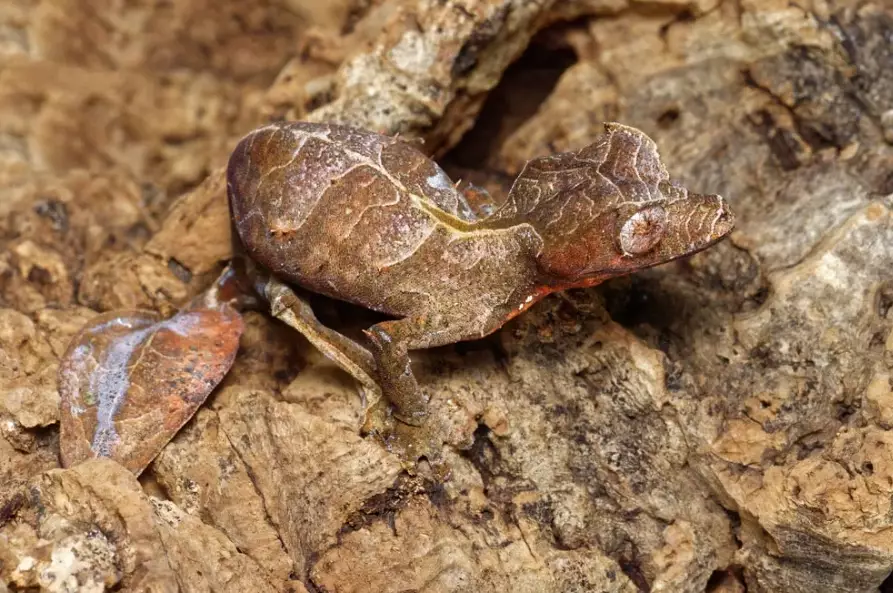
The biggest mistake I see? People handling them. These are not bearded dragons. They are stress-prone, delicate display animals. Frequent handling disrupts their cryptic behavior, can damage their delicate skin and fringes, and causes immense stress. Their beauty is to be observed, not held.
Conservation Status: Protecting a Master of Disguise
Here's the hard truth: their greatest adaptation is useless against deforestation. Most Uroplatus species are threatened by habitat loss due to slash-and-burn agriculture, logging, and charcoal production. The pet trade has historically been a pressure, though well-managed captive breeding programs for certain species (like Uroplatus henkeli) have reduced the demand for wild-caught animals.
According to the IUCN Red List, many species are listed as Vulnerable or Endangered. For example, the Mossy Leaf-tailed Gecko (Uroplatus sikorae) is considered Vulnerable. Their survival depends on the protection of Madagascar's remaining rainforests. Supporting reputable conservation NGOs focused on Madagascar and purchasing only captive-bred animals from ethical breeders are tangible ways to help.
Reader Comments