Navigate This Guide
- Is That a Cuban Tree Frog? How to Know for Sure
- Why the Cuban Tree Frog is a Problem (It's Not Just Noise)
- What to Do If You Have Cuban Tree Frogs: The Control Debate
- The Other Side: Ecology and Biology of a Survivor
- Cuban Tree Frogs as Pets? What You Need to Know
- Tracking the Spread: Where Are They Now?
- Common Questions Answered (The Stuff You Actually Search For)
Okay, let's talk about the Cuban tree frog. You've probably seen one, or heard one, especially if you live anywhere in Florida or the Gulf Coast. That loud, grating call on a humid night? The massive, almost cartoonish frog clinging to your window or peeking from your mailbox? Yep, there's a good chance that's our friend, Osteopilus septentrionalis. I remember the first time I saw one up close on my porch light in Tampa. I was shocked by its size—it dwarfed the native green tree frogs I was used to. I thought, "What on earth is that thing?" If you've had that same moment of confusion, you're in the right place.
This isn't just another frog. It's a story about an uninvited guest that decided to make itself at home, with pretty big consequences for our local ecosystems. Some people find them fascinating, others see them as a nuisance. I've swung between both views myself, depending on whether I find one in my pool skimmer or just observing one from a distance. This guide is going to walk you through everything: from figuring out if you're really looking at a Cuban tree frog, to understanding why they're a problem, and what you can (or should) do about it. We'll also dive into their weirdly interesting biology, because like them or not, they're here to stay.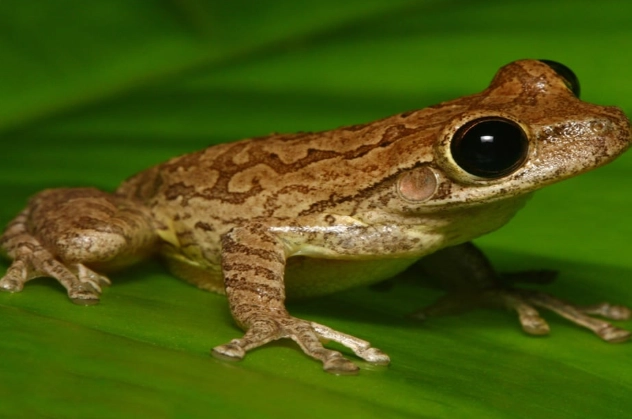
Is That a Cuban Tree Frog? How to Know for Sure
Misidentification is super common. Not every big frog is a Cuban tree frog, and young ones can look a lot like native species. Getting this right is the first step. So, how can you tell a Cuban tree frog apart from a native green tree frog or squirrel tree frog?
The size is the biggest giveaway for adults. A full-grown Cuban tree frog can reach over 6 inches (15 cm) in length. That's about the size of an adult human hand. Native U.S. tree frogs, like the green tree frog or the barking tree frog, typically max out around 2.5 inches. The difference is startling when you see them side-by-side.
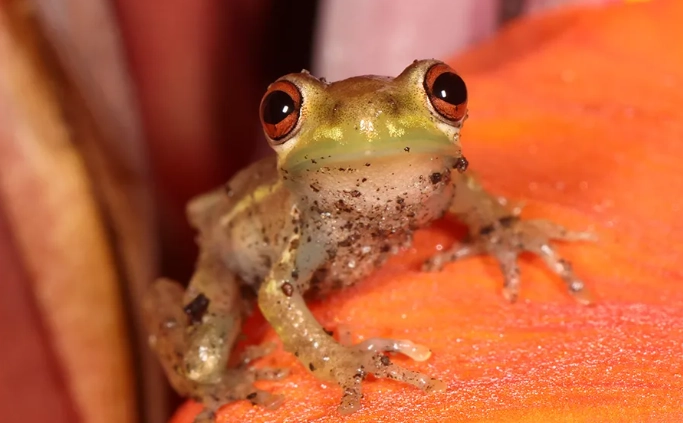
But what about the little guys? Juveniles are trickier. Here’s where you need to look at the details.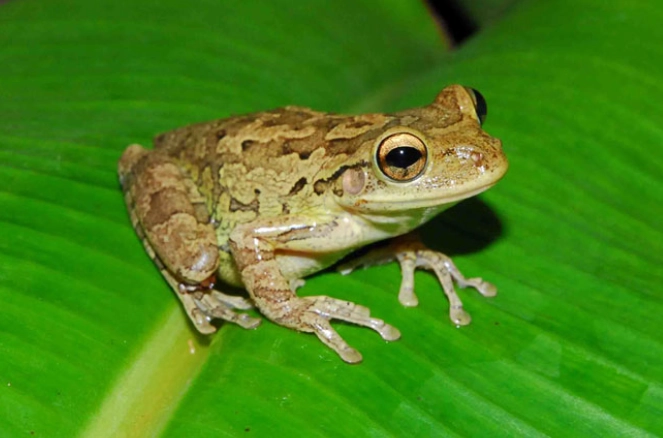
Key Identification Features
First, check the skin. Cuban tree frogs have unusually warty, bumpy skin for a tree frog. It can look almost like they have small pebbles stuck to their back. Native tree frogs tend to have smoother skin. The color is wildly variable—they can be gray, tan, green, brown, or even a sort of whitish color. They're the chameleons of the frog world, changing shades to blend in.
Now, look at the eyes. This is a dead giveaway. Their eyes have a distinctive bony ridge that creates a sort of "shelf" over the eye, making them look a bit bug-eyed or surprised. The iris is often a striking gold, orange, or bronze color. Native species lack that pronounced ridge.
Finally, the feet. Like all tree frogs, they have large toe pads for climbing. But on a Cuban tree frog, the toe pads are enormous relative to their toe size. It's like they're wearing oversized suction cups.
Here’s a quick comparison table that I find super helpful when I'm trying to coach friends on what to look for:
| Feature | Cuban Tree Frog | Native Green Tree Frog |
|---|---|---|
| Adult Size | Very large (3 to 6+ inches) | Small to medium (1.5 to 2.5 inches) |
| Skin Texture | Warty, bumpy, pebbled | Mostly smooth, sometimes slightly granular |
| Eye Ridge | Prominent bony ridge, creates a "shelf" | No pronounced bony ridge |
| Toe Pads | Exceptionally large, wider than the toe | Large, but proportional to toe width |
| Color | Extremely variable (gray, tan, green, brown, white) | Usually bright green, sometimes with white side stripe |
Why the Cuban Tree Frog is a Problem (It's Not Just Noise)
So they're big and they look funny. Why does anyone care? Well, the Cuban tree frog is considered one of the most damaging invasive amphibian species in places like Florida. Their impact goes way beyond just eating a few bugs or croaking loudly.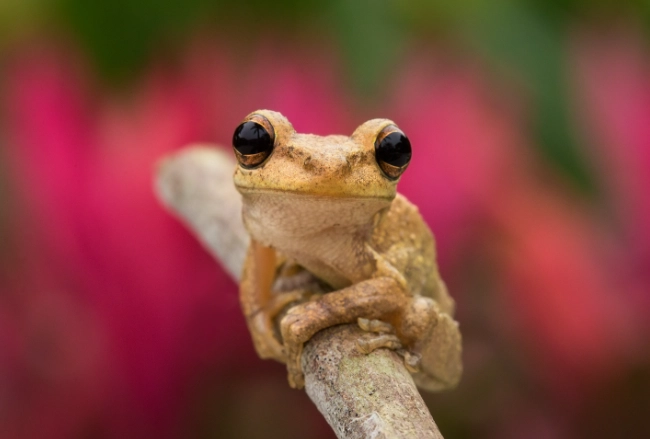
Their most direct impact is on our native wildlife. Cuban tree frogs are voracious, opportunistic eaters. Their diet includes insects, spiders, lizards, small snakes, and—most problematically—other frogs. They are known to eat native tree frogs, toads, and even smaller members of their own species. They literally out-eat and out-compete our native amphibians for food and space. In some areas, they've been linked to local declines of native frog populations. That's a big deal for biodiversity.
Then there's the predator side. Because they get so large, they have fewer natural predators in their new homes. Native birds, snakes, and mammals might not recognize them as prey, or they might simply be too big to eat. This lack of checks and balances lets their populations explode.
And yeah, they're a nuisance to us humans too. They love human structures. You'll find them in electrical boxes, transformer stations (where they can cause short circuits and power outages—seriously), plumbing, and mailboxes. Their sticky toe pads let them climb smooth surfaces like windows and sliding glass doors with ease, often leaving behind little smears. They also love to hang out in pool skimmers and outdoor drains.
Their call is another point of contention. It's not the pleasant "ribbit" or chirp of many natives. It's a loud, raspy, snoring sound—often described as a grating "grrrrrrk"—that can go on all night, especially after rain. If one has taken up residence right outside your bedroom window, you'll understand the frustration.
What to Do If You Have Cuban Tree Frogs: The Control Debate
This is the part where opinions get divided. Wildlife agencies in invaded areas, like the University of Florida IFAS Extension, often recommend humane euthanasia of Cuban tree frogs as a responsible action to protect native ecosystems. They provide detailed guidelines on how to do this correctly. I know, it sounds harsh. I struggled with this idea at first. I like animals. The thought of intentionally killing a frog didn't sit right with me.
But after learning more about their ecological impact—seeing how few native green tree frogs were around compared to a decade ago—my perspective shifted. It's not about the individual frog; it's about the collective impact on the whole local frog community. It's a conservation choice, and a tough one.
If you're not comfortable with that route, there are other strategies focused on deterrence and exclusion. The goal is to make your property less inviting to them.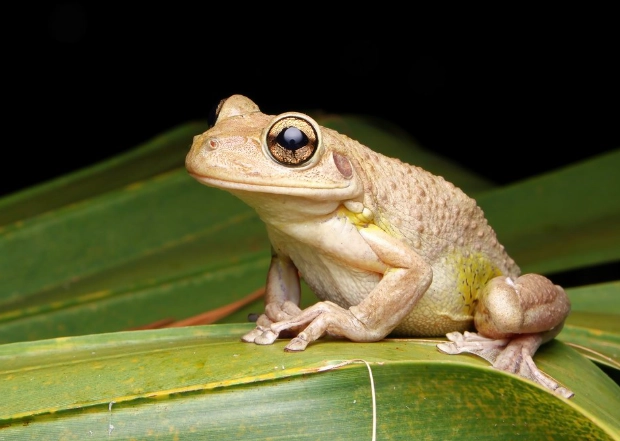
Humane Deterrence and Removal Methods
First, eliminate what attracts them: food, water, and shelter. Turn off outdoor lights at night, or switch to yellow "bug" lights. Lights attract the insects that the frogs eat. A dark yard is a less buffeted yard for a frog.
Remove hiding spots. Clear away piles of debris, lumber, and dense ground cover near your house. Keep vegetation trimmed back from walls and windows. Seal up gaps and cracks around your home's exterior, in eaves, and around pipes. They can squeeze into surprisingly small spaces.
For non-lethal removal of individual frogs, you can wear disposable gloves (remember the skin secretion!), gently capture the frog in a plastic bag, and then… well, this is where you have a decision to make. Some people relocate them far away, but many experts discourage this. You might just be moving the problem to another area, and the frog likely won't survive in an unfamiliar territory. It's a bit of an ethical gray zone.
If you have a recurring problem in a specific spot, like a pool skimmer, you can install a frog log or ramp to help any trapped animal (not just frogs) escape. For mailboxes, a quick check before reaching in is a good habit.
You have to weigh your comfort level with the broader environmental recommendation. I think the most important thing is to be informed. Know why the recommendation exists. Whether you choose to follow the full guidelines from the Florida Fish and Wildlife Conservation Commission (FWC) or stick to deterrence, you're at least making a conscious choice.
The Other Side: Ecology and Biology of a Survivor
Let's take a break from the "problem" angle for a minute. To really understand the Cuban tree frog, you have to appreciate why it's such a successful invader. Its biology is a masterclass in adaptation.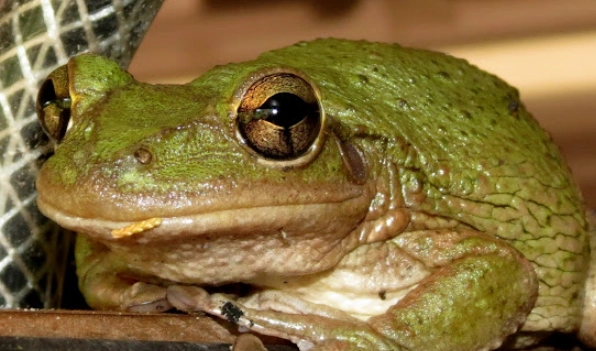
They are incredibly tolerant. They can handle a wider range of conditions than most native frogs. Slightly brackish water? No problem. Drier environments? They'll find a cool, damp spot and wait it out. They thrive in both natural habitats and heavily human-modified landscapes. Suburban neighborhoods are basically paradise for them.
Their reproductive strategy is a powerhouse. A single female can lay over 10,000 eggs in a year, in multiple clutches. The eggs are laid in floating masses in any available standing water—ponds, ditches, birdbaths, flooded tires, you name it. The tadpoles are tough, too, and develop quickly.
And that skin secretion we talked about? It's not just an irritant to us. It likely offers them some protection against predators and maybe even bacteria or fungi in their environment. It's a multi-purpose tool.
I once watched a Cuban tree frog hunting on a screen enclosure. It moved with this slow, deliberate patience, inching closer to a moth over what felt like an hour. Then, in a flash of tongue, the moth was gone. You can't help but respect the efficiency, even as you worry about what else it's eating.
Cuban Tree Frogs as Pets? What You Need to Know
This comes up a lot, especially because people find the babies and think they're cute. Can you keep a Cuban tree frog as a pet? Technically, yes. But should you? That's a more complicated question.
First, the legal part. In many areas where they are invasive, like Florida, it is illegal to release them into the wild. If you take one in, you are making a commitment for the life of the animal, which can be over 10 years in captivity. You cannot decide later to let it go. That's irresponsible and often against the law.
As pets, they have pros and cons. On the plus side, they are hardy, interesting to observe, and have big personalities. They get used to a routine and can be bold feeders.
On the downside, they get very large, requiring a sizable tall terrarium (a 20-gallon high tank minimum for one adult). They are nocturnal, so they'll be most active when you're trying to sleep. And that skin secretion means you should always wash your hands after handling their habitat or the frog itself. It's not a "hands-on" pet.
Their diet in captivity is varied: crickets, roaches, worms, and occasionally pinky mice for large adults (which some owners find off-putting). They need proper heating, humidity, and UVB lighting to stay healthy—a significant setup cost and ongoing maintenance.
My personal take? Unless you are a committed amphibian enthusiast with the proper setup and understanding of the long-term responsibility, it's better to admire them in your yard (or manage them humanely) rather than bring one inside. There are many other frog species better suited to life as a pet.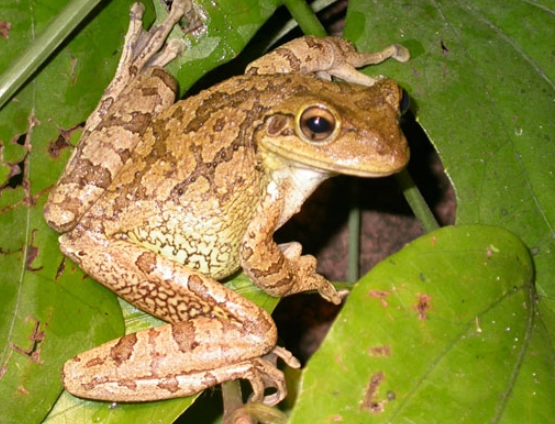
Tracking the Spread: Where Are They Now?
The Cuban tree frog's range is expanding, largely aided by human activity. They are firmly established throughout Florida and have been found in coastal areas of Georgia, South Carolina, Alabama, Mississippi, Louisiana, and Texas. Isolated sightings pop up even farther north, often linked to the plant trade.
Cold is their main limit. They cannot survive prolonged freezing temperatures, which is why their permanent populations are mostly confined to the subtropical and Gulf Coast states. However, with climate trends, that "comfort zone" may slowly shift northward over time.
Scientists and citizen scientists track their spread through reporting programs. Organizations like the USGS maintain databases on non-native species distribution. If you find one well outside its known range, reporting it to a local wildlife agency or university can be helpful for tracking.
Common Questions Answered (The Stuff You Actually Search For)
So the next time you hear that raspy snore in the night or spot a giant, warty frog on your window, you'll know exactly what you're dealing with. You'll know how to identify it, understand its impact, and have a toolkit of options for how to respond. Whether you choose to be a passive observer or an active participant in native species conservation is a choice only you can make. At least now you can make it with your eyes wide open.
Reader Comments