In This Guide
- Meet the Pacific Tree Frog: More Than Just a Pretty Face
- Where Do Pacific Tree Frogs Live? (Hint: Probably Near You)
- The Soundtrack of Spring: Decoding the Pacific Tree Frog Call
- Creating a Frog-Friendly Backyard: Can You Attract Pacific Tree Frogs?
- Beyond the Basics: Cool Facts and Common Questions
- The Bigger Picture: Conservation and Why They Matter
Let me tell you, the first time I heard a Pacific tree frog calling in my backyard, I thought it was a bird. A weird, rhythmic bird with a serious case of the hiccups. It was this persistent kekekekekek sound coming from the damp ferns under the big redwood. A little investigation later, and I found the source: a tiny, greenish-brown frog, no bigger than a paper clip, puffing up its throat like a balloon and belting out its heart. That was my proper introduction to the Pacific tree frog, Pseudacris regilla, and honestly, I've been fascinated ever since.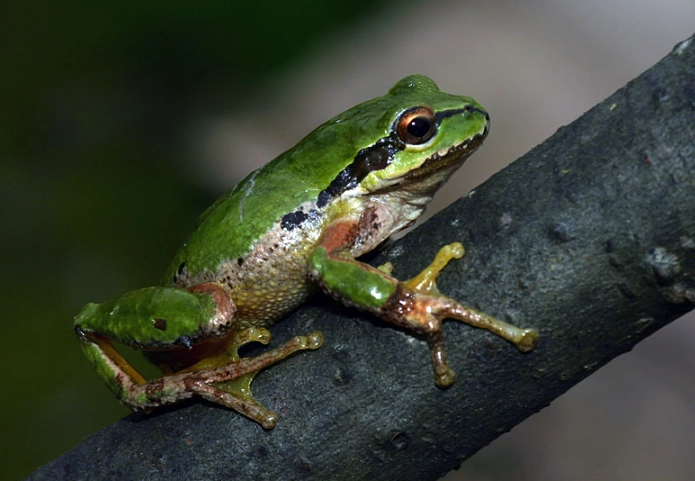
These little guys are everywhere on the West Coast. I mean everywhere. From the damp forests of British Columbia down to the creeks of Baja California, they are the undisputed champions of the amphibian world in terms of distribution. They're the only native frog species found in both Alaska and California, which is pretty impressive for something that fits in the palm of your hand. But despite being so common, there's a lot of confusion about them. Are they green or brown? Are they poisonous? How do you tell them apart from other frogs? And what's with all the noise?
I've spent years watching them in my garden, and I've made some mistakes along the way (like trying to feed them mealworms meant for lizards—bad idea). So, I wanted to put together a guide that's not just a dry scientific overview, but a practical look at these little singers. From their camouflage superpowers to their surprisingly complex love songs, let's get into it.
Meet the Pacific Tree Frog: More Than Just a Pretty Face
The Pacific tree frog, sometimes called the Northwest tree frog or the chorus frog, is a small amphibian with a huge personality. Its scientific name, Pseudacris regilla, used to be Hyla regilla. Scientists changed it, which happens more often than you'd think in biology. It's part of the Hylidae family, the tree frogs, although honestly, they're not as arboreal as some of their tropical cousins. They climb, sure, but they're just as happy in a puddle on the ground.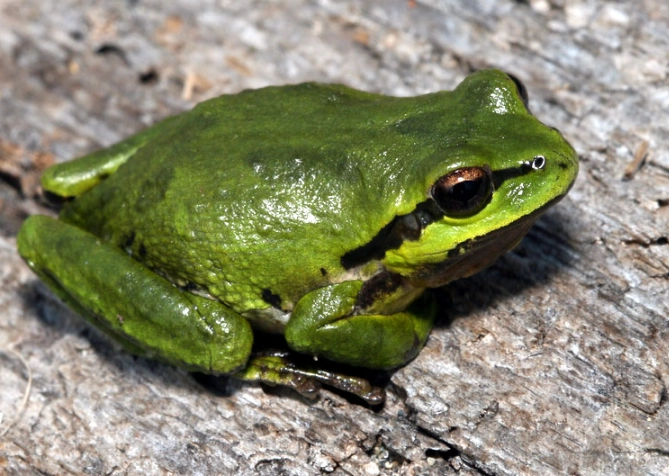
What's in a Name? The nomenclature can be confusing. The Pacific tree frog (Pseudacris regilla) is also commonly called the Pacific chorus frog. It's the same animal. In some older books, you might find it under Hyla regilla. The important thing is the range: it's the primary small frog you'll encounter from California to British Columbia.
Now, here's the first thing that trips people up: color. You see a picture of a bright green Pacific tree frog. Then you see a photo of a brown one that looks like it's covered in mud. Both are Pacific tree frogs. They have this incredible ability to change their color, shifting between green, brown, grey, and even reddish, depending on their environment, temperature, and mood. It's not as instantaneous as a chameleon, but it happens over a period of hours or days. I've watched one on a green leaf slowly shift from brown to a mottled green over a couple of days—it's wild.
How to Spot a Pacific Tree Frog (Even When It's Hiding)
So, if color is unreliable, what should you look for? A few key features are dead giveaways.
- The Mask: Look for a dark stripe that runs from the nose, through the eye, and back to the shoulder. It looks like a little bandit mask. This is one of the most consistent features.
- Size: They're small. Adults typically range from 3/4 inch to 2 inches long. You could fit two or three on a standard sticky note.
- Toe Pads: Like all tree frogs, they have distinctive round, sticky pads on the tips of their toes. These help them climb, though I've found them on my window more often than in tall trees.
- Skin Texture: Their skin is usually smooth or slightly granular, not warty like a toad.
The best way to get a solid visual is to check out the excellent photo galleries and identification resources provided by the California Herpetology Society. Their guides are incredibly detailed and helped me confirm my own backyard sightings.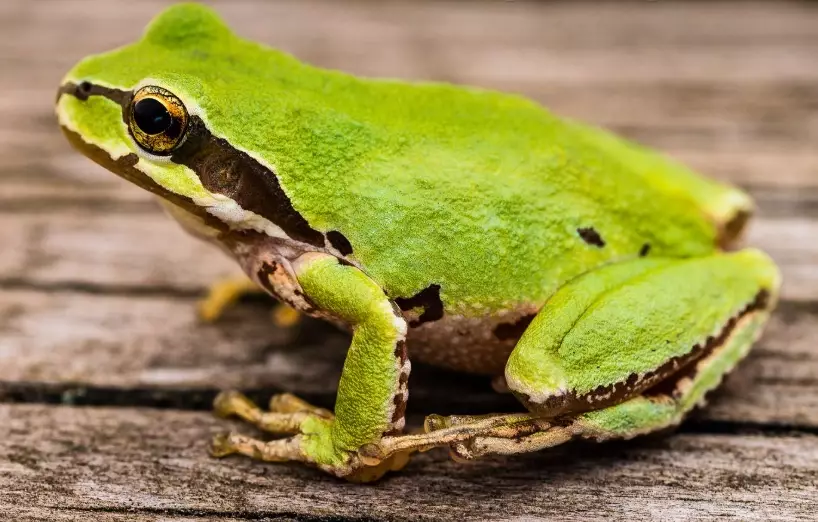
Where Do Pacific Tree Frogs Live? (Hint: Probably Near You)
These frogs are habitat generalists, which is a fancy way of saying they're not picky. As long as there's moisture and some food, they'll make do. Their adaptability is a huge reason for their success.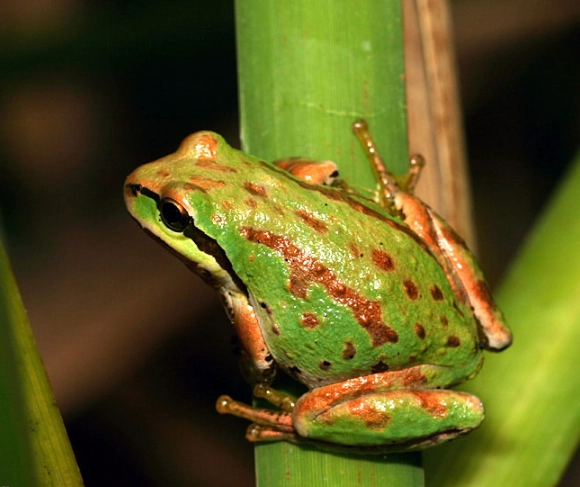
Prime Pacific Tree Frog Real Estate
You're most likely to find them in:
- Wetlands & Marshes: Their classic home. Still or slow-moving water is essential for breeding.
- Forest Edges & Meadows: Especially those near ponds or streams. They like the cover of ferns, grasses, and low shrubs.
- Backyard Gardens: Yes, really! If you have a pond, a consistently damp area, or even just a lot of lush vegetation and avoid pesticides, you might get tenants. My small garden pond attracted its first pair about three years ago.
- Agricultural Ditches & Irrigation Channels: Not glamorous, but it works for them.
They're not deep forest dwellers; they prefer edges and openings. And they need water for breeding, but outside of the breeding season, adults can wander surprisingly far from water, hanging out in damp foliage.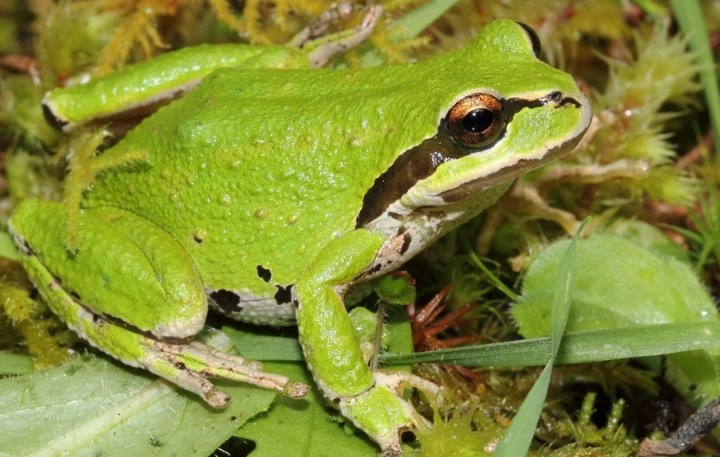
The Lifecycle: From Egg to Crooner
Understanding their lifecycle explains a lot about their behavior, especially the noisy spring concerts.
The Annual Cycle: In late fall and winter, they hibernate, often buried in mud or under logs. Come spring (as early as January in warmer coastal areas), the males wake up and head to water. That's when the singing starts—to attract females. After breeding, adults may disperse. The eggs hatch into tadpoles, which metamorphose into tiny froglets by late summer. These froglets then face the challenge of surviving their first winter.
The eggs are laid in small, loose clusters attached to vegetation in shallow water. A single female can lay hundreds of eggs. The tadpoles are dark, often with speckles, and take several weeks to months to develop, depending on water temperature. If you want a deep dive into amphibian development and conservation efforts, the U.S. Fish and Wildlife Service has extensive, trustworthy materials on wetland species.
The Soundtrack of Spring: Decoding the Pacific Tree Frog Call
This is what most people search for: the sound.
If you've heard it, you'll never forget it. The male Pacific tree frog's call is a loud, two-part note, often repeated rapidly: "kreck-ek" or "rib-bit". Actually, fun fact, that classic Hollywood "rib-bit" sound effect you hear in almost every movie jungle scene? That's usually the call of the Pacific tree frog, recorded and reused endlessly, even in movies set in South America or Asia. It's the most famous frog call in the world, and most people don't even know it's from this little West Coast native.
They call to attract females and establish territory. On a warm, damp spring evening near a pond, the chorus can be deafening—a beautiful, chaotic symphony. Each call is made by the frog closing its nostrils and mouth, then forcing air back and forth over its vocal cords, inflating its single, balloon-like vocal sac.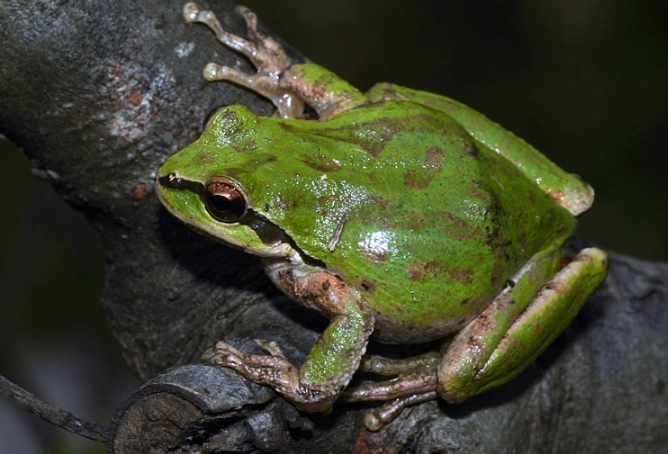
Listen for Yourself: Descriptions only go so far. The best resource I've found for authentic calls is the Macauley Library at Cornell University. They have thousands of verified wildlife recordings. Search for "Pseudacris regilla" and you'll hear the real deal, not a movie sound effect. It's a fantastic way to learn.
How can you tell if it's a Pacific tree frog and not another species? Their call is generally shorter and more staccato than the deep jug-o-rum of a bullfrog (an invasive species, by the way) and lacks the long, drawn-out snore of a leopard frog. It's that distinctive, brisk "kreck-ek".
Creating a Frog-Friendly Backyard: Can You Attract Pacific Tree Frogs?
This is a huge user pain point. People love wildlife and want to encourage it, but they don't know how, or they make mistakes that unintentionally harm the animals. I've learned this through trial and error.
First, a reality check: you can't "buy" Pacific tree frogs and release them. That's a terrible idea for many ecological and legal reasons. The goal is to make your yard so inviting that local frogs discover it and decide to stay. It's about habitat, not relocation.
The Top 3 Essentials for a Pacific Tree Frog Paradise
- Water, Water, Water: This is non-negotiable for breeding. A small, shallow pond (even a pre-formed plastic one) is perfect. The edges should slope gently so froglets can get in and out. Avoid fish, especially goldfish and koi, as they will eat eggs and tadpoles. A simple, fish-free water source is the single best thing you can add.
- Chemical-Free Zones: This is the most important advice I can give. Pesticides, herbicides, and fungicides are absolute killers for amphibians, whose porous skin readily absorbs toxins. If you want frogs, you have to commit to organic gardening. I stopped using even "organic" pesticides like neem oil near the pond, and the insect population (frog food) exploded.
- Shelter & Food Sources: They need places to hide from predators (birds, snakes) and the sun. Dense, native plantings, rock piles, and old logs are perfect. And remember, food isn't something you provide directly. By avoiding chemicals, you encourage a healthy population of insects, spiders, and other invertebrates—the frog's natural diet.
Here’s a quick table summarizing the do's and don'ts based on my own experience and research from places like the Xerces Society for Invertebrate Conservation, which has great info on pesticide impacts.
| Do This | Avoid This | Why It Matters |
|---|---|---|
| Install a shallow, sloping pond | Adding predatory fish like goldfish | Fish will devour eggs and tadpoles, halting reproduction. |
| Plant dense native shrubs & grasses | Keeping a manicured, monoculture lawn | Frogs need cover from predators and the elements. Lawns offer none. |
| Leave leaf litter and log piles | Using chemical pesticides/herbicides | Chemicals poison frogs directly and kill their insect food supply. Leaf litter harbors bugs. |
| Provide shallow water dishes in dry months | Using outdoor lighting that attracts insects to death | Frogs can dehydrate. A simple water dish helps. Bright lights can zap their food and disorient them. |
Beyond the Basics: Cool Facts and Common Questions
The Bigger Picture: Conservation and Why They Matter
Pacific tree frogs are currently considered a species of "Least Concern" by the IUCN because of their wide range and adaptability. But that doesn't mean they're immune to threats. They are bioindicators. Their permeable skin and complex lifecycle (water and land) make them incredibly sensitive to environmental changes. A decline in local frog populations can be an early warning sign of pollution, habitat fragmentation, or climate change impacts.
What hurts them? Habitat loss is number one. Draining wetlands, filling in ponds, clearing vegetation. Pesticide runoff is a silent killer. Introduced species, like bullfrogs and non-native fish, outcompete and eat them. And diseases like chytrid fungus, which has devastated amphibian populations worldwide, are a constant concern.
The good news? Because they adapt to gardens, everyday people can help. By creating a chemical-free yard with a water feature, you're creating a potential refuge. You're contributing to a network of small habitats that can support local populations. Reporting sightings to community science projects like iNaturalist helps scientists track their health and range.
So, the next time you hear that familiar "rib-bit" on a spring night, know that you're listening to a tough little survivor, a master of disguise, and the original Hollywood star. With a little understanding and a few changes in our own backyards, we can make sure that soundtrack plays for generations to come.
Reader Comments