Jump to What Matters
Let's cut to the chase. You're thinking about getting a crested gecko, and now you're stuck on whether to bring home one or two. I've been keeping these guys for over a decade, and I've seen all the outcomes—from happy solo pets to cramped pairs that just don't get along. This isn't about some generic advice; it's about what actually works in real life.
Most blogs will tell you it's a personal choice. Sure, but that's not helpful. I'll give you the specifics: costs, space, time, and even the subtle social dynamics that most beginners miss. By the end, you'll know exactly which option fits your home.
The Quick Answer: It Depends on Your Situation
If you're new to reptiles or on a tight budget, start with one crested gecko. It's cheaper, easier to manage, and lets you learn the ropes without overwhelm. But if you have the space and cash, and you're keen on observing social interactions, two can work—but only if you do it right. I made the mistake early on of assuming two would be twice the fun; it wasn't. One gecko ended up dominating the food, and I had to separate them.
Here's a snapshot to set the stage:
| Aspect | One Crested Gecko | Two Crested Geckos |
|---|---|---|
| Initial Cost | Around $200-$300 (gecko, enclosure, supplies) | $400-$600 (double the geckos, larger enclosure) |
| Monthly Upkeep | $20-$30 (food, substrate, utilities) | $40-$60 (more food, more frequent cleaning) |
| Space Needed | 20-gallon tank minimum | 30-40 gallon tank or larger |
| Time Commitment | 30 minutes daily for feeding/check-ups | 45-60 minutes daily, plus monitoring for aggression |
| Social Dynamics | Solitary, less stress | Can be social, but risk of fighting |
Numbers aside, the real decision hinges on your lifestyle. Let's dive deeper.
The Case for Getting One Crested Gecko
Starting with a single gecko is like learning to drive in an empty parking lot—it's safer and less stressful. I recommend this for 80% of new owners.
Pros of a Solo Gecko
Cost is the big one. You're looking at $50-$100 for the gecko itself, plus $150-$200 for a decent setup: a 20-gallon vertical tank, substrate like coconut fiber, hiding spots, and a misting system. Monthly, you'll spend on powdered diet (like Pangea or Repashy), insects for variety, and electricity for heating if needed. It adds up, but it's manageable.
Space-wise, a 20-gallon tank fits on most desks or shelves. I kept my first gecko, Gizmo, in a tank on my bookshelf for years. He thrived because I could focus all my attention on him—checking his weight, adjusting humidity, and noting his eating habits. With one, you catch issues early, like a slight weight drop or irregular shedding.
Behaviorally, crested geckos are solitary in the wild. They don't get lonely; that's a myth perpetuated by mammal-centric thinking. Gizmo was content alone, exploring his enclosure at night and resting during the day. He never showed signs of distress, unlike some paired geckos I've seen that constantly hide from each other.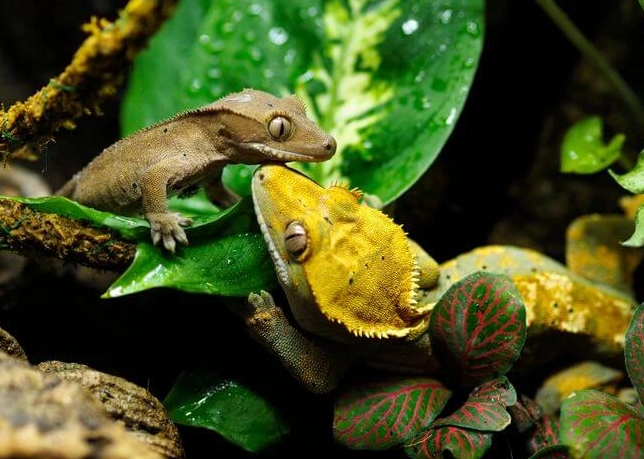
Cons of a Solo Gecko
The downside? Some people find it less entertaining. If you're hoping for interactive pets, one gecko might seem boring. They're nocturnal, so you'll mostly observe them at night. Also, if you're into breeding or want a dynamic display, a single gecko limits that.
But honestly, the cons are minor compared to the risks of multiple geckos. I've seen beginners rush into getting two, only to end up with aggression issues that require separate enclosures—doubling costs overnight.
The Case for Getting Two Crested Geckos
Two geckos can be rewarding, but it's not for everyone. It's like hosting a roommate; you need compatibility and extra resources.
Pros of Multiple Geckos
If you have the space, a larger enclosure with two geckos can be a fascinating display. You might see social behaviors like tail-waving or co-resting—though it's rare. For breeders, obviously, you need a pair, but that's a whole different topic involving sexing and maturity.
Cost per gecko can be slightly lower if you buy supplies in bulk, but initial outlay is higher. A 30-gallon tank costs more, and you need double the hiding spots and feeding stations to prevent competition. I learned this the hard way when I added a second gecko to Gizmo's tank without enough hides; he became territorial over the food dish.
Some owners enjoy the challenge. It teaches you about reptile social structures and health monitoring on a larger scale.
Cons of Multiple Geckos
The biggest risk is aggression. Crested geckos can fight, leading to injuries or stress. Even if they don't fight outright, one might dominate resources, causing the other to lose weight. I've had to separate geckos after noticing one was always hiding and not eating.
Cost and time spike. Monthly food doubles, cleaning becomes more frequent because waste accumulates faster, and you need to monitor both geckos individually. Vet bills can be higher if issues arise.
Space is critical. A cramped tank is a recipe for stress. Experts from the Association of Reptilian and Amphibian Veterinarians recommend at least 20 gallons per gecko for cohabitation, but I'd say go bigger—30-40 gallons minimum. That means a dedicated spot in your home.
Key Factors to Consider Before Deciding
Let's break it down into actionable points. Don't just guess; assess your situation.
Cost Comparison: One vs. Two
I'll use real numbers from my experience. For one gecko:
- Gecko: $80 (standard morph)
- Enclosure: $100 for a 20-gallon tank with screen top
- Supplies: $50 for substrate, plants, hides
- Monthly: $25 for food and misc.
For two geckos:
- Geckos: $160 (two)
- Enclosure: $150 for a 40-gallon tank
- Supplies: $80 for extra hides and feeding dishes
- Monthly: $50 on average
Over a year, one gecko costs around $500 initially plus $300 upkeep, while two cost $900 initially plus $600 upkeep. If money's tight, stick with one.
Space and Enclosure Requirements
Measure your space. A 20-gallon tank is about 24" x 12" x 16" (LxWxH). For two, a 40-gallon is 36" x 18" x 16". Can you fit that? Also, consider weight—a full tank can be heavy. I had to reinforce a shelf once after adding a larger setup.
Vertical space is key; crested geckos are arboreal. They need height to climb. Don't skimp on this.
Time and Effort for Care
With one gecko, daily care takes 10 minutes for feeding and misting, plus weekly cleaning. With two, it's 15-20 minutes daily, and cleaning twice a week because waste builds up. If you travel often, one is easier to manage with a pet sitter.
Health monitoring doubles. You need to weigh each gecko weekly, check for injuries, and ensure both are eating. It's doable, but requires discipline.
Common Mistakes and Expert Tips
Here's where most guides fall short. I've seen these errors repeatedly.
Mistake 1: Assuming geckos get lonely. Reptiles don't have social needs like mammals. A solo gecko is fine. Adding another for "company" often causes stress.
Mistake 2: Skimping on enclosure size. Even for one gecko, a 20-gallon is the bare minimum. For two, go bigger. I use a 40-gallon for my pair, and they still sometimes squabble over basking spots.
Mistake 3: Not having a backup plan. If you get two and they fight, you need a second enclosure ready. I keep a spare 20-gallon tank for emergencies. It's saved me multiple times.
Expert tip: Start with one gecko. After six months, if you're comfortable and have extra resources, consider adding a second—but quarantine the new one in a separate tank for a month to check for health issues. Introduce them slowly in a neutral space.
Another tip: Monitor feeding closely. Use multiple food dishes placed apart. I've seen dominant geckos block access, leading to malnutrition in the submissive one.
Frequently Asked Questions
Ultimately, the choice between one or two crested geckos boils down to your resources and goals. If you're starting out, go with one—it's simpler, cheaper, and lets you build confidence. If you're experienced and ready for the challenge, two can be rewarding, but plan for the extra work. Whatever you decide, focus on providing a great environment; these creatures thrive with proper care.
Reader Comments