Let's cut to the chase. You're here because you've seen a picture of a white leopard gecko—that ghostly, almost mythical-looking reptile—and you're hooked. Maybe you're wondering if they're as fragile as they look, or if their care is a nightmare. Good news: they're one of the most beginner-friendly reptiles you can get. But "beginner-friendly" doesn't mean "set it and forget it." After keeping these animals for over a decade, I've seen the same subtle mistakes trip up new owners, mistakes most care sheets gloss over. This guide isn't just a list of facts; it's the roadmap I wish I had, covering not just the white leopard gecko care basics, but the nuanced details that make the difference between a surviving pet and a thriving one.
Your Quick-Start Guide
What Is a White Leopard Gecko? It's More Than Just Color
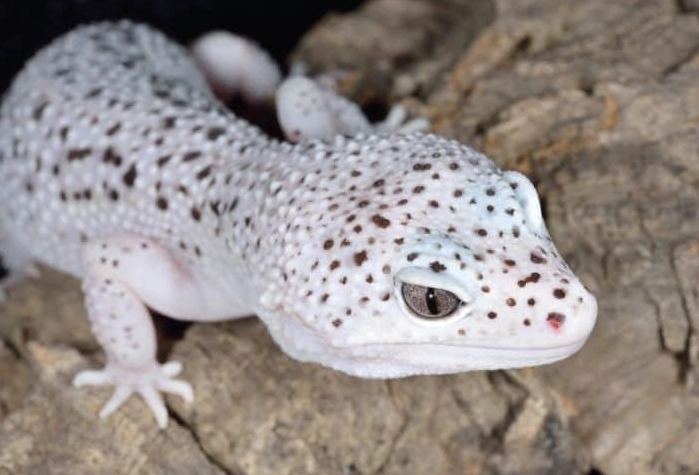
First, a clarification. "White leopard gecko" isn't a separate species. It's a color and pattern mutation (what reptile enthusiasts call a "morph") of the common leopard gecko (Eublepharis macularius). The classic wild type has yellow and black spots, but through selective breeding, we get these stunning white variations. The two most common types are:
Blizzard Morph: This is your solid white gecko. No patterns, just a clean, often chalky or greyish-white body. Sometimes they have faint yellow hints on the tail. Their eyes are usually dark.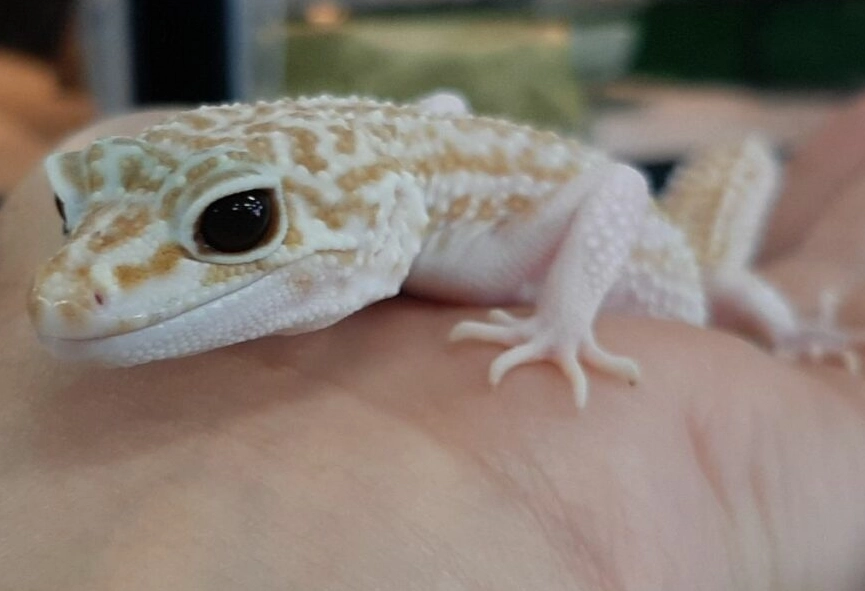
Murphy Patternless or "MP" Morph: These start life with faint purple and yellow bands, which fade as they age into a creamy, pale yellow or off-white adult. They lack the spots but often retain a softer, more uniform color.
Why does this matter for care? It doesn't, really. Their needs are identical to any other leopard gecko morph. But here's the first non-consensus point: that brilliant white color can make certain health issues slightly easier to spot early, like tail thinning or skin irritation. It's a small perk.
A Personal Note on Temperament: I've kept dozens of leopard geckos over the years, and I've found no consistent link between color morph and personality. My feistiest gecko was a blizzard, and my calmest was also a blizzard. Don't buy into the myth that certain colors are "nicer." Individual personality varies wildly.
How to Set Up the Perfect White Leopard Gecko Tank
This is where most people mess up, not by providing too little, but by overcomplicating. You don't need a rainforest. You need a dry, warm slice of rocky grassland.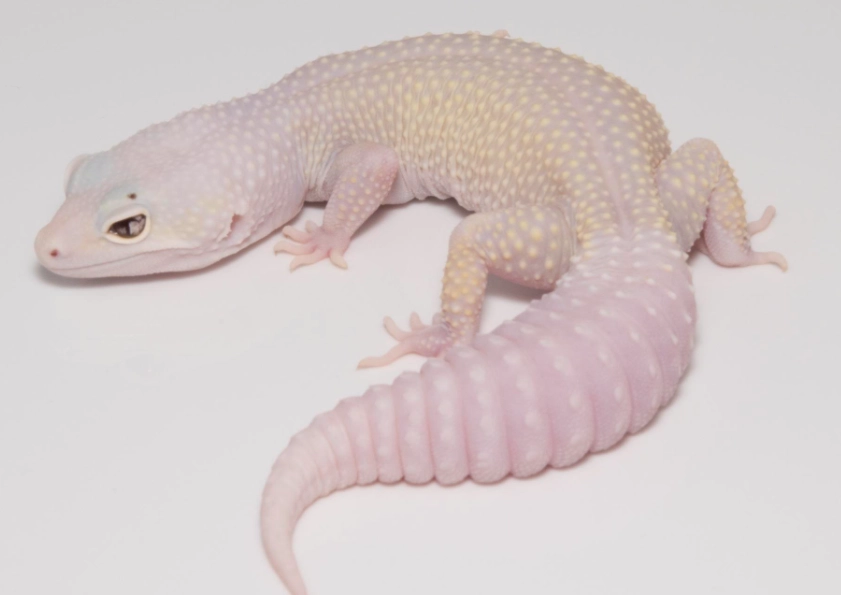
The Tank Itself: Size and Security
For a single adult, a 20-gallon long tank (30" x 12" x 12") is the absolute minimum I'd recommend. A 40-gallon breeder (36" x 18" x 16") is ideal, giving them space to explore and establish distinct areas. Front-opening enclosures are fantastic for reducing stress during maintenance. The lid must be secure—these guys can't climb glass, but crickets can jump out.
The Non-Negotiables: Heat and Hides
Leopard geckos need a temperature gradient. One end warm, one end cool. They regulate their body temperature by moving.
- Warm Side: 88-92°F (31-33°C) on the floor under the heat source. Use an under-tank heater (UTH) connected to a thermostat. This is crucial. Unregulated heat mats can cause severe burns. I learned this the hard way years ago with a minor scorch on a hide—it scared me straight about using thermostats.
- Cool Side: 70-77°F (21-25°C).
- Nighttime: Can drop to the high 60s°F (18-20°C). No colored "night" bulbs. They don't need heat at night if your home stays above 65°F.
You need at least three hides:
- Warm Hide: Placed directly over the UTH. A simple plastic container with a hole works.
- Cool Hide: On the opposite end.
- Humid Hide: This is critical for shedding. A small container filled with damp (not wet) sphagnum moss or paper towels. Place it in the middle or warm side. Check it weekly for mold.
Substrate: The Controversial Topic
Walk into any pet store, and they'll try to sell you calcium sand. Don't buy it. It's a major impaction risk if ingested. For beginners, I strongly recommend paper towel, slate tile, or a reptile-safe non-adhesive shelf liner. They're safe, cheap, and easy to clean. Loose substrates like a soil/sand mix can be used for advanced, naturalistic setups, but only if you're confident in your husbandry and your gecko's health.
| Substrate Option | Pros | Cons | Best For |
|---|---|---|---|
| Paper Towel | Ultra-safe, cheap, easy to monitor health/poop. | Looks boring, needs frequent changing. | Quarantine, beginners, sick geckos. |
| Slate Tile | Natural look, retains heat well, easy to clean, zero risk. | Heavy, need to cut to fit. | All owners looking for a permanent, low-risk solution. |
| Reptile Carpet | Reusable, some texture. | Can snag claws, traps bacteria if not washed frequently. | A temporary option, but not my first choice. |
| Bioactive Soil Mix | Most natural, allows digging. | Expensive setup, requires maintenance, risk of impaction if husbandry is poor. | Experienced keepers only. |
Daily Care: Feeding, Supplements, and Cleaning
White leopard geckos are insectivores. They don't eat fruits or veggies. Their diet is live bugs.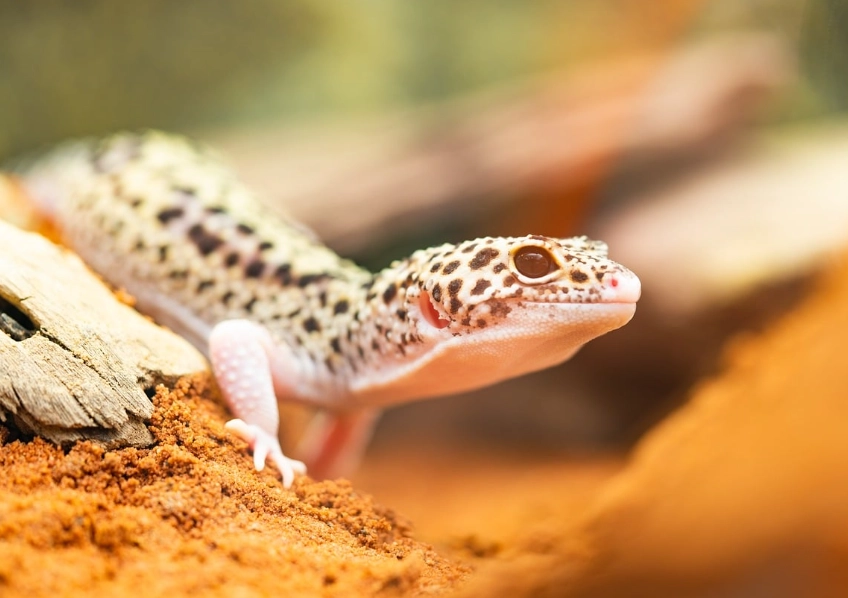
Staple Feeders: Crickets, dubia roaches, and black soldier fly larvae are excellent. Mealworms and superworms are okay as part of a varied diet but are fatty and less nutritious as a sole food.
Feeding Schedule:
- Juveniles (under 1 year): Daily, as many appropriately-sized insects as they'll eat in 10 minutes. Insects should be no bigger than the space between the gecko's eyes.
- Adults (over 1 year): Every other day or 2-3 times a week. 5-10 insects per feeding.
Here's the supplement routine that prevents 90% of common health issues:
- Calcium (without D3): Lightly dust insects at every feeding. Keep a small dish of pure calcium powder in the tank at all times. They'll lick it if they need it.
- Calcium (with D3) & Multivitamin: Dust insects with this combo once a week. D3 helps them absorb calcium, but too much is harmful. The once-a-week schedule is the safe sweet spot.
Gut-loading is non-optional. Feed your insects nutritious food (commercial gut-load, carrots, sweet potato, leafy greens) 24-48 hours before feeding them to your gecko. You are what your food eats.
Clean water in a shallow dish must always be available. Change it daily. Spot-clean feces and dead insects daily. Do a full substrate change and tank wipe-down (with a reptile-safe disinfectant like F10) monthly.
Handling and Building Trust With Your Gecko
Give your new gecko at least a full week to settle in with no handling. Just feed and observe.
Start by placing your hand flat and still in the tank for a few minutes each day. Let them come investigate. The first few handlings should be brief—just lifting them gently and placing them back down inside the tank. Never grab from above (you look like a predator). Scoop from below.
Handle over a soft surface like a bed or couch. They are faster than you think and can jump. Sessions of 10-15 minutes, a few times a week, are plenty. Watch for signs of stress: rapid tail twitching (different from a slow, curious wag), trying to bolt, or huffing sounds. If you see these, put them back.
Common Health Issues to Watch For
With good care, white leopard geckos are hardy. But you should know the red flags.
- Refusal to Eat: Often due to stress (new home), incorrect temperatures, or impending shed. If it lasts more than 10 days in an adult, see a vet.
- Shedding Problems (Dysecdysis): Stuck shed, especially on toes and eyes. Ensure your humid hide is properly damp. A stuck toe tourniquet can lead to toe loss.
- Metabolic Bone Disease (MBD): The big one. Caused by lack of calcium/D3. Symptoms include rubbery jaw, bowed legs, tremors, and difficulty walking. It's preventable with proper supplementation.
- Impaction: A blockage in the gut from eating substrate or oversized food. Symptoms are lethargy, loss of appetite, and a swollen belly. Proper temperatures (for digestion) and safe substrate prevent this.
Have an exotics vet lined up before you need one. Not all vets treat reptiles.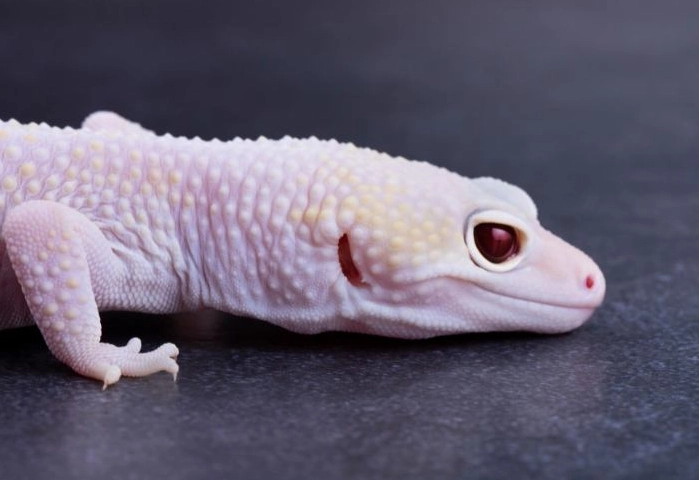
Your White Leopard Gecko Questions, Answered
My white leopard gecko isn't eating the crickets I put in the tank. What am I doing wrong?
First, check the temperature on the warm side floor with a digital thermometer. If it's below 88°F, their metabolism slows and they can't digest. That's the most common cause. Second, try a different feeder. Some geckos are picky. Try dubia roaches or black soldier fly larvae. Third, are the crickets too big? A scared gecko won't tackle a large, fast-moving insect. Finally, try feeding with tongs in the evening when they're naturally more active. Dangling the insect can trigger their hunting instinct.
How long do white leopard geckos actually live as pets?
With proper care, 15-20 years is common. I know of several over 25. This isn't a short-term commitment. That "beginner" label refers to the simplicity of their needs, not the duration. When you get one, you're signing up for a pet that could be with you through high school, college, and beyond.
Can I house two white leopard geckos together to keep each other company?
I strongly advise against it, especially for beginners. Leopard geckos are not social. Co-habitation, even two females, often leads to stress, competition for food and heat, and injury. The smaller one will almost always be bullied, leading to weight loss and illness. The only semi-safe scenario is a very large, meticulously planned enclosure for a proven female-only pair, but the risks usually outweigh any perceived benefits. One gecko per tank is the safest, least stressful rule.
What's the one piece of equipment most new owners skip that they really need?
A digital infrared thermometer gun. Those dial stick-on thermometers are notoriously inaccurate. The temperature on the floor where your gecko sits is what matters. A $20 temp gun lets you instantly check the exact spot under the warm hide and the cool hide. It's the single best tool for diagnosing "mystery" problems like not eating or improper shedding.
Do white leopard geckos need special lighting since they're albino?
Most white morphs are not true albinos (they have dark eyes). However, they can be more light-sensitive. They do not require, and often dislike, bright white lights. They are crepuscular (active at dawn/dusk). A low-output UVB light (like a ShadeDweller kit) can be beneficial for their overall health and calcium metabolism, but it must be provided alongside proper supplementation and plenty of shaded hides so they can escape it. It's not strictly necessary if your supplement regimen is perfect, but many advanced keepers consider it a welfare upgrade. Avoid intense basking spots or colored bulbs.
Bringing a white leopard gecko into your home is a rewarding experience. Their subtle personalities, their soft skin, and that striking appearance make them endlessly fascinating. By focusing on the fundamentals—a properly heated and sized tank, a simple but nutritious diet, and attentive but patient handling—you'll set the stage for a long, healthy life for your pale-scaled friend. Start simple, get the basics rock solid, and you'll have a captivating pet for decades to come.
Reader Comments