Let's cut to the chase: the albino hognose snake isn't just a pretty face. That striking white and yellow coloration is the hook, but the real story is the personality packed into this small, shovel-snouted reptile. I've kept various hognose morphs for over a decade, and the albino variant consistently draws the most questions—and the most misconceptions. Is it more delicate? Harder to feed? A diva in a scalesuit? This guide walks you through everything, from decoding their unique behaviors to setting up a habitat they'll thrive in, not just survive in.
What’s Inside This Care Guide
What Exactly Is an Albino Hognose Snake?
An "albino hognose snake" refers to any hognose snake (most commonly the Western hognose, Heterodon nasicus) expressing the albino genetic morph. This isn't a separate species. Albinism is a recessive trait that removes melanin, the pigment responsible for blacks, browns, and grays. The result? A snake with a creamy white to bright yellow background and patterns of orange, red, or pink. Their eyes are pink or red due to the lack of pigment in the iris, revealing the blood vessels underneath.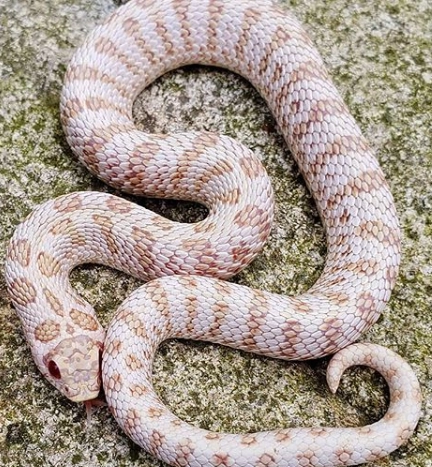
Here’s a crucial point many beginners miss: the albino gene does not inherently make the snake more fragile or sickly. A well-bred albino from a reputable breeder is just as hardy as a normal-colored ("wild type") hognose. The challenges associated with albinism in other animals, like poor eyesight, aren't a significant issue for hognoses, who rely more on scent and ground vibration anyway. The care differences are minimal, mostly revolving around a slight sensitivity to very bright light, which is easy to manage.
The Real Deal on Albino Hognose Personality & Behavior
If you want a pet that acts like a pet, a hognose might be your snake. They're curious, diurnal (active during the day), and have a repertoire of behaviors you won't find in a ball python. The albino coloration doesn't change this.
The Drama Queen Act: Hognoses are famous for bluffing. When startled, they may flatten their necks like a cobra (hence the nickname "puff adder"), hiss loudly, and even strike with a closed mouth. If that fails, they’ll flip onto their backs, open their mouths, and play dead, sometimes even secreting a musky smell. It's all an act. An albino hognose performing this death scene is a hilarious contrast of "ferocious" behavior in a pastel package. They almost never bite in defense.
Once settled—which can take a few weeks—they become remarkably inquisitive. You'll see them "periscope," raising the front third of their body to get a better look around. They are burrowers by nature, using that upturned snout to dig in loose substrate. This isn't antisocial behavior; it's enrichment. A happy hognose splits its time between exploring, basking, and tunneling.
Setting Up the Perfect Albino Hognose Enclosure
Think of the enclosure as a secure, climate-controlled studio apartment with good digging potential. For an adult, a 20-gallon long tank (30" x 12" x 12") is the minimum, but a 40-gallon breeder (36" x 18" x 16") is better. Hatchlings can start in a 10-gallon. Front-opening enclosures are fantastic as they don't startle the snake as much.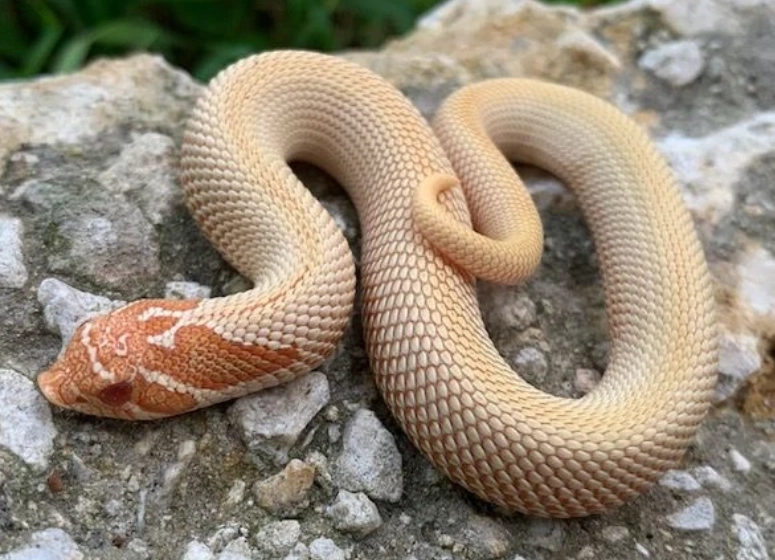
Critical Environmental Parameters
Getting these wrong is the root of most health and feeding problems.
| Parameter | Target Range | How to Achieve It | Why It Matters |
|---|---|---|---|
| Temperature Gradient | Warm side: 85-90°F (29-32°C) Cool side: 70-75°F (21-24°C) |
Use an under-tank heat pad or heat tape on one side, regulated by a thermostat. A low-wattage ceramic heat emitter or deep heat projector can supplement. | Essential for digestion and metabolism. A snake that's too cold won't eat. |
| Humidity | 30-50% (Spike to 50-60% during shed) | Provide a humid hide (plastic box with damp sphagnum moss) and a water bowl. Lightly mist if needed. | Prevents dehydration and ensures clean, complete sheds. |
| Lighting | Low to moderate. A natural day/night cycle. | Ambient room light is often sufficient. Avoid intense, hot basking spots directly over an albino. | Albinos lack pigment protection. While not severely photosensitive, harsh light can cause stress. |
Substrate & Enrichment: More Than Just Decor
Substrate: This is where you cater to their instinct. Aspen shavings are the gold standard—they hold burrow structure well and are digestible in small amounts if ingested. Avoid cedar or pine (toxic), sand (causes impaction), and overly damp substrates like coconut fiber (can raise humidity too high).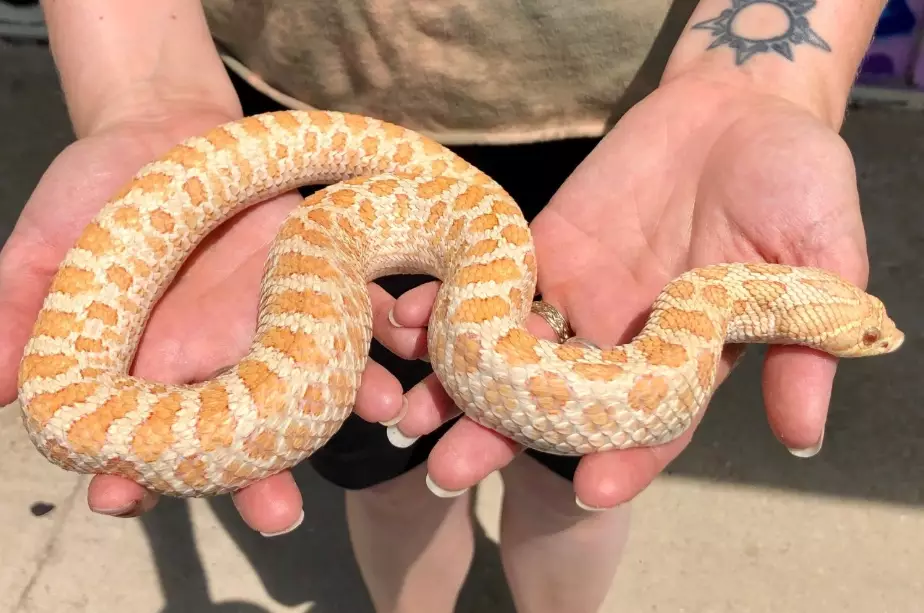
Enrichment: Two tight hides (one warm, one cool), a sturdy water bowl, and things to explore. Cork rounds, fake plants, and smooth rocks work. The goal is to make them feel secure while moving around. A bare tank is a stressed snake.
Feeding Your Albino Hognose: The Biggest Hurdle
This is the make-or-break for most owners. Hognoses are amphibian specialists in the wild, and some individuals—albino or not—can be notoriously picky about switching to frozen/thawed rodents in captivity.
The Standard Diet: Appropriately sized frozen/thawed mice. "Appropriately sized" means the mouse is no wider than the snake's body at its widest point. Hatchlings eat pinky mice every 5-7 days, adults eat adult mice every 7-10 days.
The Picky Eater Scenario: If your albino hognose refuses mice, don't panic. This is common. Here’s a tiered strategy I've used for years: 1. Scenting: Rub the mouse with a frog or toad (available from some bait shops or online herp suppliers). The smell is irresistible. 2. Braining: Puncture the skull of the frozen/thawed mouse. The scent of brain matter often triggers a feeding response. 3. Offering Alternative Prey: Some will take frozen/thawed African clawed frog legs or fish-scented mice. This is a last resort, as you want them on a rodent diet. 4. Environmental Check: 90% of the time, refusal is due to incorrect temperatures, a tank that's too open, or recent handling. Fix the environment first.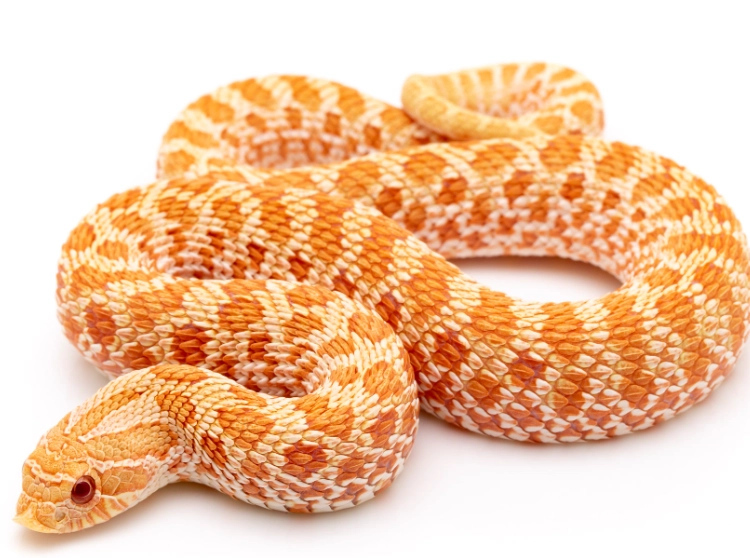
Never leave a live rodent unattended with your snake. A mouse can seriously injure a hognose.
Albino Hognose Health & Common Issues
They are robust snakes when kept correctly. Watch for these signs:
Incomplete Shed (Dysecdysis): Stuck shed, especially over the eyes ("eye caps"). Cause: low humidity. Solution: provide a humid hide and a shallow warm bath. Respiratory Infection (RI): Wheezing, mucus around nostrils, open-mouth breathing. Cause: low temperatures and/or high humidity. Requires a vet visit for antibiotics. Mites: Tiny black/red parasites moving on the snake or in the water bowl. Isolate, treat the snake and deep-clean the enclosure. Consult a vet for safe treatment options. Regurgitation: The snake vomits its meal. This is serious. Causes include handling too soon after eating, temperatures being too low for digestion, or an illness. Wait two weeks before offering a smaller meal, and ensure temps are perfect.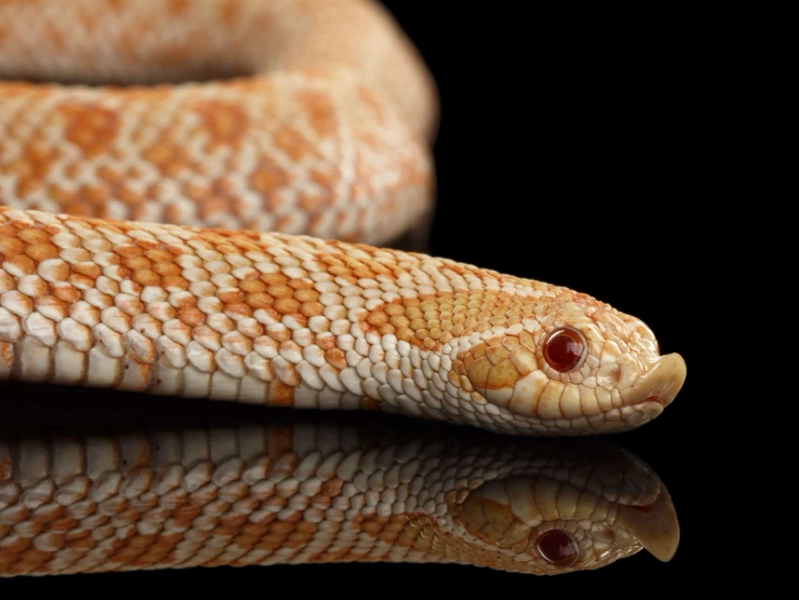
Establish a relationship with an exotics vet who sees reptiles before you have an emergency. The Association of Reptilian and Amphibian Veterinarians (ARAV) has a finder tool on their website.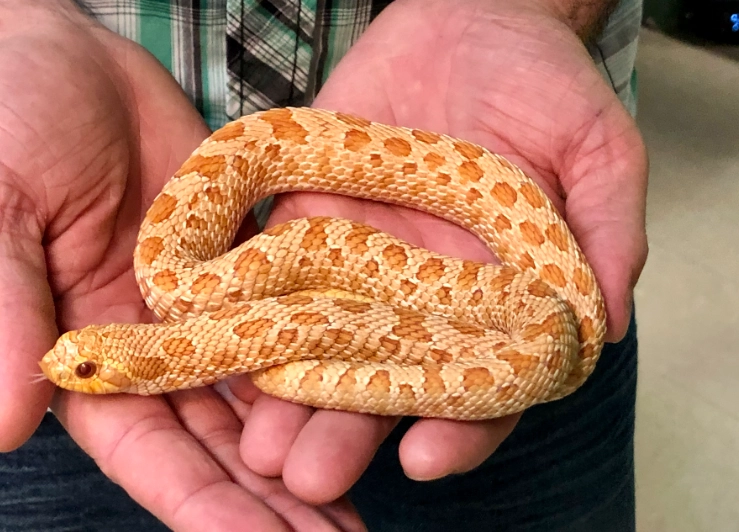
FAQs from the Front Lines of Hognose Keeping
Are albino hognose snakes good for beginners?
With a major caveat: yes, if you are a patient beginner. Their care is straightforward, their size is manageable, and their defensive acts are harmless. The caveat is their potential for picky eating. A beginner who panics at the first feeding refusal can make things worse. If you're prepared to problem-solve and not force interactions, an albino hognose can be a fantastic first snake.
Why won't my albino hognose eat, even though my temperatures are right?
First, double-check your temps with a digital infrared thermometer—analog stick-ons are notoriously inaccurate. If temps are truly correct, consider stress. Is the enclosure in a high-traffic area? Have you been handling it frequently? Try leaving it completely alone for a full week in a quiet room, then offer a very warm, brained pinky mouse at dusk using long feeding tongs. No peeking. Often, it's our own anxious energy that perpetuates the fast.
How do I handle my albino hognose without stressing it?
Start slow. Don't handle for the first two weeks after bringing it home. For the first few sessions, keep it short—5 minutes max. Approach from the side, not from above (like a predator). Support its body fully. If it huffs and puffs, just keep a calm, confident hold; it will learn you're not a threat. Always wash your hands before and after to avoid transferring smells or bacteria.
Is the albino morph more expensive than others?
It used to be a premium morph, but thanks to years of captive breeding, prices have dropped significantly. You can find a healthy albino Western hognose from a reputable breeder for between $200 and $400, depending on lineage and color intensity. Avoid pet stores; their snakes are often stressed, unsocialized, and can have hidden health issues. Go to a dedicated reptile expo or a breeder with strong reviews.
Can I house two albino hognose snakes together?
Don't. Hognoses are not social animals. Cohabitation causes chronic stress, competition for resources (heat, hides, food), and can lead to cannibalism, especially if one is significantly smaller. The only exception is for controlled, expert-level breeding projects. Every hognose deserves its own private space.
Reader Comments