So you're thinking about getting a tarantula. The internet is flooded with hundreds of species, from fuzzy teddy bears to metallic blue jewels and everything labeled "not for beginners." It's overwhelming. I remember staring at my first spider, a Chilean Rose Hair, wondering if I was doing it all wrong. After keeping them for over a decade, I've learned that all tarantulas really fall into three practical categories from a keeper's perspective: the beginner-friendly, the stunning display spider, and the challenging expert species. Picking the right type isn't just about what looks cool—it's about safety, enjoyment, and the spider's welfare.
What's Inside This Guide?
The Three Tarantula Categories Explained
Forget scientific families for a second. When you walk into a reptile expo or browse an online store like Fear Not Tarantulas, the real division is based on care difficulty and temperament. This is the split that matters for your daily life with the spider.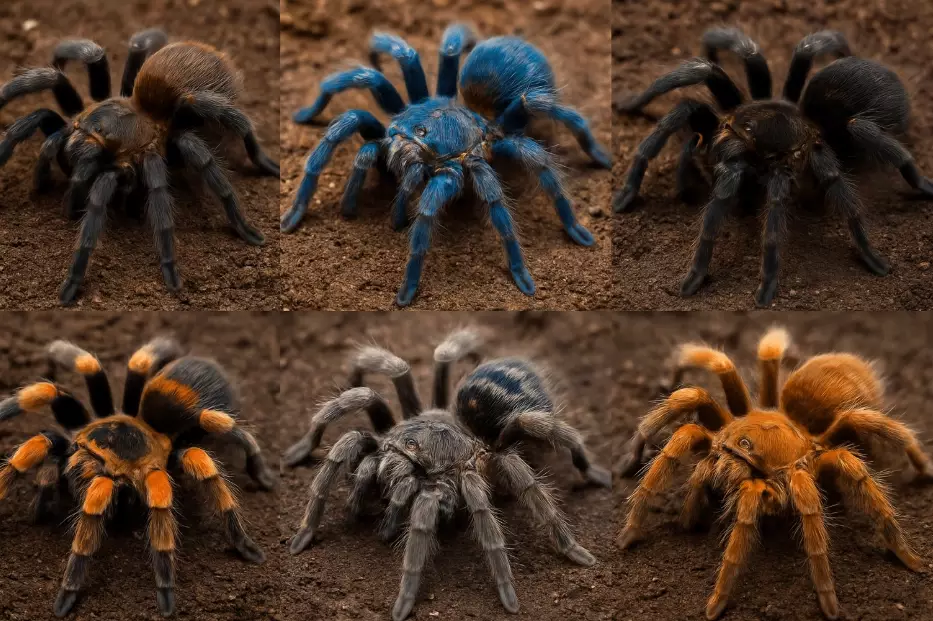
First, you have the New World tarantulas, from the Americas. These are generally the chill ones. Their primary defense is kicking urticating hairs—tiny, irritating bristles from their abdomen. It's like getting fiberglass in your skin, unpleasant but rarely dangerous if you wash up and don't rub your eyes. Their venom is typically mild, comparable to a bee sting for most people.
Then there are the Old World tarantulas, from Africa, Asia, and Australia. No urticating hairs here. When threatened, their first and often only response is to bite. They're faster, more defensive, and their venom is almost always more potent. We're talking severe pain, muscle cramps, sometimes requiring medical attention. This isn't to scare you, but to respect them.
Within these two groups, we get our three keeper types: the docile New World terrestrials (beginner), the often skittish but breathtaking New World arboreals (display), and the fast, defensive Old Worlds (challenging).
Quick Geography Lesson: "New World" = the Americas (North, Central, South). "Old World" = everywhere else (Africa, Asia, Europe, Australia). This isn't just geography; it's a reliable shorthand for predicting a tarantula's behavior and defense mechanisms.
Best Beginner Tarantulas: Your First Spider
This is where 90% of people should start. The goal here is a spider that forgives minor mistakes, is easy to care for, and lets you learn the basics of tarantula husbandry without a high-stress situation.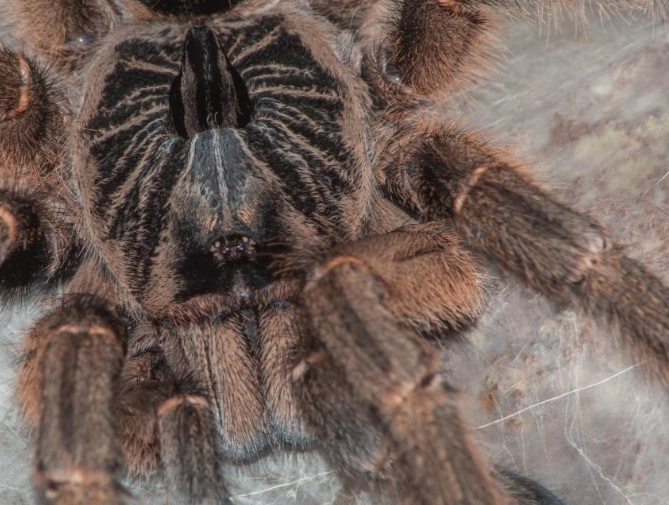
You want a New World terrestrial species. Ground-dwelling, slow to medium pace, and a reputation for a calm disposition.
Top Contenders for Your First Enclosure
The Chilean Rose Hair (Grammostola rosea/porteri): The classic. For decades, this was "the" pet tarantula. They're incredibly hardy, can go on long fasts, and are often content to just sit in the open. The downside? They can be moody and go into fasting periods for months. I had one that refused food for 9 months once—perfectly healthy, just stubborn. You can find them at almost any pet store that sells exotics, usually for $30-$50.
The Curly Hair Tarantula (Tliltocatl albopilosus): My top recommendation now. They're like a fuzzy, curious teddy bear. More active than a Rose Hair, with a great feeding response, and they're prolific webbers, decorating their home with neat tunnels. They're almost always available from online breeders for $40-$70 for a juvenile. A fantastic choice that's rarely a "pet hole."
The Brazilian Black (Grammostola pulchra): The jet-black, velvety superstar. They are famously docile, slow-moving, and stunning. The catch? They grow painfully slow and are often more expensive ($80-$150 for a juvenile). If you have patience and a bit more budget, there's no classier beginner spider.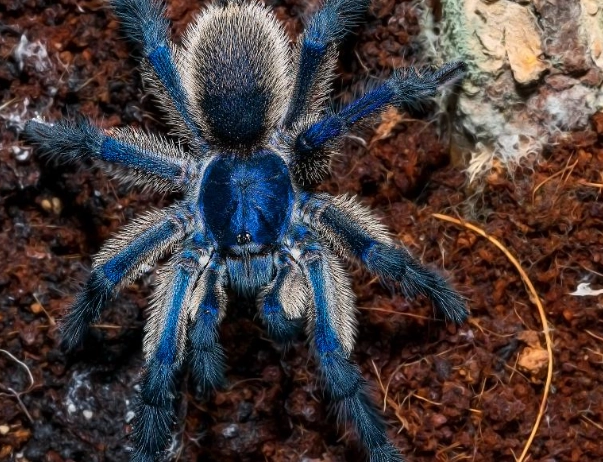
| Species (Common Name) | Temperament | Growth Speed | Typical Price (Juvenile) | Why It's a Good First Pick |
|---|---|---|---|---|
| Chilean Rose Hair | Calm, sometimes moody | Slow | $30 - $50 | Ultra-hardy, widely available, teaches patience. |
| Curly Hair Tarantula | Docile, curious | Medium | $40 - $70 | Great eater, active webber, very forgiving. |
| Brazilian Black | Exceptionally docile | Very Slow | $80 - $150 | Beautiful, predictable behavior, "showpiece" beginner spider. |
Set them up in a 5 to 10-gallon tank with 4-5 inches of slightly moist coconut fiber substrate, a hide (a piece of cork bark is perfect), and a shallow water dish. Feed them one or two crickets a week. That's the core of it.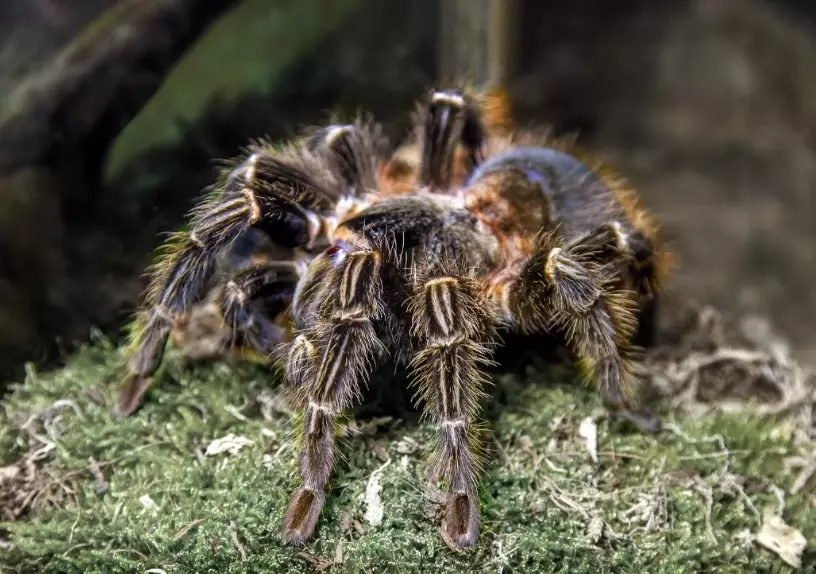
Showstopper Display Tarantulas
This category is for when you've got the basics down and want something that consistently makes guests say "Wow." These are often New World species with incredible colors or fascinating behaviors. They might be slightly more skittish or have specific care needs, but they're generally not dangerous.
The Pink Toe Tarantula (Avicularia avicularia): The classic beginner arboreal. They live in trees, so you give them a tall enclosure with cork bark to climb on. They're beautiful—black with pink toe tips. But they can be nervous, prone to bolting, and have a unique defense: they shoot poop. It's accurate. Not dangerous, just messy. A great intro to arboreal care.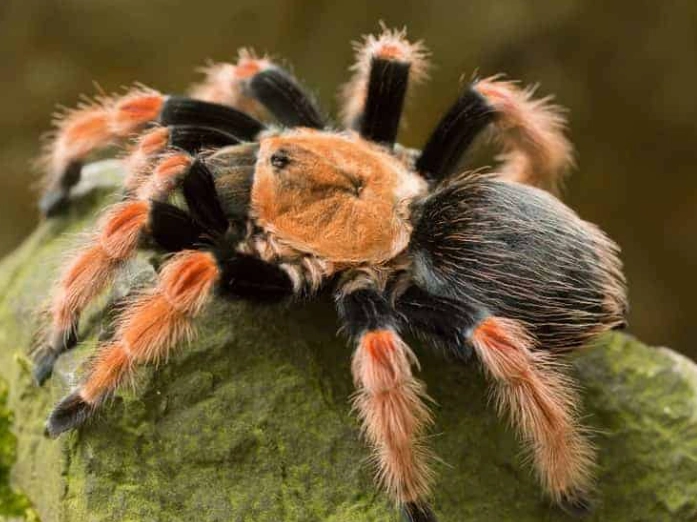
The Greenbottle Blue (Chromatopelma cyaneopubescens): Arguably the most stunning tarantula commonly available. Electric blue legs, metallic green carapace, and an orange abdomen. They're also fantastic webbers, often turning their entire enclosure into a silken masterpiece. They're active, good eaters, and from the New World (Venezuela). They require drier conditions and can be a bit faster, but they're manageable for a confident beginner moving to their second spider. Expect to pay $80-$150.
These spiders are for looking, not touching. Their enclosures become living art. You're paying for the visual spectacle and the fascinating behavior.
Challenging & Old World Tarantulas
This is the advanced class. We're talking about Old World terrestrials and fossorials (burrowers) known for speed, defensiveness, and medically significant venom.
Why would anyone keep these? For the same reason people climb mountains. The challenge, the respect for the animal, and yes, the adrenaline. They are often breathtakingly beautiful in a fierce way.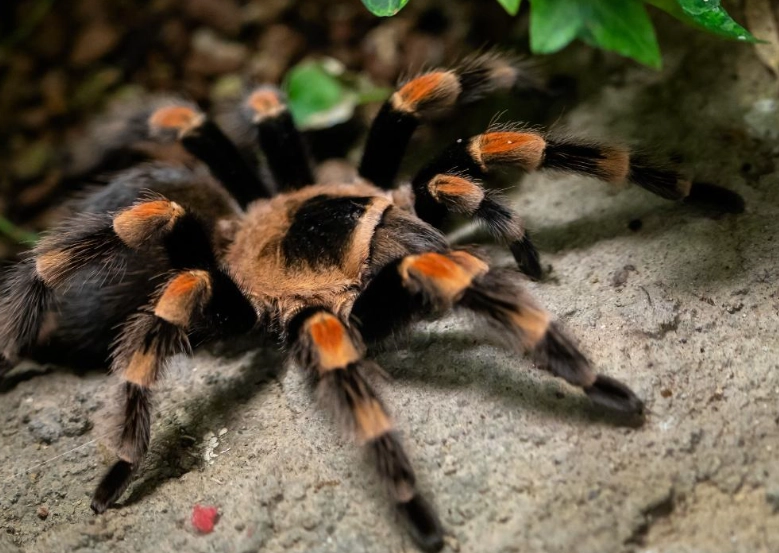
The Orange Baboon Tarantula (Pterinochilus murinus): Nicknamed the "OBT" or "Orange Bitey Thing" in the hobby. It's a running joke with a serious truth behind it. They are bright orange, incredibly fast, and have a legendary defensive attitude. They will assume a threat posture at the slightest disturbance. Their venom is potent. This is a species you rehouse with long tools, a clear plan, and a deep container to work over.
Asian Fossorials (e.g., Haploclastus, Cyriopagopus): These are the pet holes. Jet-black, velvety, and they vanish into elaborate underground burrows you might only see at night. If you need to do maintenance, you're excavating a defensive spider with potent venom. The appeal is in creating a naturalistic setup and catching rare glimpses of a secretive predator.
My strong opinion: Do not start here. I've seen too many people buy an OBT as their first spider because it was cheap and colorful. It almost always ends badly—a bitten keeper, an escaped spider, or a dead tarantula from improper care. Master a few calm New Worlds first. Learn how they molt, how they eat, how to spot problems. Then, if you're still drawn to the edge, research relentlessly and connect with experienced keepers on forums like Arachnoboards before even considering a purchase.
How to Choose Your First Tarantula?
It's not just picking the prettiest picture. Ask yourself these questions:
What's your budget for the spider itself? Beginners: stick to the $30-$80 range. If you spend $200 on a rare sling (baby tarantula), the pressure is on, and they're fragile.
Do you want to see it often? A Curly Hair or Greenbottle Blue will be out. A fossorial species will be hidden 90% of the time.
Where are you buying from? Avoid big-box pet stores. Seek out reputable online breeders or local reptile expos. Look for reviews. A healthy spider is more important than a cheap one.
My personal take? Get a juvenile ("spiderling") or sub-adult of a hardy species like the Curly Hair. You'll get to watch it grow, they're less fragile than tiny slings, and you'll learn the molting process without as much panic.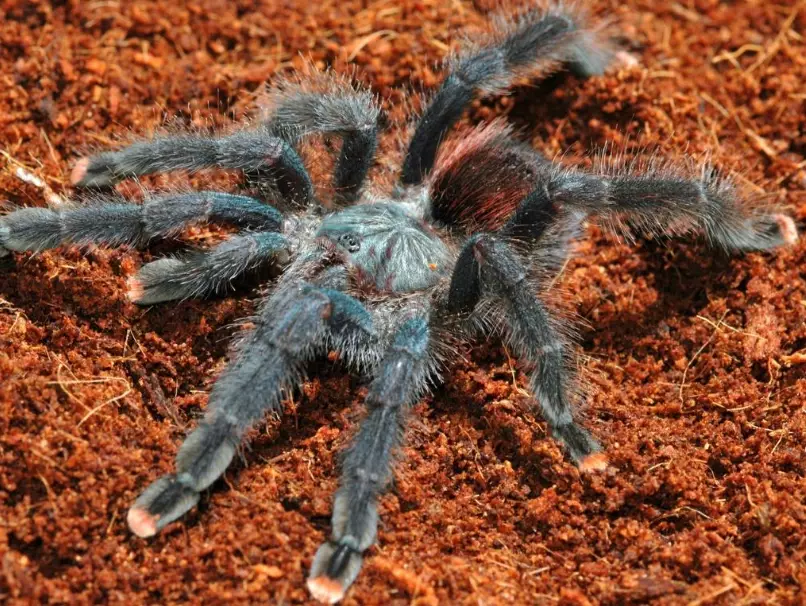
Beyond the Basics: Pro Tips They Don't Tell You
Care sheets get the basics right, but they miss the nuance. Here's what I've learned the hard way.
Ventilation is king, especially for arboreals. Stagnant air kills. More cross-ventilation is almost always better than less. Those stuffy, tall "tarantula kits" with just a top screen? Avoid them.
Deep substrate isn't just for burrowers. Even for terrestrials, give them 4-5 inches. It helps with humidity, gives them digging options, and most importantly, cushions a fall. A tarantula's abdomen can rupture like a water balloon if it falls from the top of a tall tank onto a hard surface. Deep, soft substrate prevents that.
Don't trust the "communal" hype. Some species, like the Monocentropus balfouri, can be kept in groups. This is advanced, specialized husbandry. For 99.9% of tarantulas, including all beginners, they are solitary and will cannibalize each other. One spider per enclosure. No exceptions.
The hobby is full of great resources. The Arachnoboards forum is an invaluable community. The Tarantula Collective on YouTube provides excellent visual guides. Use them.
Reader Comments